When you click on links to various merchants on this site and make a purchase, this can result in this site earning a commission. Affiliate programs and affiliations include, but are not limited to, the eBay Partner Network.
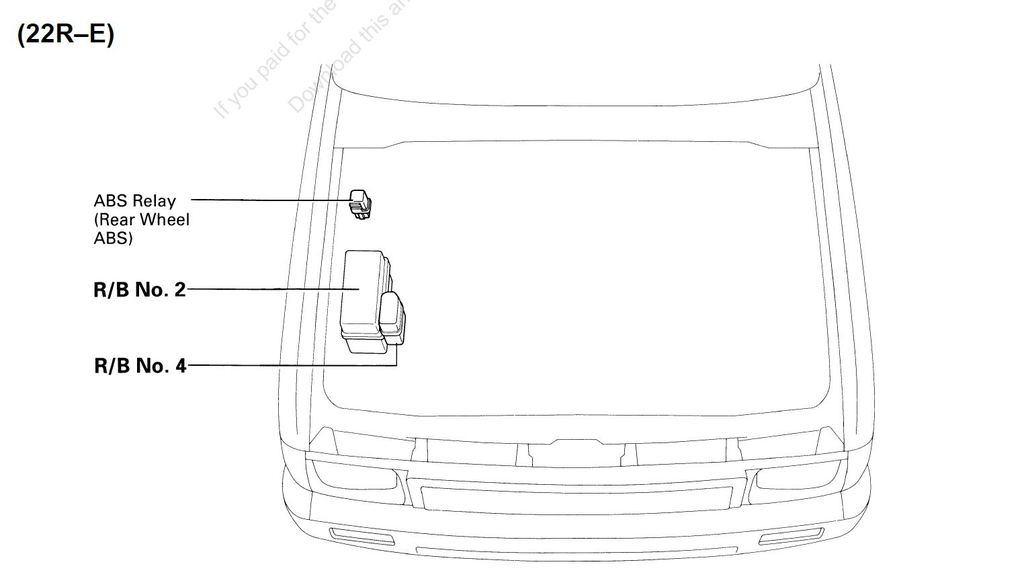
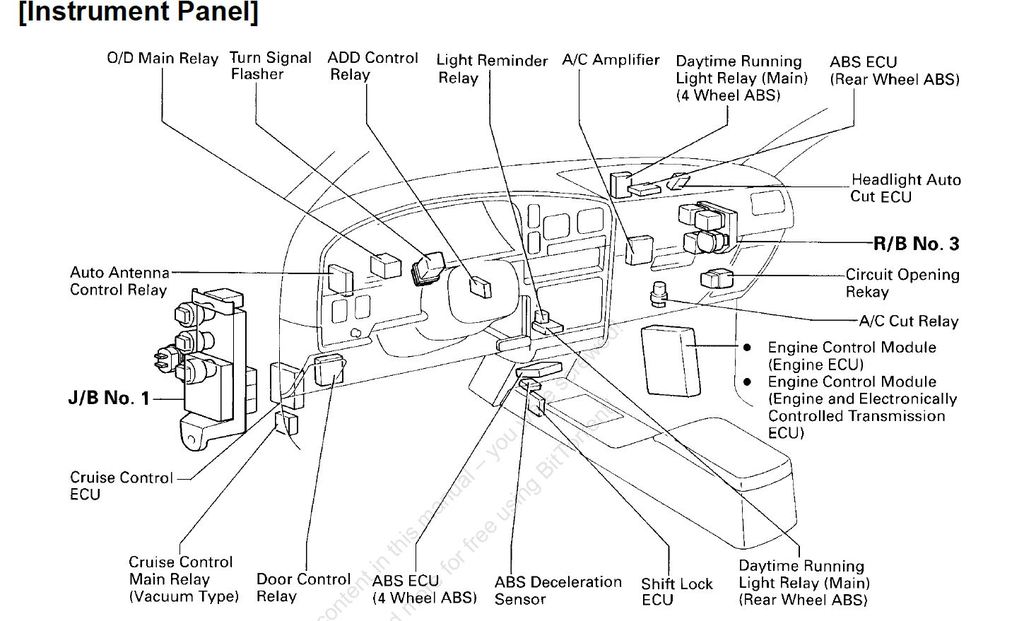
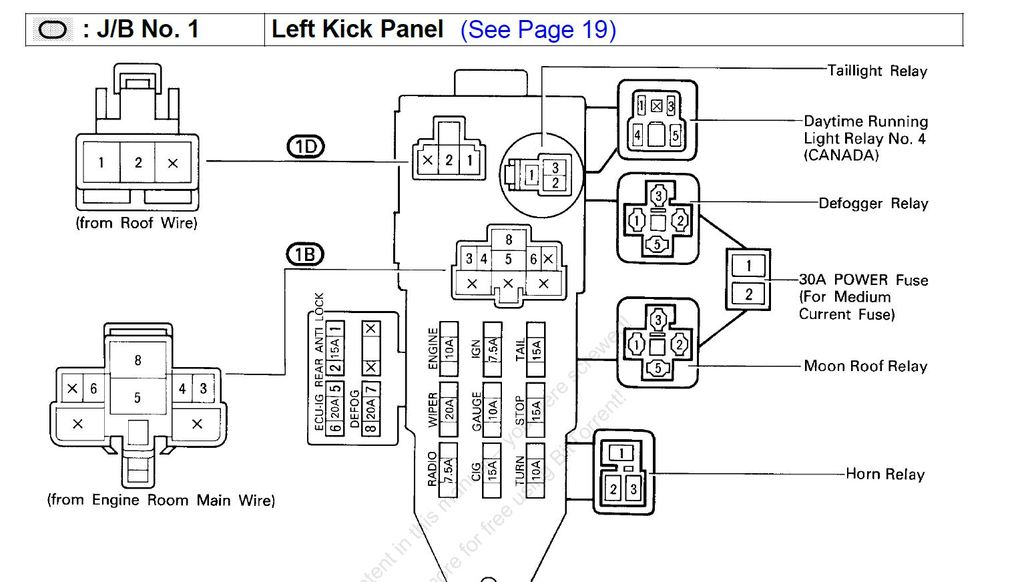
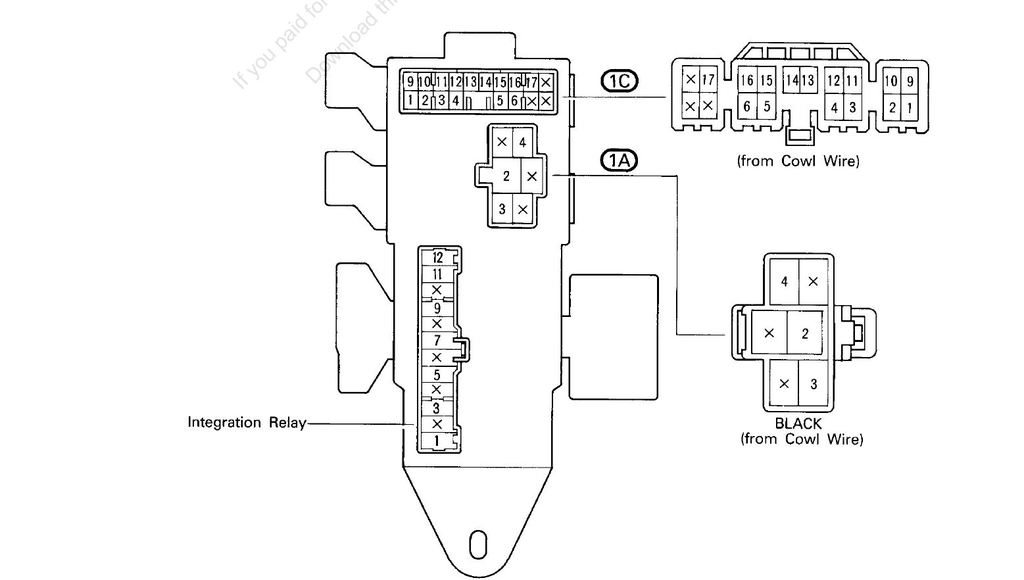
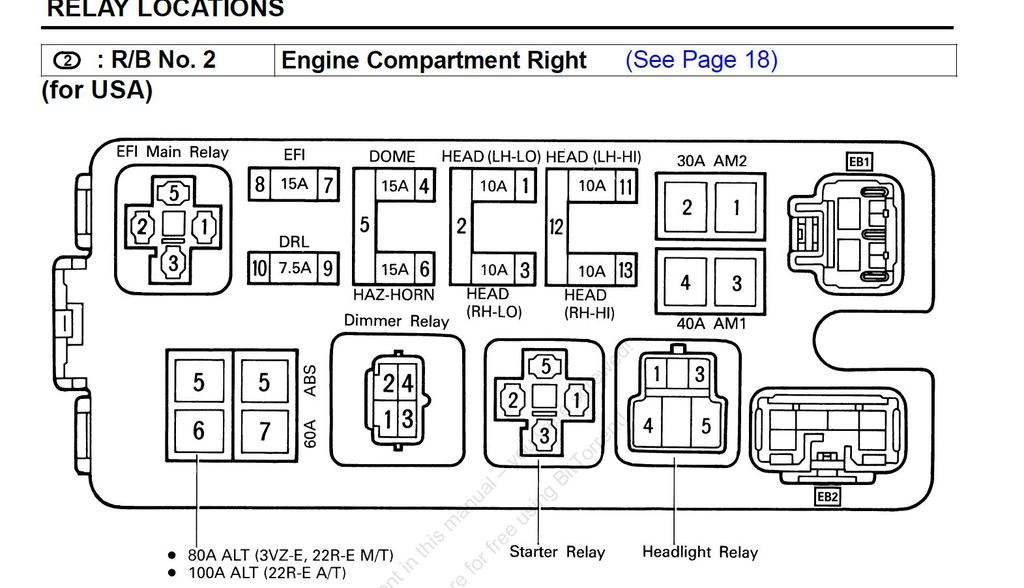
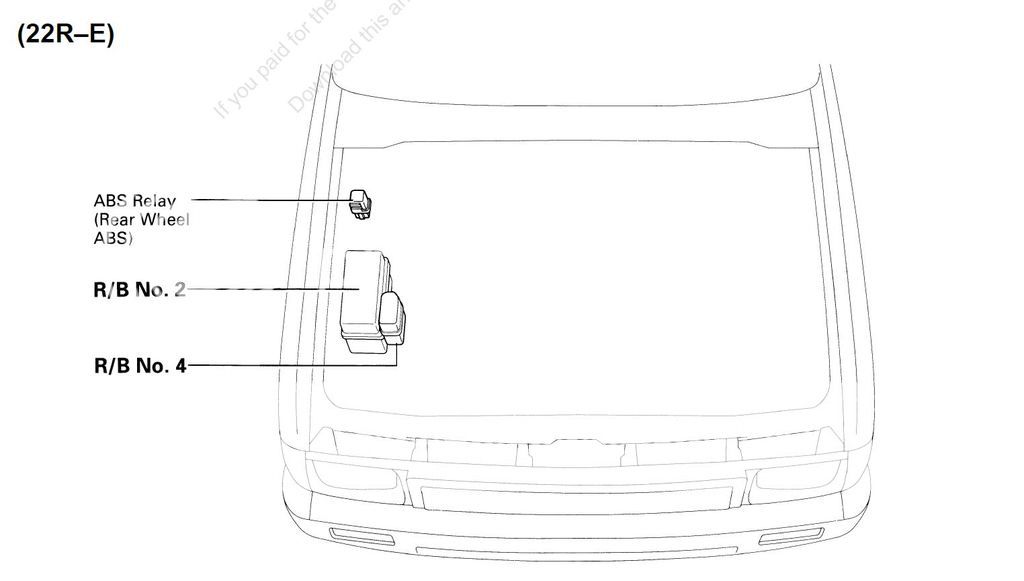
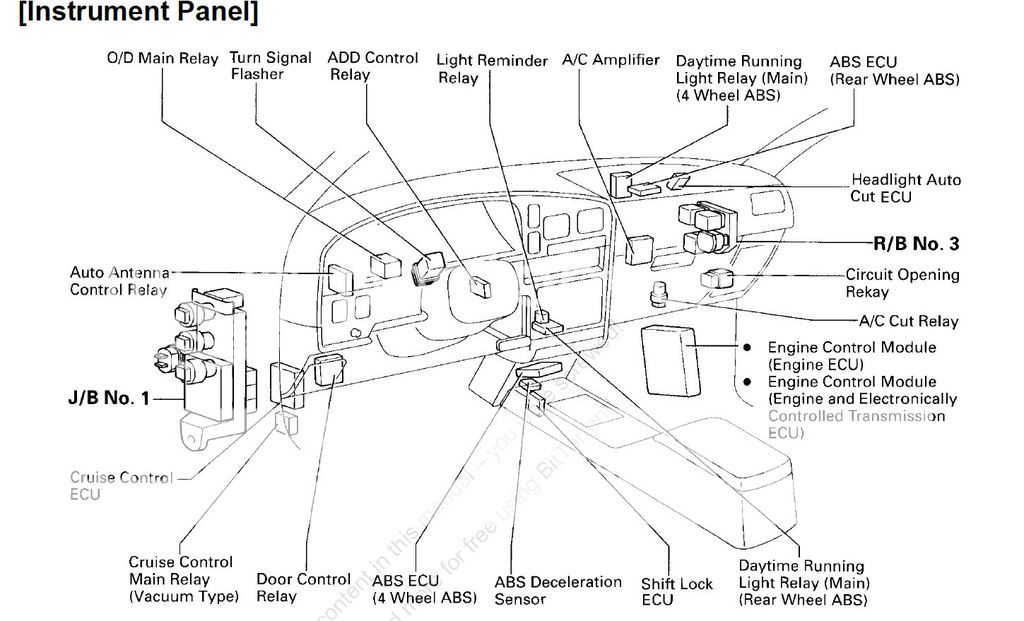
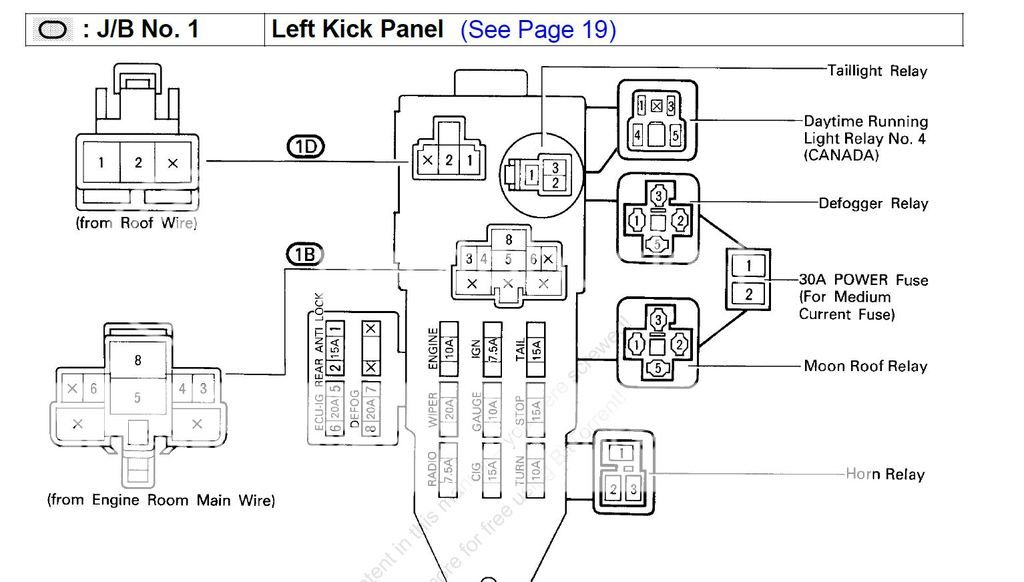
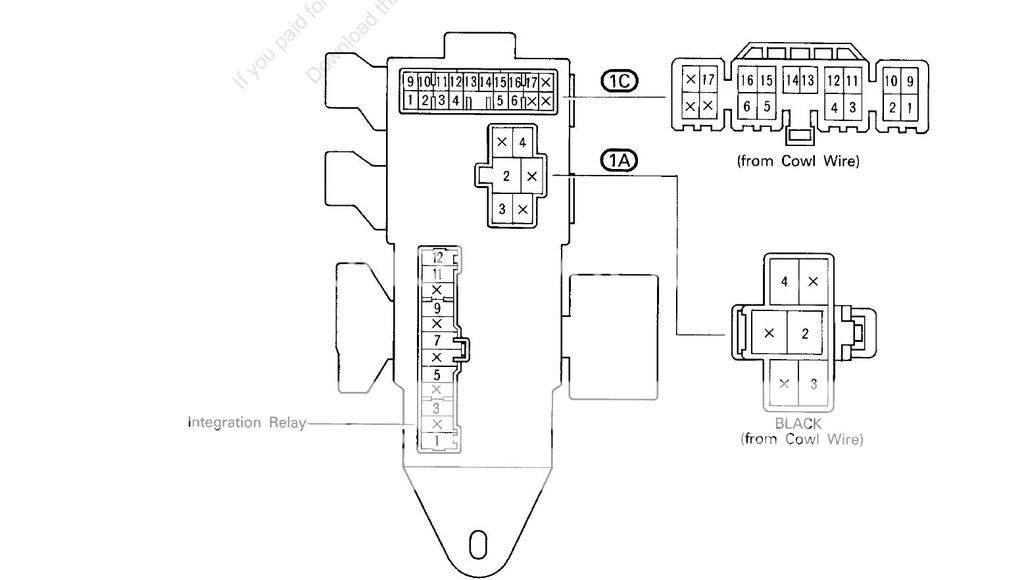
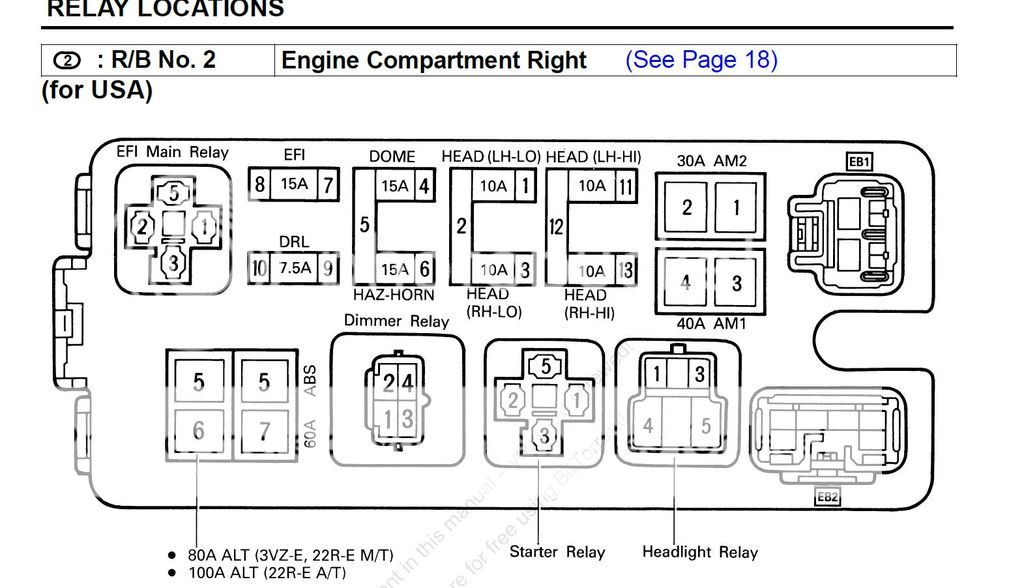
Also, I found this in my 4runner fsm on my computer. I found it weird that the starter relay was in the kick panel. On my truck mine was under the steering column I'm pretty sure. But then I found this.
According to this, it should be in your junction box? In the engine compartment. I don't wanna throw shade, but I wonder if the guy used a starter relay in the kicker panel fuse box, as a replacement for whatever was in there just because it worked? Sorry, if I'm completely off base. This is from the 1990-1995 4Runner FSM I have.
I know it's kind of a pain, but could you look at post #13, and list off everything you checked/replaced that you are almost 100% sure is not the issue. Just wanna be on the same page, so we're not goin in circles.
I don't know how I missed that post..
Ok, so my issue would fall under "Engine will not crank"
Battery Charge low: it was at 12.24V after multiple attempts to start the vehicle and sitting for a couple weeks without running. (I charged the battery this morning and at 13V has no issue starting). Battery Cables loose or worn: The cables have been inspected and cleaned, no visible corrosion found at contact points between cables and battery post. Starter Relay Faulty: The relay has been replaced and I get a Starter Solenoid clicking sound every time (I guess there could be a chance the wires between the relay and starter or ignition switch could be an issue). Clutch Start Switch Faulty: The starter solenoid is clicking every time. Fusible link blown: I doubt the fusible link is blown because I'm getting the starter solenoid click every time, but I guess it's possible to have a connection issue or maybe corrosion on the fusible link? Starter Faulty: This is always a possibility, but after 3 new Toyota OEM starters I'm very skeptical this is the issue (but maybe the real issue is causing damage to the starter?) Ignition Switch Faulty: The ignition switch has not yet been replaced or bypassed. This is a possibility.
Orange = likely Yellow = less likely Green = not likely (but possible)
Also, I found this in my 4runner fsm on my computer. I found it weird that the starter relay was in the kick panel. On my truck mine was under the steering column I'm pretty sure. But then I found this.
According to this, it should be in your junction box? In the engine compartment. I don't wanna throw shade, but I wonder if the guy used a starter relay in the kicker panel fuse box, as a replacement for whatever was in there just because it worked? Sorry, if I'm completely off base. This is from the 1990-1995 4Runner FSM I have.
Very interesting. I'm now even more confused as to why the starter relay is inside the vehicle on the drivers kick panel?? Here's the fuse box under the hood... Further inspection is needed.
Fuse box under the hood on my 1991 Toyota 22RE 4Runner.
Yes, do checksa as cr@ves4wheelin says above.
However, above schematics confirms that his layout is different from yours. So we do not get confused ignore the above schematics. Let's work on actual, physical relay and socket that you have.
Got a multi-meter? I'll show you need to probe.
Also...
Had 3 OEM starters over the past 2 years. Battery tested good, starter relay was replaced...
Toyota components are almost always bullet-proof. Most problems arise from the way things are wire, maintained, assembled. People/shop/mechs who replace them over and over without actually making sure they are bad do not now what they are doing.
Gt a multi-meter.
Last edited by RAD4Runner; Jun 11, 2017 at 11:35 AM.
Okay, disregard my post about the fuse box then, because I think that must be for a 1992 -1995.
Originally Posted by JPL
I don't know how I missed that post..
Ok, so my issue would fall under "Engine will not crank"
Battery Charge low: it was at 12.24V after multiple attempts to start the vehicle and sitting for a couple weeks without running. (I charged the battery this morning and at 13V has no issue starting). Battery Cables loose or worn: The cables have been inspected and cleaned, no visible corrosion found at contact points between cables and battery post. Starter Relay Faulty: The relay has been replaced and I get a Starter Solenoid clicking sound every time (I guess there could be a chance the wires between the relay and starter or ignition switch could be an issue). Clutch Start Switch Faulty: The starter solenoid is clicking every time. Fusible link blown: I doubt the fusible link is blown because I'm getting the starter solenoid click every time, but I guess it's possible to have a connection issue or maybe corrosion on the fusible link? Starter Faulty: This is always a possibility, but after 3 new Toyota OEM starters I'm very skeptical this is the issue (but maybe the real issue is causing damage to the starter?) Ignition Switch Faulty: The ignition switch has not yet been replaced or bypassed. This is a possibility.
Orange = likely Yellow = less likely Green = not likely (but possible)
I have suggestions, might be back tracking.
Battery, Cables, and starter I believe can be ruled out.
Starter Relay verified, so I guess that can be ruled out, wish I had some sort of documentation. But I don't.
There's a clutch start switch, and a clutch start cancel switch. Ignore the cancel switch on the dash, and look under the dash where the clutch pedal is resting. There should be a switch if you follow the clutch pedal up, and it's just a little plunger thing that has a spring inside that makes it pop out when you push the pedal in and I would verify it does. The cancel switch on the dash wouldn't affect anything, broken or not.
The fusible link can very well have corrosion where the fuse touches the ends on the inside. but if the starter relay isn't in the engine compartment (like Terry posted earlier, which matches what my manual says where it's supposed to be), then there wouldn't be a fusible link.
If all else checks out I would see how much an ignition switch is. What is it like $30 at o'reillys I think?
After all that, then I would go over the Previous Owners wiring for sure, but only as a last resort.
Hope that helps.
Last edited by cr@ves4wheelin; Jun 11, 2017 at 11:23 AM.
Also please post:
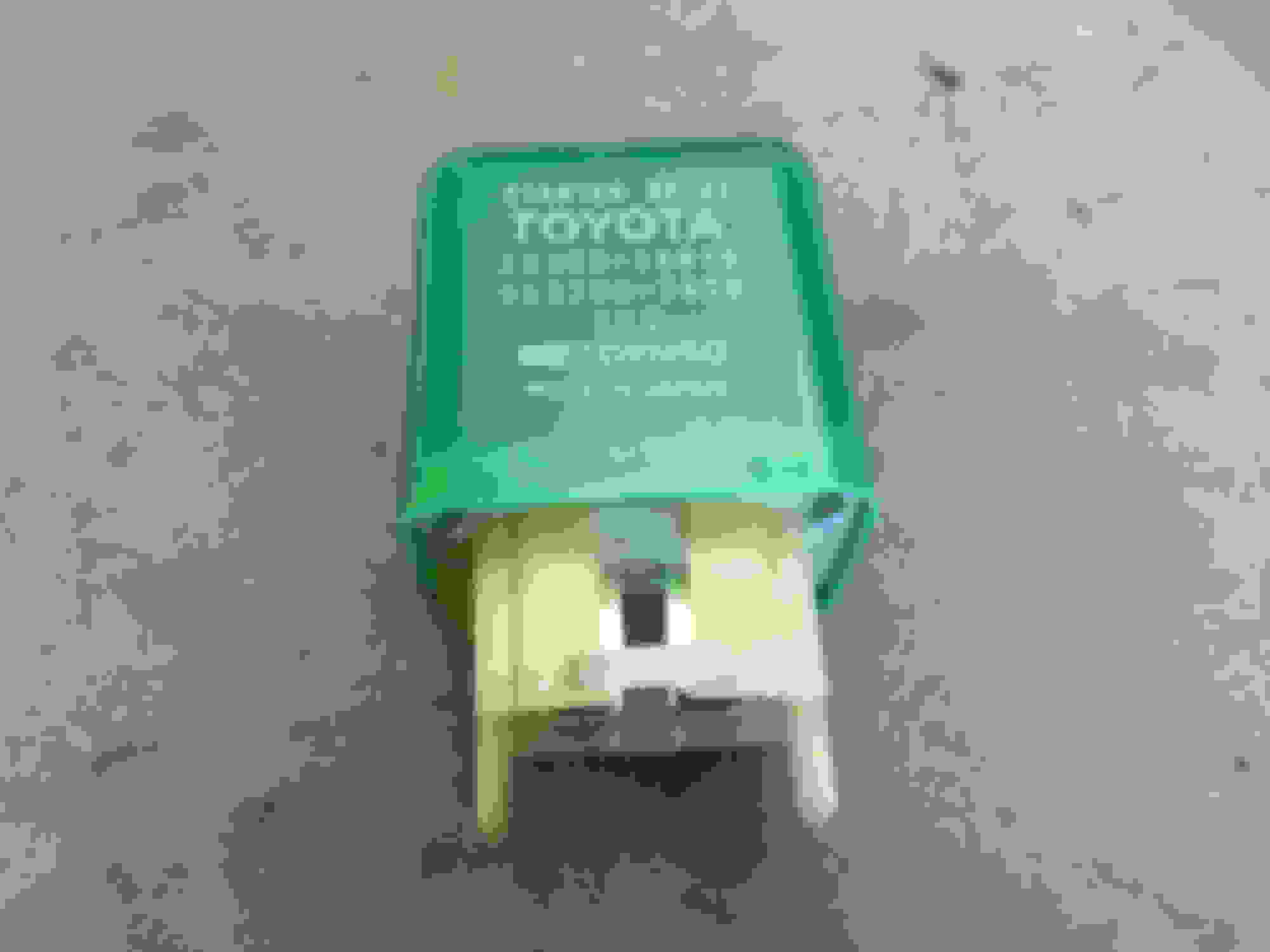
1) Close up picture of starter relay AND relay socket.
2) Schematic on relay housing please post, i present
3) Exactly where each pin of the relay goes into the socket if known.
4) Finally, beg someone in forum to share his schematic for EXACTLY same model as your truck.
There's no schematic on the relay as there should be. The wires off the back of the Starter Relay socket match the color code of the wiring diagram posted earlier with: first pin/wire (Black) going to Ignition Switch, second pin/wire (Black) going to Ignition Switch, third pin/wire (Black-Red/Black-Red) two wires going to Clutch pedal switch and Clutch Cancel switch, and fourth pin/wire (Black-White) going to Starter, Cold start injector, and Start Injector time switch.
Yes, do checksa as cr@ves4wheelin says above.
However, above schematics confirms that his layout is different from yours. So we do not get confused ignore the above schematics. Let's work on actual, physical relay and socket that you have.
Got a multi-meter? I'll show you need to probe.
Also...
Toyota components are almost always bullet-proof. Most problems arise from the way things are wire, maintained, assembled. People/shop/mechs who replace them over and over without actually making sure they are bad do not now what they are doing.
Gt a multi-meter.
I have a multi-meter. What should I test on the relay socket?
Post #9 Guy has the same thing as far as the relay location goes. That's all I came up with.
This seems to match my setup. Wish it gave more detail such as wire color and where each wire connects. I'm pretty sure the wire schematic posted earlier matches mine even though the location of the starter is different.
Okay, disregard my post about the fuse box then, because I think that must be for a 1992 -1995.
I have suggestions, might be back tracking.
Battery, Cables, and starter I believe can be ruled out.
Starter Relay verified, so I guess that can be ruled out, wish I had some sort of documentation. But I don't.
There's a clutch start switch, and a clutch start cancel switch. Ignore the cancel switch on the dash, and look under the dash where the clutch pedal is resting. There should be a switch if you follow the clutch pedal up, and it's just a little plunger thing that has a spring inside that makes it pop out when you push the pedal in and I would verify it does. The cancel switch on the dash wouldn't affect anything, broken or not.
The fusible link can very well have corrosion where the fuse touches the ends on the inside. but if the starter relay isn't in the engine compartment (like Terry posted earlier, which matches what my manual says where it's supposed to be), then there wouldn't be a fusible link.
If all else checks out I would see how much an ignition switch is. What is it like $30 at o'reillys I think?
After all that, then I would go over the Previous Owners wiring for sure, but only as a last resort.
Hope that helps.
I checked the Clutch pedal switch and it looks good.. making contact when pedal is pressed down and it springs back when pedal comes up. If I don't find anything obvious today I'll likely order a new ignition switch (Mine is worn out.. if it fixes the problem then that's a bonus). I can easily remove the dash and expose as much of the wiring harness as possible, but that's certainly my last resort (It's my second/hardly ever used vehicle).
You know, if it was my truck, and if I was really in a bind. I'd grab the starter relay schematic, and solder a temporary jumper wire to the one wire (Black-White wire possibly) from the relay that goes to the starter solenoid. I know it's redneck, but at least you'd have a something that'd start everytime without worrying bout being stuck if it's your daily driver.
You know, if it was my truck, and if I was really in a bind. I'd grab the starter relay schematic, and solder a temporary jumper wire to the one wire (Black-White wire possibly) from the relay that goes to the starter solenoid. I know it's redneck, but at least you'd have a something that'd start everytime without worrying bout being stuck if it's your daily driver.
I would always, as a last resort, jump the starter directly. I've done it in the past, but not on this vehicle. I would rather use that option as a last resort.. I thought about possibly having some sort of toggle switch setup between the battery and starter that way I would bypass everything! Let's hope it doesn't come to that.
Question: Does the Black wire going from the Starter relay and Ignition Switch connect directly to the Starter? (see picture below) Since mine is not an automatic and doesn't have a Neutral Start switch.. does that wire connect directly with a manual setup?
I would always, as a last resort, jump the starter directly. I've done it in the past, but not on this vehicle. I would rather use that option as a last resort.. I thought about possibly having some sort of toggle switch setup between the battery and starter that way I would bypass everything! Let's hope it doesn't come to that.
Question: Does the Black wire going from the Starter relay and Ignition Switch connect directly to the Starter? (see picture below) Since mine is not an automatic and doesn't have a Neutral Start switch.. does that wire connect directly with a manual setup?
I'd assume that circuit does not exist on your vehicle.
Last edited by cr@ves4wheelin; Jun 11, 2017 at 12:12 PM.
Would it make sense to run a temporary wire replacing the Black-White wire between the Starter Relay and Starter? Or could the current limit be on the Ignition Switch side? or both........?
Not replacing, but merely giving the electricity another path of travel to get to the starter solenoid. If nothing was wrong with the electrical circuit after the starter relay side, then it would work. Given everything before the starter relay was getting power. It would also confirm that everything before the starter relay is good. I wouldn't cut any wires though, would strip the coating off though, you could always black tape it or something later. It's up to you though, not really recommended from my part.
Not replacing, but merely giving the electricity another path of travel to get to the starter solenoid. If nothing was wrong with the electrical circuit after the starter relay side, then it would work. Given everything before the starter relay was getting power. It would also confirm that everything before the starter relay is good. I wouldn't cut any wires though, would strip the coating off though, you could always black tape it or something later. It's up to you though, not really recommended from my part.
I agree! I was thinking about actually removing the factory wire from the Relay socket and crimping on a new wire so I wouldn't have to cut or splice anything. I think the next step would be to test voltage and continuity on each wire coming off the Relay Socket, but that would require a second person (so I can measure and read the multi-meter when turning the ignition. I may not have fixed it yet, but I think we've canceled out a good number of variables.



 Jun 11, 2017 | 10:34 AM