


1st gen 4Runner ('89) won't start...
 Jan 18, 2005 | 09:02 AM
#1

Thread Starter
Registered User
Joined: May 2004
Posts: 154
Likes: 0
From: Kill Devil Hills (Colington Harbour), NC
1st gen 4Runner ('89) won't start...
The other day, it was raining really hard. When it does here, the whole road is covered some places. I stopped at the bank, shut it off, did my business and started it back up, no problem. But, as I was driving, I started to hear a clicking sound. It seemed like it was coming from straight ahead of me in the engine compartment. I only drove about a mile to a restaurant and shut it off. I tried to restart it and it wouldn't start. I left it there overnight. When I returned the next day, it started right up, but was idling fast. I drove down the road another short distance and stopped at a store. It continued to idle fast...something was telling me I should let it running...but I shut it off. When I came back out, it wouldn't restart again. I SORT OF sounds like a weak battery. I came back and tried to jump start it and it still wouldn't start. Could it be the alternator, starter? I'm sure it has something to do with something getting wet that shouldn't have. Some wiring maybe? I don't know, but it's still sitting there and towing and mechanics here are priced outrageously, so I'd rather get it figured out somehow myself. At the moment, I'm thinking starter....but would it still TRY to start (sounds like it's dying) if it were the starter? Any help would be greatly appreciated!
Thanks,
Shawn
Thanks,
Shawn
Jan 18, 2005 | 07:08 PM
#3
Registered User
Joined: Mar 2004
Posts: 1,421
Likes: 2
From: Oceanside, CA.
I dont think its the starter because there is NO reason that you would here it clicking while you are driving.
I believe your dad is on the right track because both the toyota's I have owned '86 and a '89 have had problems with water getting into the front spark plug wire on the distributor when its raining really heavy.
Some questions though. Does the motor crank at normal speed when you try to start it, or does it struggle to turn the motor over??????
Do you have a volt meter that you can check the alternator output with?
I believe your dad is on the right track because both the toyota's I have owned '86 and a '89 have had problems with water getting into the front spark plug wire on the distributor when its raining really heavy.
Some questions though. Does the motor crank at normal speed when you try to start it, or does it struggle to turn the motor over??????
Do you have a volt meter that you can check the alternator output with?
Jan 18, 2005 | 07:21 PM
#4
Thread Starter
Registered User
Joined: May 2004
Posts: 154
Likes: 0
From: Kill Devil Hills (Colington Harbour), NC
Originally Posted by SoCal4Running
I dont think its the starter because there is NO reason that you would here it clicking while you are driving.
I believe your dad is on the right track because both the toyota's I have owned '86 and a '89 have had problems with water getting into the front spark plug wire on the distributor when its raining really heavy.
Some questions though. Does the motor crank at normal speed when you try to start it, or does it struggle to turn the motor over??????
Do you have a volt meter that you can check the alternator output with?
I believe your dad is on the right track because both the toyota's I have owned '86 and a '89 have had problems with water getting into the front spark plug wire on the distributor when its raining really heavy.
Some questions though. Does the motor crank at normal speed when you try to start it, or does it struggle to turn the motor over??????
Do you have a volt meter that you can check the alternator output with?
The motor cranks at about half speed, it struggles to try to turn over. What does that tell you?
I DO have a volt meter somewhere. I'll have to try and find it (since we moved) and take it to work with me tomorrow so I can check it after work.
A guy my dad talked to about it ALSO thinks it's the starter, which got wet and NOW frozen. I have a lot of trouble shooting to do. Part of me still thinks it could be the starter b/c the rubber/cover in the wheel well right by the starter came loose and was hanging down, allowing a lot of extra water to get right in to the starter...plus, being on the passenger side, where most of the water/puddles were that I hit.
Last edited by Amocat00; Jan 18, 2005 at 07:23 PM.
Jan 18, 2005 | 08:07 PM
#5

Registered User
Joined: Jan 2005
Posts: 149
Likes: 0
From: Bozeman, MT
I would like to think that it is the starter but the clicking noice dosen't make since. If i were you I would test the starter with a meter gague and see if it reads if it dose then it is the distributor caps that got wet and those will just take time to dry out.
Jan 18, 2005 | 08:59 PM
#6

As I posted on 4x4Wire:
And the web page link that I posted there as well:
http://www.4crawler.com/4x4/CheapTricks/Starter.shtml
The clicking you hear is likely the circuit opening relay, it sits behond the ECU and does turn on when the key is in the start position. It always clicks, but since the starter is usually running then, you never hear it. The ECU is all solid state and does not may any sound.
As noted on my web page, get out a volt meter and measure the voltage at the starter solenoid control wire while trying to start (that is the small wire) and see if it is close to the battery voltage then (within 0.5 volts). If not the problem is upstream from the starter (connecions, wiring, relay and or ignition switch). If ithe voltage is good, see what the voltage at the big wire on the starter is. It too should be strong (same as the battery). If it drops low, then the problem is in the wire to the battery. If all that checks out, the problem is inside the solenoid. The solenoid does two things on the Denso starter:
#1 It makes the electrical contact to send power from the battery to the starter motor, via the copper contacts inside the solenoid.
#2 The solenoid pushes out the bendix gear to engage the flywheel and that is what lets the starter turn the engine over.
Two problems that can crop up, both related to uneven contact wear (and they always seem to wear unevenly) is that the plunger contact ring can't hit both contacts evenly, one being lower than the other due to the wear. When this happens, there is no electircal contact and no current can flow. Also, since the plunger is a tight fit inside the bore of the solenoid, it gets "cocked" in the bore and sticks before pushing the bendix gear all the way out. The easy and inexpensive fix for these problems is to pull the starter out, open up the solenoid cover and look inside. If the contacts are worn, it is visibly evident and the repair is to remove the old worn ones and install new ones. Button it back up, install the starter, hook up the wires and it is as good as new.
But it is important to first do the detective work and find out where the problem is. Throwing a new (usually rebuilt) starter in there for $200 or so is usually a big waste of money. Taking the truck to a shop (where they will usually throw in a rebuilt starter) is an even bigger waste of money.
As noted on my web page, get out a volt meter and measure the voltage at the starter solenoid control wire while trying to start (that is the small wire) and see if it is close to the battery voltage then (within 0.5 volts). If not the problem is upstream from the starter (connecions, wiring, relay and or ignition switch). If ithe voltage is good, see what the voltage at the big wire on the starter is. It too should be strong (same as the battery). If it drops low, then the problem is in the wire to the battery. If all that checks out, the problem is inside the solenoid. The solenoid does two things on the Denso starter:
#1 It makes the electrical contact to send power from the battery to the starter motor, via the copper contacts inside the solenoid.
#2 The solenoid pushes out the bendix gear to engage the flywheel and that is what lets the starter turn the engine over.
Two problems that can crop up, both related to uneven contact wear (and they always seem to wear unevenly) is that the plunger contact ring can't hit both contacts evenly, one being lower than the other due to the wear. When this happens, there is no electircal contact and no current can flow. Also, since the plunger is a tight fit inside the bore of the solenoid, it gets "cocked" in the bore and sticks before pushing the bendix gear all the way out. The easy and inexpensive fix for these problems is to pull the starter out, open up the solenoid cover and look inside. If the contacts are worn, it is visibly evident and the repair is to remove the old worn ones and install new ones. Button it back up, install the starter, hook up the wires and it is as good as new.
But it is important to first do the detective work and find out where the problem is. Throwing a new (usually rebuilt) starter in there for $200 or so is usually a big waste of money. Taking the truck to a shop (where they will usually throw in a rebuilt starter) is an even bigger waste of money.
http://www.4crawler.com/4x4/CheapTricks/Starter.shtml
Jan 19, 2005 | 02:08 PM
#7
Thread Starter
Registered User
Joined: May 2004
Posts: 154
Likes: 0
From: Kill Devil Hills (Colington Harbour), NC
I took apart the distributor (cap?). It looked ok, from my minimal knowledge.... WITH it apart, I tried to start it and it still did the same thing...turned ignition, cranked at about half of normal....
I guess the starter is next.....
I guess the starter is next.....
Trending Topics
Jan 20, 2005 | 05:32 PM
#8
Thread Starter
Registered User
Joined: May 2004
Posts: 154
Likes: 0
From: Kill Devil Hills (Colington Harbour), NC
I took the distributor cap off again. I cleaned out the inside/points and put it back on...same result. So, I spent 3 hours (!) removing the starter. I'm taking it to Napa Auto Parts to be tested tomorrow....I'll post results. All I know is if it's NOT the starter, I'm gonna be p!ssed, spending all that time removing it and having to spend almost as much to put it back on. Wish me luck!
~S
~S
Jan 20, 2005 | 07:32 PM
#9
The distibutor will NOT prevent the starter from turning over the engine. If the engine is not turning over, figure out why the starter is not working.
Why not just remove the 3 screws holding the solenoid cap in place on the starter and have a look? One glance would tell you if the contacts were good or not. And did you test the voltages before spending 3 hours removing the starter? If they tested OK, you could have saved the time with the starter removal.
Why not just remove the 3 screws holding the solenoid cap in place on the starter and have a look? One glance would tell you if the contacts were good or not. And did you test the voltages before spending 3 hours removing the starter? If they tested OK, you could have saved the time with the starter removal.
Jan 22, 2005 | 10:00 AM
#10
Thread Starter
Registered User
Joined: May 2004
Posts: 154
Likes: 0
From: Kill Devil Hills (Colington Harbour), NC
Originally Posted by 4Crawler
The distibutor will NOT prevent the starter from turning over the engine. If the engine is not turning over, figure out why the starter is not working.
Why not just remove the 3 screws holding the solenoid cap in place on the starter and have a look? One glance would tell you if the contacts were good or not. And did you test the voltages before spending 3 hours removing the starter? If they tested OK, you could have saved the time with the starter removal.
Why not just remove the 3 screws holding the solenoid cap in place on the starter and have a look? One glance would tell you if the contacts were good or not. And did you test the voltages before spending 3 hours removing the starter? If they tested OK, you could have saved the time with the starter removal.
Jan 24, 2005 | 02:57 PM
#11
Thread Starter
Registered User
Joined: May 2004
Posts: 154
Likes: 0
From: Kill Devil Hills (Colington Harbour), NC
Originally Posted by 4Crawler
The distibutor will NOT prevent the starter from turning over the engine. If the engine is not turning over, figure out why the starter is not working.
Why not just remove the 3 screws holding the solenoid cap in place on the starter and have a look? One glance would tell you if the contacts were good or not. And did you test the voltages before spending 3 hours removing the starter? If they tested OK, you could have saved the time with the starter removal.
Why not just remove the 3 screws holding the solenoid cap in place on the starter and have a look? One glance would tell you if the contacts were good or not. And did you test the voltages before spending 3 hours removing the starter? If they tested OK, you could have saved the time with the starter removal.
Thanks,
Shawn
Jan 24, 2005 | 03:00 PM
#12
You can usually sand the ring on the plunger smooth and it'll be good to go back in. The contacts generally need to be replaced, one or both as needed:
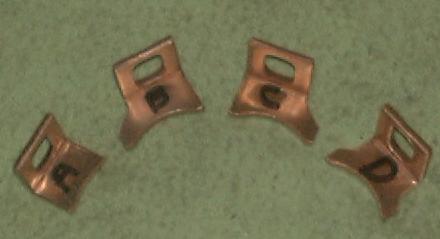
Copper contact info...
http://4Crawler.com/4x4/CheapTricks/...OnlineOrdering
Copper contact info...
http://4Crawler.com/4x4/CheapTricks/...OnlineOrdering
Jan 29, 2005 | 01:29 PM
#15
Did you do the troubleshooting I suggested?
http://www.4crawler.com/4x4/CheapTri...l#OtherOptions
I would wager the voltage present at the small solenoid control wire is way low when you turn the key. If that is the case, then the problem is NOT in the starter. It is in the wiring and components between the starter and the ignition switch. Not uncommon the that small wire to corrode up under the insulation, or the connector is dirty or the starter relay (if you have one) is flakey, or most likely the STA contact in the ignition switch is tired. Severl fixes for that are listed on my web page.
http://www.4crawler.com/4x4/CheapTri...l#OtherOptions
I would wager the voltage present at the small solenoid control wire is way low when you turn the key. If that is the case, then the problem is NOT in the starter. It is in the wiring and components between the starter and the ignition switch. Not uncommon the that small wire to corrode up under the insulation, or the connector is dirty or the starter relay (if you have one) is flakey, or most likely the STA contact in the ignition switch is tired. Severl fixes for that are listed on my web page.
Jan 29, 2005 | 01:40 PM
#16

Registered User
Joined: Jul 2004
Posts: 420
Likes: 0
From: lenoir, NC
check the battery cables.. mine use to do that and my cables were old and had breaks in them and i couldnt get enuff power to the starter.. make sure all contacts are clean and your cables are good...if that not it..i say its your ignition 
Jan 29, 2005 | 01:41 PM
#17
Thread Starter
Registered User
Joined: May 2004
Posts: 154
Likes: 0
From: Kill Devil Hills (Colington Harbour), NC
Originally Posted by 4Crawler
Did you do the troubleshooting I suggested?
http://www.4crawler.com/4x4/CheapTri...l#OtherOptions
I would wager the voltage present at the small solenoid control wire is way low when you turn the key. If that is the case, then the problem is NOT in the starter. It is in the wiring and components between the starter and the ignition switch. Not uncommon the that small wire to corrode up under the insulation, or the connector is dirty or the starter relay (if you have one) is flakey, or most likely the STA contact in the ignition switch is tired. Severl fixes for that are listed on my web page.
http://www.4crawler.com/4x4/CheapTri...l#OtherOptions
I would wager the voltage present at the small solenoid control wire is way low when you turn the key. If that is the case, then the problem is NOT in the starter. It is in the wiring and components between the starter and the ignition switch. Not uncommon the that small wire to corrode up under the insulation, or the connector is dirty or the starter relay (if you have one) is flakey, or most likely the STA contact in the ignition switch is tired. Severl fixes for that are listed on my web page.
Originally Posted by 4Crawler on 4x4Wire.com:
Did you do the troubleshooting I suggested?
http://www.4crawler.com/4x4/CheapTri...l#OtherOptions
I would wager the voltage present at the small solenoid control wire is way low when you turn the key. If that is the case, then the problem is NOT in the starter. It is in the wiring and components between the starter and the ignition switch. Not uncommon the that small wire to corrode up under the insulation, or the connector is dirty or the starter relay (if you have one) is flakey, or most likely the STA contact in the ignition switch is tired. Severl fixes for that are listed on my web page.
http://www.4crawler.com/4x4/CheapTri...l#OtherOptions
I would wager the voltage present at the small solenoid control wire is way low when you turn the key. If that is the case, then the problem is NOT in the starter. It is in the wiring and components between the starter and the ignition switch. Not uncommon the that small wire to corrode up under the insulation, or the connector is dirty or the starter relay (if you have one) is flakey, or most likely the STA contact in the ignition switch is tired. Severl fixes for that are listed on my web page.
Thanks,
Shawn
Last edited by Amocat00; Jan 29, 2005 at 01:44 PM.
Jan 30, 2005 | 08:30 AM
#18
Just trying to make sure you get the message. When I see the same post on different boards, I don't know which you or others will see or read first, so I post the same answer to the same question. You might see both replies, but some folks who are not on all the different forums may not see my reply on one forum that they are not subscribed to.
And just trying to save you time and money by helping you find the cause of your problem. You *REALLY* need to do the simple voltage checks, under load, to find where the problem is. It will just take a few minutes to do. And I am not making this up, I am quoting the Toyota Factory Service Manual on the tests and results.
And just trying to save you time and money by helping you find the cause of your problem. You *REALLY* need to do the simple voltage checks, under load, to find where the problem is. It will just take a few minutes to do. And I am not making this up, I am quoting the Toyota Factory Service Manual on the tests and results.
Last edited by 4Crawler; Jan 30, 2005 at 08:33 AM.
Jan 30, 2005 | 08:38 AM
#19
Thread Starter
Registered User
Joined: May 2004
Posts: 154
Likes: 0
From: Kill Devil Hills (Colington Harbour), NC
Originally Posted by 4Crawler
Just trying to make sure you get the message. When I see the same post on different boards, I don't know which you or others will see or read first, so I post the same answer to the same question. You might see both replies, but some folks who are not on all the different forums may not see my reply on one forum that they are not subscribed to.
And just trying to save you time and money by helping you find the cause of your problem. You *REALLY* need to do the simple voltage checks, under load, to find where the problem is. It will just take a few minutes to do. And I am not making this up, I am quoting the Toyota Factory Service Manual on the tests and results.
And just trying to save you time and money by helping you find the cause of your problem. You *REALLY* need to do the simple voltage checks, under load, to find where the problem is. It will just take a few minutes to do. And I am not making this up, I am quoting the Toyota Factory Service Manual on the tests and results.
Thanks,
Shawn
Jan 31, 2005 | 06:09 PM
#20
Thread Starter
Registered User
Joined: May 2004
Posts: 154
Likes: 0
From: Kill Devil Hills (Colington Harbour), NC
fuel pump
I replaced the fuel pump today. Then it started right up!.....BUT, it idled very fast and started to overheat within five minutes...so I shut it off. And, guess what!? It started doing the same thing, not starting, making the same half cranking sound. What's up with this thing?
~S
~S


