


My first!! Toyota 4x4
 Feb 27, 2020 | 10:56 AM
#1

Thread Starter
Registered User
Joined: Feb 2020
Posts: 130
Likes: 27
From: Florence ky
My first!! Toyota 4x4
Hello to all, my name is Jake
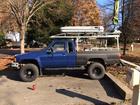
Back in the day my grandpa had 2 Toyota 4x4,(not at the same time) the first one was the tan color I would guess to be a 1980 and the second one I would say it was a 1985. (Also tan) Both were bought brand new and used for everything including being a farm truck so I got to see how capable these trucks are way back then. I’ve always wanted one ever since. My oldest brother bought a brand new 94 which was the last of the good ones. I love these old trucks because of how small and capable they are. I’ve looked on and off for years and finally started looking more seriously a year or so ago. Finally found a 1990 Toyota 4x4 in pretty good shape and very little if any rust. The frame looks great, I see a bit of rust forming behind the pass rear wheel if you look under the bottom of the quarter. 1 other spot in front of the pass rocker. (surface only) The truck runs and drives great. Just wanted to get on here and let everyone know I’m now part of the family. I’m stoked!! I’ve wanted one of these trucks bad for years. Looking forward to taking it off road a bit for sure. Oh yea it has Mickey Thompson wheels and tires!! Tires are a bit big for my taste so I’ll be looking to get a set of tires that are closer to the stock width. Perhaps a set of 31-9.5-15s or 29-9.5-15 I’m not sure what will look best. For now it’s time to service the engine,trans,transfer case,& both diffs with some good stuff. I will have to figure out what goes in each. I do know I’ll use mobile 1 engine oil not sure what to use in any of the others yet. Time for some research.
Back in the day my grandpa had 2 Toyota 4x4,(not at the same time) the first one was the tan color I would guess to be a 1980 and the second one I would say it was a 1985. (Also tan) Both were bought brand new and used for everything including being a farm truck so I got to see how capable these trucks are way back then. I’ve always wanted one ever since. My oldest brother bought a brand new 94 which was the last of the good ones. I love these old trucks because of how small and capable they are. I’ve looked on and off for years and finally started looking more seriously a year or so ago. Finally found a 1990 Toyota 4x4 in pretty good shape and very little if any rust. The frame looks great, I see a bit of rust forming behind the pass rear wheel if you look under the bottom of the quarter. 1 other spot in front of the pass rocker. (surface only) The truck runs and drives great. Just wanted to get on here and let everyone know I’m now part of the family. I’m stoked!! I’ve wanted one of these trucks bad for years. Looking forward to taking it off road a bit for sure. Oh yea it has Mickey Thompson wheels and tires!! Tires are a bit big for my taste so I’ll be looking to get a set of tires that are closer to the stock width. Perhaps a set of 31-9.5-15s or 29-9.5-15 I’m not sure what will look best. For now it’s time to service the engine,trans,transfer case,& both diffs with some good stuff. I will have to figure out what goes in each. I do know I’ll use mobile 1 engine oil not sure what to use in any of the others yet. Time for some research.


 Feb 27, 2020 | 01:56 PM
#3
Registered User


Joined: Jan 2015
Posts: 960
Likes: 147
From: Gaston, OR
Sorry Jake but with @old87yota and myself I think this site has made its Jake quota.
All kidding aside welcome to the site!
All kidding aside welcome to the site!
Feb 27, 2020 | 04:33 PM
#4
Thread Starter
Registered User
Joined: Feb 2020
Posts: 130
Likes: 27
From: Florence ky
Thanks guys, I will have to figure out how to post pics so you can see it. I definitely have a lot to learn about these trucks as well.
Last edited by Jaketheone46; Feb 27, 2020 at 04:36 PM.
Feb 28, 2020 | 01:27 AM
#5
Registered User
Joined: Jun 2013
Posts: 3,112
Likes: 582
From: Portland, Oregon, USA
Sorry Jake but with @old87yota and myself I think this site has made its Jake quota.
All kidding aside welcome to the site!
All kidding aside welcome to the site!

Good thing my user name doesn't have my name in it, otherwise it could get confusing!
Welcome!

Last edited by old87yota; Feb 28, 2020 at 12:01 PM.
 Feb 29, 2020 | 12:05 AM
#7
Thread Starter
Registered User
Joined: Feb 2020
Posts: 130
Likes: 27
From: Florence ky
There are a few jakes on here for sure. If it helps I could always go by Jacob as well.
After all normal maintenance, changing all fluids ETC I want to lock up one of my diffs. I’m a assuming most do the rear but this is a daily so I want something I can install and forget about it. I’ve looked into the spartan, lunchbox type of lockers and they seem like a wearable item?? Is there something I can install for the long haul that will be fine everyday on the street?? Which makes me question would doing the front make more sense being I could use that type of locker up front being I won’t be in 4wd very often at all.
Also tires are priority as well, I have Mickey Thompson 31x10.50x15 currently with no lift and they seem a bit large for my taste, I prefer a thin tire and also wonder if 31” is a bit to tall as well?? I’m thinking 29” perhaps but not even sure if they make a 29” tire. I’m guessing 8.5” wide would look nice. Hopefully my current rims are not to wide. They are Mickey Thompson as well.
Last edited by Jaketheone46; Feb 29, 2020 at 12:17 AM.
Trending Topics
Feb 29, 2020 | 12:39 AM
#8
Thread Starter
Registered User
Joined: Feb 2020
Posts: 130
Likes: 27
From: Florence ky
Hey guys I’m sure it’s been mentioned in this forum many times. But another hobby of mine is the RC hobby. Radio controlled trucks and airplanes as well. But scale trucks are my favorite part of the hobby. Anyway a company called RC4WD makes a totally awesome Toyota scale truck that looks dam good out of the box. I prefer the kits so I get to build my own from the ground up. But they sell them in the ready to run version as well. It’s called the RC4WD Trail finder 2. Check em out if you would ever want a true to scale RC version of your touch. It does look like the early 80s version but it’s awesome with the leaf spring suspension and solid axles.
Mar 1, 2020 | 01:28 AM
#9

Registered User
Joined: Apr 2006
Posts: 382
Likes: 7
From: Always movin
Mar 2, 2020 | 01:11 PM
#10
Thread Starter
Registered User
Joined: Feb 2020
Posts: 130
Likes: 27
From: Florence ky
Mar 5, 2020 | 12:56 AM
#11
Registered User
Joined: Apr 2006
Posts: 382
Likes: 7
From: Always movin
Mar 6, 2020 | 11:33 AM
#12

Registered User
Joined: Jul 2012
Posts: 1,776
Likes: 110
From: Northern Colorado
Concerning lockers, I put an Aussie (lunchbox type) in my front diff and I love it. The only downside is it's a little tricky on snow/ice, but I have other vehicles for primary snow use, so it's not much of an issue for me.
The locker works well on trails. It actually gets up rock ledges better than a rear locker, because the front wheels are pulling you up and over, instead of just being pushed against the ledge by a rear locker.
You'll also need to install manual hubs to accommodate the front locker. The ADD won't completely disengage the front drive shaft with the locker installed, so everything will still be spinning when driving in 2wd unless you can unlock the hubs.
The locker works well on trails. It actually gets up rock ledges better than a rear locker, because the front wheels are pulling you up and over, instead of just being pushed against the ledge by a rear locker.
You'll also need to install manual hubs to accommodate the front locker. The ADD won't completely disengage the front drive shaft with the locker installed, so everything will still be spinning when driving in 2wd unless you can unlock the hubs.
Mar 7, 2020 | 04:05 AM
#15
Thread Starter
Registered User
Joined: Feb 2020
Posts: 130
Likes: 27
From: Florence ky
That’s awesome, from the research I’ve read mine would have come with the hubs that are just always locked unless ordered otherwise. They do work very smooth which is cool. I definitely want to lock front and rear too eventually and am trying to figure out what’s best for each end and which to do first. My concern with these cheaper style ratcheting lockers is wear. The clicks would not bother me but I’ve read good and bad about them wearing and needing replaced. My first thoughts would be some of the bad would be from bad installs.
Mar 7, 2020 | 10:15 AM
#16
Registered User
Joined: Jul 2012
Posts: 1,776
Likes: 110
From: Northern Colorado
Assuming you unlock the front hubs when on pavement, you should never wear out the front auto locker, since it will only be turning when offroad in 4wd. Obviously a rear auto locker will get exercised a lot more. I personally wouldn't put an auto locker in the rear of a daily driver; they're can be noisy and change the cornering characteristics significantly. I'd save up for a switchable locker in the rear, or put in an LSD like the True-Trac. My combination of front auto locker and rear TrueTrac is very effective offroad, and doesn't affect onroad driveability on dry pavement at all.
Mar 8, 2020 | 01:58 PM
#17
Thread Starter
Registered User
Joined: Feb 2020
Posts: 130
Likes: 27
From: Florence ky
Assuming you unlock the front hubs when on pavement, you should never wear out the front auto locker, since it will only be turning when offroad in 4wd. Obviously a rear auto locker will get exercised a lot more. I personally wouldn't put an auto locker in the rear of a daily driver; they're can be noisy and change the cornering characteristics significantly. I'd save up for a switchable locker in the rear, or put in an LSD like the True-Trac. My combination of front auto locker and rear TrueTrac is very effective offroad, and doesn't affect onroad driveability on dry pavement at all.
Here’s a question, I’ve noticed that 3000 rpms seems like your revving the engine pretty good and the peak HP of the 22RE is at like 4600 RPM with a redline of like 6000 RPM and even 4600 RPM seems high to me. I’ve not went above 3200ish maybe 3500 and that seemed like I was ringing it’s neck. Its still pulling at that point but just seems excessive. I have thought about this and think perhaps the extremely flat power curve with the early torque makes it feel like that??? It seems as though it makes the same power from 2000RPM through 32/3500RPM and perhaps all the way to redline but I’ve never came close to that and never will. I’ve noticed you can drive the thing like a diesel. I shift at 2000rpm maybe a bit higher going into 3RD being the 2nd to 3rd gap seems a bit larger than the others. You can seriously lug the thing. If driven at these lower RPMS I could see getting 500k out of one of these engines.
Mar 8, 2020 | 08:25 PM
#18
Registered User
Joined: Jul 2012
Posts: 1,776
Likes: 110
From: Northern Colorado
I've never owned or driven a 22re, but I can say that you definitely have to push the 3ve V6 past 3000 rpm or you won't get anywhere. When accelerating, I upshift my 3vze at 4000 rpm regularly, and also generally run 4000 rpm continuously up the long mountain grades here in Colorado. It'll run all day under those conditions and love it.
The 22re has somewhat bigger pistons and a longer stroke, so may not rev quite as well, but with a redline of 6000 rpm, I wouldn't hesitate to push 4000 when I needed some power.
Low rpm at wide open throttle (ie, "lugging") is not a recipe for extra long engine life. Cylinder pressures are generally higher under those conditions than at higher rpm's, translating to greater stresses on the rods and crank journals and possible increased risk of blowing a head gasket.
The 22re has somewhat bigger pistons and a longer stroke, so may not rev quite as well, but with a redline of 6000 rpm, I wouldn't hesitate to push 4000 when I needed some power.
Low rpm at wide open throttle (ie, "lugging") is not a recipe for extra long engine life. Cylinder pressures are generally higher under those conditions than at higher rpm's, translating to greater stresses on the rods and crank journals and possible increased risk of blowing a head gasket.
Mar 8, 2020 | 09:11 PM
#19
Registered User

Joined: Jun 2019
Posts: 201
Likes: 75
From: Vancouver, WA
Regarding the diff's I like the Trutracs I put in my rig pretty well. Probably not as strong as a Detroit locker, but a locker in the rear can get you into trouble in slick conditions on the street, and the Trutracs don't have any wear parts. https://expeditionportal.com/forum/t...-street.57696/
Mar 9, 2020 | 12:58 AM
#20
Thread Starter
Registered User
Joined: Feb 2020
Posts: 130
Likes: 27
From: Florence ky
I've never owned or driven a 22re, but I can say that you definitely have to push the 3ve V6 past 3000 rpm or you won't get anywhere. When accelerating, I upshift my 3vze at 4000 rpm regularly, and also generally run 4000 rpm continuously up the long mountain grades here in Colorado. It'll run all day under those conditions and love it.
The 22re has somewhat bigger pistons and a longer stroke, so may not rev quite as well, but with a redline of 6000 rpm, I wouldn't hesitate to push 4000 when I needed some power.
Low rpm at wide open throttle (ie, "lugging") is not a recipe for extra long engine life. Cylinder pressures are generally higher under those conditions than at higher rpm's, translating to greater stresses on the rods and crank journals and possible increased risk of blowing a head gasket.
The 22re has somewhat bigger pistons and a longer stroke, so may not rev quite as well, but with a redline of 6000 rpm, I wouldn't hesitate to push 4000 when I needed some power.
Low rpm at wide open throttle (ie, "lugging") is not a recipe for extra long engine life. Cylinder pressures are generally higher under those conditions than at higher rpm's, translating to greater stresses on the rods and crank journals and possible increased risk of blowing a head gasket.


