


sas steering box location and rear lift
 Dec 24, 2014 | 12:13 AM
#1

Thread Starter
Registered User
Joined: Nov 2013
Posts: 118
Likes: 0
From: washington state
sas steering box location and rear lift
So ive been searching and cant find the answer to 2 questions i have about the sas and and 63 rear swap. i am getting my straight axle in the next week or so and the swap seems clear besides how and where to mount the steering box. To me it looks like if you dont more the box forward you could have tire rubbing on one of the links, and it looks like the trail gear kit does not include new plates to weld on the frame that the box can mount to. Maybe i missed it but do you just cut a few plates, drill holes, and eyeball it? Also my other question is with the chevy springs will there be enough lift to be level or almost level with the front (tg 3inch kit) that i am getting? or can you run blocks and not have vibration?
Dec 24, 2014 | 05:23 AM
#2

I didn't move my steering and no rubbing. My buddy did move his with axle being moved sightly forward.
I can't say about 63's but have seen lots of post that the TG 3" springs run high. So you can play with rear spring pack by adding a spring to raise it a bit.
Depending on rear pinion angle and drive shaft config you can use longer schackles.
I can't say about 63's but have seen lots of post that the TG 3" springs run high. So you can play with rear spring pack by adding a spring to raise it a bit.
Depending on rear pinion angle and drive shaft config you can use longer schackles.
Dec 24, 2014 | 10:06 AM
#3
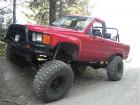
I just looked at TG's IFS Eliminator kit, and you are correct, it doesn't come with the steering box mounting plates. If you have the ability and tools, you could easily make your own, or buy them separately, check Lowrange Offroad, or Addicted Offroad, they are TG dealers and are usually cheaper than going directly through TG.
As for the steering box mounting location, that depends on what springs you use and how far your axel is moved forward. You mentioned the TG 3" kit, I have heard that their 3" spring length is shorter than their 4" & 5" lift springs, but their install instructions don't clarify this, which can cause problems with getting a bad shackle angle when welding your front spring hanger in place as per their directions. So you might want to tack weld your hanger in place , checking your shackle angle with the weight of the vehicle down on the front tires to make sure you have a descent shackle angle before doing any final welding. With your front wheels pointing straight ahead you want your tie rod and your drag link to be running parallel to each other. With the drag link connected to the pitman arm you can use clamps to hold the steering box to the frame so you can mark where to drill your holes. You'll want to have your steering box rotated forward making sure the pitman arm is going to clear the frame, and check your steering shaft rag joint to make sure it's not going to bind up. Some people have had to lengthen the steerng shaft, just depends on how far forward your axel is moved.There are a lot of good threads here: https://www.yotatech.com/forums/f152/
I don't have any experience with chevy 63's, but have heard you get aprox 3" of lift with them. I've also heard as muddpigg stated, that TG's 3" lift springs runs higher, and take awhile to settle, so you would probably have to play around with adding leaves to the chevies, or pull a leaf out of the front TG springs to lower the front a bit.
I hope this helps you out some, good luck on the SAS!
As for the steering box mounting location, that depends on what springs you use and how far your axel is moved forward. You mentioned the TG 3" kit, I have heard that their 3" spring length is shorter than their 4" & 5" lift springs, but their install instructions don't clarify this, which can cause problems with getting a bad shackle angle when welding your front spring hanger in place as per their directions. So you might want to tack weld your hanger in place , checking your shackle angle with the weight of the vehicle down on the front tires to make sure you have a descent shackle angle before doing any final welding. With your front wheels pointing straight ahead you want your tie rod and your drag link to be running parallel to each other. With the drag link connected to the pitman arm you can use clamps to hold the steering box to the frame so you can mark where to drill your holes. You'll want to have your steering box rotated forward making sure the pitman arm is going to clear the frame, and check your steering shaft rag joint to make sure it's not going to bind up. Some people have had to lengthen the steerng shaft, just depends on how far forward your axel is moved.There are a lot of good threads here: https://www.yotatech.com/forums/f152/
I don't have any experience with chevy 63's, but have heard you get aprox 3" of lift with them. I've also heard as muddpigg stated, that TG's 3" lift springs runs higher, and take awhile to settle, so you would probably have to play around with adding leaves to the chevies, or pull a leaf out of the front TG springs to lower the front a bit.
I hope this helps you out some, good luck on the SAS!
Last edited by rustED; Dec 24, 2014 at 10:45 AM.
Dec 29, 2014 | 10:02 PM
#5
Thread Starter
Registered User
Joined: Nov 2013
Posts: 118
Likes: 0
From: washington state
hey guys one more question about the sas, what is everyone doing about the drive shaft? i know some companies make extentions but from what i have read the have bad vibration over 50 or so? would like to be able to go at least 70 because i am going to be driving back and forth from college next year... thanks
Dec 30, 2014 | 10:19 AM
#6
You better research driveshaft 101, 4crawler had a link on his site. Was very helpful and helped me through same questions. Not a simple answer as there is many different variables and an understanding of topic is key.
Dec 30, 2014 | 03:10 PM
#7
hey guys one more question about the sas, what is everyone doing about the drive shaft? i know some companies make extentions but from what i have read the have bad vibration over 50 or so? would like to be able to go at least 70 because i am going to be driving back and forth from college next year... thanks
For the front driveshaft TG makes a long spline kit, you can have a driveline shop add it to your front.
When I did my SAS I moved the front axel forward about 2". I had a Toyota rear driveshaft laying around. I removed the DC joint (Double Cardan Joint) from my original front driveshaft. After taking some measurements I cut the spare rear Toyota shaft making it 4-3/8" longer than the stock front shaft and welded the DC joint in.
It's been almost 3 years and I haven't had any problems with it, I have plenty of flex and never had the driveshaft separate (yet) when the suspension is drooping. I have never had it balanced and I can run in 4hi back and forth to work with no vibrations. I don't know about 70mph though... usually if the weather conditions are bad enough that I need 4 hi, then it's way to bad for me to go 70!
I agree with muddpigg it would be good to do some research on it, I built my front driveshaft as a temporary solution, I was planning on doing the long spline kit eventually, it's just taking longer than expcted, lol.
Last edited by rustED; Dec 30, 2014 at 03:22 PM.
Trending Topics
Dec 30, 2014 | 11:26 PM
#9
Thread Starter
Registered User
Joined: Nov 2013
Posts: 118
Likes: 0
From: washington state
i was just looking on 4 crawler and realized that they have drive shaft spacers, and they talk about using them with solid axle toyotas? they have them in 1.5" thick, not sure how the angle would be but could it get me close enough to not let the drive shaft come apart? or would just spending the money and extending my original one be a better idea?
Jan 1, 2015 | 09:24 AM
#10
i was just looking on 4 crawler and realized that they have drive shaft spacers, and they talk about using them with solid axle toyotas? they have them in 1.5" thick, not sure how the angle would be but could it get me close enough to not let the drive shaft come apart? or would just spending the money and extending my original one be a better idea?
Last edited by rustED; Jan 1, 2015 at 09:27 AM.
Jan 1, 2015 | 09:56 AM
#11
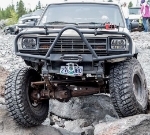
with an SAS most of the stock toyota d/s don't have enough length of stock spline length.
Like rustED said, get the conversion done and than worry about a driveshaft. having that sucker come lose due to the two halves coming apart, especially while under throttle can lead to castrophic damage (IE a destroyed transfer case) that will leave you in need of a tow.
steering box- place it as far forward as you can, though some don't need to move it and get by leaving in the stock location on 96-95's. having the extra bracing the mount offer helps too


Like rustED said, get the conversion done and than worry about a driveshaft. having that sucker come lose due to the two halves coming apart, especially while under throttle can lead to castrophic damage (IE a destroyed transfer case) that will leave you in need of a tow.
steering box- place it as far forward as you can, though some don't need to move it and get by leaving in the stock location on 96-95's. having the extra bracing the mount offer helps too
Jan 3, 2015 | 08:24 PM
#12

Registered User


Joined: Jun 2011
Posts: 1,699
Likes: 75
that's a good pic of the steering box location.
but if you have aspirations for running 38's or bigger, and you don't want to cut into the footwell area, you'll need the box to be further forward.
it's not something that you want to do twice, so build for what the target is now... mine needed to be forward another couple of inches, the body crossmember should have been clearanced to move the box forward more.
if you leave it like in the pic, which is what i have, with the box just about touching the front body crossmember, you may end up having to get a $150 custom short steering arm, which is not the best choice for driving on the street.
you will of course be running crossover steering, and and both bars need to be parallel enough to not bang into each other at full stuff, which is where the steering arm length and box location come into play.
toyota front axle shafts ride on bronze bushings when fwd is engaged, and the axles are turning, which is a high wear design... the axle stubs ride on bearings of course, but the point is that you don't want to be driving around at high speed with fwd engaged.
tg has good bronze bushing replacements, for when you rebuild the front end.
but if you have aspirations for running 38's or bigger, and you don't want to cut into the footwell area, you'll need the box to be further forward.
it's not something that you want to do twice, so build for what the target is now... mine needed to be forward another couple of inches, the body crossmember should have been clearanced to move the box forward more.
if you leave it like in the pic, which is what i have, with the box just about touching the front body crossmember, you may end up having to get a $150 custom short steering arm, which is not the best choice for driving on the street.
you will of course be running crossover steering, and and both bars need to be parallel enough to not bang into each other at full stuff, which is where the steering arm length and box location come into play.
toyota front axle shafts ride on bronze bushings when fwd is engaged, and the axles are turning, which is a high wear design... the axle stubs ride on bearings of course, but the point is that you don't want to be driving around at high speed with fwd engaged.
tg has good bronze bushing replacements, for when you rebuild the front end.
Jan 5, 2015 | 10:58 PM
#13
Thread Starter
Registered User
Joined: Nov 2013
Posts: 118
Likes: 0
From: washington state
Again, thanks for the help guys! Im running 33x12.5 xterrains i got from a buddy until they wear out and probably wont run bigger then 35's while having 4.56's... kinda pushing it already but dont really have the money to buy gears front and rear. Maybe ill have 5.29's and some 38 iroks next summer if work goes well haha

Thread
Thread Starter
Forum
Replies
Last Post
RedRunner_87
95.5-2004 Tacomas & 96-2002 4Runners (Build-Up Section)
84
Jun 1, 2021 01:51 PM
Vargntucson
95.5-2004 Tacomas & 96-2002 4Runners
0
Jul 4, 2015 12:15 PM


