General Vehicle Related Topics (Non Year Related) If topic doesn't apply to Toyotas whatsoever, it should be in Off Topic
Sponsored by:
Sponsored by:

Hypothetical 22R-G

Thread Tools
 
Search this Thread
 
Old Apr 27, 2007 | 08:53 PM
  #1  
Bunta Fujiwara's Avatar
Thread Starter
Banned
 
Joined: Apr 2007
Posts: 300
Likes: 0
From: Boulder, CO
Hypothetical 22R-G

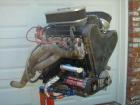
I am planning to build a new type of Toyota engine this summer, designated 22R-G. It would be the same 2366cc inline 4 cylinder carbureted 22R, except with twin cams and 16 valves. the bottom end would be a stock 22R, and the top end would be a specially cast T-6000 series aluminum-titanium alloy head, custom cast and machined. A very good friend of mine owns a machine shop, and I have a foundry. Output could be between 140 and 180 hp "stock", with a 9000-10,000 rpm redline. The "G" stands for wide valve angle twin cam. "F" for those who might be wondering is "economical" twin cam with a smaller valve angle. Any thoughts appreciated.
Reply
Old Apr 27, 2007 | 09:25 PM
  #2  
DeathCougar's Avatar
Donny, you're out of your element
20 Year Member
Liked
iTrader: (23)
 
Joined: Jan 2003
Posts: 17,692
Likes: 58
From: Marysville, WA
now THAT is an interesting prospect. Tho i dont know about 9-10K rpm. Dont know if the bottom end will hold up to that without some reinforcment.
Reply
Old Apr 27, 2007 | 09:29 PM
  #3  
RustBucket's Avatar
Registered User
iTrader: (1)
 
Joined: Aug 2005
Posts: 1,804
Likes: 25
From: Atlanta
I bet the bottom end would hold up, but I'm not a machinist.

I've wondered - could a head be produced that was cast iron? It seems like a cast iron head would only add a few more pounds over and aluminum one and then overheating would hardly be a concern...

I love the idea of making a 4-V 22re, just like the Nissan 4-bangers, eh?
Reply
Old Apr 27, 2007 | 09:30 PM
  #4  
Bunta Fujiwara's Avatar
Thread Starter
Banned
 
Joined: Apr 2007
Posts: 300
Likes: 0
From: Boulder, CO
Your're probably right about the reinforcement part. But aluminum-titanium pistons, con-rods, and crank could be added, made to the exact same dimensions and specifications as the stock unit, by degreasing said components, placing them on top of a blueprint, and tracing. Casting temp. would probably be around 4000-5000 degrees F, with a partial quench (rapid cooling) followed by slow quenching (letting it sit for a few days, gradually cooling off). A forged Toyota block could handle it fine, I'm sure.
Reply
Old Apr 27, 2007 | 09:31 PM
  #5  
Bunta Fujiwara's Avatar
Thread Starter
Banned
 
Joined: Apr 2007
Posts: 300
Likes: 0
From: Boulder, CO
*you're*

sorry.
Reply
Old Apr 27, 2007 | 09:41 PM
  #6  
DeathCougar's Avatar
Donny, you're out of your element
20 Year Member
Liked
iTrader: (23)
 
Joined: Jan 2003
Posts: 17,692
Likes: 58
From: Marysville, WA
yea but for that much money, why waste the time for such a nominal gain? The DOHC idea is sweet as hell. But to have to put all the extra $$$ into it...i dunno.
Reply
Old Apr 27, 2007 | 09:46 PM
  #7  
Bunta Fujiwara's Avatar
Thread Starter
Banned
 
Joined: Apr 2007
Posts: 300
Likes: 0
From: Boulder, CO
all it would take money-wise is the money needed to pay for the gas for the furnace, the metals required, and a stock 22R. I can do it all for free in my friend's machine shop.
Reply
Old Apr 27, 2007 | 10:02 PM
  #8  
DeathCougar's Avatar
Donny, you're out of your element
20 Year Member
Liked
iTrader: (23)
 
Joined: Jan 2003
Posts: 17,692
Likes: 58
From: Marysville, WA
im talking about including the bottom end.

What kind of research have you done regarding shape, flow, CC's, compression, etc?
Reply
Old Apr 27, 2007 | 10:31 PM
  #9  
Bunta Fujiwara's Avatar
Thread Starter
Banned
 
Joined: Apr 2007
Posts: 300
Likes: 0
From: Boulder, CO
I've done some research, but haven't reached a final conclusion yet. Compression probably around 11:1. Flow volumes and rates would have to be calculated and planned with a binary phase diagram. Other than that I'm not sure yet.

Reply
Old Apr 27, 2007 | 11:02 PM
  #10  
^VooDoo^'s Avatar
Banned
 
Joined: Mar 2006
Posts: 393
Likes: 1
From: Alhambra CA.
Unless you sidedraft it, It would be a waste of time with stock carb, I really suggest EFI and RT it.
Reply
Old Apr 27, 2007 | 11:13 PM
  #11  
Bunta Fujiwara's Avatar
Thread Starter
Banned
 
Joined: Apr 2007
Posts: 300
Likes: 0
From: Boulder, CO
A very good idea, EFI and turbo. But I was thinking sidedraft. Just forgot to mention that. My other one (in the other thread) is EFI twin turbo.
Reply
Old Apr 28, 2007 | 08:53 AM
  #12  
tc's Avatar
tc
Contributing Member
 
Joined: Nov 2005
Posts: 8,875
Likes: 3
From: Longmont, CO
Hmmm ... a lot of big words there. A lot of big words used incorrectly to be more clear.

Originally Posted by Bunta Fujiwara
the top end would be a specially cast T-6000 series aluminum-titanium alloy head, custom cast and machined. A very good friend of mine owns a machine shop, and I have a foundry.
6000 series aluminum alloys only have residual (0.15% max) titanium. It is not correct to call them a aluminum-titanium alloy. They are solid solution strengthened by copper and silicon. The T goes at the end to designate a heat treatment type. T6 is the most common.

Originally Posted by Bunta Fujiwara
But aluminum-titanium pistons, con-rods, and crank could be added,... Casting temp. would probably be around 4000-5000 degrees F, with a partial quench (rapid cooling) followed by slow quenching (letting it sit for a few days, gradually cooling off).
There we go with more "aluminum-titanium" stuff ... Melting point of 6061 is only about 1200F. You're gonna spend a fortune on the extra energy to put that much superheat into it, and you'll vaporize most of the aluminum in the process. But maybe you meant an aluminum OR a titanium alloy... Even then, for Ti (or steel for that matter) you're still "only" at 3000F. Your heat treat terminology is all screwed up too. Quenching is indeed rapid cooling - you can't "slow quench" - you "slow cool". T6 heat treatment is solution treated and aged - heat to a high temperature, quench, then hold at an elevated temperature (but much lower than the solution treating temp) for a period of time (usually a couple hours) then air cool.

Originally Posted by Bunta Fujiwara
all it would take money-wise is the money needed to pay for the gas for the furnace, the metals required, and a stock 22R. I can do it all for free in my friend's machine shop.
If you're going to be solution treating aluminum alloys, you need very special furnaces as you are VERY close to the melting point. It is not uncommon for companies who do it all the time to open the furnace and find a puddle instead of a part. If you were talking about doing titanium, EVERYTHING at elevated temp has to be done in inert atmospheres (vacuum or argon) or you'll nitride the surface and won't be able to machine it (the gold drill bits are coated in titanium nitride)

Originally Posted by Bunta Fujiwara
Flow volumes and rates would have to be calculated and planned with a binary phase diagram.
Wow - even more big words! The phase diagram will certainly provide useful information for casting, but has little to do with the flow of the air/fuel mixture in and the exhaust out of the engine. To be of great use, you'll want to use at least a tertiary phase diagram for the alloys you are considering.

But maybe these are just issues with translation into English. I think your time would be better served making such a head for the 3VZE - a market that is currently not served and holds more potential than the 22R.
Reply
Old Apr 28, 2007 | 09:04 AM
  #13  
DeathCougar's Avatar
Donny, you're out of your element
20 Year Member
Liked
iTrader: (23)
 
Joined: Jan 2003
Posts: 17,692
Likes: 58
From: Marysville, WA
haters be hatin.....
Reply
Old Apr 28, 2007 | 09:08 AM
  #14  
tc's Avatar
tc
Contributing Member
 
Joined: Nov 2005
Posts: 8,875
Likes: 3
From: Longmont, CO
I ain't hatin' - just pointing out some issues with what he has posted, and I even posted a possible cause for the issues (he doesn't speak English primarily). He DOES however, speak English as a second language better than I speak whatever his first language is!

I've been a metallurgist working on steel, nickel, and titanium alloys for 10+ years - kinda pet peeve to see incorrect information put out there...
Reply
Old Apr 28, 2007 | 10:15 AM
  #15  
Bunta Fujiwara's Avatar
Thread Starter
Banned
 
Joined: Apr 2007
Posts: 300
Likes: 0
From: Boulder, CO
You're right about the incorrect use of terms. I haven't done a whole lot of research regarding alloys, and would probably make a custom alloy for the engine components. I incorrectly assumed T-6000 to have a higher percentage of titanium. Most of my research is done on component engineering rather than materials engineering. I need to do more work in that area. And a tertiary phase diagram would be useful as well. As far as 6 cylinder engines go, I would probably down the line build a new series of hypothetical Toyota inline 6 engines for more torque.
Reply
Old Apr 28, 2007 | 10:21 AM
  #16  
Bunta Fujiwara's Avatar
Thread Starter
Banned
 
Joined: Apr 2007
Posts: 300
Likes: 0
From: Boulder, CO
In Japan, we learned English as a second language quite well.
Reply
Old Apr 28, 2007 | 10:42 AM
  #17  
MudHippy's Avatar
Registered User
 
Joined: Jan 2007
Posts: 6,106
Likes: 27
Dude, I'd buy your 3VZE top end, make me one dual cam with 48 valves. Wait...is that too many? Nobody wants to fuss with the inline 6's, or carburation, trust me. Go ahead and make one for yourself. It would be nice to build just whatever comes to mind, more power to ya.

Last edited by MudHippy; Apr 28, 2007 at 10:45 AM.

Reply
Old Apr 30, 2007 | 09:22 AM
  #18  
toy power's Avatar
Registered User
 
Joined: Feb 2007
Posts: 171
Likes: 0
i don't care what anyone else says. if you manage to make one of these; and it works like you say it will; i will buy one. for sure.
Reply
Old Apr 30, 2007 | 09:32 AM
  #19  
ewong's Avatar
Registered User
 
Joined: Aug 2005
Posts: 1,731
Likes: 3
From: Philly PA
Originally Posted by tc
I think your time would be better served making such a head for the 3VZE - a market that is currently not served and holds more potential than the 22R.

I think the 3VZE (the 3.0L v6) is kinda a "dead end" motor - IMHO that market is addressed by the 3.4L swap?

The 22R-G concept is neat - but IMHO the 3RZ (the 2.7L 4 banger) would be a better starting point as the 18/20/22 series motors are kinda "no more"...

Last edited by ewong; Apr 30, 2007 at 10:25 AM.

Reply
Old Apr 30, 2007 | 09:56 AM
  #20  
89silverpu's Avatar
Registered User
 
Joined: Feb 2007
Posts: 2,203
Likes: 0
From: Sierra Nevada's or the Deserts of Las Vegas
It would be a lot better and more powerful if you swapped in a v-8. Why try and make a I-4 "powerful", that just seems like a waste of time.
Reply


All times are GMT -8. The time now is 01:35 AM.