When you click on links to various merchants on this site and make a purchase, this can result in this site earning a commission. Affiliate programs and affiliations include, but are not limited to, the eBay Partner Network.
I appreciate the help in advance.
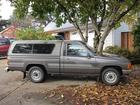
I love vehicles, but never have taken the time to dive into fixing one up. I decided to take the leap and got a 1986 4Runner that's been sitting for 2 years after some engine/mechanical failure.
Here's what I know: The previous owner drove it, it may have overheated, it started knocking and smoking so they parked it and it hasn't moved since.
Some details:
-62k miles on the 22RE (I believe)
-coolant/radiator is empty, it's bone dry.
-engine oil on dipstick is black but no burnt smell.
-there appears to have been some oil spray that misted a little all over the top of the engine.
-I am able to spin the main crank and it's buttery smooth.
I know there's a ton of resources and info out there. What I am looking for is a logical list of what things to try and in what order since I don't really know what to try and even if this engine is worth putting time into or I just need to get a rebuilt one.
I imagine the fuel is bad now, so will need to drain/empty it?
I am not sure if the timing chain snapped or a head gasket blew, I am thinking of taking the top off to see the chain?
I am super excited to get this back up and running and taking it out in the mountains.
Thanks!
Pic:
Last edited by Avalon786; Jun 23, 2020 at 01:25 PM.
If the PO said it "might have overheated", then I'm sure it did. I would definitely look at the head gasket. Taking the valve cover off to get a look at the chain and chain guides is definitely a good idea.
There are more knowledgeable people here than me, that will hopefully chime in.
Maybe caused by overheat, maybe by a small leak in the radiator, maybe in the bottom hose, whatever it might be. Maybe even a leak in the radiator's drain valve.
Only way to be sure is to put water into the system and look for leaks.
engine oil on dipstick is black but no burnt smell.
Was it at the right level? That matters too. Replace the oil and filter no matter what.
-I am able to spin the main crank and it's buttery smooth.
I am not sure if the timing chain snapped or a head gasket blew, I am thinking of taking the top off to see the chain?
Believe it or not, those two go together.
Since you can turn the crank, just pull the distributor cap off, and watch what the rotor does when you turn the main crank. Does it go around once every two turns of the crankshaft? If it does, I'd bet the timing chain is good. For moment.
To check the head gasket, you can do a pressure test on each cylinder. Once you know whether each cylinder has correct pressure in it, then you can do a leak-down test. If either test fails, bad head gasket. If it really did overheat, though, it's a good bet. More on that later.
Now, SINCE the engine has more than 60K miles on it, it's time to replace the timing chain. This is according to the FSM. So, you'll have to pull the valve cover AND the front timing chain cover. New gaskets for the valve cover, including the half-moons front and back, for the timing chain cover, and, if you want to do it properly, the water and oil pumps. That includes the front main crankshaft seal in the oil pump. That is replaced any time the oil pump is removed for any reason. The oil pump seal has a habit of rupturing at unexpected intervals, so it's something to watch for.
If you pull the timing chain cover, it's a good idea to replace the timing chain guides with the metal ones available after-market, not the plastic OEM ones.
As to the head gasket: IF you have to replace it, and you most likely will, you will need a whole new gasket set for the whole engine. That means the throttle body, the intake plenum, the injectors, exhaust manifold, all of it. If you take two parts apart, and there was a gasket between them, you'll need a new one to put back in. There are gasket sets from many sources, including the Toyota dealerships. The Toyota OEM gasket set is recommended, but I used a Fel-Pro set, and it's been working just fine. So far, anywho
Once you have the head off, send it to a machine shop. Have it NDI'd (Non-Destructive Inspection) for cracks, and checked for warpage. If it's cracked, you'll need a new head. If not, and it's not warped beyond FSM specs, you're golden. Have the machine shop clean it all up real good, including having the valves and seats lapped.
While you have the head off, you'll have to clean off the remains of the old head gasket. There is an excellent thread on how to do that here on YT somewhere. Remember to stuff paper towels into the cylinders, and some small chunks into the water and oil holes where they feed into the head. You do NOT want the chunks of anything in them. Also, into the intake holes, and exhaust ports. And the water hoses feeding the intake plenum and throttle body. Anything you take off, and has a hole of some kind feeding into anything, stuff paper towel into it to prevent it from getting anything into it while it's apart.
While you have it all apart, BTW, check the set of small hoses feeding the throttle body and intake plenum carefully fro ANY sort of damage, weakness, degradation, etc. This is when you want to replace them, not after one blows on the highway.
Then you'll have to "deck" the engine block. Make sure it's not warped in any way. Again the FSM is an excellent source for how-to. If it's warped beyond specs, well, time for a new block. I don't want to talk about that...
Is the radiator, it's hoses, and the thermostat, all in good shape? Did it overheat because the radiator needs to be cleaned off outside, due to being clogged up by dirt, mud, bugs, or rodded inside because the cores are clogged by using non-distilled water? Maybe because the thermostat is failed closed? Is the fan clutch working properly? Is the radiator shroud in good shape? Replace the three main radiator hoses no matter what. Probably the thermostat, too.
You're getting into a whole new 22RE world. You will learn an awful lot right off the bat. A real good way to get into the Toyota 22RE engine, and the truck in general. You'll need good tools of all sorts, including some specialty tool. Be ready to spend some money. On tools, on gaskets, on hoses, etc etc. Harbor Freight, and the Toyota stealership are two sources for many things you will need. Rock Auto, LS Engineering... The list goes on.
I wish you all the best on this project! That LOOKS like a beautiful truck. Did you check the little nooks and crannies all over the body for rust? The frame? You should
Straight looking truck!
here’s what i would do.
1) pull the oil drain plug. See if water comes out. Hope not. Oil floats on water so the water will be at the bottom. If not, put the drain plug back in.
2) pull the plugs, look for a cleaner one which would be an indication of water gotten into a cylinder while running.
3) start it without water in it to prove the peripheral stuff like the fuel injection, and all is working.
4) try to do a compression test. If the engine truly has 60k or so on it, i would expect readings somewhere between 150-170 except for a cylinder with bad head gasket.
The best case scenario is it lost the head gasket due to overheating and warped the head. Often the thermostat fails and takes the headgasket with it. It’s going to be up to you to determine how comfortable you are pulling the head, having it resurfaced and reinstalling it all vs. just swapping the engine for a good running one. If available, this is usually the simpler route for folks with less experience.
I am trying to see what makes sense to try first. If the engine is trashed, I don't want to waste too much time on things that won't matter. But I am willing to just try to get it started if it can help diagnose and validate what may actually be wrong.
I am trying to see what makes sense to try first. If the engine is trashed, I don't want to waste too much time on things that won't matter. But I am willing to just try to get it started if it can help diagnose and validate what may actually be wrong.
Well, best case:
Get rid of the old fuel. That stuff doesn't store well for 2 years in a truck's fuel tank. If it were me, I'd also drain the whole fuel system, if there's anything in it, and blow out the lines. There is a hatch under the back seat, that allows access to the place in the fuel tank where the pump is, and all the lines go in/out. Make sure that any lines you pull off, you put back on the correct place!
Once that's done, a new filter, and put some new fuel in, I wouldn't add more than 5 gals or so, just in case things don't go well.
Give the pump a quick check by turning the key to "start", without pushing in the clutch, OR pressing the "Clutch Start Cancel" switch. Don't do either of those things. Make damn sure the transmission and transfer case are in Neutral. Be certain. Absolutely positive.
When you turn the key to start, the engine won't crank, but you'll hear the fuel pump. Hopefully A small, pretty quiet, "whining" sound while the key is in the start position. If not, you'll need to start troubleshooting it, before you can go any further. If it works, hold it until the whine drops slightly in pitch. This will indicate the system is/can be pressurized. Might take a second or three.
Check the oil, and the filter. Maybe drain a little out of the oil pan to check for water/metal shavings, or worse, chunks of metal. Chunks probably mean it's time for a bottom up rebuild, or a new engine. Make sure the oil is at the correct level. Remember that if you put on a new filter, or if it's just sat for two years, the filter may well be empty, meaning you need a little more than the full mark on the dipstick to be properly full.
Especially if, as so many, including me, people do, you, or the PO, put an aftermarket, oversize, oil filter. I started out using Fram PH8-A, then went to the Purolator PurOne, PL300001. There is also a filter made by Toyota that's about that size, and fits perfectly, and is strongly recommended. I can't recall the part number, but there are a few threads about them. Just do a search on the site here. If you use an oversize filter like that, it can take about 1/2 quart extra to properly fill the system to normal.
THEN, flush the radiator/cooling system, check the thermostat, replace the big radiator hoses, there are 3, and fill it up, burping it as best you can. Make sure there's no major leaks anywhere, including in the throttle body/intake plenum area.
Check that the belts are in good enough shape, for now, and correctly tightened. You can remove the AC belt for now, if you want.
Ensure the timing is at least close. Pull the distributor cap, and make sure that when the timing mark on the main crankshaft pulley is at 0, the distributor rotor is pointed at the #1 spark plug wire where it goes into the cap. Right about 10 o'clock. If it's 180° out, rotate the crankshaft ONE turn, and it should line up. Please note the use of the word "should"!
Charge up the battery, clean the posts and terminals, plug it all back together, and fire it up, if it will.
See what, and where the "knock" might be. Remember that the 22RE engines are notorious for a slight valve knock. Normal, and expected, especially if it's been a while, if ever, since the valve lash was properly set.
If it's a bad, loud CLANK, shut down right away. You may have a thrown piston rod, a piston is hitting a valve, whatever. Time for a tear down and probable rebuild.
I pulled the fuel tank skid off and let a little fuel out. It looked really good and smelled normal. So decided I’ll leave it as is for now. Maybe the PO put some stabilizer in there.
I pulled the fuel tank skid off and let a little fuel out. It looked really good and smelled normal. So decided I’ll leave it as is for now. Maybe the PO put some stabilizer in there.
Ok, that takes care of the fuel it's self. If you think it's still good go with it
Same for the filter. If you think it's OK, then go with it.
Can you hear the pump run, either with the quick-check I mentioned, or by jumping the test connector? No fuel pump, no run.
I would still take care of all the other things before trying to start it. The oil, the radiator, etc.
IF IT WERE ME.
You're not me, obviously. You won't even NEED to put water in it for a quick start-up check. Don't run it for more than a few seconds with no water, though.
I would make certain about the timing, and the oil, at the very least. Oil's too low, or too contaminated, no lube for the engine, bad things follow
Same for the cylinder pressure, and leak-down, tests. They are a good way to detect a bad head gasket without starting it.
Update:
I had some spare time and tried what I could.
-lifted the valve cover and manually spun the crank to make sure the timing chain was in 1 piece, it looked good and was intact.
-drained the fuel tank
-replaced the fuel filter (that was fun...)
-replaced the thermostat (one of the 2 bolts from the housing broke off, lol)
-replaced spark plugs and wires
-replaced the water pump (it had exploded! Like completely shot. There were a pile of metal shavings in it. I added distilled water to the radiator and drained it and some small shavings came out in the water)
-replaced serpentine belts
After that work I figured I’d give it a shot. I hooked up the battery and tried to start it after throwing in 2 gallons of premium. No start...I made sure I had fuel and spark. Fuel definitely made it to the new filter.
Any thoughts?
Overall I feel like I learned a ton. I had never done any of the above before 😁
Last edited by Avalon786; Jul 12, 2020 at 11:18 PM.
The first thing I would do is pull the oil pan off, maintenance is pointless if your bottom end is trash.
^^^There is no such thing as a good knock. I'd get the engine rebuilt using OEM parts and be good for another 400k miles. The truck looks worthy of new engine. Do it once and do it right JMHO



 Jun 23, 2020 | 11:27 AM