When you click on links to various merchants on this site and make a purchase, this can result in this site earning a commission. Affiliate programs and affiliations include, but are not limited to, the eBay Partner Network.
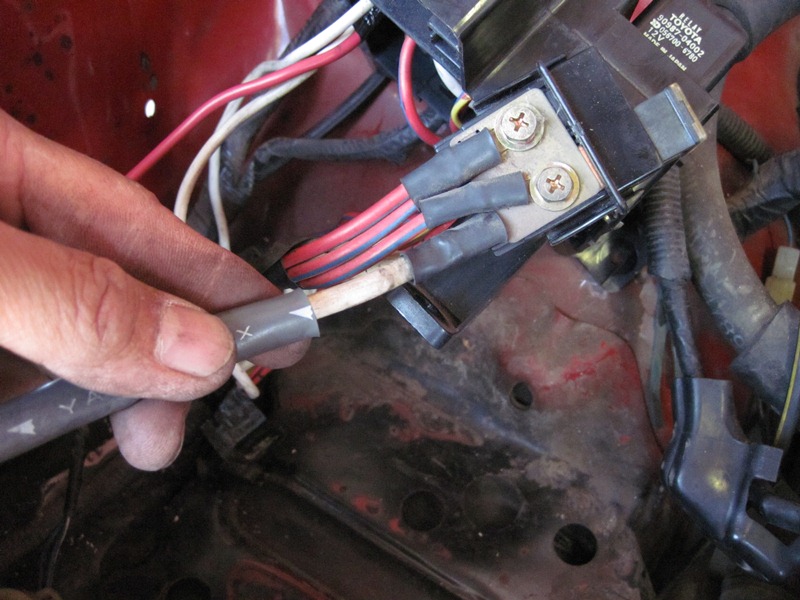
That one there in the center of the image, twisted together, going from the + to the fuse box. Seems rather makeshift. When the motor's running, it smolders. If I undo it, the motor does not start. What do?
On another note, I wonder if it has remotely anything to do with my carb issues. Truck runs and drives fine, float glass slightly short of even. When it warms up, it quits and float glass is empty. I posted this in another thread, vapor-lock and a malfunctioning CMH were mentioned but not explained. How do I fix?
Last edited by Johnsoline; Dec 29, 2016 at 08:00 AM.
That one there in the center of the image, twisted together, going from the + to the fuse box. Seems rather makeshift. When the motor's running, it smolders. If I undo it, the motor does not start. What do?
On another note, I wonder if it has remotely anything to do with my carb issues. Truck runs and drives fine, float glass slightly short of even. When it warms up, it quits and float glass is empty. I posted this in another thread, vapor-lock and a malfunctioning CMH were mentioned but not explained. How do I fix?
Sorry that was me, let's tackle this first cause it's pointless to fix the other if it's just going to burn to the ground.
That's a hack and a really bad one. I'm with wyo. The white wire is a primary supply, the blue section is a fuse link maybe but not oem. The smaller gauge wire connected needs removed, the fuse link removed and replaced, and then you can put a proper sized wire from the battery to the fuse link.
This actually relates to the other problem. Bad heater coils in either the choke opener, or cold mixture heater system, drawing too much power and creating too much heat. BUT you need to verify the fuel pump and lines, nor the float and valve assembly are clogging.
I think you want the vacuum map? Can do in the other thread.
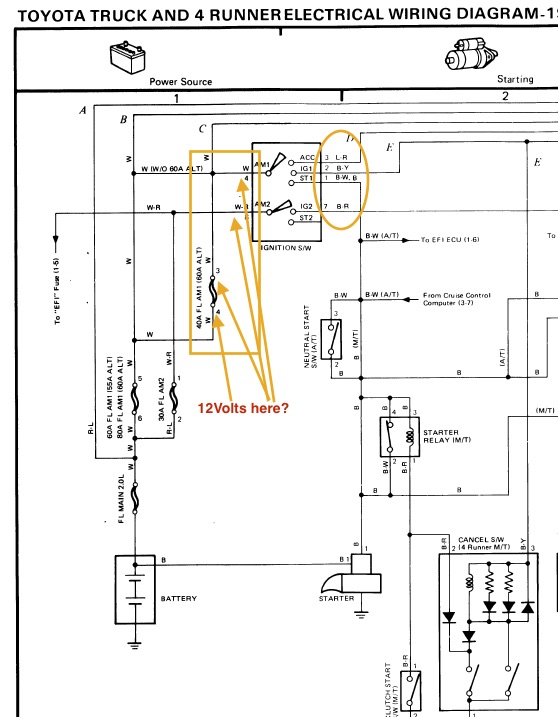
The geometry is a little different to the fuse box on first vs second gen. The OP of this thread took great pictures of a 2nd, the discussion gets a little detailed. In short the safety systems are up stream of the primary 80amp fuse, that is the horn headlamps and hazard signals, and rely on the FL to provide power in a worst case scenario.
The white wire is spliced into the blue wire which is spliced into the green wire. The blue wire is only about an inch long. Where'd this blue wire come from? The green wire seems quite a bit too small of a gauge to run whatever the white wire is connected to, considering the gauge of the white wire. I'd say the green wire doesn't look original either.
The white wire is OEM,
the blue is probably 100amp FL wire,
the little wire needs to go away and be replaced with wire the same gauge as the white.
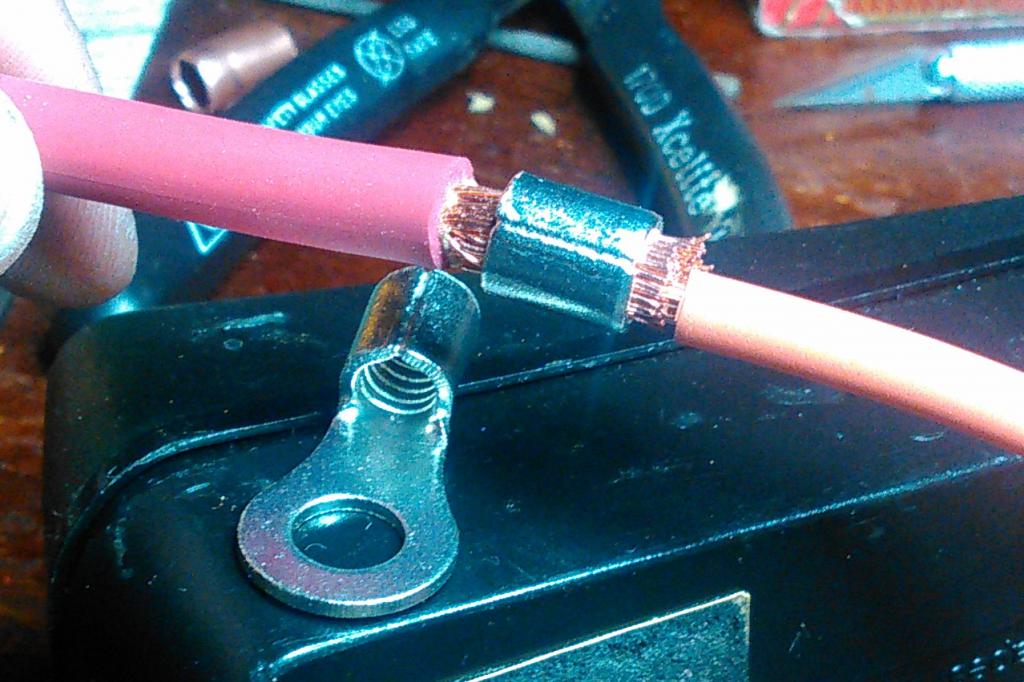
You'll need to get some parallel crimp terminals, not butt splices. And probably have to reconnect both ends of the FL, so get new FL wire so you're sure what is there read the wire gauge off the white wire and source FL wire 4 sizes smaller (ie white =12, FL = 16) .And since you don't have the OEM wire sleeve, it's firerated, you'll need some fiberglass or other firerated sleeve and some heat shrink.
BUT... Looks like the blue wire is the fusible link wire. It was cut short somehow. The green wire was added to extend the wire. Best to get a replacement fusible link wire. I suggest you check with Summit Racing for proper size FL wire That's where I got my fusible link (upgraded cabling so different from the stock blue)
IF budget is tight, at least get that connection fixed.
Parallel crimp makes two wires directly contact each other. It is more secure, has lower resistance and better current-carrying capacity, unlike a "butt-splice" where current flows through the metal of the crimp connector from one wire to the other. I used the barrel of a terminal lug for mine, and crimped with a good crimper. Then I filled voids with solder, coated with liquid electrical tape and heat-shrunk, to protect it from battery acid.
You need to access bottom of fuse block to un-screw the fusible link from the assembly... Check Terry's thread
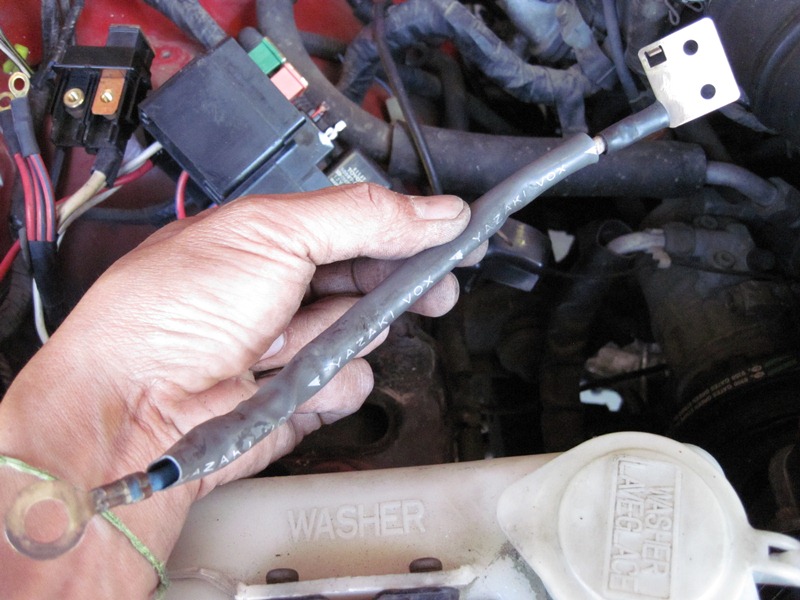
Here's the battery to fuse block to ignition switch.
Happy New Year!
Last edited by RAD4Runner; Dec 30, 2016 at 08:25 PM.
This seems to be my only issue. Other FL wire is intact. I'll have to get ahold of a multimeter.
Yep.
smoldering means power goes to heating the resistamce of tha poor connection, instead of to your ignition, fuel pump and electronics, hence truck dies.
Originally Posted by wyoming9
I use my Multimeters more then any of the other tools I own it seems
Yes, Next only to our senses, the multimeter is the most important electrical diagnostic tool.
Got FL wire at napa. Rebuilt the line. That and my carb issue I got fixed. Truck works now! Now all I need to do is get a new dash and it'll be good as brand new.
Got FL wire at napa. Rebuilt the line. That and my carb issue I got fixed. Truck works now! Now all I need to do is get a new dash and it'll be good as brand new.
Cool! You can never go wrong with clean, robust repair work.



 Dec 29, 2016 | 07:52 AM




 I think you want the vacuum map? Can do in the other thread.