When you click on links to various merchants on this site and make a purchase, this can result in this site earning a commission. Affiliate programs and affiliations include, but are not limited to, the eBay Partner Network.
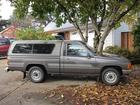
So I took my 1990 4Runner in for it's biannual California smog test today and failed in two categories.
My HC (PPM) was measured at 201 at 15 mpg and 210 at 25 with the maxes allowed being 118 and 98 respectively. Similarly, CO (%) measured at 6.82 and 6.97 where the max allowed are .47 and .61.
A quick look on Google implicates vacuum leaks in both cases, but I'm hoping to get either confirmation or just better information. I will agree that my vacuum lines are all pretty old, so a problem there is not going to be a surprise.
A vacuum leak would result (in the first instance) in an excessively lean mixture. That would decrease CO (until it got really lean) and increase O2. The opposite of your case.
Given the age of your vehicle, my first guess is that you have a "miss." (Unburned fuel gets dumped into the exhaust.) You can probably hear it. If not, try pulling plug wires one a time; if one makes no difference that's a cylinder that's not firing, and is probably dumping fuel. Put your multimeter on OX1 in the diagnostic connector. It should flop from about 0.3 to 0.7 volts at least 8 times in 10 seconds once warmed up. If not, it could be a lot of things, but most likely the O2 sensor itself.
The good news is that you have good NOx numbers. Those can be harder to fix.
Now the real irony is the English degree on the wall in my office. Nice catch
I have a lot of "I used to be's" in my history, and if any of those have served me well, they have taught me to be wary of what I think I know.
The engine does have a periodic miss. I had a couple of plug wires get hot some time ago and replaced only those (because I thought I knew, you see) and I'm sure I neglected the rest. This is probably a good time to check my work in that regard.
I have to admit being a little intimidated by the mess of vacuum lines in there, but if it needs to be done, then it will get done.
A vacuum leak would result (in the first instance) in an excessively lean mixture. That would decrease CO (until it got really lean) and increase O2. The opposite of your case.
Given the age of your vehicle, my first guess is that you have a "miss." (Unburned fuel gets dumped into the exhaust.) You can probably hear it. If not, try pulling plug wires one a time; if one makes no difference that's a cylinder that's not firing, and is probably dumping fuel. Put your multimeter on OX1 in the diagnostic connector. It should flop from about 0.3 to 0.7 volts at least 8 times in 10 seconds once warmed up. If not, it could be a lot of things, but most likely the O2 sensor itself.
The good news is that you have good NOx numbers. Those can be harder to fix.
Good luck.
It may be the quality of my multimeter, but it bounced from .2 to 1.1, but settled mostly in the low numbers. Is operating outside .3 - .7 an indicator of a problem as well? I put new plugs, wires, cap and rotor on it, then fixed the crack in the intake duct that kept it from running right at all. It still runs pretty much the same as it did before; mostly pretty good, but with a periodic miss, and it does smell kind of gassy.
Good to hear from you again, DrCreosote. Hoping you get that figured out.Yup, try pronouncing Boatswain, Forecastle, Worcestershire
Puyallup, Sammamish and Issaquah need to get thrown into the mix as well. Listening to automation try and pronounce it is great. With Sammamish they actually threw an extra set of M's in their first attempt at pronunciation.



 Apr 27, 2020 | 10:27 AM