


'87 SR5 Turbo Automatic has Really Soft Brakes
 Jun 13, 2018 | 02:27 PM
#1

Thread Starter
Registered User
Joined: Apr 2017
Posts: 488
Likes: 18
From: Birmingham, AL
'87 SR5 Turbo Automatic has Really Soft Brakes
On my past two '87 SR5 Turbos (Automatic Tranny), I've had a hard time stopping the truck especially when pointed down hill in gear. If I'm at a redlight facing downhill waiting for it to turn, I feel like I have to literally stand on the pedal.
I think I need new rotors and pads, but am pretty sure those won't solve it.
Ideas:
1) Maybe it's the pads and rotors?
2) Maybe I have air in my brake lines?
3) Since mine are Turbo models, they should already have a larger brake master cylinder right?
4) And I've heard the 1" Brake Booster (Marlin, etc) won't help right?
https://www.roundforge.com/articles/...booster-specs/
Any ideas?
I think I need new rotors and pads, but am pretty sure those won't solve it.
Ideas:
1) Maybe it's the pads and rotors?
2) Maybe I have air in my brake lines?
3) Since mine are Turbo models, they should already have a larger brake master cylinder right?
4) And I've heard the 1" Brake Booster (Marlin, etc) won't help right?
https://www.roundforge.com/articles/...booster-specs/

Any ideas?
Jun 13, 2018 | 08:37 PM
#2
Registered User


Joined: Jun 2015
Posts: 221
Likes: 31
Have you looked to see what size you have in regards to the brake booster and master cylinder? It's easy to visually verify. If you're not leaking/losing fluid anywhere externally or internally, bleed the brakes maybe? You say you have to stand on the pedal, but what does the pedal feel like? A 30 year old booster could be failing too. Has the system been futzed with? Is the LSPV still attached and functioning correctly?
There's lots of things that need to be checked by you since you're in front of the truck.
There's lots of things that need to be checked by you since you're in front of the truck.
Jun 13, 2018 | 08:42 PM
#3
Thread Starter
Registered User
Joined: Apr 2017
Posts: 488
Likes: 18
From: Birmingham, AL
Have you looked to see what size you have in regards to the brake booster and master cylinder? It's easy to visually verify. If you're not leaking/losing fluid anywhere externally or internally, bleed the brakes maybe? You say you have to stand on the pedal, but what does the pedal feel like? A 30 year old booster could be failing too. Has the system been futzed with? Is the LSPV still attached and functioning correctly?
There's lots of things that need to be checked by you since you're in front of the truck.
There's lots of things that need to be checked by you since you're in front of the truck.
- Have you looked to see what size you have in regards to the brake booster and master cylinder? It's easy to visually verify.
HOW? IS THERE A THREAD SOMEWHERE? I'LL DO A SEARCH.
- If you're not leaking/losing fluid anywhere externally or internally, bleed the brakes maybe?
AGREED
- You say you have to stand on the pedal, but what does the pedal feel like?
THE PEDAL FEELS OKAY - NOT TOO HARD OR SOFT. IT JUST TAKES A TON OF EFFORT TO STOP IT WHILE IN GEAR.
- Is the LSPV still attached and functioning correctly?
I WILL CHECK.
Last edited by Charles4x4; Jun 13, 2018 at 08:43 PM.
Jun 13, 2018 | 09:21 PM
#4
Registered User
Joined: Jun 2015
Posts: 221
Likes: 31
The size of the master is usually stamped on the side of it, should say 13/16, 7/8, 1, etc. The booster types are also listed in the link you posted, with pictures. Dual diaphragms have a step down in their shape toward the master cylinder.
Not too hard or soft on the pedal is subjective at best, but maybe you're not getting enough vacuum assist, maybe you have air in your lines. Maybe something auto trans specific? I don't know, never had an automatic anything. Maybe a lot of things. You've got a few things to check.
Not too hard or soft on the pedal is subjective at best, but maybe you're not getting enough vacuum assist, maybe you have air in your lines. Maybe something auto trans specific? I don't know, never had an automatic anything. Maybe a lot of things. You've got a few things to check.
Jun 13, 2018 | 11:21 PM
#5

Registered User


Joined: Mar 2012
Posts: 7,122
Likes: 680
Charles,
The transmission may still be tying to engage and drive forward even when you're on the brakes. Have you ever tried putting it in neutral while at stop facing downhill? Then we would be absolutely sure you are only struggling to stop the vehicle weight, not transmission trying to drive forward when you really want it to stop.
Also, there is a signal line from brake switch to ECU and ECT. I think they reduce fuel pressure OR injector output to help slow down the truck, AND tell ECT that you are trying to stop.
Please check IF you get 12V there when you press on brake.
FROM 1988 22RE SCHEMATIC


Last edited by RAD4Runner; Jun 14, 2018 at 09:03 AM.
Jun 13, 2018 | 11:24 PM
#6
Registered User
iTrader: (1)
Joined: Apr 2009
Posts: 13,381
Likes: 100
From: I live in New Tripoli Pa out in the woods

Pull the wheels off and inspect your pads and rotors.
Jack the back pull the drums inspect your brake shoes and drums.
Do you use the Parking Brake to keep your rear brakes adjusted ??
if not that will lead to long pedal travel
A soft pedal does seem to be air in the lines or Rubber brake hoses blowing up like a balloon under pressure
Jack the back pull the drums inspect your brake shoes and drums.
Do you use the Parking Brake to keep your rear brakes adjusted ??
if not that will lead to long pedal travel
A soft pedal does seem to be air in the lines or Rubber brake hoses blowing up like a balloon under pressure
Jun 13, 2018 | 11:44 PM
#7
Registered User
Joined: Mar 2012
Posts: 7,122
Likes: 680
Do you use the Parking Brake to keep your rear brakes adjusted...
Last edited by RAD4Runner; Jun 14, 2018 at 11:49 AM.
Trending Topics
Jun 14, 2018 | 04:09 AM
#8
I don't think it necessarily has a larger master cylinder but a dual diaphragm brake booster
on my 94 I did the usual pad, etc. Still spongee brakes. Replaced the booster, stopped like a time.
so you keeping this one or dumping it?
on my 94 I did the usual pad, etc. Still spongee brakes. Replaced the booster, stopped like a time.
so you keeping this one or dumping it?
Jun 14, 2018 | 11:33 AM
#9
Thread Starter
Registered User
Joined: Apr 2017
Posts: 488
Likes: 18
From: Birmingham, AL
I'm actually planning on keeping this one - it will be my daily driver when I start my other project (a 4th gen King of the Hammers vehicle) - more to come on that!
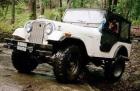
I got really attached to my gray one and hated to see it go. This one has a rebuilt engine ($6K) less than a thousand miles ago, all the gauges work. Just needs a lot of aesthetics, brake work, tranny kick-down adjustment, and a new gasket on the rear diff. I'm also going to paint it Bronze Metallic and bought some '86 graphics for it - I've always loved that color and have never been able to find one.
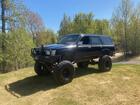
I bought about 30 parts the other night online and am waiting for them to arrive. Current pic of the vehicle (when I towed it home last weekend) and the vehicle I want this one to look like (but with gray interior) when it is done attached!
Last edited by Charles4x4; Jun 14, 2018 at 11:38 AM.
Jun 14, 2018 | 11:39 AM
#10
Thread Starter
Registered User
Joined: Apr 2017
Posts: 488
Likes: 18
From: Birmingham, AL
Yes^^^
Charles,
The transmission may still be tying to engage and drive forward even when you're on the brakes. Have you ever tried putting it in neutral while at stop facing downhill? Then we would be absolutely sure you are only struggling to stop the vehicle weight, not transmission trying to drive forward when you really want it to stop.
Also, there is a signal line from brake switch to ECU and ECT. I think they reduce fuel pressure OR injector output to help slow down the truck, AND tell ECT that you are trying to stop.
Please check IF you get 12V there when you press on brake.
FROM 1988 22RE SCHEMATIC
Charles,
The transmission may still be tying to engage and drive forward even when you're on the brakes. Have you ever tried putting it in neutral while at stop facing downhill? Then we would be absolutely sure you are only struggling to stop the vehicle weight, not transmission trying to drive forward when you really want it to stop.
Also, there is a signal line from brake switch to ECU and ECT. I think they reduce fuel pressure OR injector output to help slow down the truck, AND tell ECT that you are trying to stop.
Please check IF you get 12V there when you press on brake.
FROM 1988 22RE SCHEMATIC
Jun 14, 2018 | 12:57 PM
#11
Glad you found one to keep! Sounds like a keeper
I always liked that brown on a 1st gen
I bought an 86 (in 1986) put 120k on it in 4 years.
I saw it 2 years ago, a bit (OK a lot )worse for wear but it was still cruising around. Same license plate.
for the booster I bought a new one off Amazon.
it made a huge difference. Old one had a lot of corrosion on the inside due to a bad seal. Didnt see the damage until I removed the master cylinder.
I always liked that brown on a 1st gen
I bought an 86 (in 1986) put 120k on it in 4 years.
I saw it 2 years ago, a bit (OK a lot )worse for wear but it was still cruising around. Same license plate.
for the booster I bought a new one off Amazon.
it made a huge difference. Old one had a lot of corrosion on the inside due to a bad seal. Didnt see the damage until I removed the master cylinder.
Last edited by dropzone; Jun 14, 2018 at 12:59 PM.
Jun 14, 2018 | 01:22 PM
#13
Thread Starter
Registered User
Joined: Apr 2017
Posts: 488
Likes: 18
From: Birmingham, AL
The size of the master is usually stamped on the side of it, should say 13/16, 7/8, 1, etc. The booster types are also listed in the link you posted, with pictures. Dual diaphragms have a step down in their shape toward the master cylinder.
Not too hard or soft on the pedal is subjective at best, but maybe you're not getting enough vacuum assist, maybe you have air in your lines. Maybe something auto trans specific? I don't know, never had an automatic anything. Maybe a lot of things. You've got a few things to check.
Not too hard or soft on the pedal is subjective at best, but maybe you're not getting enough vacuum assist, maybe you have air in your lines. Maybe something auto trans specific? I don't know, never had an automatic anything. Maybe a lot of things. You've got a few things to check.
 Jun 14, 2018 | 04:37 PM
#15
Registered User
Joined: Jun 2015
Posts: 221
Likes: 31
That's interesting. I've never seen one stamped with the old Toyota logo too. What about out back, is your LSPV there? I recently overhauled my entire brake system because I'm going to be doing some light hauling and the brakes were terrible. I found quite a few Micky mouse things going on underneath that I initially missed when I towed it home a few years ago. In the end, I replaced the master, booster, front calipers/rear cylinders, pads/shoes. I also had to repair two lines going to the front passenger side caliper that were hacked during an apparent LSPV delete. The fittings going into the "T" union were hacked off and there were compression fittings connecting the two lines. The pads on that side were worn wedge shaped, like only the front two pistons were working and the truck wanted to pull to the left on hard stops. Definitely go through everything on an unknown brake system. Not saying you need to throw new parts at everything like I did, but brakes are about as important as it gets, so make sure everything is in good order.
The booster was definitely bad on mine. I could press down and up on the pedal repeatedly and the idle would fluctuate. Now the idle is steady when I do that and the brakes are solid. This is something you can also easily test.
The booster was definitely bad on mine. I could press down and up on the pedal repeatedly and the idle would fluctuate. Now the idle is steady when I do that and the brakes are solid. This is something you can also easily test.
Jun 14, 2018 | 05:49 PM
#16
Thread Starter
Registered User
Joined: Apr 2017
Posts: 488
Likes: 18
From: Birmingham, AL
That's interesting. I've never seen one stamped with the old Toyota logo too. What about out back, is your LSPV there? I recently overhauled my entire brake system because I'm going to be doing some light hauling and the brakes were terrible. I found quite a few Micky mouse things going on underneath that I initially missed when I towed it home a few years ago. In the end, I replaced the master, booster, front calipers/rear cylinders, pads/shoes. I also had to repair two lines going to the front passenger side caliper that were hacked during an apparent LSPV delete. The fittings going into the "T" union were hacked off and there were compression fittings connecting the two lines. The pads on that side were worn wedge shaped, like only the front two pistons were working and the truck wanted to pull to the left on hard stops. Definitely go through everything on an unknown brake system. Not saying you need to throw new parts at everything like I did, but brakes are about as important as it gets, so make sure everything is in good order.
The booster was definitely bad on mine. I could press down and up on the pedal repeatedly and the idle would fluctuate. Now the idle is steady when I do that and the brakes are solid. This is something you can also easily test.
The booster was definitely bad on mine. I could press down and up on the pedal repeatedly and the idle would fluctuate. Now the idle is steady when I do that and the brakes are solid. This is something you can also easily test.
I assume this means a brake upgrade won't do much since I've already got the Turbo Dual Diaphragm booster and 13/16 MC (although 1" could be better but would make pedal stiffer). If I'm replacing rotors/pads, any suggestions?
Last edited by Charles4x4; Jun 14, 2018 at 06:36 PM.
Jun 15, 2018 | 06:15 AM
#17
Thread Starter
Registered User
Joined: Apr 2017
Posts: 488
Likes: 18
From: Birmingham, AL
Yes^^^
Charles,
The transmission may still be tying to engage and drive forward even when you're on the brakes. Have you ever tried putting it in neutral while at stop facing downhill? Then we would be absolutely sure you are only struggling to stop the vehicle weight, not transmission trying to drive forward when you really want it to stop.
Also, there is a signal line from brake switch to ECU and ECT. I think they reduce fuel pressure OR injector output to help slow down the truck, AND tell ECT that you are trying to stop.
Please check IF you get 12V there when you press on brake.
Charles,
The transmission may still be tying to engage and drive forward even when you're on the brakes. Have you ever tried putting it in neutral while at stop facing downhill? Then we would be absolutely sure you are only struggling to stop the vehicle weight, not transmission trying to drive forward when you really want it to stop.
Also, there is a signal line from brake switch to ECU and ECT. I think they reduce fuel pressure OR injector output to help slow down the truck, AND tell ECT that you are trying to stop.
Please check IF you get 12V there when you press on brake.
I'm also beginning to wonder if these are all linked. I still need to check voltage at the ETC later today, but here are the current symptoms:
1) Steering wheel shakes while in gear at low RPM (AC off, pedal depressed) but goes away when AC is on or you press the pedal a little (or put it in P or N)
2) Braking is easier stopped downhill in N vs. D (but no or not much more than my 80 or 100 series land cruiser automatics)
3) If I'm going 50+/- MPH and press the pedal way down, the auto doesn't downshift out of Overdrive in Normal or ETC. I have to turn off Overdrive for it to downshift. I tried adjusting the kickdown cable yesterday and shifting is much smoother, but no affect on downshifting.
Just wondering if some/all of these are connected. The engine is completely rebuilt (nice and strong), but I do not know the condition of the tranny although it feels solid other than the lack of downshifting. I'll be diving into the ETC later today.
I still need to check voltage at ETC and make sure a faulty ECT Module isn't the issue later today.
Jun 15, 2018 | 09:14 AM
#18
Registered User
Joined: Mar 2012
Posts: 7,122
Likes: 680
I used OEM pads for front (provides most of the stopping power).
Used NAPA NON-premium shoes and cylinders in the back (provides less stopping power).
Lesson Learnt: The rear break cylinders are likely to leak after replacing the brake shoes. Here's why.
Jun 15, 2018 | 11:25 AM
#19
Registered User
Joined: Apr 2016
Posts: 1,583
Likes: 291
From: Alaska
Don't forget that a vacuum brake booster needs good vacuum to work, if you have leaks your engine will run rough at low RPM and you will have to hit the brakes harder for them to work.
#1 are your rear brakes adjusted correctly (as mentioned)
#2 is the pedal spongy
#3 get a vacuum gauge and see what you get/check for leaks
#4 vacuum boosters can fail without causing the idle fluctuations when you hit the pedal
#1 are your rear brakes adjusted correctly (as mentioned)
#2 is the pedal spongy
#3 get a vacuum gauge and see what you get/check for leaks
#4 vacuum boosters can fail without causing the idle fluctuations when you hit the pedal
Jun 15, 2018 | 11:56 PM
#20

Are you running slightly oversized tires?
I've got about an extra inch on mine.
Definitely not going to lock up the brake on accident in mine..
coupled with the mangled Bell cranks on the ebrake due to the routing of the cable around the rear lift. Setting the E-brake bends the crank, then doesn't release the rear pads fully. Er uh, bottom line check the brake isn't sticking a bit, this will wear down the pad.. A clear sign is you get one decent stop at the end of the driveway/block after using the ebrake.
Anyways there is also an IDL line from tps to ECT comp. Double check this one when you inspect the brake signal.
Also worth double checking the tps signal levels (voltage at ECU, key on engine stopped), throttle open should be around 5v and closed less than 1v (from memory, DBL check the book)
At 55 mph indicated you need to have 85% throttle to get the trans to drop down for acceleration.
I've got about an extra inch on mine.
Definitely not going to lock up the brake on accident in mine..
coupled with the mangled Bell cranks on the ebrake due to the routing of the cable around the rear lift. Setting the E-brake bends the crank, then doesn't release the rear pads fully. Er uh, bottom line check the brake isn't sticking a bit, this will wear down the pad.. A clear sign is you get one decent stop at the end of the driveway/block after using the ebrake.
Anyways there is also an IDL line from tps to ECT comp. Double check this one when you inspect the brake signal.
Also worth double checking the tps signal levels (voltage at ECU, key on engine stopped), throttle open should be around 5v and closed less than 1v (from memory, DBL check the book)
At 55 mph indicated you need to have 85% throttle to get the trans to drop down for acceleration.


