


84 4x4 stock carb leak
 Dec 12, 2013 | 05:38 AM
#1

84 4x4 stock carb leak
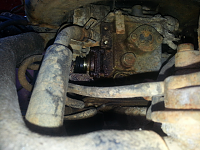
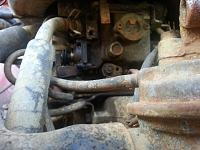
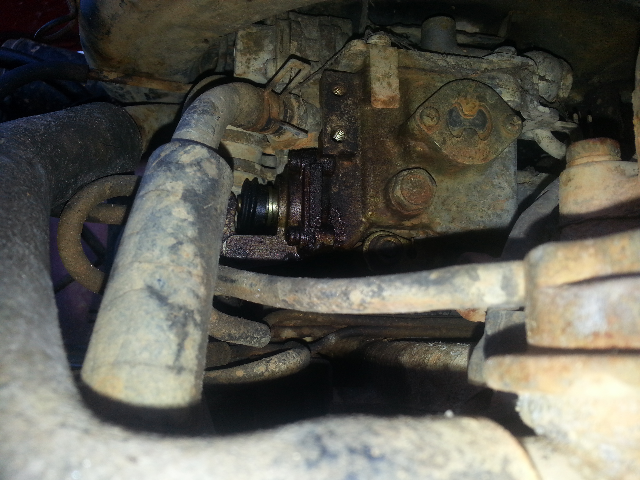
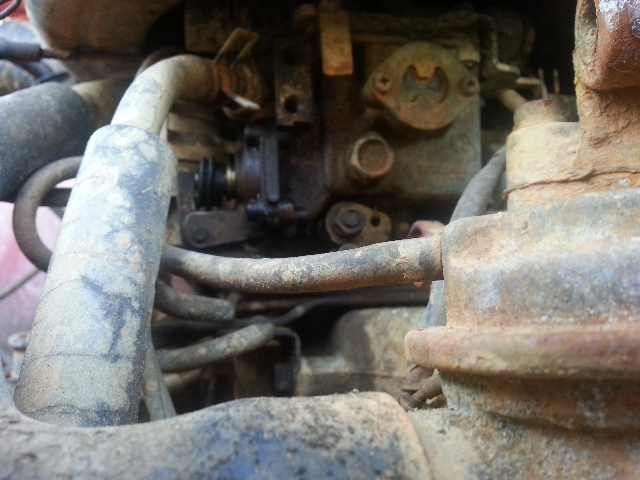
It ran fine until it started to leak on the carb. Leaking right at a little boot/plundger right on the front of it. Can anyone tell me what this is?
 Dec 13, 2013 | 09:19 PM
#4

Registered User
Joined: Jul 2012
Posts: 452
Likes: 3
From: Sacramento, CA
As was stated, you can get a rebuild kit at your local auto parts store which will have that diaphragm, or if you just want to replace that part, you can get it at the dealer or an online Toyota parts dealer.
Dec 27, 2013 | 09:45 PM
#5

Registered User
Joined: Dec 2013
Posts: 10
Likes: 0
how does the auxillaryaccelerator pump interact with the manual accelerator pump... my stock carb has a slight hesitation upon initial acceleration . I looked i nto the carb and see a small squirt when I actuated the throttle with the engine off. should i apply a vacume pump to the auxillary pump and try it to see if the squirt is stronger.
Dec 28, 2013 | 07:24 AM
#6
Registered User
Joined: Jul 2012
Posts: 452
Likes: 3
From: Sacramento, CA
The Auxiliary Accelerator Pump (AAP) is coolant temperature controlled via its own Vacuum Switch Valve (VSV). The VSV is mounted on the engine block in its own housing, in between the intake manifold. The VSV has three ports on it, one receives source vacuum from the intake manifold via the metal vacuum rails, one port is connected to the AAP via a rubber vacuum line, and one port goes to the Choke Opener.


When the sensor is cold, as in a cold engine, the sensors routes engine vacuum to the AAP. Inside the AAP is a two sided chamber, rubber diaphragm and an internal spring. Strong engine vacuum pulls the diaphragm away from the carburetor body, compressing the spring, which draws in fuel from the float bowl. One chamber contains vacuum, one chamber contains fuel, both are kept separate by the diaphragm.
Upon acceleration, vacuum is now low, too low to compress the internal spring. Now the spring returns to its shape which presses against the diaphragm which now forces the chamber with fuel out into the carburetor throat. The fuel from the AAP will flow out of the same jet into the carburetor throat as does the fuel from the main accelerator pump. This fuel circuit is protected from fuel traveling in the wrong direction via check balls.
Once the engine coolant reaches a set temperature, the VSV then switches the vacuum from the AAP to the Choke Opener and remains there. Now the AAP is non functioning by design. Once the VSV reaches a certain cold temperature, because of the coolant, the VSV then switches internally back to applying vacuum to the AAP on the next engine start up.
What's common is that the rubber diaphragm fails in some manner and no fuel is added into the carburetor when accelerating. What can be checked on a cold start up, is pulling the vacuum line at the port on the AAP and see if fuel comes out of it. No fuel should come out of the port as it is kept separate by the rubber diaphragm. The other test is, as you stated, apply vacuum, on a cold engine, to the port with the engine off. Then remove the vacuum and you should see some fuel squirt out of the same jet as you saw when manually operating the throttle arm. Do not turn the throttle arm when you release the vacuum. Just see if gas comes out the same jet.
Or perhaps the VSV is defective.
When the sensor is cold, as in a cold engine, the sensors routes engine vacuum to the AAP. Inside the AAP is a two sided chamber, rubber diaphragm and an internal spring. Strong engine vacuum pulls the diaphragm away from the carburetor body, compressing the spring, which draws in fuel from the float bowl. One chamber contains vacuum, one chamber contains fuel, both are kept separate by the diaphragm.
Upon acceleration, vacuum is now low, too low to compress the internal spring. Now the spring returns to its shape which presses against the diaphragm which now forces the chamber with fuel out into the carburetor throat. The fuel from the AAP will flow out of the same jet into the carburetor throat as does the fuel from the main accelerator pump. This fuel circuit is protected from fuel traveling in the wrong direction via check balls.
Once the engine coolant reaches a set temperature, the VSV then switches the vacuum from the AAP to the Choke Opener and remains there. Now the AAP is non functioning by design. Once the VSV reaches a certain cold temperature, because of the coolant, the VSV then switches internally back to applying vacuum to the AAP on the next engine start up.
What's common is that the rubber diaphragm fails in some manner and no fuel is added into the carburetor when accelerating. What can be checked on a cold start up, is pulling the vacuum line at the port on the AAP and see if fuel comes out of it. No fuel should come out of the port as it is kept separate by the rubber diaphragm. The other test is, as you stated, apply vacuum, on a cold engine, to the port with the engine off. Then remove the vacuum and you should see some fuel squirt out of the same jet as you saw when manually operating the throttle arm. Do not turn the throttle arm when you release the vacuum. Just see if gas comes out the same jet.
Or perhaps the VSV is defective.
Last edited by slow-mo; Dec 28, 2013 at 07:36 AM.
Trending Topics
Jan 6, 2014 | 08:09 PM
#9
Registered User
Joined: Dec 2013
Posts: 10
Likes: 0
carb
i took the carb apart for the 3 rd time . this time i soaked it in a new can of carb cleaner for 2 days.. i took it out and banged it on the work bench acouple of wacks . i shook it and could hear the balls tinkling... i put it back together and now it runs like a brand new truck. but the kits come with brand new balls. boy they got balls to send out a kit with balls for a carb that has unserviceable balls.

Thread
Thread Starter
Forum
Replies
Last Post


