When you click on links to various merchants on this site and make a purchase, this can result in this site earning a commission. Affiliate programs and affiliations include, but are not limited to, the eBay Partner Network.
hey guys. light at the end of the tunnel for getting my 1980 project on the road. the last hurdles were the horn, turn signals, and reverse lamps. I fixed the horn with a .22 shell on the contact lol ive finally sourced a reverse lamp switch for the L43 but my turn signals are acting up. heres my issue. when the switch is used at the column, the signals will blink ONCE and then stay on. the hazards work as designed. I have some small LED front turn signals, if that matters. I tracked down the correct flasher from Toyota for this truck and can order it, just wondering if that is the issue since my hazards still work fine and I didn't see multiple flashers in the parts list for this truck. any advice is appreciated. I assume since power is getting to the lamps, and staying on solid, that the issue is the flasher but fire away. this is a budget trail rig build but id like to fix it the right way.
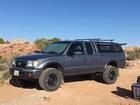
That's a nice looking truck! In most cases turn signal issues are caused by bad grounds, but in this case it might actually be the LEDs. Your system is meant for more voltage. It can't tell the blinker is actually working since the LED draws so little, and so it doesn't work.
That's a nice looking truck! In most cases turn signal issues are caused by bad grounds, but in this case it might actually be the LEDs. Your system is meant for more voltage. It can't tell the blinker is actually working since the LED draws so little, and so it doesn't work.
THIS is exactly what I thought when I first hooked them up. so heres my question, why do they work fine on hazard mode?
I don't know enough about the electric system to tell you any more. I just remember hearing what I wrote in my first post about LEDs. I could see the hazards using a different mechanism somehow than the blinkers, but I'm completely guessing now. Someone here will definitely know. If you're bored in the meantime, you could always try connecting a regular bulb to the wires and see if it works.
I don't know enough about the electric system to tell you any more. I just remember hearing what I wrote in my first post about LEDs. I could see the hazards using a different mechanism somehow than the blinkers, but I'm completely guessing now. Someone here will definitely know. If you're bored in the meantime, you could always try connecting a regular bulb to the wires and see if it works.
yeah ive got some old front signals for an fj40 I had somewhere I can plug in and see what happens, thanks.
If I were to guess, and I am, I would suspect one of two possibilities: First, it could be that two bulbs alone (turn signals) don't put enough load on the flasher unit to make it function properly, as 83 suggested, but 4 bulbs (4 way flashers) DO create enough load. Twice the load, yes?
Second, that the flasher unit for the turn signals needs a certain amount of current flow, and only 2 LEDs don't draw enough to make it function, as we've pretty much established already, but that the flasher unit for the 4-ways, IF there is a seperate one, may need less current to make it function correctly, and once again the current draw by the 4 bulbs, and their wiring, which does count into the equation, is enough for proper flasher unit operation. In other words, the turn signal flasher unit needs X amount of current, but the 4-way flasher unit need less than X to function.
A third possibility just occurred to me, is that IF you've only check the turn signals on one side, could the bulbs and wiring on one side draw less current than the other? Dirty connections, bad wires, something is creating a higher current draw on one side than the other. Thus, when the flashers go, there is a high enough draw to make the flasher unit function properly.
Having gone through all that, I would suspect that the 4 bulb vs 2 bulb situation is the real situation. A possible solution is to put a resistor in-line with a bulb on each side to create a higher current draw for the turn signals so the flasher unit will function. Wouldn't take a very large resistor, maybe 3-4 ohms, 10 Watts resistor would probably do the trick. After all, how great a resistance do the regular bulbs and wiring create? Not a lot. More than the LEDs, yes, but not a lot in the overall scheme of things.
I wish you good luck, and hope this is a little helpful
Pat☺
If I were to guess, and I am, I would suspect one of two possibilities: First, it could be that two bulbs alone (turn signals) don't put enough load on the flasher unit to make it function properly, as 83 suggested, but 4 bulbs (4 way flashers) DO create enough load. Twice the load, yes?
Second, that the flasher unit for the turn signals needs a certain amount of current flow, and only 2 LEDs don't draw enough to make it function, as we've pretty much established already, but that the flasher unit for the 4-ways, IF there is a seperate one, may need less current to make it function correctly, and once again the current draw by the 4 bulbs, and their wiring, which does count into the equation, is enough for proper flasher unit operation. In other words, the turn signal flasher unit needs X amount of current, but the 4-way flasher unit need less than X to function.
A third possibility just occurred to me, is that IF you've only check the turn signals on one side, could the bulbs and wiring on one side draw less current than the other? Dirty connections, bad wires, something is creating a higher current draw on one side than the other. Thus, when the flashers go, there is a high enough draw to make the flasher unit function properly.
Having gone through all that, I would suspect that the 4 bulb vs 2 bulb situation is the real situation. A possible solution is to put a resistor in-line with a bulb on each side to create a higher current draw for the turn signals so the flasher unit will function. Wouldn't take a very large resistor, maybe 3-4 ohms, 10 Watts resistor would probably do the trick. After all, how great a resistance do the regular bulbs and wiring create? Not a lot. More than the LEDs, yes, but not a lot in the overall scheme of things.
I wish you good luck, and hope this is a little helpful
Pat☺
thanks, earlier today I was wondering basically what you are saying, is it possible that all 4 lamps together is enough to make it function vs just one side of the truck which doesn't. I will be throwing on some kind of regular bulb when I get home and checking results. if it persists then I know the LED isn't the issue, and I will replace the flasher. if the LED is the issue ill grab some resistors on the amazons.
I can't swear a single bulb per side is enough. I've not had it happen, yet, but I've heard on forums long ago that the turn signals either don't flash, or flash in a strange manner when a bulb fails. Flashing very fast, I think. This is in trucks with 4 normal turn signal bulbs in, mind you. I haven't lost a turn signal bulb, myself, though. YET Honestly, as far as I know, my bulbs are all factory. You can't beat these Toyotas for longevity, that's for sure!
It's definately worth giving it a shot, though. I do apologize for getting so wordy. Ask me the time, I tell you how to build a clock, you know? Very bad habit.
I have the answers your looking for...
the right answer ended up being a culmination of two things. I sourced the new relay from Toyota and it is JDM AF. It’s not the same part it’s Toyota’s replacement for the original design and comes with directions and an genuine oem Toyota zip tie. After swapping to the new relay I have full operation of all lamps! In both turn signal and hazards. Small issue, now it blinks in fast mode because of the led in the front signal, but hey they work. NOW I believe I can pick up two small resistors and put them in line and everyone will be happy. Here’s pics because threads without pics are dumb.
Ew relay right smack on top of the old one. JDM goodness and P/N for you



 Mar 31, 2020 | 03:22 AM