When you click on links to various merchants on this site and make a purchase, this can result in this site earning a commission. Affiliate programs and affiliations include, but are not limited to, the eBay Partner Network.
So I've had some on-going issues off and on the past year or so. When I add a heavy electrical load at idle the RPM will drop and truck eventually stalls. -- that's the short version
Details
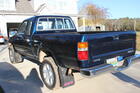
Truck: 1993 4runner, 5sp, 5vz-fe, 4x4
This really started happening after upgrading to H4 headlights with depot housings and an aftermarket (hella) harness. I assumed it was because I was running 90/100 watt bulbs but everything I read said that should not be the case. Problem happened before/after 5vz swap as well. My 3vz ran like crap at idle so i assumed that was the case but since it's started happening post swap, doesn't appear to be the root cause. So the symptoms are -- as I add electrical load my idle will get lower and lower until the truck stalls. I can watch my voltage continually drop until it hits a certain point causing the truck to stall. I can idle it up to get voltage back however, if I run my high beams and roll up the windows and hold the switches too the long truck will buck and start to stall at any speed. Especially with higher wattage bulbs
I can monitor the voltage across the battery terminals with the truck running at temp idling around 650-700 rpm and it is 13.5 or higher and above 14 when cold starting. As I start to add load, headlights, blower, radio, blinkers, etc the truck eventually hits a tipping point and cuts out. I haven't seen it drop below 12.5 before it stalls but I can watch it continually drain. The truck stalls with the voltage across the battery measuring above 12.5 at times. It doesn't buck, gasp, or make any sounds it just cuts out like someone pulled the plug on the ignition. I assume this is because there's enough voltage being pulled away from the ignition that it stops functioning.
I purchased the entire swap from toyonlyswaps, this includes the harness and everything else. All my accessories work including cruise control etc with only one CEL for cat inefficiency because i haven't relocated my rear O2 sensor yet. All new battery cables, grounds, etc. The grounds are on bare metal, i just took a wire wheel to those yesterday to make sure.
For Grounds -- I have 3 total one to the block, one to the inner fender on the drivers side (both of these are off the negative battery post), and one off the head to the firewall (bare metal as best I could with sand paper). These connections are tight, new, and not corroded. The grounds for the headlight harness are attached at both inner fenders and on bare metal. The harness is fused/relayed and pulling directly off the positive side of the battery
I upgraded my charge cable to go directly to the battery through a 150amp fuse using welding cable and a hydraulic crimper to make sure my ends were good and tight with copper lugs correctly sized both at the alternator and the battery terminal itself
There is a cable that runs from the positive battery terminal to the starter then a smaller cable from the starter up to the drivers side of the 80amp fuse. I DID disconnect the stock charging wire from the alternator (I did not originally do so and was quickly corrected by RAD4Runner that i was bypassing the security of my fuses). So I do not have a cable going directly to the fuse box it runs through the starter post.
Battery terminals -- new, no corrosion, tight connections.
Battery is an x2 power AGM under 3 years old that holds voltage just fine for multiple days without being run, no signs of parasitic draw.
I have downgraded my headlights to a set of H4 55/65 watt bulbs for now but can still reliably recreate the issue with the truck at temp and idling. I can turn on the high beams, blower on high, and 4 ways and it'll pull the idle lower and drop the voltage until the truck dies. When I have a volt meter across the battery terminals the voltage leaks out like a parasitic draw until the truck shuts off. I do notice significant dimming of my interior lights (all of them) as well when adding more electrical load at idle but that doesn't sound all that uncommon.
I'm at a loss at this point, especially with the new motor and wiring and it's still happening. I have thought about going to LED's for the tails/turns/etc but would rather figure out the root cause of this issue first because I feel like that's a bandaid.
Next steps (also thanks to Rad4Runner) with my questions next to them
Measure voltage for ignition system with heavy electrical draw -- where should I measure this voltage from?
Measure voltage for fuel system with heavy electrical draw -- is this at the fuel pump itself or somewhere else?
I'd take a look at my Sense wire (white) at the alternator.
When you increase the electrical load and the voltage at the fuse box drops, the alternator's voltage regulator uses the Sense wire to detect the voltage drop and increase the output of the alternator to compensate. If the Sense wire is not reading correctly, the alternator is "blind" and may not be able to supply the extra current demanded. If this theory is correct (and applies to you), you could be pulling the voltage down at the fuse box so far that the ECM just drops out.
You may need to use a voltmeter at both the alternator and fuse box to see if the voltages track when load is applied. If they do, and the alternator output is not rising when load is applied, you might have a bad voltage regulator. I believe the garden-variety alternator tester at any parts store will test that.
I'd take a look at my Sense wire (white) at the alternator.
When you increase the electrical load and the voltage at the fuse box drops, the alternator's voltage regulator uses the Sense wire to detect the voltage drop and increase the output of the alternator to compensate. If the Sense wire is not reading correctly, the alternator is "blind" and may not be able to supply the extra current demanded. If this theory is correct (and applies to you), you could be pulling the voltage down at the fuse box so far that the ECM just drops out.
You may need to use a voltmeter at both the alternator and fuse box to see if the voltages track when load is applied. If they do, and the alternator output is not rising when load is applied, you might have a bad voltage regulator. I believe the garden-variety alternator tester at any parts store will test that.
So I'd be measuring the alternator output (voltage) directly from the post on the alternator and the voltage at the 40amp fuse in the fuse box. As I apply the load, the alternator output should increase and I should see the drop in voltage as the sense wire until the alternator picks up the slack?
What you want is for the voltage at the 40amp fuse to remain (at least approximately) the same under all load conditions. If it does, and your vehicle stalls anyway, then the Sense wire is probably not the issue and I'm barking up the wrong tree.
But if increasing load causes the voltage (at the 40amp fuse, but what you really care about is the ECM) to drop to the point where it all shuts down, you want to figure out why. There will always be a voltage drop down the alternator A wire (the fat one) because it's pushing a lot of current. So you want the alternator output to inch up during load to cancel out that voltage drop and keep the voltage at the 40amp fuse constant. If the sense wire is bad, the alternator doesn't know to raise the voltage. If the A wire is bad, it will have so much voltage drop that the alternator will raise as far as it can (16v?) but it won't help. If your battery is bad (the battery should carry a big part of current spikes) your alternator may not be able to produce enough current to hold up everything.
So, did some testing today and have some interesting results.
Baseline -- no electrical load
Car off just batter voltage -- 12.66v leads connected at battery terminals
Car at idle - 14.26v leads connected to alternator post and negative battery terminal
RPM with no load 740-750 (RPM readings pulled from OBDII reader not my cluster)
--------------------------------------------------
Headlight testing, leads on alternator post and negative battery terminal
Low Beam, Idle -- Initial surge to 14.33v settled to 14.27v with a noticeable load on motor
High Beam, Idle -- Initial surge to 14.28v with what seemed like a very slow parasitic draw that I let go for a few minutes and stopped it at 14.10v RPM fluctuating from 680-700 RPM
Turns the lights completely off and voltage dropped to 14.08v turned the lights back on to high beam, voltage dropped to 14.03v and truck stalled
Restarted truck with High Beams still on -- 14.03 and could cycle High-Low beam without issue. RPM seams to fluctuate around 80RPM never recovering to the original 750 range withload left on it
--------------------------------------------------
Blower testing, leads on alternator post and negative battery terminal
Baseline reading at idle with no load since the truck had been running awhile -- 14.08v
Blower at low speed -- 14.16v
Blower at high speed -- 14.32v -- This seems to indicate the voltage regulator is getting the correct signal from the signal wire and upping the voltage when necessary
--------------------------------------------------
Blower + Headlight testing, leads on alternator post and negative battery terminal
Baseline reading at idle with no load -- 14.13v
Low beams and low blower speed -- immediately jumped up to 14.24v settled at 14.22v
High Beams and high blower speed -- immediately jumped to 14.29v before stalling with no noticeable voltage drop at alternator output. Attempts to restart the truck with both high beams and high blower speed but would die immediately after firing off
Held engine at 2k RPM, High Blower Speed and high beams -- 14+ volts at alternator output still (forgot to write down exact reading) truck dropped to 200ish RPM immediately, stumbled around a bit with me giving it throttle, and then died.
--------------------------------------------------
So before getting into my other testing I also took the truck to my local oreilly's and they run both an alternator test and battery test both checked out perfect. That combined with my results above tells me my alternator output is not the problem and it is providing more than enough voltage to the system for it to continue to run. Read on for some actual progress.
After all that and finally seeing it stumble when I held it at 2k rpm I decided to check my fuel pump voltage. I have a video that I will link down below as well but the results were interesting at least
Leads are now on the power wire for the fuel bump and a bolt for the back seat belt. I verified I has getting consistent readings with this setup before continuing on.
baseline, no load, idle -- 13.08v
low beams, idle -- 13.04v
high beams, idle -- 12.98-13.00v
blower low speed, idle -- 13.07-13.08v
Blower high speed, idle -- 13.02-13.04v
Low beams, blower low speed, idle - 13.01-13.02v
high beams, blower lower speed, idle - 12.96-12.97
low beams, blower high speed, idle - 12.92 - 12.93v
high beams, blower high speed, idle -- initial drop to 12.4v, then to 12.3v, then to 12.2v. At this point I started cycling the high beams and could watch it go up and down but no stall. When I cycled the blower off the second I turned it back up to high the voltage at the fuel pump dropped to all 0's and the truck stalled.
Once it died, I can recreate the condition of the voltage at the FP going to 0 when turning on either the HB or the blower to high speed with the other on it's high setting as well. I did not cycle the key, would just crank it back over and alternated which was on at start (high beam or blower high speed) and would cycle the other one. First hit, fuel pump voltage would go to 0 and it would stall. Which mimics the behavior I was seeing when this happened while driving, only then it was high or low beam plus the blower would cause it to stall but I had the 90/100w bulbs in where as now i have the 55/65w bulbs in. I will say, no matter what I had turned on when I started the truck it cranked hard and fired right up each time.
video of it happening https://photos.app.goo.gl/LSa75atxcFTrtVd87
While watching the video a few times, I find it interesting when I turn the low beams on it drops to 10v then recovers to the 12.7-12.8 range. The blower was on high for the entirety on the video.
Have to run out for a bit this afternoon but I am curious where my testing should go from here.
Is it still worth checking the readings at the 40amp fuse? I would prefer not because it's a giant PITA with the intake for the 5vz being there but I can find a way to make it work
Where should I go to troubleshooting the fuel pump voltage drop next?
Should I look at running a wiring directly to the drivers side of the 80am from the battery positive terminal instead of battery positive terminal --> starter post --> 80amp fuse?
I did my best at formatting this is an easily readable way. Let me know if there's anything I can do to make that part easier as well.
I believe so. It is on my 88 4runner. I think you can power the fuel pump from the diagnostic plug on the drivers side of the engine. the fp terminal to positive. This supplies 12v direct to the fuel pump. maybe try that and repeat your testing.
I would do the jumper-test suggested by rmsdon; that would eliminate the COR-VAF circuit from the fuel pump. If the truck stops stalling, it will point you to the problem area.
I assume that when the truck dies you still have electrical everywhere; the dash lights are on, you can turn on the headlights, etc. If you lose other electrical when the truck dies, your problem may be elsewhere.
Some modern vehicles don't have fuses on the headlight circuit, but self-resetting "thermal" circuit breakers. (The idea is that headlights are a safety item, and if you have an intermittent short you'd like the vehicle to try re-lighting them.) But even if you had those, it shouldn't affect the engine.
Note that none of these suggestions have anything to do with your new headlights.
Jumper test is my first step today after inspecting the COR. I know when I first bought the truck it had no inner fender and no grommet on the hole for where the antenna cable ran out. I know this because I eventually ran my CB radio out there and covered it with tape after making it larger. I have since picked up an inner fender liner and completely covered the hole but I believe that hits directly where that COR is so it could have gotten wet.
I need to find the Jumper config for the 5vz (easy enough with some googling) and I will report back! Appreciate all the replies so far, I have actually been enjoying getting a little more confident in my electrical troubleshooting.
Short update -- I found my diagnostic port and on the inside it has the mappings for it. Connected to the Fp to 12v (directly to battery positive sits its right there) and nothing happened so time to actually google how to jump that correctly.
However, the COR was a bit more telling...photo below. It's gotten wet and has most definitely been deteriorated somewhat. Now I know it works since the car starts and runs just fine. Trying to remember back to the couple EE classes I took in college, electricity will follow the past of least resistance which could explain how the voltage is being pulled away from the FP circuit if the resistance is higher than it should be within the relay. Either way, it needs to be replaced. The female plug isn't in too bad a shape (also pictured below). Need to check to see if I can pull that apart to clean it.
Was able to get the relay apart...how it still works at all is beyond me
I don't want to put it together and have it back in the truck at this point. I don't know if I can get it locally but mcgeorge toyota online has it. I am going to call my local dealership first thing tomorrow morning to see if they have one in stock and what their price is/how quick they can get one. Mcgeorge is usually about a week (at least) to get parts from. Toyota parts deal also has it, for 2$ more than mcgeorge and they ship from Cali (closer than FL to me) so I might go that route too.
you have the 3.4l swap. i dont know if the harness for the swap retains the fp function at that connector. i have the off road solutions harness and i dont think i ever tried that.
you have the 3.4l swap. i dont know if the harness for the swap retains the fp function at that connector. i have the off road solutions harness and i dont think i ever tried that.
I don't see a connector in that spot for fp on the diagnostic port, so I bet you're right.
New relay ordered from mcgeorge Toyota online. My local dealership wanted 138$ and they would have to order it anyway, mcgeorge was 100 even with shipping. Should have it mid/end next week.
Excellent troubleshooting!
Only replacing parts after verifying they are bad. Your truck and pocket are happy.
Originally Posted by COMTB
New relay ordered from mcgeorge Toyota online. My local dealership wanted 138$ and they would have to order it anyway, mcgeorge was 100 even with shipping. Should have it mid/end next week.
McGeorge, Lakeland Toyota and Toyota Parts Deal had been my go-to online source for OEM parts.
Excellent troubleshooting!
Only replacing parts after verifying they are bad. Your truck and pocket are happy.
McGeorge, Lakeland Toyota and Toyota Parts Deal had been my go-to online source for OEM parts.
Thanks Rad! While I love the parts cannon as much as the next guy, I do my best to only fire it when it's absolutely necessary.
TPD is one of my favorites since they ship from Cali and can usually get here quickly. I almost ordered from there but decided McGeorge should get my business this time. Kind of a toss-up with shipping nowadays though.
Wow! Part showed up yesterday via USPS, I'm borderline amazed. Was originally scheduled for delivery on Saturday. Naturally was excited and immediately installed it. I didn't have time to do formal testing with a multi-meter, hoping to get to that today but initial signs are good! I was unable to get the truck to stall at idle with it at operating temperature no matter what I did. Even tried quickly switching the blower on/off (immediately all the way up to high) and cycling the high beams to create the spiked load on the electrical system. The RPM would dip and all the interior lights would dim but it never stalled so I am hopeful this resolves an issue that's been going on for over a year!
I'll post test results tonight or tomorrow when I have the time to go through verifying voltage at the FP.
Finishing up this thread -- replacing the COR for the fuel pump has fixed the issue. I put the 90/100 watt bulbs in and monitored the voltage at the FP it dropped to around 11.1volts with the high beams on, blower on high, radio, and the 4ways flashing. When I checked voltage at the battery it was hovering around 12.5 so the system was definitely not keeping up at idle but the truck never stalled. The second I would blip the throttle the voltage would bump up to 13.3-13.5 and that wasn't even close to 2k rpm.
All testing was done at idle and I was never able to replicate the truck stalling where as before I could reliably get the truck to stall cycling either the high beams or the blower from off-->high with everything else on. So calling this resolved!
Looking at the photo of your old COR, I doubt your problem was ever an issue with electrical loads. That relay was long past end-of-life. But whatever the back-story, I'm glad you fixed it. And thanks for the wrap-up.



 Jan 7, 2022 | 01:22 PM