When you click on links to various merchants on this site and make a purchase, this can result in this site earning a commission. Affiliate programs and affiliations include, but are not limited to, the eBay Partner Network.
I have been trouble shooting for a couple months on this issue!
After truck runs and heats up for 20 minutes I turn off truck and it wont start backup! I have researched many threads on this issue in here and many other forums! wait 5 to 10 minutes starts and runs great. This went on for probably a month before original igniter finally gave all the way out. I took it to a dealer shop for diagnostics - 2 weeks and 450 dollars later they gave me back the truck barely able to run with a corolla igniter in it! Was only able to drive 20 mph home and if tried to give more gas it would try and die.
Bought used igniter and coil back from yard for 100 with same part number TOYOTA 201 installed ran great for 45 minutes and stalled waited 10 minutes started backup and drove home! Could drive it to store that was close but not a long drive for more say 10 minutes or the igniter would fail again and have to wait for it to cool down before restart. I could go on and on with explaining what I've already been through but will try and keep it short.
What I replaced trying to troubleshoot this =
big 3 upgrade with number 4 wires and mine was like 6 upgrade meaning =
wire from battery power term to fuse box under hood was number 8 wire then about 4 inches from battery factory sliced in like a number 12 wire so upgrade to 8 wire all the way to box
also ran number 10 wire from battery negative terminal to igniter-coil pack mounting frame because it grounds through the frame it's ,mounted on and also grind
all paint to make sure grounds were to clean metal
replaced all grounds with 4 gauge from inner finders to battery and the one in back top of engine to firewall....
new fame to engine ground
engine to battery ground
power cable from alternator to positive on battery
took fuse box apart and check all connections looked good!
replace EFI relay
fuel relay
relay above ecu in passenger kick panel that controls full pump and other functions from ECU
Toyota tested wire from igniter to ECU and no lose of power
Toyota said losing 1.5 volts from alternator power wire to battery and the big 3 i did fixed the lose!
checked coil reads good.
tested pickup coils in distrib and readings were good per throwing code 12 not reading crank so g1 g2 and g- all within spec.
I run 2 computers original computer got jetted and bought used computer and switch them for passing emissions test and igniter goes out while running BOTH ecu's so figure not ECU problem....
alternator checked at autozone checked good for output but now researching voltage regulator testing and problem causing.
why I changed EFI we were checking with heat gun all relays in fuse box under hood and it was hot so replaced it. researched they do run hot LMAO AFTER REPLACING.....
I finally wore out the second igniter - coil pack and put the 3rd pack in 2 days ago.
runs great but is heating up so I don't drive it long enough to start the igniter problem I think once they do fail they keep doing it tell they go out for good! The original ran for like a month and I drove it on a 200 mile fishing trip it wouldn't start a couple times on trip but after waiting it would start until it had enough and failed all the way a few weeks after getting home from trip..
two days ago I put my old distrib in thinking it could still be the ditrib causing the problem. Started right up and ran great!..
Now today I drove and got gas and came home and left it at idol and got the heat gun. You see you can let the engine idol for 20 minutes or so and feel the igniter heating up! On the second igniter we let it get hot enough to kill the engine and then we checked the new relays I had put in the fuse box! Well we took out the EFI relay and plugged it back in and it started right up! We let it die again and did the same thing taking EFI out and it was like it reset something and it would start right back up! It will also reset if you take the fuel relay out same way! --- GO FIGURE????? but that is why I replaced the relay in kick panel...
Back to today and heat gun. I was watching the temp on the side of the igniter and my aftermarket E-FAN came on and the temp started rising on the igniter, it rose 2 degrees and when the fan shutoff it started cooling down! Fan would come back on drawing power and igniter would start climbing in heat right away it finally got to 96 degrees so I shut it off knowing by touch that I was getting close to burning this igniter for the first time and was trying so save it!
So researching voltage regulators and what problems they can cause because it seems that maybe when the alternator has to output more power the regulator is not sending correct volts or amps to ignition parts.... Plan on taking it out and having it tested but I know that it has at least 350,000 miles on it so was just going to buy a new one anyway (alternator) and put it in tomorrow and see if things are fixed!
This has gone on for months and I have read about every CODE 12 THREAD none to man LOL even with old distrib it's still heating up!
ran for 20,000 miles without a problem after I installed the motor - NOTE = first motor I have ever installed and i'm not a good mechanic on rigs and never have liked working on rigs but I have dropped rear - end tranny - all new suspension now engine and know about everything from springs and shocks from new front axles to gears to everything on this rig i have worked on! Now this "ELECTRICAL PROBLEM" GRRRRRR
I bought this truck brand new and put 470,000 miles on it. At 175,000 Yoyota dealer blew up original motor doing tune-up (another story) so had one built and installed til it gave out.
So I just installed a 3.0 raptor performance motor in it 20,000 miles ago!
with jetted computer
K/N filter charger
downy headers
2 steps up on cam and everything else they put in the performance model from raptor motors
529 gears
7in lift
35 12.50's on 15 inch deep dish rims
2 3/4 inch almost straight custom exhaust from headers
Double welded smitty built bumpers all the way around!
E-FAN
5-SPEED
I have ran Toyota trucks since 1984 when I bought a 1983 22r 4x4 short bed brand new until I bought this one brand new in 1994 and have never had a Toyota truck let me down until now "EVER" i even drove my 83 home 200 miles in 3rd gear to get it home because of the faulty trannies back then!
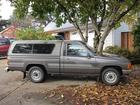
I can't tow my boat for Salmon fishing or take it camping or anything! Can anyone help me dry my tears and troubleshoot this son-of-a-b..... THANKS IN ADVANCE AND IT MIGHT BE FIXED WITH THE NEW ALTERNATOR BUT I HAVE THOUGHT I HAD IT FIXED MANY TIMES BEFORE---- THE PICTURE YOU NEVER WANT TO TAKE!
I have a question. WHY have you been messing with used igniters & coils to try to fix this? It's impossible to know the history on these pieces so there aren't reliable replacement parts. That's why the boneyards won't guarantee used electrical parts. Why not just get some NEW, quality replacements, like these?
I've always used Standard Motor Products stuff in the Toyota's I've fixed & they last & work well.
There are a few things I can tell you about Igniters (Ignition Control Modules) & Ignition Coils that I have learned from experience. It's usually the coil going bad that eventually takes out the Igniter. I've also learned that an ignition coil can test within spec for Primary & Secondary resistance when COLD, but be out of spec when it gets HOT. It's worthwhile to run the vehicle to full temp, shut it off & then measure/test the coil for resistance spec. The windings inside the coil, as they age, get fatigued, due to all the current that they carry, & lose some capacity to carry that current (higher resistance). Heat just makes the problem worse. The high resistance in the coil damages the switching transistor in the Igniter.
The cheap Chinese stuff never lasts. I had 1 cheap coil (Spectra Premium brand) burn up 3 different Igniters/Ignition Control Modules until I figured out that the cheap coil, after less than 6 months of service, was going out of spec when hot (high primary resistance). I changed the coil out for a Standard brand and have had no problems since.
The symptoms you describe (2nd paragraph in your post) describes EXACTLY what mine was doing. Sometimes I had to wait 20 minutes (in summer) to let it cool down, then it would start back up like nothing happened. Eventually though it wouldn't start at all, even cold, once the coil took out the Igniter/ICM.
The original Toyota Part # for the Igniter is 8962112050. They are still available but the best price I've found for a new one is $400+ (regular MSRP $577!), which makes the Airtex or Standard brand units a great value, and either one is good quality.
Only other thought I have is it could be your pickup coil in the distributor. Those can have the same "hot" resistance problem as the ignition coil, so it's a good idea to test that for resistance hot as well.
The first thing we did is put a new coil in months ago and yes it may have been a cheap one from autozone but figured it would fix the problem and did not! It didn't take a month to show the new coil didn't fix it - it showed right away so went on to other trouble shooting!
The original code was 12 "distributor" I installed brand new distrib in brand new engine when installed test pickup coils which tested within spec so then put in my original distributor and it still heated igniter to point of shutting engine off.
As far as parts all the research says buy good expensive igniter or buy used toyota igniter because cheaper made ones have heat removing alloys in igniter to help cool them and cheaper outfits selling them do not have this! I had actually bought a brand new one right away and the truck barely started when installed so put my original one in and it ran much better with it since it had not gone out all the way! The used igniters i bought from yards were in "IGNITER COIL PACKS IN MOUNTING FRAMES" From toyota trucks. So I have tried 3 different coils = my original and then 2 other coil-igniter packs. If I could be sure it was coil i would go get a good one and if I could prove it's the igniter i would buy a good one and be done but everything is telling me it's neither!
I will take your advice and double check the one that is in it to make sure now knowing it could be the problem and have it tested under stress thank you for pointing that out!
This week I put a heat gun on the igniter and watched engine get up to running temp and it seemed normal temps like 70 degree's so I turned on all lights and wipers and heater fan and blinkers to see if it would start heating up and no change then I throttled to 3000 rpm watching heat on igniter and no change at all!
"THEN MY FLEX-A-LITE FAN CAME ON" The temp started rising right away! Then when it shout off it started to cool down. It turns on again and it would rise about 3 degree's and when shutoff it would only cool down about 1 1/2 degree so the cooling was not catching up with the rising heat of when the fan would turn on. So with all this being done we (2 friends helping off and on) Think there is a short in the fan or wiring The fan has 300,000 miles on it and they wired it straight to the fuse box and into the ignition wires to get the "KEY TURN" off and on for the fan but we think they put it in wire line with all ignition control straining all spark or volts and amps of whole system.... now it has run with no problems for a long-LONG time but now it's stressing my whole system "WE" think LOL.....We had traced all wires and took apart the fuse and relay box under the hood weeks ago and found no bad connections with old fan wring but now I checked where wiring goes into fan clips for power and the mount is lose inside the fan body..... I just found this out like 2 days ago.
I think we found the problem but will be taking it to a battery alternator shop this week to do much better stress testing for brand new alternator - igniter wires - now coil thanks to you! battery which also might not be good enough to take max stress which I never thought of because starting has been no problem and no battery light but battery shop says it could test good under light stress and be failing under hardest stress..... I will pull my hair out if it's just the battery but these electronic systems have to have all power or something will fail!
UNDER RESEARCH = Heat is most likely a bad ground or short that is why I did the ground and power cable upgrades... I figure I had ruled out the coil and igniter weeks ago but with your post will make sure they test the coil to the limits!!!
Right now I'm looking into first trouble shooting the E-FAN it just makes since that if a bad ground in that could mess everything up and that is what made the igniter heat-up when nothing else did with most electrical on and ran at 30000 r's did not bother coil-igniter at all!
I appreciate your reply and gives me something to make sure to rule out this week... THIS HAS BEEN A TERRIBLE EXPERIENCE TO SAY THE LEAST.
Now it might be the first thing we did "new coil" or a simple "battery" I hope it's the fan wiring inside the fan then I wont feel so stupid Like my friends and I said at the start months ago it's probably something "STUPID" like so many times!
Thanks again for replying i really needed that info too!!!!
No problem, just trying to help. Electrical problems can be the worst to track down. You just have to take it all in order. No need to feel "stupid" about any of this, as the process of going through things is always a learning process, and no two problems (especially electrical ones) are almost never the same.
The 'cheap coils" from Autozone whose part number starts with a "C" & cost something like $20 are made by Spectra Premium. These are the exact brand of coil I had so many problems with, so if that's what you have I'd advise replacing it with a quality one, if you haven't already. Standard Motor Products brand is the one I stand by. You get what you pay for. I only advised going with new, good quality parts because you can then eliminate those parts as the problem, and maybe make it a little easier to track it down.
Is this "Flex-A-Lite" fan an auxiliary fan, or the main cooling radiator fan? This isn't clear. Also, it's very possible there is a problem with that fan, especially since it's seen 300K miles of service. I'd say you more than got your money's worth out of it, & it may be time (or past time) to replace it. Seeing how your testing seems to indicate that the operation of that fan causes the problem, I'd also be looking at it hard. Again, the wire winding in the fan motor could be fatigued after exposure to so much engine heat after so long a time, & the winding could have extra resistance in them because of it. This causes the fan to draw more power to work, especially when the fan motor starts. So you may be right about it "straining...volts and amps".
There is also the possibility that the fan's controller is malfunctioning. I would assume the thing has a relay in it to turn the fan circuit on & off. 300K miles of service on a frequently cycling relay? Likely the relay contacts are pitted & worn, another possible source of high resistance & current draw. Relays don't last forever. Relay contacts are basically another "connection" in a circuit so you have to treat them just like a wire to terminal connection, even if you can't see them inside the relay's case. I have no idea if the relay in the Flexalite controlled is replaceable or not so, again, a new fan setup with a new controller may be your way to go here. I had a similar problem with my truck, with the fuel pump relay. The contacts inside were very pitted after 400K miles of use, & were causing high resistance across the contacts. This drew more current but dropped the voltage to the fuel pump, causing the pump to run too slow & not provide enough fuel volume. So the truck would sometimes stall out due to lack of proper fuel volume. Basically the same problem. The "fan clips for power mount is loose" you mentioned could also be a resistance problem. Loose connections may arc and often take more than usual current to pass the electricity across that arc. A bad ground is just the same and in fact could be worse, because DC power flows from negative to positive. That's why good "ground" is crucial in DC circuits. Always verify that connections are clean and tight.
Also loose connections can give you those erratic symptoms, sometimes it's acting up, sometimes not. The loose connection could settle in a decent contact position & all seems normal, or be jumping around on the contact causing the issue. This is the one that causes you to pull your hair out.
Quote: "Like my friends and I said at the start months ago it's probably something "STUPID" like so many times!" I've learned that 9 times out of 10 it's usually something simple or just so small that it's easily overlooked, like a terminal connection or contacts inside a relay that you can't see. That's why you just take EVERYTHING in the circuit in order, from power source to end of the "stream". Test every component & verify every connection. You eventually find it & fix it. Keep going & be patient with yourself, you'll get there.
... So researching voltage regulators and what problems they can cause ...
I don't see where you've checked the voltage on the main bus. Trivial to do; with the engine running, put your multimeter on the battery posts. You should have 13.9-15.1volts (at 25°C). (You really care about the voltage AT the igniter, but there aren't too many failures that cause the voltage to be higher there than at the battery posts. But since the first thing you did (should have done) was get out your meter, go ahead and test that too.)
You can blame the Chinese or heat, but over-voltage is often death to electrical components. And easy to check.
scope103 -
You are correct, charging voltage should be checked and verified to be in spec. However, it has not been my experience with vehicles that a faulty voltage regulator causes an over-voltage condition; in fact just the opposite happens, not enough voltage. I've dealt with quite a few faulty voltage regulators before (both external & internal to the alternator) and they either cause reduced charging voltage or block it completely. I would think that if he had an over-voltage problem with the charging system, he would have noticed quite a few other electrical items on the truck failing first before the Igniter, plus other symptoms like dimming or flickering lights. Also, the voltage regulator on his '94 is solid state, and heat is also a big killer of electronics, including voltage regulators. If he is having problems with his aux cooling fan not working the way it should, he may very well be having a heat problem.
I only mentioned the Chinese parts because their quality is suspect in my experience, and the extra resistance they can produce in an electric circuit produces heat, damaging the part further & possibly damaging parts connected to it. This is a basic concept of electrical resistance, known as Joule Heating. https://en.wikipedia.org/wiki/Joule_heating
The purpose of the voltage regulator is to regulate the voltage DOWN, not up. (The alternator can easily hit 20-25 volts running open loop.) While the alternator can certainly fail in a way that it produces no output, over-voltage is the more common failure of the regulator (the most common symptom is a damaged battery, but over voltage is over voltage).
Today it's a global economy; saying all Chinese manufactured parts are suspect is like saying all parts from Autozone are suspect. You've not old enough to have directly experienced this, but in the first 1/3 of the 20th Century, one of harshest pejoratives you could give about a product is to say "it's made in Japan."
"The purpose of the voltage regulator is to regulate the voltage DOWN, not up." So, explain how, exactly, you can get an over-voltage if the regulator fails? The only way I know is if one of the contact switches get stuck in a closed position, but as I said, this is rather rare, as those components almost always fail in the "open" position, by design, especially in the more modern internal, solid state regulators. So I guess we're going to have to agree to disagree.
Yes, I may not be old enough to have direct experience with the first 30 years of the 20th century, but I certainly know my history very well. If you will go back and read exactly what I said, I have DIRECT experience with Chinese made auto parts, and I have never had such a part (electrical or otherwise) last beyond 6 months of service. This is also why I said :their quality is suspect IN MY EXPERIENCE. Your mileage may vary but personally I will NOT recommend the use of such parts, as they have repeatedly proven to me that they are not worth using. And for the record, I did not slag ALL parts from Autozone; I know they also stock some quality parts that are worth using, but they aren't made in China. I stand by what I said earlier, you get what you pay for.
"The purpose of the voltage regulator is to regulate the voltage DOWN, not up." So, explain how, exactly, you can get an over-voltage if the regulator fails? ...
It's a little easier to see with an old-style electro-mechanical regulator.
When you turn the key to on, current flows through the alternator field, but there is no output voltage as the rotor isn't turning. As the alternator spins up, the output voltage rises. In the regulator, that voltage is applied to a "relay." When the voltage hits the target (somewhere around 13.9-15.1v) the coil has enough current to pull in the armature, opening the field circuit, which cuts off the alternator output. The voltage sinks, the "relay" releases the armature, closing the contacts, and re-energizing the field. The cycle repeats. If that fine wire in the coil breaks, the armature doesn't move, and the output voltage just keeps rising. Same when the contacts "weld" together. Modern regulators use FETs and IGBTs, but the operation is the same, and they can still fail "closed" where the alternator just keeps producing more and more voltage.
Of course, there are other ways that parts of the charging system can fail where the voltage just goes to zero and stays there. When that happens, the alt light goes on, the headlights dim, and 20 minutes later the engine stops. So you appear at the mechanic, who tells you your regulator "failed" and you need a new alternator. But in the case where the regulator fails "closed," there's no alt light, the engine keeps running, and if you're paying attention you might notice that your headlights are brighter. That's a good thing, isn't it? Well, after a month you fry the battery from over-charging, and your truck won't start. You haul the battery down to your local parts store, where they put it on the tester and confirm "Yup, you need a new battery." If you were lucky enough to have the battery replaced by a competent mechanic, he would also check the charging voltage, and he wouldn't let you leave without getting a new regulator (today, usually a whole new alternator). But if you're just Joe Blow down at the parts store, you put in that new battery, and curse the crappy parts you get when that battery also dies in a month.
This might be why some people think regulators can "only" fail open; it's obvious when that happens, but less so with the common failure of where the regulator never opens in the first place.
Don't believe me? (Why should you, I'm just "some guy" on the internet.) If you follow Toyota's instructions http://web.archive.org/web/201102051.../2onvehicl.pdf , you first check the charging voltage, and if it's over spec you replace the regulator. If it's under spec (less common; such a failure usually means no voltage at all), you check the alternator open-loop output, and if that's okay THEN you replace the regulator.
Originally Posted by 13Swords
... you get what you pay for.
Ever notice how, in the real world, when someone says that they're trying to sell you something they know is over-priced? Heck, if that were even partially true, no one would ever shop at Harbor Freight!
I took the truck to battery shop and put it on the tester... everything checked out ok with lights and most electrical on with new alternator put in then the E-FAN TURNED ON = dropped alternator output by 1 1/2 volts or amps or whatever and the guy said yeah that fan is taking a lot of power from the alternator.
When ordering my new flex-a-lite fan #674 it states that the main power to fan motor pulls 19.5 amps and that power wire has a fuse inline straight to battery + positive... it also has another power wire that can either go to KEY TURN ON wire or STRAIGHT TO POSITIVE POST TOO!
My old e-fan was actually wired right into my EFI relay wire in the fuse-relay box under hood. So we took that wire out and rewired the whole setup this time taking both power wires to battery positive terminal which if engine is still hot when key is turned off it will still run til coolant is cooled to temp! I did this to make sure the E-FAN WAS NOT MESSING WITH ANYTHING IN THE IGNITION SYSTEM and would be running all ny itself! I had that fan installed by a 4x4 shop before and why the put it to the EFI i'll never know when you could hook it up to the damn lighter if you wanted! ANYWAY====
We needed to set temp for E-fan to come on by the temp sensor prob that comes with it that shoves through radiator towards the top to read temps Its was about 62 degrees out and started the motor....heat came up and reading the igniter seemed very normal, we had the temp dial on E-fan turned all the way down so it would not come on til my gauge hit middle on dash but before it got all the way there I turned on bright lights - heater fan - blinkers and no change in igniter temps to speak of. I WAS ALSO READING RADIATOR AND ENGINE BLOCK TEMPS! I wanted to set the fan to radiator temp at 185 but then the difference in engine block temp = engine was like 195 when radiator was reading 180 so we turned it on! The temp in igniter jumped a couple degree's right away and then stayed for about 10 seconds and raised 1 more degree! sitting at idol the motor was not heating up much so I put it up to 300 rs and igniter stayed right where it was at...then fan came on again and it started raising off again and it would drop down some but not much.... It was doing it much slower then last time I checked with the old fan BUT IT WAS STILL DOING IT! So I had my friend turn the fan temp nob all the way so it would stay on and it climbed clear to 101 degree's so I shut the truck off.
I'm no mechanic but my friend has done swaps and built a 1958 chevy 4x4 on 3/4 ton frame and ˟˟˟˟ so we started in on discussing this problem. He started telling me the fan should never run that long anyway and I told him it should be able to idol for an hour and that fan should come on as much as needed and not burn the igniter out! He went on about it should only come on during stop lights and turn right off and while driving it should cool the igniter down so it would work all the time! Well what about 4x4ing - traffic going 5 MPH on highway and many other things that force you to drive slow ==== it would fail again...so what we did is turn the nob more so the fan wouldn't come on as soon LMAO NOW....in theory the less it works the less it will heat up! Then we took it on a drive with the heat gun in tow! We drove it about 3 miles and checked the igniter temp 101 then drove another 3 miles and it measured 102. So then i drove it home about 6 miles and it still measured 102 now the fan never came on during the whole drive so that must be the running temperature for the whole system minus the fan working....
Now my concern was that when the radiator was reading 185 give or take the engine block was at 199 to 202 which is a brand new (20,000 miles) 3.0 raptor performance motor with two steps up on cams and all - headers - jetted computer 2 3/4 inch exhaust cold air intake and E-FAN so I did some research on motor temps and coolant temps.
one thread-shop says best performance for toyota 3.0 v6 engine temp is between 195 and 215 and if your not running those temps you will get worse gas millage and less power that those numbers are the best temps..... I looked in my book and could find no temps at all.... now when reading threads I had to make sure people were talking block temp because so many are about RADIATOR OR COOLANT TEMPS!!! In fact some people don't worry about temps of 220 and 230 in the engine blocks is still safe!
So when I was running my temp sensor at 185 in radiator my engine was running at 199 - 202 and the fan never came on. we set it high for a reason and sure enough it didn't come on so it never got any hotter but I feel the problem is still there - but could it be that I was running my fan TOO MUCH and had it dialed down to much so it ran way to much.... I could also run it at the radiator at 190 and engine would run 205 maybe 210.
If your laughing so am I -- I don't think the problem is fixed but it might run til next summer if I avoid traffic - 4x4ing and driving slow which I don't like anyway.... It might be that it will only run as long as it needs and shut right off giving it time to cool itself also and never heat stop again or BURN-OUT... But we did check a bunch of wiring and things and found no bad wires anywhere on truck.
The link the first guy sent was cheap for new coil and new igniter so I think I will order the new ones just in case.
The original code was code 12 which is mentioned 3 times distributor then STARTER CIRCUIT the starter is about the only thing I have not checked and it's wiring.... I guess that will be next.... any thoughts??? thanks again for all your in-put
OH by the way another thread said that running temp for the engine block on a 3.0 is 194 from factory... so don't let me miss-lead you of setting engine temp but I'm keeping it where it is for now!!!
Sure wish there was somewhere that posted what temperatures an igniter runs at and how hot it can get before burning out and what shuts them off just to wait for it to cool for 5 or 10 minutes and drive off!
I haven't got to tow my boat to fishing for 3 months...Thank god my buddies all have boats....
Last edited by headcoach; Oct 14, 2019 at 10:48 PM.
Good work on the thorough testing. Just a few thoughts.
I would have liked to know what the differences in power draw readings were between the old fan & the new one. If the new fan was drawing much less than the old one, most likely the old fan was the problem, along with it being wired into your EFI circuit. No idea why the previous shop would have done that; it's not the right way to wire in an electric cooling fan IMO. Power straight from the battery is the usual way, so at least you get that straightened out.
Did you go through all of the ground straps & cables while it was at the shop? Have them do voltage drop tests on them to check them? I've found bad grounds to be the cause of many electrical problems, so they are well worth testing.
TEMPS - Checking the available stock parts, it looks like there are 2 different thermostats for your engine; 1 rated at 180 degrees and another "alternate temperature" one rated at 195. You say your engine was reading 195 so that sounds like you have a 195 degree thermostat. Given that you have a performance engine and cam plus other mods, I'd say that temp is right on. The readings you state sound very much inline. So it would also make sense if you set the "ON" temp of the E-Fan higher as well. The hottest temp you got on the Igniter was 102. I'd say you're fine there. Underhood temps can normally reach 200 degrees (prolonged idling, very slow traffic, etc) so those units were designed by Toyota to take those temps & keep on going. I still think the Igniters were burning out due to an electrical load problem, not from engine heat. If in future you still seem to have problems with Igniters burning up it may be a ground issue, so check those out thoroughly as well.
What I did with electrical ground and power up-grade ======
The first photo is the main power cable to alternator all these I did in number 4 wire mostly with heavy duty ends already on from factory and bought them the length to fit where I needed it. I also kept the stock wires in from harness on all grounds and power cables I up graded.. this shows the #4 wire going over motor top to main positive battery terminal with a 120 fuse put in so I can get them at any gas station or parts store! I had a stereo shop install it inline and used blue zip-ties so it shows where I have worked. I also will post picture of ground wire to fender drivers side to alternator mount for good ground....you should also see the plenum to firewall ground redone..
Then I show battery from block to battery ground right over top of stock ground wire. I also upgraded the wire from the relay-fuse box because halfway to battery they had spliced in like a #12 wire from a #8 wire going to box so I made it all #8 wire with heat shrink and covered like all wires I did. I also put a #4 ground from frame to engine block and replace the tiny #12 ground wire from battery to passenger side fender well (only about 6 inches long) to battery with #4 wire I also grinded all areas down to metal and used electric grease on all metal connections. I mentioned in my original post that I also ran a #10 wire from igniter-coil mounting frame straight to battery ground because the igniter and coil both ground through the mounting frame. I also ground the surface and remounted the frame to fender wall to make sure the igniter was grounded good!
Now to your point I did not test afterwards all grounds!!! In my first post Toyota shop had told me the alternator power wire to battery was losing 1 to 1 1/2 volts reading 14 1/2 at alternator and 13 at battery so we did test that new connection I put in and it read 14 and 14 so fixed that drop in volts but now it makes me think that main stock wire is still inline with the new wire and that could still be messing with it????.... the problem is that is in the wiring harness and I would have to redo all the connections to that harness to take it out wouldn't I... ?????? The last thing I want to do is tear into stock wiring harness but I might have too now if it's not fixed! Here are the picks ==== and yes that is a brand new alternator with new voltage regulator inside not re-built
Last edited by headcoach; Oct 15, 2019 at 08:21 AM.
Knowing it's the efan, personally, I would just go back to the fan clutch and get rid of the issue all together.
I thought hard and long on this! One of my friends said the same thing but he has always driven a v8 My original flex-a-lite ran for 300,000 miles without a hick-up the problems I did run into were once goose hunting going through a foot and a half of snow in the stubble field to set decoys up i had to go in 4 low 3rd gear to keep speed up and one of the wires bounced off and over heated the engine I looked down and it was in the red! It was a quick fix and after going back and forth making a long runway to be able to plow so much snow off we went HA.....
Everyone knows the 3.0 lacks power! An E-FAN can give any v6 up to 10 or 15 HP more. It can also help when 4x4 crawling taking heat away from motor a lot better then a slow running belt fan at low speeds in 4 low working the motor hard. my truck has 475,000 miles on it! this is the 3rd motor. the second one I had ported and polished heads - bored - balanced and that is when I bought downey headers - jetted the computer and put in the first E-FAN EVEN WITH THAT MOTOR I have never lost a race to a somewhat stock V8 truck since they pull up next to you and want to race all the time! but that is only out to 50 mph after that they catch me!
This new raptor motor has a lot of upgrades in it including 2 steps up on the cams because the owner told me they went one step up but people couldn't feel the difference so he started doing 2 steps up and I already had ported and polished heads - jetted computer - downey 2 3/4 inch headers - k/n filter charger getting rid of all factory smog crap from California model engine and now with this motor 2 3/4 inch exhaust all the way out the back that we put in almost straight - the only bends are up and over axle then straight out to smitty built back bumpers with a tip facing down and the exhaust above bottom bumper tube for protection when wheeling! The stock exhaust "SUCKED" with all the turns and ˟˟˟˟ and had already burned hole in tubing where it curved around back tire to come out right bellow the back corner panel of bed to get crushed or tore out while wheeling. I also run white water with driftboats for some 30 years and many time have to take my truck out in rivers to put boat in and now My exhaust tip is much higher then stock for not going under water!
All this is important to me! I feel I get the most out of the engine I can with all the upgrades and the E-FAN helps a lot or is a great part of the whole system. I told the engine builder what I had to put on the motor and he said "WOW" it should hall ass. Well when you are running 35 - 12.50 tires even with 529 gears it's still the weak 3.0 slow but I would put mine next to anybodies - well unless that are running turbo's or super-charger ha..... And yeah I have not raced one of the new v8's they are coming out with that have 450 and 500 horse's so I know there are plenty of v8's that can stomp my truck but since that second motor and up-grades they just cant get off the line like I can and through third gear i make ground the whole way on them then I can see them coming and just let off like I already won ,,LMAO... with all the up-grades i should be pushing 215 horses at high r's with this new motor.....I looked into the 3.4 swap with super-charger real hard but this motor was only 2,500 and with a good core back for $500 dollar core charge for my block it was only 2,000 and I just couldn't see going through all this work and putting a motor with 100,000 miles on it which almost all 3.4 swaps do after looking into paying someone to do the job. I'm just didn't think I was smart enough to do a complete swap and super-charger upgrades and the cost was way more then what I did!
BUT YOUR RIGHT! I might have too!!!!!
I bought this truck brand new and have tortured it from crushing the rear axle housing towing rock to tearing off side bar step elk hunting to racing in the dirt to crawling... I had also bought a brand new 1983 Toyota pickup straight axle 4x4 and ran 33's on it with 4 inches of lift for some 300,000 miles on the 22r I'm trying to log 1,000,000 miles in Toyota trucks HA and am very close to half a million with this 1994.... It's mine and it's promised to my daughter when I die so I'm keeping it no matter what! Yeah my buddies have told me just go buy a new truck LOL but this one is paid for LOL ....thanks for the replies guy's I do greatly appreciate it.....
Last edited by headcoach; Oct 15, 2019 at 09:07 AM.
Looks like very nice work, everything sounds & looks right on. Nice to know that what I suspected was correct, and that you fixed a voltage drop problem. No substitute for hard data. I can understand not wanting to hack up the old harness & wires, but if the original wire just isn't getting the job done anymore I replace it. I doubt the original wire still being hooked up & inline with the new will cause you any problems. Your readings show that you no longer have voltage drop from that stock wire. The 4 gauge you installed should be more than enough.
One more small thing. By "electric grease" did you mean Dielectric Grease or did you mean Electrically Conductive Grease? There is a difference and there is a common misconception about the proper use of Dielectric Grease. Dielectric Grease is silicone based and is not electrically conductive; it will act as an insulator instead, so it should never but applied between the contact areas of a connection. It should only be applied once the connection is made & tightened, to protect the connection from corrosion & oxidation. Electrically Conductive Grease, also sometimes known as Silver Conductive Grease, is carbon based and has silver particles in it. It is not normally used in automotive applications.
Drove some 89 miles some through town but most on highway. First stop I checked Igniter temp at 71 degree's which is great... it tested to 71 and 72 every time until I got close to home and had a couple back to back long stop lights and when parked at home read 88 degree's probably because I did not get up to 40 mph or faster for any length of time to cool engine from stopping at lights so long. Still 88 is not hot but temps were down outside so that helped a lot also.
I'm not sure it is fixed, the fan never came-on during all this driving because we have it set right above 185 temp at radiator and the thermastat is opening at 180 so cooling system of motor is doing it's job not even needing E-FAN----
I could let it idol for 20 or 30 minutes again watching heat rise and see how far it goes but don't want to POP igniter for the first time and I can drive the truck now which is good because My Honda accord I have been driving just got stolen at US bank right in front of the front doors while I was getting some banking done! GEEEZE so glad I can drive my truck again.
Today I will be researching part of code 12 which is what code it has thrown all along - part of the code is "STARTER SIGNAL CIRCUIT" which I have not done research on because the starter has worked flawlessly! But I know there is a starter relay in relay-fuse box underhood so something might be wrong in that electrical system.... WE WILL SEE.....It showed code again on the long drive which for a long time I have been undoing battery for work and resetting the code read so have not seen a code again until now so will get it read but I assume it's still code 12 which I have already tested and ran 2 distributors in truck and tested pickup coils that give good readings within spec.... thanks
Code 12 has nothing to do with the starter. Your ECM is missing the NE or G signal after the ECU gets the STA signal. It could be the coils in the distributor, or it could be an intermittent open/short in the wiring to the ECM.
My book on the truck says under code 12 starter signal circuit maybe because it's a 5 speed I don't know!
We did test the pickup coils ne-1 ne-2 and -g Can't remember if there is a ne-3 anyway they tested within spec I also had put in brand new distributor when installing brand new engine 20,000 miles ago and have since then put in my old distrib and still throwing code 12 with either one! I also have original ecu that is jetted and a used one that I put in to go through DEQ and swap back so have felt it's not the ECU
NOW NOT GETTING SIGNAL TO ECU ..... what else does it go through from distrib to ECU? You mention ECM? I thought that was just another way to say computer?
We replaced EFI relay in relay box and also replaced main relay above computer on passenger side kick panel..... I'm all ears about where that signal from distrib could be getting lost or shorted so I could check it too!
Toyota shop also checked wire from Ignter to computer and said it was good not losing any signal from their???
I feel i have trouble shot =
computer
distributor
coil
igniter
E-FAN to EFI wire changed so EFI
voltage regulator
EFI relay
main relay
Heck the only thing that isn't brand new now is starter and power steering pump LMAO yeah I also put a brand new radiator in when putting new motor in....
so yeah I'm all ears on where that signal maybe getting lost and sorry for not knowing more about the route but I'm just a hack and my buddies and I are all old and they are good with older carbed motors so they are frustrated too so any help is greeted with open arms!
STA SIGNAL????
IF IT'S A SHORT IN THE WIRING HARNESS I'M JUST GOING TO PUNT THE BALL.....
Thanks for your feed-back....
Last edited by headcoach; Oct 18, 2019 at 11:34 AM.
Just an idea but before you go tearing into another system, you might want to just get the code cleared out of the computer. Unhooking the battery sometimes is not enough to get it done. You'd need a code reader with a code reset function to completely clear the code. I'd have that done first & see if the code came back or not. If it does come back, then by all means look into what might be causing it. But if it's just a left-over code from your previous problems, it may be telling you something is wrong when actually there isn't.
The E-Fan not coming on during "regular" driving sounds pretty normal to me, as there should be enough air flow to cool the system & maintain the stock temp. The E-Fan is a good idea if you are operating the truck under heavier loads at road speeds (like pulling a heavy trailer) or under loads while the truck isn't moving forward quickly (4 wheeling, etc.) The E-Fan makes up for the lack of air flow due to the slow forward speed not pushing the "normal" amount of air through the radiator.



 Oct 3, 2019 | 07:55 PM