


What caused this piston to look like this?
 Oct 27, 2007 | 03:47 AM
#1

Thread Starter
Contributing Member
iTrader: (1)
Joined: Jul 2007
Posts: 1,391
Likes: 1
From: shreveport, La
What caused this piston to look like this?
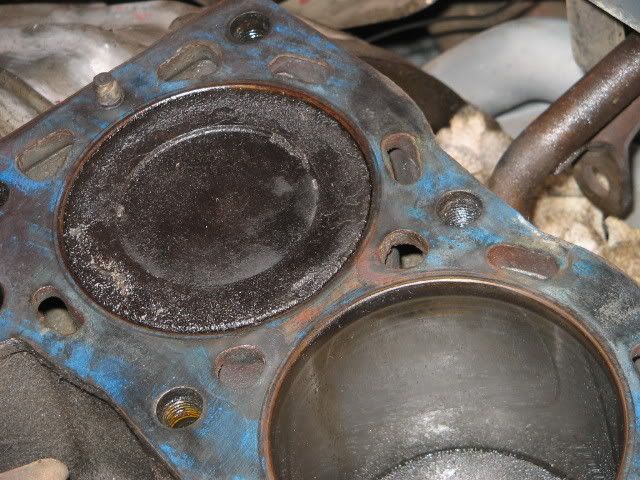
replacing my head gasket, and noticed number 4 piston. i have a miss that comes and goes and was wondering if the the injector could be clogged or going bad. what do you guys think?
number 4 is on the left
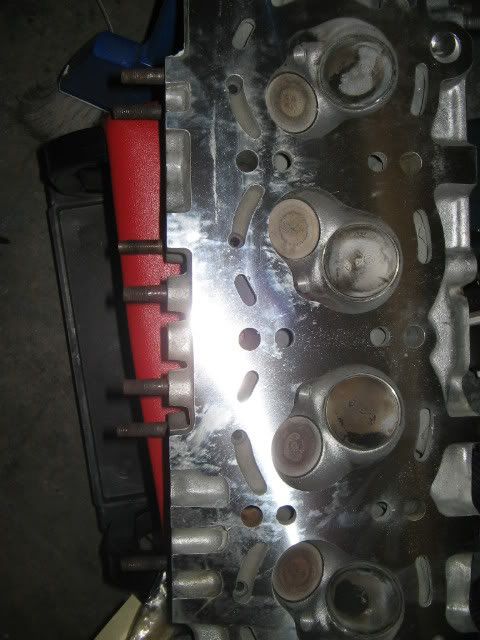
this is number 1
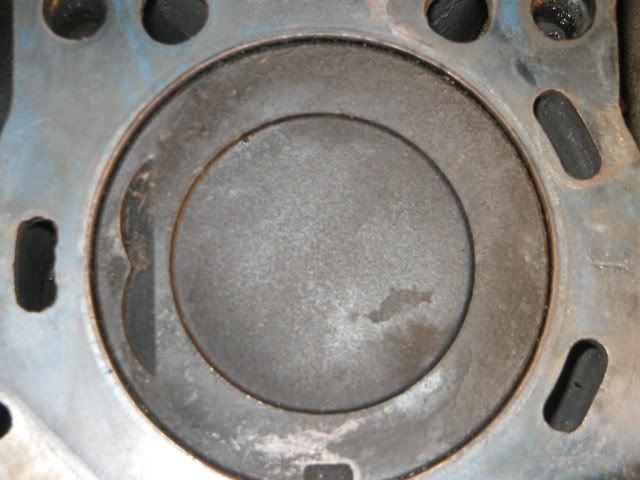
this is number 4 notice the color and the black wet build up
number 4 spark plug looked just like the rest good and gray, but a little black residue around the top of the plug.. could this be an injector problem?
number 4 is on the left
this is number 1
this is number 4 notice the color and the black wet build up
number 4 spark plug looked just like the rest good and gray, but a little black residue around the top of the plug.. could this be an injector problem?
Oct 27, 2007 | 04:30 AM
#2

Registered User
Joined: Apr 2007
Posts: 491
Likes: 1
Looks like Earl to me. Perhaps #4 intake valve seal is leaking. While head is off, good time to touch up those valves and put on new seals. I would say if it was the injector, you would be running really rich all the time with poor mileage and a heavy smell of unburned fuel. All this assumes the cylinder wall has no scratches or worse. If your rings are starting to stick from sludge, I suggest you switch to synthetic motor oil or add a pint of kerosene at the next oil change. Either one will eventually clean the sludge from the rings by the next oil change. My "dirty" little secret.
Oct 27, 2007 | 12:39 PM
#4

Registered User
Joined: Sep 2007
Posts: 1,059
Likes: 1
From: Richmond , Va / Henrico Co.
Head Gasket
Could be low compression too , bad burn and plug depending on how hot could still be clean , a worn or stuck set of rings would be a real good reason as well but then again lower compression

If it hasn't been done prevoiusly then yes - guides,seals and valve job
How many miles on those rings by the way ? The cyl wall looks good in pic and little if no ridge I see so I am guessing they are fairly fresh
Last edited by n4ynu1010; Oct 27, 2007 at 12:40 PM.
Oct 27, 2007 | 06:11 PM
#6
Registered User
Joined: Sep 2007
Posts: 1,059
Likes: 1
From: Richmond , Va / Henrico Co.
Oct 28, 2007 | 10:43 AM
#7

Registered User
Joined: Aug 2006
Posts: 1,518
Likes: 1
From: Tucson, AZ USA Age:60
Actually, to me, the other piston looks like the problem child, not #4.
I assume that you're doing the head gasket because you blew it (that gasket).
You would not see a totally clean piston top and cylinder in an engine with over 100,000 miles.
You would, however, see a totally clean cylinder (and piston) with a blown head gasket that was allowing coolant (water) to enter the cylinder.
Saw that all the time when we did head gaskets. You couple always tell which cylinder(s) the gasket was bad around, allowing coolant in, as they would be completely spotless.
BTW, this points out one of the best and most effective ways to clean buildup from an engine and that is to [b]SLOWLY[/b/ drip water into the intake while it's running, adding enough throttle to keep the revs up.
Fred
I assume that you're doing the head gasket because you blew it (that gasket).
You would not see a totally clean piston top and cylinder in an engine with over 100,000 miles.
You would, however, see a totally clean cylinder (and piston) with a blown head gasket that was allowing coolant (water) to enter the cylinder.
Saw that all the time when we did head gaskets. You couple always tell which cylinder(s) the gasket was bad around, allowing coolant in, as they would be completely spotless.
BTW, this points out one of the best and most effective ways to clean buildup from an engine and that is to [b]SLOWLY[/b/ drip water into the intake while it's running, adding enough throttle to keep the revs up.
Fred
Trending Topics
Oct 28, 2007 | 12:08 PM
#8
Registered User
Joined: Sep 2007
Posts: 1,059
Likes: 1
From: Richmond , Va / Henrico Co.
Head Gasket
Actually, to me, the other piston looks like the problem child, not #4.
I assume that you're doing the head gasket because you blew it (that gasket).
You would not see a totally clean piston top and cylinder in an engine with over 100,000 miles.
You would, however, see a totally clean cylinder (and piston) with a blown head gasket that was allowing coolant (water) to enter the cylinder.
Saw that all the time when we did head gaskets. You couple always tell which cylinder(s) the gasket was bad around, allowing coolant in, as they would be completely spotless.
BTW, this points out one of the best and most effective ways to clean buildup from an engine and that is to [b]SLOWLY[/b/ drip water into the intake while it's running, adding enough throttle to keep the revs up.
Fred
I assume that you're doing the head gasket because you blew it (that gasket).
You would not see a totally clean piston top and cylinder in an engine with over 100,000 miles.
You would, however, see a totally clean cylinder (and piston) with a blown head gasket that was allowing coolant (water) to enter the cylinder.
Saw that all the time when we did head gaskets. You couple always tell which cylinder(s) the gasket was bad around, allowing coolant in, as they would be completely spotless.
BTW, this points out one of the best and most effective ways to clean buildup from an engine and that is to [b]SLOWLY[/b/ drip water into the intake while it's running, adding enough throttle to keep the revs up.
Fred
but not the kind you want hehe , alot of peeps use water injection for better mileage and that is one of the perks - Steam Cleaning #4 could be dark from low compression ( could have been leaking into crankcase) so HG may solve all your problems
, I would check the injectors like you said you were just for GP(General Purpose).Thats one thing nice about the 4 banger is it is much easier to work on
Last edited by n4ynu1010; Oct 28, 2007 at 12:18 PM.

Thread
Thread Starter
Forum
Replies
Last Post
LotOMiles
95.5-2004 Tacomas & 96-2002 4Runners
8
Sep 14, 2015 11:45 PM


