When you click on links to various merchants on this site and make a purchase, this can result in this site earning a commission. Affiliate programs and affiliations include, but are not limited to, the eBay Partner Network.
thanks. I may end up selling it when I finally get it finished. Two years of fighting with the fab shop to finish their half of the work and give me my truck back (we agreed to two months in the shop) has taken the fun away and caused so much personal stress in leaving me without transportation.
Whose idea was it to connect the drag link to the tie rod in that way? Because of the offset between the end of the drag link and the centerline of the tie rod, you're going to have the first bit of steering wheel input cause the tie rod to rotate instead of translate. And as you turn the steering wheel the other way, it will cause the tie rod to rotate the other way before translating. This is a bad design. You're going to have a lot of play in the steering. The drag link should connect to the passenger side steering arm to fix this problem. Either this or make the end of the drag link and both ends of the tie rod EXACTLY in line which is more difficult.
Whose idea was it to connect the drag link to the tie rod in that way? Because of the offset between the end of the drag link and the centerline of the tie rod, you're going to have the first bit of steering wheel input cause the tie rod to rotate instead of translate. And as you turn the steering wheel the other way, it will cause the tie rod to rotate the other way before translating. This is a bad design. You're going to have a lot of play in the steering. The drag link should connect to the passenger side steering arm to fix this problem. Either this or make the end of the drag link and both ends of the tie rod EXACTLY in line which is more difficult.
the saddle on the drag tie rod is a tried and proven approach that was borrowed from early Broncos.
the saddle on the drag tie rod is a tried and proven approach that was borrowed from early Broncos.
if we went to the steering arm, the drag link wouldn’t be parallel with the track bar and there would be tremendous bump steer
You're right about the reduction in bump steer with parallel and equal length drag link and panhard bar. This is important on a linked truck. This is different than a leaf sprung truck where you want to maximize the length of the drag link and simply try to keep it closer to flat to try to reduce bump steer.
The setup in the video is slightly different than yours. His setup appears to limit the tie rod's ability to rotate along its own axis. This will reduce the play your setup will have.
Also, there is an inherent drawback to this design. You're alignment can only be set to a finite number of points. You're toe can only be set in increments equal to the pitch of the threads. Depending on tire size and knuckle lengths this could mean adjusting toe at only increments of 1/4" at a time. Secondly, every single adjustment would require disassembling, rotating, and reassembling the tie rod to the knuckle. Not the end of the world, but not ideal. A tie rod with no brackets welded to it (and both LH and RH threaded ends) can be adjusted to an infinite number of lengths and toe adjustments.
If you're really committed to this design, I'd recommend rotating your tie rod so that the bracket to the drag link is as close as possible to vertical, not canted forward like in your picture. I would try to find a way to prevent the tie rod from rotating along its own axis. And separate from the linkage setup, the bolts holding the Heims to the knuckle are pretty long. I'd see if you could put those in double shear or just bring the Heims up closer to the knuckle and shorten those bolts. You don't want the bolts connecting the Heims to the knuckle to bend or break.
You're right about the reduction in bump steer with parallel and equal length drag link and panhard bar. This is important on a linked truck. This is different than a leaf sprung truck where you want to maximize the length of the drag link and simply try to keep it closer to flat to try to reduce bump steer.
The setup in the video is slightly different than yours. His setup appears to limit the tie rod's ability to rotate along its own axis. This will reduce the play your setup will have.
Also, there is an inherent drawback to this design. You're alignment can only be set to a finite number of points. You're toe can only be set in increments equal to the pitch of the threads. Depending on tire size and knuckle lengths this could mean adjusting toe at only increments of 1/4" at a time. Secondly, every single adjustment would require disassembling, rotating, and reassembling the tie rod to the knuckle. Not the end of the world, but not ideal. A tie rod with no brackets welded to it (and both LH and RH threaded ends) can be adjusted to an infinite number of lengths and toe adjustments.
If you're really committed to this design, I'd recommend rotating your tie rod so that the bracket to the drag link is as close as possible to vertical, not canted forward like in your picture. I would try to find a way to prevent the tie rod from rotating along its own axis. And separate from the linkage setup, the bolts holding the Heims to the knuckle are pretty long. I'd see if you could put those in double shear or just bring the Heims up closer to the knuckle and shorten those bolts. You don't want the bolts connecting the Heims to the knuckle to bend or break.
Thanks for all of the input — it’s valid. After 2 more weeks back at that fab shop, I got a call that it was done and that other than some slip in the steering shaft, it drives much better.
I don’t agree that there is much slop in the steering shaft and I didn’t see any improvement in drivability - it’s scary as hell above 30 mph - bump steer, dead spot in steering, twitchy, rear feels like it’s sliding in the turns.
its going to a new fab shop in two weeks. Hoping to get some answers then.
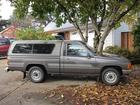
in the meantime, here are some pics of the new color going on while it’s out of commission
Finally finishing up my doors. Two new regulators and tons of wiring for the FJ power mirrors, power lock/unlock switch add to the pass side, mirror defrost and speakers






 Jan 4, 2020 | 12:01 AM