


OBD0 to OBD1?
 May 8, 2011 | 04:08 PM
#1
Thread Starter
Registered User
iTrader: (3)
Joined: Jan 2010
Posts: 339
Likes: 0
From: Meridian Mississippi
OBD0 to OBD1?
Ok, Honda master tech friend tells me of a trick they do to get more HP out of their older engines: convert OBD0 engines to OBD1. The advantage is apparently the ability to add modified EPROM's to enhance performance.
Ok, so the question is this: would a 95 22RE computer (OBD1) and harness, with some connector replacement, work on an 87 22RE? I am an automotive electrical tech so a bit of a rewire is no problem!!
Maybe I'm wrong but my understanding of the difference between OBD1 and OBD0 is that 1 is an input-output system and 0 is only an output type.
Sorry if this has been talk through before but I couldn't find any real info on the forums.
Ok, so the question is this: would a 95 22RE computer (OBD1) and harness, with some connector replacement, work on an 87 22RE? I am an automotive electrical tech so a bit of a rewire is no problem!!
Maybe I'm wrong but my understanding of the difference between OBD1 and OBD0 is that 1 is an input-output system and 0 is only an output type.
Sorry if this has been talk through before but I couldn't find any real info on the forums.
May 8, 2011 | 04:36 PM
#2
Registered User
Joined: Jan 2007
Posts: 6,106
Likes: 27
Well...to begin with there's technically no such thing as "OBD0". There's really only OBD/OBDI and OBDII. If you're master tech buddy is talking in those terms he's no master.
If you want to upgrade a 22RE to a OBDII system you might as well go with a megasquirt which will give you all the benefits of OBDII as far as programmability + some(namely sequential injection if you got the money), and is basically universal as far as applications. BTW, ALL 22REs ARE OBD OR OBDI, OBD AND OBDI ARE EXACTLY THE SAME THING!!!

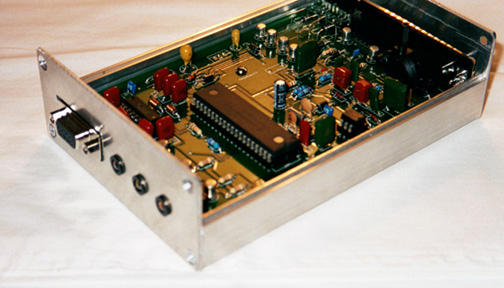
The Most Efficient and Cost-Effective Electronic Fuel Injection Controller in the Universe - and YOU BUILD IT YOURSELF!
http://www.bgsoflex.com/megasquirt.html
Other than that you can shell out big $ to JET and have them reprogram the ECU it's got.
If you want to upgrade a 22RE to a OBDII system you might as well go with a megasquirt which will give you all the benefits of OBDII as far as programmability + some(namely sequential injection if you got the money), and is basically universal as far as applications. BTW, ALL 22REs ARE OBD OR OBDI, OBD AND OBDI ARE EXACTLY THE SAME THING!!!
The Most Efficient and Cost-Effective Electronic Fuel Injection Controller in the Universe - and YOU BUILD IT YOURSELF!
Other than that you can shell out big $ to JET and have them reprogram the ECU it's got.
Last edited by MudHippy; May 8, 2011 at 06:38 PM.
May 8, 2011 | 04:47 PM
#3
Registered User
Joined: Aug 2009
Posts: 13,574
Likes: 72
From: Wilkes-Barre, PA, USA
switching to a 95 ECU doesn't do any good without all the related electrical sensors etc from the 95 as well. For what it would cost you to switch over, it's not worth it. I believe an 87 22re and a 95 22re put out the same HP wise anyway. If there is I don't see it being more then 5 hp anyway.
And IIRC a 22re ECU cannot be chipped only reprogrammed which as MudHippy stated would be $$$$$. And reprogramming as far as I know cannot be done through a diagnostic port like an OBDII can.
And IIRC a 22re ECU cannot be chipped only reprogrammed which as MudHippy stated would be $$$$$. And reprogramming as far as I know cannot be done through a diagnostic port like an OBDII can.
May 8, 2011 | 06:41 PM
#4
Thread Starter
Registered User
iTrader: (3)
Joined: Jan 2010
Posts: 339
Likes: 0
From: Meridian Mississippi
Well...to begin with there's technically no such thing as "OBD0". There's really only OBD/OBDI and OBDII. If you're master tech buddy is talking in those terms he's no master.
If you want to upgrade a 22RE to a OBDII system you might as well go with a megasquirt which will give you all the benefits of OBDII as far as programmability + some(namely sequential injection if you got the money), and is basically universal as far as applications. BTW, ALL 22REs ARE OBD OR OBDI, OBD AND OBDI ARE EXACTLY THE SAME THING!!!
Other than that you can shell out big $ to JET and have them reprogram the ECU it's got.
If you want to upgrade a 22RE to a OBDII system you might as well go with a megasquirt which will give you all the benefits of OBDII as far as programmability + some(namely sequential injection if you got the money), and is basically universal as far as applications. BTW, ALL 22REs ARE OBD OR OBDI, OBD AND OBDI ARE EXACTLY THE SAME THING!!!
Other than that you can shell out big $ to JET and have them reprogram the ECU it's got.

Dude! chill! whats with all the attitude? You slamming my friends ability dies ZERO good and you were anything BUT helpful.
It was just a question. Sorry if, IYHO i'm just an idiot about OBD of any kind.
BTW- if you see a post by me asking a question, feel free to NOT submit any more replies.
 May 8, 2011 | 06:51 PM
#6

Registered User
Joined: Jul 2004
Posts: 1,231
Likes: 1
From: Toronto
Your buddy is a honda guy, correct? They switch to OBD1 (from OBD "0" or OBD "2", because it's the easiest to modify)
All 22re's are OBD 1... no difference.
The only difference is 85-88's have a different intake than 89-95's, resulting in 10 less hp.
Electronics are basically the same.
Basically, not worth the time.
If you want to tune, get a MAPECU3 or SMT-6 / 7... but really, stock 22re, you will be lucky to pick up 10hp....
All 22re's are OBD 1... no difference.
The only difference is 85-88's have a different intake than 89-95's, resulting in 10 less hp.
Electronics are basically the same.
Basically, not worth the time.
If you want to tune, get a MAPECU3 or SMT-6 / 7... but really, stock 22re, you will be lucky to pick up 10hp....
May 8, 2011 | 08:10 PM
#7
Registered User
Joined: Jan 2011
Posts: 353
Likes: 0
From: va
Well.......to begin with......
Dude! chill! whats with all the attitude? You slamming my friends ability dies ZERO good and you were anything BUT helpful.
It was just a question. Sorry if, IYHO i'm just an idiot about OBD of any kind.
BTW- if you see a post by me asking a question, feel free to NOT submit any more replies.[/quote]
Dude you are very rude someone trys to help you and you go off on them whos got the attitude?? It aint his fault your friend was wrong and he corrected it so that you would know what was right.
Dude! chill! whats with all the attitude? You slamming my friends ability dies ZERO good and you were anything BUT helpful.
It was just a question. Sorry if, IYHO i'm just an idiot about OBD of any kind.
BTW- if you see a post by me asking a question, feel free to NOT submit any more replies.[/quote]
Dude you are very rude someone trys to help you and you go off on them whos got the attitude?? It aint his fault your friend was wrong and he corrected it so that you would know what was right.
Last edited by baddest94; May 8, 2011 at 08:32 PM.
Trending Topics
May 8, 2011 | 08:13 PM
#8
Registered User
Joined: Jan 2007
Posts: 6,106
Likes: 27
OBD-I
The regulatory intent of OBD-I was to encourage auto manufacturers to design reliable emission control systems that remain effective for the vehicle's "useful life". The hope was that by forcing annual emissions testing for California , and denying registration to vehicles that did not pass, drivers would tend to purchase vehicles that would more reliably pass the test. OBD-I was largely unsuccessful[citation needed], as the means of reporting emissions-specific diagnostic information was not standardized. Technical difficulties with obtaining standardized and reliable emissions information from all vehicles led to an inability to implement effectively the annual testing program.
OBD-1.5
OBD 1.5 refers to a partial implementation of OBD-II which General Motors used on some vehicles in 1994 and 1995 (GM did not use the term OBD 1.5 in the documentation for these vehicles - they simply have an OBD and an OBD-II section in the service manual.)
OBD-II
OBD-II is an improvement over OBD-I in both capability and standardization. The OBD-II standard specifies the type of diagnostic connector and its pinout, the electrical signalling protocols available, and the messaging format. It also provides a candidate list of vehicle parameters to monitor along with how to encode the data for each. There is a pin in the connector that provides power for the scan tool from the vehicle battery, which eliminates the need to connect a scan tool to a power source separately. However, some technicians might still connect the scan tool to an auxiliary power source to protect data in the unusual event that a vehicle experiences a loss of electrical power due to a malfunction. Finally, the OBD-II standard provides an extensible list of DTCs. As a result of this standardization, a single device can query the on-board computer(s) in any vehicle. This OBD-II came in two models OBD-IIA and OBD-IIB.
EOBD
EOBD is a version of OBD-II required in Europe since Model Year 2003 for diesel vehicles and since 2001 for gasoline vehicles. With Euro V and Euro VI emission standards, EOBD emission thresholds will be lower than previous Euro III and IV. EOBD refers to Europe On-Board Diagnostics.
EOBD2
The term "EOBD2" is a marketing term used by some vehicle manufacturers to refer to manufacturer-specific features that are not actually part of the OBD or EOBD standard. In this case "E" stands for Enhanced
JOBD
JOBD is a version of OBD-II for vehicles sold in Japan.
Do you see OBD0? Because OBD0 is OBD/OBDI(or OBD 1). THE TERM OBD0 IS 100% INACCURATE. The ONLY other type is OBDII. OBD 1.5, EOBD, EOBD2 AND JOBD ARE VERSIONS OF OBDII. EVERYTHING ELSE IS OBD/OBDI. THERE'S REALLY ONLY 2 KINDS OF OBD, 1(I) & 2(II).
The regulatory intent of OBD-I was to encourage auto manufacturers to design reliable emission control systems that remain effective for the vehicle's "useful life". The hope was that by forcing annual emissions testing for California , and denying registration to vehicles that did not pass, drivers would tend to purchase vehicles that would more reliably pass the test. OBD-I was largely unsuccessful[citation needed], as the means of reporting emissions-specific diagnostic information was not standardized. Technical difficulties with obtaining standardized and reliable emissions information from all vehicles led to an inability to implement effectively the annual testing program.
OBD-1.5
OBD 1.5 refers to a partial implementation of OBD-II which General Motors used on some vehicles in 1994 and 1995 (GM did not use the term OBD 1.5 in the documentation for these vehicles - they simply have an OBD and an OBD-II section in the service manual.)
OBD-II
OBD-II is an improvement over OBD-I in both capability and standardization. The OBD-II standard specifies the type of diagnostic connector and its pinout, the electrical signalling protocols available, and the messaging format. It also provides a candidate list of vehicle parameters to monitor along with how to encode the data for each. There is a pin in the connector that provides power for the scan tool from the vehicle battery, which eliminates the need to connect a scan tool to a power source separately. However, some technicians might still connect the scan tool to an auxiliary power source to protect data in the unusual event that a vehicle experiences a loss of electrical power due to a malfunction. Finally, the OBD-II standard provides an extensible list of DTCs. As a result of this standardization, a single device can query the on-board computer(s) in any vehicle. This OBD-II came in two models OBD-IIA and OBD-IIB.
EOBD
EOBD is a version of OBD-II required in Europe since Model Year 2003 for diesel vehicles and since 2001 for gasoline vehicles. With Euro V and Euro VI emission standards, EOBD emission thresholds will be lower than previous Euro III and IV. EOBD refers to Europe On-Board Diagnostics.
EOBD2
The term "EOBD2" is a marketing term used by some vehicle manufacturers to refer to manufacturer-specific features that are not actually part of the OBD or EOBD standard. In this case "E" stands for Enhanced
JOBD
JOBD is a version of OBD-II for vehicles sold in Japan.
Do you see OBD0? Because OBD0 is OBD/OBDI(or OBD 1). THE TERM OBD0 IS 100% INACCURATE. The ONLY other type is OBDII. OBD 1.5, EOBD, EOBD2 AND JOBD ARE VERSIONS OF OBDII. EVERYTHING ELSE IS OBD/OBDI. THERE'S REALLY ONLY 2 KINDS OF OBD, 1(I) & 2(II).
Last edited by MudHippy; May 9, 2011 at 10:07 AM.
May 9, 2011 | 01:46 AM
#9
Registered User
Joined: Aug 2009
Posts: 13,574
Likes: 72
From: Wilkes-Barre, PA, USA
Your buddy is a honda guy, correct? They switch to OBD1 (from OBD "0" or OBD "2", because it's the easiest to modify)
All 22re's are OBD 1... no difference.
The only difference is 85-88's have a different intake than 89-95's, resulting in 10 less hp.
Electronics are basically the same.
Basically, not worth the time.
If you want to tune, get a MAPECU3 or SMT-6 / 7... but really, stock 22re, you will be lucky to pick up 10hp....
All 22re's are OBD 1... no difference.
The only difference is 85-88's have a different intake than 89-95's, resulting in 10 less hp.
Electronics are basically the same.
Basically, not worth the time.
If you want to tune, get a MAPECU3 or SMT-6 / 7... but really, stock 22re, you will be lucky to pick up 10hp....
May 9, 2011 | 07:51 AM
#10
Registered User
Joined: Jul 2004
Posts: 1,231
Likes: 1
From: Toronto
OBD-I
The regulatory intent of OBD-I was to encourage auto manufacturers to design reliable emission control systems that remain effective for the vehicle's "useful life". The hope was that by forcing annual emissions testing for California , and denying registration to vehicles that did not pass, drivers would tend to purchase vehicles that would more reliably pass the test. OBD-I was largely unsuccessful[citation needed], as the means of reporting emissions-specific diagnostic information was not standardized. Technical difficulties with obtaining standardized and reliable emissions information from all vehicles led to an inability to implement effectively the annual testing program.
OBD-1.5
OBD 1.5 refers to a partial implementation of OBD-II which General Motors used on some vehicles in 1994 and 1995 (GM did not use the term OBD 1.5 in the documentation for these vehicles - they simply have an OBD and an OBD-II section in the service manual.)
OBD-II
OBD-II is an improvement over OBD-I in both capability and standardization. The OBD-II standard specifies the type of diagnostic connector and its pinout, the electrical signalling protocols available, and the messaging format. It also provides a candidate list of vehicle parameters to monitor along with how to encode the data for each. There is a pin in the connector that provides power for the scan tool from the vehicle battery, which eliminates the need to connect a scan tool to a power source separately. However, some technicians might still connect the scan tool to an auxiliary power source to protect data in the unusual event that a vehicle experiences a loss of electrical power due to a malfunction. Finally, the OBD-II standard provides an extensible list of DTCs. As a result of this standardization, a single device can query the on-board computer(s) in any vehicle. This OBD-II came in two models OBD-IIA and OBD-IIB.
EOBD
EOBD is a version of OBD-II required in Europe since Model Year 2003 for diesel vehicles and since 2001 for gasoline vehicles. With Euro V and Euro VI emission standards, EOBD emission thresholds will be lower than previous Euro III and IV. EOBD refers to Europe On-Board Diagnostics.
EOBD2
The term "EOBD2" is a marketing term used by some vehicle manufacturers to refer to manufacturer-specific features that are not actually part of the OBD or EOBD standard. In this case "E" stands for Enhanced
JOBD
JOBD is a version of OBD-II for vehicles sold in Japan.
Do you see OBD0? Because OBD0 is OBD/OBDI(or OBD 1). THE TERM OBD0 IS 100% INACCURATE. The ONLY other type is OBDII. OBD 1.5, EOBD, AND JOBD ARE VERSIONS OF OBDII. EVERYTHING ELSE IS OBD/OBDI. THERE'S REALLY ONLY 2 KINDS OF OBD, 1 & 2.
The regulatory intent of OBD-I was to encourage auto manufacturers to design reliable emission control systems that remain effective for the vehicle's "useful life". The hope was that by forcing annual emissions testing for California , and denying registration to vehicles that did not pass, drivers would tend to purchase vehicles that would more reliably pass the test. OBD-I was largely unsuccessful[citation needed], as the means of reporting emissions-specific diagnostic information was not standardized. Technical difficulties with obtaining standardized and reliable emissions information from all vehicles led to an inability to implement effectively the annual testing program.
OBD-1.5
OBD 1.5 refers to a partial implementation of OBD-II which General Motors used on some vehicles in 1994 and 1995 (GM did not use the term OBD 1.5 in the documentation for these vehicles - they simply have an OBD and an OBD-II section in the service manual.)
OBD-II
OBD-II is an improvement over OBD-I in both capability and standardization. The OBD-II standard specifies the type of diagnostic connector and its pinout, the electrical signalling protocols available, and the messaging format. It also provides a candidate list of vehicle parameters to monitor along with how to encode the data for each. There is a pin in the connector that provides power for the scan tool from the vehicle battery, which eliminates the need to connect a scan tool to a power source separately. However, some technicians might still connect the scan tool to an auxiliary power source to protect data in the unusual event that a vehicle experiences a loss of electrical power due to a malfunction. Finally, the OBD-II standard provides an extensible list of DTCs. As a result of this standardization, a single device can query the on-board computer(s) in any vehicle. This OBD-II came in two models OBD-IIA and OBD-IIB.
EOBD
EOBD is a version of OBD-II required in Europe since Model Year 2003 for diesel vehicles and since 2001 for gasoline vehicles. With Euro V and Euro VI emission standards, EOBD emission thresholds will be lower than previous Euro III and IV. EOBD refers to Europe On-Board Diagnostics.
EOBD2
The term "EOBD2" is a marketing term used by some vehicle manufacturers to refer to manufacturer-specific features that are not actually part of the OBD or EOBD standard. In this case "E" stands for Enhanced
JOBD
JOBD is a version of OBD-II for vehicles sold in Japan.
Do you see OBD0? Because OBD0 is OBD/OBDI(or OBD 1). THE TERM OBD0 IS 100% INACCURATE. The ONLY other type is OBDII. OBD 1.5, EOBD, AND JOBD ARE VERSIONS OF OBDII. EVERYTHING ELSE IS OBD/OBDI. THERE'S REALLY ONLY 2 KINDS OF OBD, 1 & 2.
May 9, 2011 | 10:36 AM
#11
Registered User
Joined: Jan 2007
Posts: 6,106
Likes: 27
I second the SMT units. I used to use a Perfect Power (smart tuner) unit on my 2001 Elantra when PP first came out. I believe I still might have that little box somewhere around here too. Nice thing about that is you can run all kinds of diagnostics right from a standard laptop though the units software.
MegaSquirt-III EMS System with MS3X Expansion V3.57 - Assembled

MegaSquirt-III Engine Management System w/PCB3.57 - Assembled Unit Part # MS3X357-C_BL
It's finally here! The MegaSquirt-III is a drop in daughter card that greatly expands the MegaSquirt's functionality.
We now have complete, ready to run MegaSquirt-III ECUs. This one includes the MS3X expansion board.
The MS3 daughter card on its own will give you all these features and more:
MegaSquirt-III Engine Management System w/PCB3.57 - Assembled Unit Part # MS3X357-C_BL
It's finally here! The MegaSquirt-III is a drop in daughter card that greatly expands the MegaSquirt's functionality.
We now have complete, ready to run MegaSquirt-III ECUs. This one includes the MS3X expansion board.
The MS3 daughter card on its own will give you all these features and more:
- VE and ignition tables are now both 16 x 16
- 0.1% steps on VE table, 0.1 degree steps on ignition table
- Socket for an onboard SD card - no laptop required for data logging (SD Card not included)
- Built in USB port
- GM stepper IAC control
- Closed loop idle and mixture control
- CANBus communications for interface with GPIO Board, IO Extender, or other devices
- Staged injection
- Native support for many different OEM trigger patterns
- 8 Sequential fuel injection outputs. Each can drive a high impedance injector, and unused injection outputs can be put to other purposes.
- 8 Logic level 5 volt ignition outputs. Works with many types of ignition modules and coils, including LSx coils and our IGN-1As. Requires exteranl module or coils with internal ignitors.
- 6 Medium current outputs. Use for 2 stage progressive nitrous, boost control, tach output, 3 wire idle speed control, general purpose PWM or relay control, or many other potential applications.
- 3 Analog inputs. Use for an external MAP sensor, second O2 sensor, fuel pressure, accelerometer, or general data logging.
- 4 Switch inputs. Can be used to start data logging, arm a nitrous system, switch tables, launch control, VSS input (with external conditioner), and more.
- 1 Cam sensor input. Can be used with VR, Hall, or optical sensors.
Last edited by MudHippy; May 9, 2011 at 10:55 AM.
May 9, 2011 | 10:50 AM
#12
Registered User
Joined: Aug 2009
Posts: 13,574
Likes: 72
From: Wilkes-Barre, PA, USA
R I believe is south african money. ie Rand  1R = roughly $0.15 so R2793 = $414 and VAT I believe is their version of a sales tax. = cheaper then the megasquirt. Not saying it's better as I don't have extensive knowledge on either of the newer smt nor the megasquirt.
Oh and the SMT8LW is wireless. But still a piggy back not a standalone. That runs about $620.
Now the comparable top of the line PP XMS4 C Group runs about $966. That runs 4-8 cyls. Also has a wireless option I believe. If you only need 4 injector outputs you can run the XMS4 A Group
1R = roughly $0.15 so R2793 = $414 and VAT I believe is their version of a sales tax. = cheaper then the megasquirt. Not saying it's better as I don't have extensive knowledge on either of the newer smt nor the megasquirt. Oh and the SMT8LW is wireless. But still a piggy back not a standalone. That runs about $620.
Now the comparable top of the line PP XMS4 C Group runs about $966. That runs 4-8 cyls. Also has a wireless option I believe. If you only need 4 injector outputs you can run the XMS4 A Group
Last edited by xxxtreme22r; May 9, 2011 at 11:02 AM.
May 9, 2011 | 07:56 PM
#13
Thread Starter
Registered User
iTrader: (3)
Joined: Jan 2010
Posts: 339
Likes: 0
From: Meridian Mississippi
thanks for all the HELPFUL posts. I was really just looking for a relatively inexpensive way to upgrade the performance on my 22RE like my friend did on his Honda's. Guess if I want honda performance I should drop in a Honda motor..................NAHHHHHHHHH!
I like my Yota and I think I'll just do the header/exhaust and the larger AFM and enjoy it!
I like my Yota and I think I'll just do the header/exhaust and the larger AFM and enjoy it!

Thread
Thread Starter
Forum
Replies
Last Post
pplusent
86-95 Trucks & 4Runners
10
Sep 18, 2018 10:02 PM
Colington
86-95 Trucks & 4Runners
3
Aug 13, 2015 02:21 PM
rjtrials
Looking For A Mechanic/Fabricator/Shop
3
Aug 6, 2015 07:25 PM


