


Ticking under load
 Aug 3, 2020 | 02:04 PM
#1

Thread Starter
Registered User
Joined: Aug 2020
Posts: 3
Likes: 1
Ticking under load
Hello!
Let me start by saying I've had a lot of vehicles that ticked. Mainly Subarus and 22r's. What I'm hearing doesn't sound normal.
I have a bone stock 3vze 5spd with 150k. At idle and on flat ground the engine is smooth and quiet. When going uphill, trying to maintain speed and or accelerate (engine under load) I start to hear a ticking that doesn't have a uniform pattern. It's a very high pitch tick if that makes sense. The ticking goes away if I let up on the throttle. For example, if I'm going 65 in 5th on flat ground, then come to a hill and keep on the gas, the ticking will start and get louder with more load. I downshift to 4th, ticking goes away. I attempt to give more throttle to maintain around 60 (3k rpm) and the ticking comes back. I'm forced to let up little by little to keep the ticks away until I'm eventually going about 50 and the hill ends.
Now I understand I can't always leave it in 5th going up hill, but it ticks even in 4th at 3k rpm. It really depends on engine load.
Without throwing out my own theories, does anyone have an idea of what it might be? Have you experienced this behavior?
Thanks in advance
Let me start by saying I've had a lot of vehicles that ticked. Mainly Subarus and 22r's. What I'm hearing doesn't sound normal.
I have a bone stock 3vze 5spd with 150k. At idle and on flat ground the engine is smooth and quiet. When going uphill, trying to maintain speed and or accelerate (engine under load) I start to hear a ticking that doesn't have a uniform pattern. It's a very high pitch tick if that makes sense. The ticking goes away if I let up on the throttle. For example, if I'm going 65 in 5th on flat ground, then come to a hill and keep on the gas, the ticking will start and get louder with more load. I downshift to 4th, ticking goes away. I attempt to give more throttle to maintain around 60 (3k rpm) and the ticking comes back. I'm forced to let up little by little to keep the ticks away until I'm eventually going about 50 and the hill ends.
Now I understand I can't always leave it in 5th going up hill, but it ticks even in 4th at 3k rpm. It really depends on engine load.
Without throwing out my own theories, does anyone have an idea of what it might be? Have you experienced this behavior?
Thanks in advance
Aug 3, 2020 | 07:19 PM
#2

Registered User


Joined: Apr 2017
Posts: 964
Likes: 197
Well the 3.0 is belt driven iirc so no timing chain.
its not the sound of a vsv opening and closing rapidly or something loose in the engine bay?
If its engine internal, it probably exists all the time at a lower volume. Try getting a mechanics stethoscope and giving a listen.
its not the sound of a vsv opening and closing rapidly or something loose in the engine bay?
If its engine internal, it probably exists all the time at a lower volume. Try getting a mechanics stethoscope and giving a listen.
 Aug 4, 2020 | 05:32 PM
#4

Pre-ignition, aka ping under load.
Easy to check out, put a tank full of premium in it and it will delay the noise to a higher rpm under the same load..
Which of course is really hard on bearings and turns into rod knock if you keep on the same course.
Free things you can do is ensure your exhaust is all sealed tight. Downshift before the hill pick up speed and keep the rpms in the power band before the ECU starts to pull the timing advance down.
Low cost, you want to run some injector cleaner. (This one is cheap enough you might as well do it regardless) This will help with soluble clogs but not actual debris like rust or other solid particles in the filters.
After that it gets abit more extensive and expensive. If you don't know when the oxygen sensors were replaced, and you can get them off without snapping the studs, it's not a bad investment..
The ignition trim is cyclical here, engine detects ping and reduces timing advance, retarded timing produces less power and now you have a loaded engine which starts to ping and you start back at the beginning which brings the engine eventually to a practical stop.
Easy to check out, put a tank full of premium in it and it will delay the noise to a higher rpm under the same load..
Which of course is really hard on bearings and turns into rod knock if you keep on the same course.
Free things you can do is ensure your exhaust is all sealed tight. Downshift before the hill pick up speed and keep the rpms in the power band before the ECU starts to pull the timing advance down.
Low cost, you want to run some injector cleaner. (This one is cheap enough you might as well do it regardless) This will help with soluble clogs but not actual debris like rust or other solid particles in the filters.
After that it gets abit more extensive and expensive. If you don't know when the oxygen sensors were replaced, and you can get them off without snapping the studs, it's not a bad investment..
The ignition trim is cyclical here, engine detects ping and reduces timing advance, retarded timing produces less power and now you have a loaded engine which starts to ping and you start back at the beginning which brings the engine eventually to a practical stop.
Aug 4, 2020 | 07:25 PM
#6
Thread Starter
Registered User
Joined: Aug 2020
Posts: 3
Likes: 1
Pre-ignition, aka ping under load.
Easy to check out, put a tank full of premium in it and it will delay the noise to a higher rpm under the same load..
Which of course is really hard on bearings and turns into rod knock if you keep on the same course.
Free things you can do is ensure your exhaust is all sealed tight. Downshift before the hill pick up speed and keep the rpms in the power band before the ECU starts to pull the timing advance down.
Low cost, you want to run some injector cleaner. (This one is cheap enough you might as well do it regardless) This will help with soluble clogs but not actual debris like rust or other solid particles in the filters.
After that it gets abit more extensive and expensive. If you don't know when the oxygen sensors were replaced, and you can get them off without snapping the studs, it's not a bad investment..
The ignition trim is cyclical here, engine detects ping and reduces timing advance, retarded timing produces less power and now you have a loaded engine which starts to ping and you start back at the beginning which brings the engine eventually to a practical stop.
Easy to check out, put a tank full of premium in it and it will delay the noise to a higher rpm under the same load..
Which of course is really hard on bearings and turns into rod knock if you keep on the same course.
Free things you can do is ensure your exhaust is all sealed tight. Downshift before the hill pick up speed and keep the rpms in the power band before the ECU starts to pull the timing advance down.
Low cost, you want to run some injector cleaner. (This one is cheap enough you might as well do it regardless) This will help with soluble clogs but not actual debris like rust or other solid particles in the filters.
After that it gets abit more extensive and expensive. If you don't know when the oxygen sensors were replaced, and you can get them off without snapping the studs, it's not a bad investment..
The ignition trim is cyclical here, engine detects ping and reduces timing advance, retarded timing produces less power and now you have a loaded engine which starts to ping and you start back at the beginning which brings the engine eventually to a practical stop.
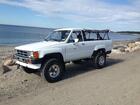
Obligatory pic of the old beast:

I'm going to follow your advice and start with injector cleaner and exhaust. It isn't loud but I have been suspecting a leak. I also have a new fuel filter I've been meaning to fit. It probably hasn't been replaced in 10+ years.
Aug 4, 2020 | 07:26 PM
#7

Registered User
Joined: Jul 2012
Posts: 1,776
Likes: 110
From: Northern Colorado
I agree with Co_94_PU; sounds like pinging. Back before knock sensors, that was common when running at full throttle and low rpm. Good reason to learn not to do that.
Normally the ECU and knock sensor should keep it from audible pinging, but a couple of things could prevent the ECU from retarding spark enough.
- excessively advanced base timing
- really crappy gas
- clogged or defective fuel injector causing a lean mixture
- carbon build-up in one or more cylinders resulting in hotspots causing preignition. The carbon acts like a glow plug. (I once blew a hole in an aircraft piston because of that. interesting day.)
- lugging the engine excessively at low rpm
Trying premium gas is a good idea. Also, if you haven't already, adjust your driving habits such that you never operate under full load below 3000 rpm. Your engine will thank you. It's ok to idle along in traffic at 1500-2000 rpm, but when you want to accelerate or go uphill, try to keep rpm between 3000 and 4500.
Normally the ECU and knock sensor should keep it from audible pinging, but a couple of things could prevent the ECU from retarding spark enough.
- excessively advanced base timing
- really crappy gas
- clogged or defective fuel injector causing a lean mixture
- carbon build-up in one or more cylinders resulting in hotspots causing preignition. The carbon acts like a glow plug. (I once blew a hole in an aircraft piston because of that. interesting day.)
- lugging the engine excessively at low rpm
Trying premium gas is a good idea. Also, if you haven't already, adjust your driving habits such that you never operate under full load below 3000 rpm. Your engine will thank you. It's ok to idle along in traffic at 1500-2000 rpm, but when you want to accelerate or go uphill, try to keep rpm between 3000 and 4500.
Trending Topics
Aug 4, 2020 | 07:32 PM
#8
Thread Starter
Registered User
Joined: Aug 2020
Posts: 3
Likes: 1
I agree with Co_94_PU; sounds like pinging. Back before knock sensors, that was common when running at full throttle and low rpm. Good reason to learn not to do that.
Normally the ECU and knock sensor should keep it from audible pinging, but a couple of things could prevent the ECU from retarding spark enough.
- excessively advanced base timing
- really crappy gas
- clogged or defective fuel injector causing a lean mixture
- carbon build-up in one or more cylinders resulting in hotspots causing preignition. The carbon acts like a glow plug. (I once blew a hole in an aircraft piston because of that. interesting day.)
- lugging the engine excessively at low rpm
Trying premium gas is a good idea. Also, if you haven't already, adjust your driving habits such that you never operate under full load below 3000 rpm. Your engine will thank you. It's ok to idle along in traffic at 1500-2000 rpm, but when you want to accelerate or go uphill, try to keep rpm between 3000 and 4500.
Normally the ECU and knock sensor should keep it from audible pinging, but a couple of things could prevent the ECU from retarding spark enough.
- excessively advanced base timing
- really crappy gas
- clogged or defective fuel injector causing a lean mixture
- carbon build-up in one or more cylinders resulting in hotspots causing preignition. The carbon acts like a glow plug. (I once blew a hole in an aircraft piston because of that. interesting day.)
- lugging the engine excessively at low rpm
Trying premium gas is a good idea. Also, if you haven't already, adjust your driving habits such that you never operate under full load below 3000 rpm. Your engine will thank you. It's ok to idle along in traffic at 1500-2000 rpm, but when you want to accelerate or go uphill, try to keep rpm between 3000 and 4500.
Aug 4, 2020 | 07:48 PM
#9
Once you've identified it as PING by adding a higher octane fuel and noting a shift in the rpm or load range it happens in, you'll wind up going thru a bunch of voltage tests of sensor data at the ECU.
Its very much helpful if you've got a low traffic hill you are familiar with that you can reproduce this testing on.. If you can start at a RPM and speed range and either go farther before it happens or add a larger throttle plate angle before it starts to make the noise after upping your octane it's likely pre-ignition.
Aug 4, 2020 | 07:49 PM
#10
Registered User
Joined: Jul 2012
Posts: 1,776
Likes: 110
From: Northern Colorado
[Q]Thanks for the advice RJR, I'll adjust my habits. I've been trying to keep it between 2.5-3k under load. The previous owner said not to go much over 3k but he's not a mechanic.[\Q]
It's a common misconception that running at low rpm is somehow easier on the engine. Not so. Cylinder pressures are higher at low rpm and full throttle than at higher rpm, because the piston can't move away from the expanding gases as quickly. Higher cylinder pressures mean higher rod bearing stresses, and more importantly for the 3vze, higher head gasket stresses.Not what you want.
Obviously running continuously at redline isn't a good idea, but at anything under 4500 rpm, the rod bearing stresses due to piston acceleration are considerably less than the stresses due to cylinder pressures.
It's a common misconception that running at low rpm is somehow easier on the engine. Not so. Cylinder pressures are higher at low rpm and full throttle than at higher rpm, because the piston can't move away from the expanding gases as quickly. Higher cylinder pressures mean higher rod bearing stresses, and more importantly for the 3vze, higher head gasket stresses.Not what you want.
Obviously running continuously at redline isn't a good idea, but at anything under 4500 rpm, the rod bearing stresses due to piston acceleration are considerably less than the stresses due to cylinder pressures.
Last edited by RJR; Aug 4, 2020 at 07:51 PM.


Thread
Thread Starter
Forum
Replies
Last Post
JerrfyLube
95.5-2004 Tacomas & 96-2002 4Runners
5
Jul 9, 2011 07:50 PM


