


Synthetic Oil what weight?
 May 18, 2010 | 03:48 PM
#61
Registered User
Joined: Feb 2008
Posts: 1,417
Likes: 0
From: hendersonville, TN.
Sure motors will act diff, but not that much to measure. !00c is the standard of engine temps, and it sounds like thats what oil Co's shoot for in the viscosity levels. I have read a bit and so I have been using 5w30 syn blend, Valvoline. I am due for a change today. All my trips are short, so the change is due at less than a 3000 mile mark.
I love OIL FORUMS
I love OIL FORUMS
May 18, 2010 | 04:15 PM
#62

Registered User
Joined: Apr 2009
Posts: 5,592
Likes: 24
From: Dixon, Ca
Changin mine now, drove on an errand, been draining about n hour. 5 gts of valv. 5-30 syn, Toyota filter, $19.43. I drove 1181 miles in 6 Mo. Mostly short trips in town, I know that not great for engine and oil. Next change will be in 3 months or 3000. I went to long this time.
 May 18, 2010 | 08:04 PM
#64

Registered User
Joined: Jan 2005
Posts: 1,600
Likes: 1
From: Leadville Colorado
0W30 is a light oil, that's crazy. Maybe you guys are just lucky and have really tight engines. I've never had a 22re that I would feel comfortable running a 0W30 in any climate. Maybe I just have a better feel for the engine than most, I don't know. I've had a few 22re's and I've always found that they like thicker oil much better than too thin.
May 18, 2010 | 08:30 PM
#65
Registered User
Joined: Feb 2008
Posts: 1,417
Likes: 0
From: hendersonville, TN.
0W30 is a light oil, that's crazy. Maybe you guys are just lucky and have really tight engines. I've never had a 22re that I would feel comfortable running a 0W30 in any climate. Maybe I just have a better feel for the engine than most, I don't know. I've had a few 22re's and I've always found that they like thicker oil much better than too thin.
May 18, 2010 | 10:02 PM
#66

Registered User
Joined: Jan 2008
Posts: 1,085
Likes: 7
From: Connecticut
This is what I was trying to say above; a 0W-30 and 10W-30 are the same weight at operating temp. At 70 or 80 deg F the 0W-30 may be a little lighter than the 10W-30, but it will still be thicker than either oil when they're at operating temp.
Actually the SAE ratings are a range, and there's a good bit of variation within the range, so you have to look at the specs of the oil to compare.
Syntec 0W-30, for example (the famous "German Castrol", which is 100% Group IV PAO) is actually about the heaviest 30 weight sold. Its viscosity at 100° C is 12.1 cSt: nearly a 40 weight (the 30 weight rating ranges from 9.3 - 12.49 cSt at 100° C).
And since most or all 0W-30s are full synthetics, they will have higher viscosity after a few thousand miles than probably any of the mineral 10W-30s which will shear (lose viscosity) as their VIIs break down. The GC will have higher viscosity after, say, 4k miles of use, than even many of the mineral 10W-40s.
If it's thin oil you're worried about, it's the petroleum 5W-30s you have to watch out for. All or nearly all of them will shear to 20 weight at operating temp after only a few thousand miles. Check out the 100° C viscosities on these used oil analysis reports of mineral 5W-30s:
Quaker State Peak 5W-30 - starts out at 100° C viscosity of 10.5 cSt, but after only 2308 miles it is down to 8.77 cSt which is a 20 weight:
http://www.bobistheoilguy.com/forums...Number=1242221
See this chart for the cSt values for different SAE weights: http://www.bobistheoilguy.com/cms/in...d=48&Itemid=55
Here's an FAQ on reading the used oil analysis (UOA) reports: http://www.bobistheoilguy.com/forums...94#Post1110194
Shell Formula 5W-30 - starting 100C viscosity 10.7 cSt drops to 8.85 cSt (20 weight) after 5467 miles:
http://www.bobistheoilguy.com/forums...Number=1247117
Here's a UOA on Exxon Superflo, Havoline and Trop Arctic 5W30s, all of which shear to 20 weight after less than 3000 miles:
http://www.bobistheoilguy.com/forums...=249690&page=1
I know some here will disagree, but IMO a 20 weight oil is too thin to properly protect our motors. The modern motors designed to use modern thin oils are different animals than our 20+ year old engine designs. Like pruney81, I'm a fan of slightly heavier oils for our motors. I find there is significantly less mechanical noise from the engine with a 40 weight than with a 30. I'm running Syntec 10W-40 right now and as mentioned plan to try the Rotella T6 5W-40 next.
If you want to use a 5W-30, and you don't want it to become a 5W-20, you need to choose a synthetic. Most of them hold their viscosity, even after more miles:
Pennzoil Platinum 5W-30 - starting at 10.3 cSt, still at 9.68 even after 6900 miles:
http://www.bobistheoilguy.com/forums...Number=1062797
Valvoline Synpower 5W-30 - starting at 10.5 cSt, remarkably still a 10.17 after 5k miles:
http://www.bobistheoilguy.com/forums...Number=1594903
An exception is Mobil 1 5W-30 which shears from an 11.3 to a lousy 8.81 after 6856 miles:
http://www.bobistheoilguy.com/forums...Number=1362988 Mobil changed their Mobil 1 base oil several years ago from excellent Group IV PAO to a so-so quality Group III. Most of their oils shear almost as badly as mineral oils now.
Compare those Penn Platinum and Synpower Group III 5W-30 reports to this one for the true Group IV synthetic Syntec 0W-30: the GC is still a robust 30 weight at 11.29 cSt after 7372 miles:
http://www.bobistheoilguy.com/forums...Number=1196072 I'm leery of trying GC, though, since it apparently does not contain esters which would counteract the drying effects of the PAOs. I'm afraid it would cause leaks. But if you want the great performance of PAOs, AMSOIL is a great choice since they DO include esters in their PAO oils.
Actually the SAE ratings are a range, and there's a good bit of variation within the range, so you have to look at the specs of the oil to compare.
Syntec 0W-30, for example (the famous "German Castrol", which is 100% Group IV PAO) is actually about the heaviest 30 weight sold. Its viscosity at 100° C is 12.1 cSt: nearly a 40 weight (the 30 weight rating ranges from 9.3 - 12.49 cSt at 100° C).
And since most or all 0W-30s are full synthetics, they will have higher viscosity after a few thousand miles than probably any of the mineral 10W-30s which will shear (lose viscosity) as their VIIs break down. The GC will have higher viscosity after, say, 4k miles of use, than even many of the mineral 10W-40s.
If it's thin oil you're worried about, it's the petroleum 5W-30s you have to watch out for. All or nearly all of them will shear to 20 weight at operating temp after only a few thousand miles. Check out the 100° C viscosities on these used oil analysis reports of mineral 5W-30s:
Quaker State Peak 5W-30 - starts out at 100° C viscosity of 10.5 cSt, but after only 2308 miles it is down to 8.77 cSt which is a 20 weight:
http://www.bobistheoilguy.com/forums...Number=1242221
See this chart for the cSt values for different SAE weights: http://www.bobistheoilguy.com/cms/in...d=48&Itemid=55
Here's an FAQ on reading the used oil analysis (UOA) reports: http://www.bobistheoilguy.com/forums...94#Post1110194
Shell Formula 5W-30 - starting 100C viscosity 10.7 cSt drops to 8.85 cSt (20 weight) after 5467 miles:
http://www.bobistheoilguy.com/forums...Number=1247117
Here's a UOA on Exxon Superflo, Havoline and Trop Arctic 5W30s, all of which shear to 20 weight after less than 3000 miles:
http://www.bobistheoilguy.com/forums...=249690&page=1
I know some here will disagree, but IMO a 20 weight oil is too thin to properly protect our motors. The modern motors designed to use modern thin oils are different animals than our 20+ year old engine designs. Like pruney81, I'm a fan of slightly heavier oils for our motors. I find there is significantly less mechanical noise from the engine with a 40 weight than with a 30. I'm running Syntec 10W-40 right now and as mentioned plan to try the Rotella T6 5W-40 next.
If you want to use a 5W-30, and you don't want it to become a 5W-20, you need to choose a synthetic. Most of them hold their viscosity, even after more miles:
Pennzoil Platinum 5W-30 - starting at 10.3 cSt, still at 9.68 even after 6900 miles:
http://www.bobistheoilguy.com/forums...Number=1062797
Valvoline Synpower 5W-30 - starting at 10.5 cSt, remarkably still a 10.17 after 5k miles:
http://www.bobistheoilguy.com/forums...Number=1594903
An exception is Mobil 1 5W-30 which shears from an 11.3 to a lousy 8.81 after 6856 miles:
http://www.bobistheoilguy.com/forums...Number=1362988 Mobil changed their Mobil 1 base oil several years ago from excellent Group IV PAO to a so-so quality Group III. Most of their oils shear almost as badly as mineral oils now.
Compare those Penn Platinum and Synpower Group III 5W-30 reports to this one for the true Group IV synthetic Syntec 0W-30: the GC is still a robust 30 weight at 11.29 cSt after 7372 miles:
http://www.bobistheoilguy.com/forums...Number=1196072 I'm leery of trying GC, though, since it apparently does not contain esters which would counteract the drying effects of the PAOs. I'm afraid it would cause leaks. But if you want the great performance of PAOs, AMSOIL is a great choice since they DO include esters in their PAO oils.
Last edited by sb5walker; May 18, 2010 at 10:33 PM.
May 19, 2010 | 02:34 AM
#67

Registered User
Joined: May 2009
Posts: 70
Likes: 0
From: BC Man!
Its gets pretty chilly where im from (Winters hover between -10C and -20C but occasionally into the -30's) and pretty hot (summer its around +30C most days, up to +35C on super hot days)
I always just used 10W-30 Conventional "High Milage". It says it right there on my Oil Cap. 8)
I have a rear main seal leak I believe, its not too bad, used to be just a few drips a day, but I was having to add 1L of oil every couple of weeks or after a long trip.
Then my HG blew, had that fixed up and now notice that the few drips a day has turned into quite a few drips a day, BUT, I have not had to top up the engine oil at all and its been nearly 3 months since the HG was repaired.
Im guessing most of the oil loss was through the HG slowly falling apart, and after they repaired it they have topped it up with either Synthetic or maybe a 5W-30 oil, which is where I am seeing all these extra drips come from.
Its due for a SeaFoam and Oil change very soon, so I think I should be going back to the 10W-30 High Milage. Although summer is just around the corner, should I be looking at a 10W-40 for the warmer months?
I always just used 10W-30 Conventional "High Milage". It says it right there on my Oil Cap. 8)
I have a rear main seal leak I believe, its not too bad, used to be just a few drips a day, but I was having to add 1L of oil every couple of weeks or after a long trip.
Then my HG blew, had that fixed up and now notice that the few drips a day has turned into quite a few drips a day, BUT, I have not had to top up the engine oil at all and its been nearly 3 months since the HG was repaired.
Im guessing most of the oil loss was through the HG slowly falling apart, and after they repaired it they have topped it up with either Synthetic or maybe a 5W-30 oil, which is where I am seeing all these extra drips come from.
Its due for a SeaFoam and Oil change very soon, so I think I should be going back to the 10W-30 High Milage. Although summer is just around the corner, should I be looking at a 10W-40 for the warmer months?
Last edited by Fishaa; May 19, 2010 at 02:49 AM.
May 19, 2010 | 05:20 AM
#70
Registered User
Joined: Jul 2007
Posts: 739
Likes: 0
From: Richmond va
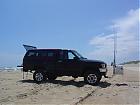
the amsoil is.I run because its desighned for the flat tappet and cam protection,and My trucks during the summer are on the scalding heat of the beach.
http://www.amsoil.com/storefront/amo.aspx
http://www.amsoil.com/storefront/amo.aspx
May 19, 2010 | 05:32 AM
#71

Contributing Member
Joined: Nov 2002
Posts: 10,666
Likes: 5
From: Oklahoma State
the amsoil is.I run because its desighned for the flat tappet and cam protection,and My trucks during the summer are on the scalding heat of the beach.
http://www.amsoil.com/storefront/amo.aspx
http://www.amsoil.com/storefront/amo.aspx
 May 19, 2010 | 07:13 AM
#72
Registered User
Joined: Jan 2008
Posts: 1,085
Likes: 7
From: Connecticut
Its gets pretty chilly where im from (Winters hover between -10C and -20C but occasionally into the -30's) and pretty hot (summer its around +30C most days, up to +35C on super hot days)
I always just used 10W-30 Conventional "High Milage". It says it right there on my Oil Cap. 8)
I have a rear main seal leak I believe, its not too bad, used to be just a few drips a day, but I was having to add 1L of oil every couple of weeks or after a long trip.
Then my HG blew, had that fixed up and now notice that the few drips a day has turned into quite a few drips a day, BUT, I have not had to top up the engine oil at all and its been nearly 3 months since the HG was repaired.
Im guessing most of the oil loss was through the HG slowly falling apart, and after they repaired it they have topped it up with either Synthetic or maybe a 5W-30 oil, which is where I am seeing all these extra drips come from.
Its due for a SeaFoam and Oil change very soon, so I think I should be going back to the 10W-30 High Milage. Although summer is just around the corner, should I be looking at a 10W-40 for the warmer months?
I always just used 10W-30 Conventional "High Milage". It says it right there on my Oil Cap. 8)
I have a rear main seal leak I believe, its not too bad, used to be just a few drips a day, but I was having to add 1L of oil every couple of weeks or after a long trip.
Then my HG blew, had that fixed up and now notice that the few drips a day has turned into quite a few drips a day, BUT, I have not had to top up the engine oil at all and its been nearly 3 months since the HG was repaired.
Im guessing most of the oil loss was through the HG slowly falling apart, and after they repaired it they have topped it up with either Synthetic or maybe a 5W-30 oil, which is where I am seeing all these extra drips come from.
Its due for a SeaFoam and Oil change very soon, so I think I should be going back to the 10W-30 High Milage. Although summer is just around the corner, should I be looking at a 10W-40 for the warmer months?
So since you have a worn rear main seal, I would go back to the high mileage oil which has more seal-swelling esters, and yes, I would also go with the 10W-40 since the motor sounds like it has some miles on it and because it will help slow the leaks. If you can get Valvoline MaxLife up there, that's a great oil. I know Petro Canada makes some great group III+ oils; maybe they make a good high-mileage oil too. Or ask around. As others have mentioned, good conventional oil will protect your motor every bit as well as a synthetic, so long as it is changed before it shears out of grade. The syns will outperform in cold weather, and in holding their viscosity instead of shearing like the conventionals.
As for an oil appropriate to say -35° C / -31° F, a petroleum 10W-40 is not appropriate. Most of them will be tar at that temp. I would definitely go with a synthetic 0W-40 or 5W-40. As mentioned, keep the operating temp weight the same, whether winter or summer. It's the cold start up "W" weight you have to watch in the cold temps. Look at the pour point of the oil you're considering. That's 5 degrees above the freeze point. At pour point, the oil will flow like tar - you can't use it at that temp. The lowest useable temp of an oil is 10° C/18° F above the pour point.
EDIT: For a winter oil, if you can get Red Line products, their 0W-40 would probably be a great choice. It's a Group V synthetic which is an ester-base oil, so it should be great for seals. It will completely clean your motor out, so if you have any sludge plugging a leak, it will wash that away. But I haven't read of any unusual reports of group Vs causing leaks. And being a true synthetic, it will last for very many miles, supporting change intervals of at least 7-8k miles (11 - 13k km). It is expensive, but considering that it also lasts twice as long, the price difference is negligible. And the pour point is just sick: -60° C / -76° F (!) That's why group Vs are used in jet aircraft engines, I guess.
For a filter to use with such a long oil change interval, I'd consider the Purolator PureONE PL20195 if you can get it:
https://www.yotatech.com/forums/f116...l#post51231877
Last edited by sb5walker; May 19, 2010 at 10:15 AM.
May 19, 2010 | 07:40 AM
#74
Contributing Member
Joined: Nov 2002
Posts: 10,666
Likes: 5
From: Oklahoma State
 May 19, 2010 | 09:17 AM
#75
Registered User
Joined: Jan 2008
Posts: 1,085
Likes: 7
From: Connecticut
There are lots of references to viscosity vs oil film thickness, and there are industry standard wear tests, but I couldn't find any reasonably comprehensible presentation of results. There's so much noise and hype and confusion on the topic. Maybe going with the oil that "feels" good is the best guide(!)
For myself, mechanical engine noise is a big warning sign. When I hear a lot of harsh metallic noise coming from an engine, I know there is more metal-to-metal contact than when using an oil that causes the motor to run more quietly. The thicker oil film does provide more cushioning and keeps metal parts separated better, which after all is the whole purpose of lubrication. Too thick, though, and the oil provides more drag, or hydrodynamic friction. That will lower fuel economy and in extreme cases can cause oil pump cavitation and lower oil flow, especially into bearings.
I noticed an example in my own veezy just recently. I've been commuting 2-3 times a week to a location an hour forty minutes away by highway. Last week I needed to add about 2/3 quart of oil (to 10W-40 that has about 4k miles on it), and all I had was some Syntec 5W-50. I was surprised to notice a significant reduction in engine noise with the added thicker oil. This continued even after a couple more trips.
With past vehicles, I have noticed much more noise with thinner oil. So my gut tells me to use the thickest oil that will still flow well. For our motors that have higher miles, IMO that's a 40 weight at op temp. Though I did use Syntec 20W-50 in my truck in the summers between 1995 at 107k miles and 2001 at 218k miles. When I replaced my head gaskets in '01 I noticed the cyl walls were in great shape: the cross-hatching was still very much in evidence and perfectly even. So using the 20W-50 did not do any harm, far from it. But I now think that weight is thicker than necessary and of course not appropriate in cold weather.
In my rummaging around the internet, I did find one article on the subject of viscosity and wear that I felt was very well founded. It's from the journal "Machinery Lubrication" published by the Noria Corporation of Oklahoma. They are industry lubrication consultants most of whose clients are manufacturers. I think they are fairly unbiased on the subject. They explain a lot of the recent trend toward lighter weight oils is due to better performance on fuel economy tests. They seem to regard this as short-sighted from a wear perspective. Their conclusion makes sense to me:
What To Use
Although thinner oils with less antiwear additive outperform more robust products in the 96-hour fuel economy test, it is not clear that such products save fuel over the useful life of the engine.
Every fluid is a compromise. Oils recommended by the auto manufacturers seem to compromise protection from wear under severe conditions to gain fuel economy and catalyst durability. It is important to recognize that to use a product that offers more protection from wear will most likely compromise your warranty. Thicker oils also compromise cold temperature flow, which may be of concern depending upon climate and season.
The best protection against wear is probably a product that is a little thicker (such as SAE 10W-30 or 15W-40) and has more antiwear additives than the oils that support the warranty. The best oil for your vehicle depends on your driving habits, the age of your engine and the climate you drive in, but it is not necessarily the type of oil specified in the owner’s manual or stamped on the dipstick.
Although thinner oils with less antiwear additive outperform more robust products in the 96-hour fuel economy test, it is not clear that such products save fuel over the useful life of the engine.
Every fluid is a compromise. Oils recommended by the auto manufacturers seem to compromise protection from wear under severe conditions to gain fuel economy and catalyst durability. It is important to recognize that to use a product that offers more protection from wear will most likely compromise your warranty. Thicker oils also compromise cold temperature flow, which may be of concern depending upon climate and season.
The best protection against wear is probably a product that is a little thicker (such as SAE 10W-30 or 15W-40) and has more antiwear additives than the oils that support the warranty. The best oil for your vehicle depends on your driving habits, the age of your engine and the climate you drive in, but it is not necessarily the type of oil specified in the owner’s manual or stamped on the dipstick.
Last edited by sb5walker; May 19, 2010 at 09:39 AM.
 May 19, 2010 | 10:56 AM
#77

Registered User
Joined: Apr 2009
Posts: 98
Likes: 0
From: Los Angeles
I switched from regular oil to  Mobil 1 High Mileage 10W-30 full synthetic. its been 5k miles and i haven't noticed more leaks. 220k miles on the rebuild engine. The engine runs smoother. This reminds me, I should change the oil on the weekend.
Mobil 1 High Mileage 10W-30 full synthetic. its been 5k miles and i haven't noticed more leaks. 220k miles on the rebuild engine. The engine runs smoother. This reminds me, I should change the oil on the weekend.
May 19, 2010 | 11:41 AM
#78
Registered User
Joined: May 2009
Posts: 70
Likes: 0
From: BC Man!
As for an oil appropriate to say -35° C / -31° F, a petroleum 10W-40 is not appropriate. Most of them will be tar at that temp. I would definitely go with a synthetic 0W-40 or 5W-40. As mentioned, keep the operating temp weight the same, whether winter or summer. It's the cold start up "W" weight you have to watch in the cold temps. Look at the pour point of the oil you're considering. That's 5 degrees above the freeze point. At pour point, the oil will flow like tar - you can't use it at that temp. The lowest useable temp of an oil is 10° C/18° F above the pour point.
So a 5W-40 say, would be thinner for starting up in cold weather, yet thicker at normal running temperatures to stop leaks there?
I always let it warm up in the winter, never start and go without waiting at least a few mins for oil to circulate and warm up.
Not sure if I should go a 0W, then engine is 16+ years old and almost 250k miles on it.
May 19, 2010 | 11:44 AM
#79
Registered User
Joined: Jan 2008
Posts: 1,085
Likes: 7
From: Connecticut
For folks looking for a good 30 weight oil, two brands perform extremely well and are bargains: Pennzoil Platinum 5W-30 & 10W-30, and for those with leaking seals, Valvoline MaxLife 5W-30 & 10W-30. Even though the MaxLife is only a blend, it performs almost as well as many of the Group III full synthetics, and it outperforms Mobil 1 in shearing, holding its viscosity very well. You can use the Platinum for 5-6k miles, and the MaxLife for 4-5k miles and still have plenty of viscosity and buffer (TBN) left. If you can find Valvoline Durablend, that seems to be the same as the MaxLife product only without the extra esters. It also holds its viscosity incredibly well, especially given that it is a blend, not a full syn. Here's a UOA for Durablend 5W-30 after 9150 miles(!) its 100° C viscosity is still 9.37 cSt and it has buffering remaining (TBN of 1.7). Amazing.
If you have the budget, Amsoil 30 weight products will outperform just about anything.
If you have the budget, Amsoil 30 weight products will outperform just about anything.
Last edited by sb5walker; May 19, 2010 at 12:11 PM.
May 19, 2010 | 11:49 AM
#80
Registered User
Joined: Jan 2008
Posts: 1,085
Likes: 7
From: Connecticut
My only concern with a 0W or 5W in the winter is that it will be quite thin and leak through the seals?? Or will this not be the case as during the cold weather the oil will be much thicker from a cold start than in the summer?
So a 5W-40 say, would be thinner for starting up in cold weather, yet thicker at normal running temperatures to stop leaks there?
I always let it warm up in the winter, never start and go without waiting at least a few mins for oil to circulate and warm up.
Not sure if I should go a 0W, then engine is 16+ years old and almost 250k miles on it.
So a 5W-40 say, would be thinner for starting up in cold weather, yet thicker at normal running temperatures to stop leaks there?
I always let it warm up in the winter, never start and go without waiting at least a few mins for oil to circulate and warm up.
Not sure if I should go a 0W, then engine is 16+ years old and almost 250k miles on it.
There's no need to use a 0W-something unless your winter temps are pretty low, but on the other hand, it wouldn't hurt to use it even at warmer temps. I wouldn't use a conventional 5W-30 below -20° C, but if using a synthetic, most of the 5W-30s and 5W-40s will flow down to about -30° or -35° C. Personally, if winter temps get into that region, I would use the 0W. It will flow better on startup.
Yes, the synthetic 5W-40s really show the advantages of synthetics: very good cold flow, and very good viscosity at operating temp, as good as the petroleum 10W-40s when fresh, and better than the minerals after a few thousand miles. And you get a longer oil change interval. But a high mileage oil will be better for leaking seals.
That Red Line 0W-40 I mentioned, btw, is anything but thin. It's a very robust 40 weight with a 100°C cSt of 15.1 - that's closer to a 50 weight than a 30.
Last edited by sb5walker; May 19, 2010 at 01:29 PM.


