When you click on links to various merchants on this site and make a purchase, this can result in this site earning a commission. Affiliate programs and affiliations include, but are not limited to, the eBay Partner Network.
Why would it not be made of silicone? Silicone comes in many different "viscosities". From the stuff you smear on your tiles to the stuff you bake your pizza on @ 430°F
Throw that POS away and buy the oem. Screw the acorn nuts down hand tight as hard as you can with your fingers, then another 1/2 revolution with a 12mm: done. Veeeery light touch. Do not put anything else in there, like sealant or such.
Who claimed that brand was made from silicone? Was it listed in the item specs when you bought it? If not, I wouldn't consider it to be fact. But why does it matter? Can you explain the difference between rubber, Buna-N, Viton, and silicone?
Just going to throw my opinion in. No need to run OEM valve cover gasket. I've run stuff from the closeout section of RockAuto up to LCE. So the $4 kits all the way up to the $20 kits. I've never run OEM. All the kits I've used worked the same. Some have the big O-ring molded to fit the bumps in the valve cover, some don't. They all work the same when you install them correctly. Put some Permatex Ultra Grey all the way around the round part of the rubber half-moons and right at the corners where the half moon, head, and valve cover O-ring all meet. Tighten the cover down until the rubber grommets just start to bulge and you're good. I find the rubber grommets all work when new, usually seal up a for their first re-use, and after that it's a gamble.
Some gaskets, however, I would only recommend OEM. Headgaskets for sure, and the intake and exhaust manifold gasket usually. Also the exhaust donuts after the manifold seem to be highest quality from Toyota. I also like the OEM oil seals. Only had one issue with an aftermarket front main seal but there is a noticeable quality difference between OEM and aftermarket seals. Most everything else just use whatever is cheapest because you don't gain anything by spending extra money.
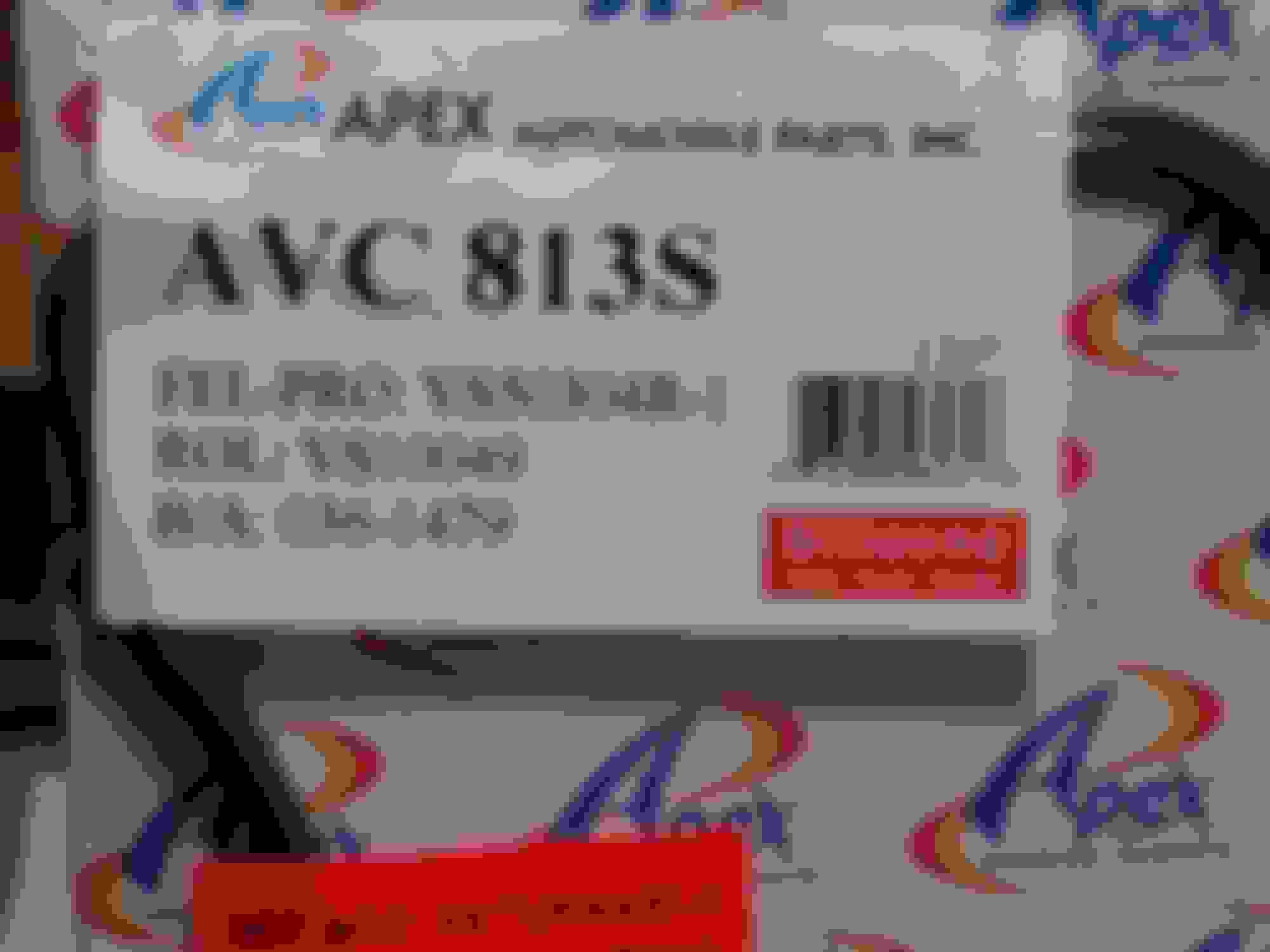
Arlindsay1992, I saw it on Youtube (the Scotty Kilmer channel). He said it was silicone but I could not find a description online that verified this. I bought one and on the label it says "SILICONE Valve Cover Gasket" (see photo below).
To answer your question:
• Silicone is more resistant to heat, chemical attacks, fungus attacks, UV and Ozone attacks than normal rubber.
• Silicone is much better than all other rubbers for thermal insulation due to its heat resistance.
• Silicone rubber offers special properties, which organic rubbers do not posses. Organic rubbers have poor tensile and tear properties at high temperatures while these properties are excellent in silicone rubbers at the same temperature conditions.
Last edited by Aikido; Nov 19, 2018 at 07:15 PM.
Reason: last few lines not showing on post
.... Screw the acorn nuts down hand tight as hard as you can with your fingers, then another 1/2 revolution with a 12mm: done. Veeeery light touch. Do not put anything else in there, like sealant or such.
The FSM clearly recommends using "seal packing" in four locations on the Valve Cover Gasket. http://web.archive.org/web/201211101.../7cylinder.pdf Personally, I don't know a whole lot about the 22re, but if you skip the seal packing on the 3VZE it pretty much guarantees a leak. I use RTV (FIPG is good if you're very quick and in a real hurry). Get the metal sparkling clean; RTV doesn't stick well to oily surfaces.
The FSM gives a torque value of 52 inch-lbs, and you should pay attention to that. I have a 1/4" drive torque wrench just for those low-value torques; you can easily pull a steel screw right out of an aluminum head. If you want to try "finger tight" you can, but in that case why ever use a torque wrench?
Originally Posted by arlindsay1992
...Just going to throw my opinion in. No need to run OEM valve cover gasket. ...
Yeah, there's an argument that Silicone has better heat resistance than Buna-N, but not below 300°F. And if you can get the valve cover that hot, the gasket is the least of your problems. I'm with arlindsay on that.
The FSM clearly recommends using "seal packing" in four locations on the Valve Cover Gasket. http://web.archive.org/web/201211101.../7cylinder.pdf Personally, I don't know a whole lot about the 22re, but if you skip the seal packing on the 3VZE it pretty much guarantees a leak. I use RTV (FIPG is good if you're very quick and in a real hurry). Get the metal sparkling clean; RTV doesn't stick well to oily surfaces.
The FSM gives a torque value of 52 inch-lbs, and you should pay attention to that. I have a 1/4" drive torque wrench just for those low-value torques; you can easily pull a steel screw right out of an aluminum head. If you want to try "finger tight" you can, but in that case why ever use a torque wrench?
Measure what hand tight as hard as you can, plus 1/2 turn is should get you there.
You are very correct about the half moon seals. On the 22-RE, if you keep them where they are, it's fine. If you remove them, you will want to reseal them. Thanks for the heads-up.
I'm not really familiar with Buna-N. When I researched what was for sale I did not see this mentioned although most descriptions of the materials in the gaskets were vague at best such as the Fel-Pro one " meets or exceeds original specifications". I did write to them and was told that it is made of "black silicone rubber". Also, the Fel-Pro gasket #VS50304R-1 is, according to Amazon fitment supposed to fit a 2000 Toyota Camry with 5SFE engine (see photo)
I don't know about what you read, but a torque of 52 in-lbs is only a bit over 4 ft-lbs. You can tighten them tighter with your hand. On the 5SFE Camry, the recommended (by the service manual, Haynes manual and Chilton manual) is 33 ft-lbs.tightened hand tight then after an hour in increments to equalize gasket pressure.
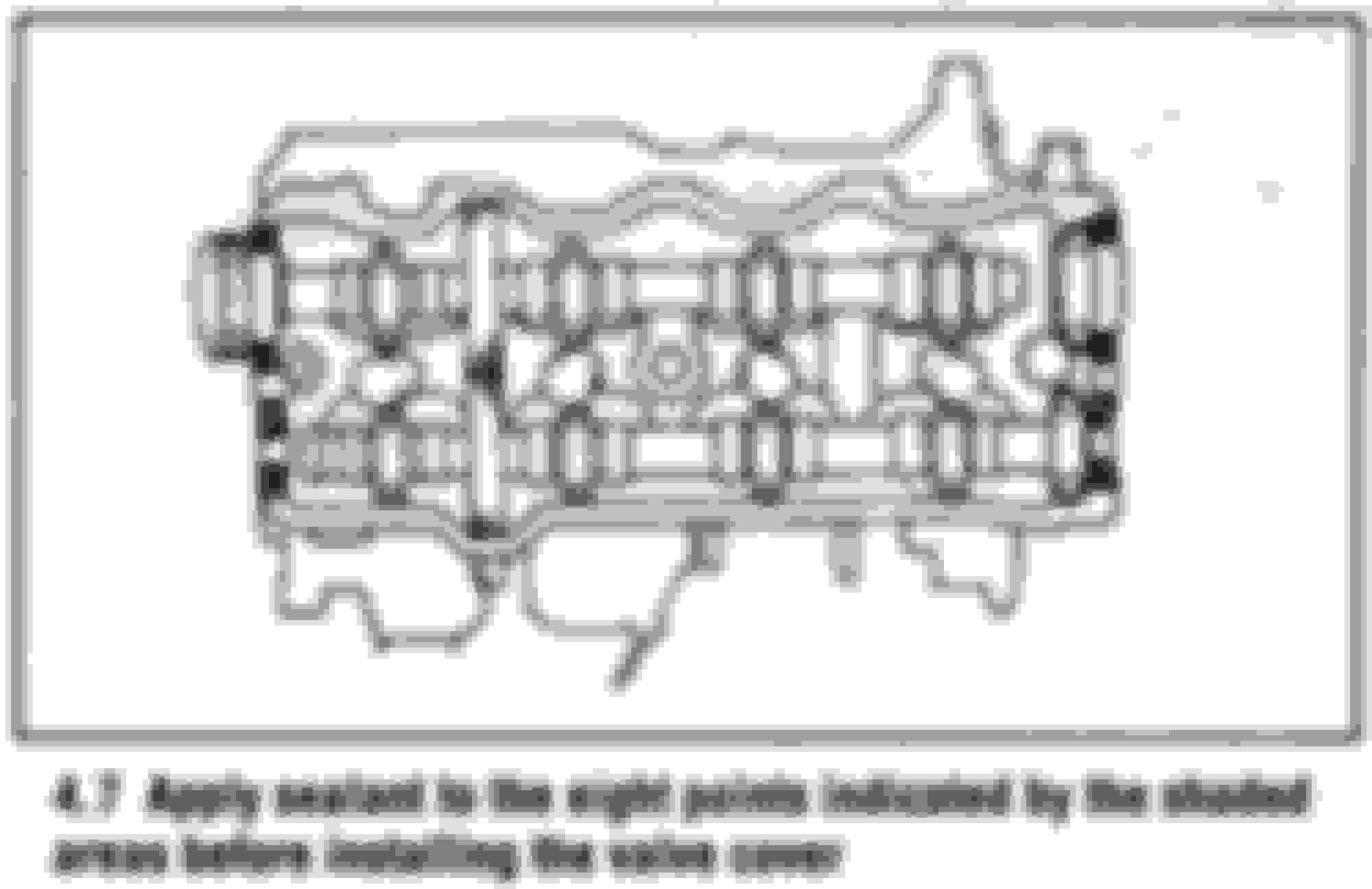
Lastly, but not leastly, the Chilton recommends using RTV sealant in 8 spots (see diagram):
not 4. The front 2 on either side cover the half moon plug (aka "semicircular plugs") that, in my opinion can be covered as one area so that the plug is level with the mating surface of the crankshaft.
So, that's what I found out. Thanks for listening/reading.
I don't know the torque for the V6. On the 22-RE, if you tighten them half a mm too tight, the rocker arms will make contact, giving you a tick from hell that you can chase for 8 consecutive valve adjustments.
For longevity of sealing efficiency, the type and quality of materials used in gaskets and seals really do matter.
It has been my experience that cheap (read most often chinese) gaskets and seals quickly get their elastomers cooked out of them by heat and oil and
They shrink and become hard and brittle before very long. This causes great unhappiness and pain, at least to me.
I always try to buy the highest quality gaskets and seals that I can find. Proper materials stay soft and pliable for longer service life.
I'd like to find some silicone valve cover gaskets for my 3vz I think they'd work well for longer than other materials do.
Millball, The only ones I found for my car was the Apex (as pictured earlier). I found it along with the lowest price for it on RockAuto(.com). I think the next best option is Fel-Pro which is black silicone rubber (not to be confused with silicone)
You can get one here: https://www.rockauto.com/en/moreinfo...sn=428&jsn=428



 Nov 15, 2018 | 11:40 PM






 should get you there.