When you click on links to various merchants on this site and make a purchase, this can result in this site earning a commission. Affiliate programs and affiliations include, but are not limited to, the eBay Partner Network.
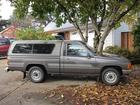
Hello, this is my first post. I am newbie and not savvy with car repairs. Maybe I am in over my head, but I bought a 1995 4Runner because I think they are super cool. But I need help please! I have been searching the forums but hoping to post here and get some help, any help is much appreciated.
It failed emissions so hoping to get some ideas from the CEL. The check engine light doesn't come on when I put the key in the 'ON' position, as it should.
I checked the #4 IGN fuse and #15 EFI fuse and both look good. I tried to jumper the E1 to TE1, but CEL still doesn't come on.
Any suggestions on what to try next? Others lights on the dash work but I was thinking of trying to replace the CEL light bulb. I am a complete novice but willing to try and learn. Please, any help, any advice is much appreciated! I will also continue searching the forums for ideas.
I tried taking the dash off yesterday, got stuck and gave up. I found another thread that shows you need to remove the bottom of the dash as there is one hidden screw, I am sure that is what was stopping me. I will give it another try today.
I am in Fort Collins, CO. It has the 3.0 L engine and 5 speed manual transmission.
It does run good, though it does run rich. It also fails emissions on CO. You can definitely smell it. I took it to a shop to see if they could get it to pass emissions but they were unable to fix it. They got the CO lower but still too high. They replaced vane air flow meter, cleaned fuel injectors, replaced air intake hose, replaced cold start injector.
One thing I read on another thread talked about testing connections from the ECM, it ended up being this person's ECM was bad and that caused the CEL to not come on. Replacing the ECM ended up fixing all of his problems. I need to find that thread again.
Last night I bought a 7 function digital multimeter to help test that. But I am a complete newbie, I have no clue how to use it, so there will be some learning happening (hopefully) today.
Thanks again for your reply, I appreciate your help!
Before you take off the Combination Meter (instrument panel), use your multimeter to check for voltage on the "W" pin in the diagnostic connector. It's connected directly to the CEL, so with key-on you should have battery (~12v) to ground. (as a sanity check, check for battery to ground on the B+ pin too.) Once you get that, jumper TE1 to E1. Since the flashing rate for codes is probably too fast to read on a multimeter, you might need a "test light." https://www.aliexpress.com/item/4001344585875.html (You can make your own from an LED and 1000 ohm resistor, but not for what they're selling complete units from China!)
I don't know about emissions checks in CO, but in CA a non-working CEL is a guaranteed fail. If you get codes off the W pin, removing the combination meter is probably still in your future.
Ugh, I wish I had seen your post earlier. I have most of the dash ripped apart. I got to the point where the Combination Meter is accessible but due to all of the stuff attached to it, I can't pull it out. I left it that way for now. I was going to search to see what do I need to do to check the CEL bulb from here?
Update. I was able to successfully remove the Combination Meter and get the truck put all the way back together and it still works! So that was a success. While I had the Combination Meter out, I swapped the CEL light bulb with a known good one (the one showing the back window is open). A little back story, someone who had the truck before me changed out the actuator for the rear window and forgot to put a piece back in so the light showing the rear window is open (or something like that) is always on. SO, I swapped those two, put the thing back together.... and now neither the CEL nor the back window open lights come on. Not the result I was hoping for. But everything else seems to work fine, so that is good.
@scope103 Thank you so much for your post!! I tried what you said with the multimeter, "W" and "B+". Here are the results of that... so being a complete newb, here is what I did: I have an el cheapo 7 function multimeter from Harbor Freight. I set it ACV 200. I connected the black end to the black terminal of the battery. I turned the ignition to the "ON" position. I stuck the red end into "W". Nothing, all zeroes. I stuck the red end into the "B+" connector and got 26.5. What does this tell me? In reading your post, I am guessing I should have gotten 26.5 or some number when I plugged into "W". I will do some searching on other posts but appreciate if you have time to give me some more direction! Thank you!!
old87yota is correct. Since you may still be in the "learning" phase, at some point put your probes right on the battery posts. If you get 26.5 or zero of anything other than ~12.6v, something is wrong. A sanity check is always good; you need to be able to trust your instruments.
Oops! I may have lead you wrong. While W connects directly to the CEL, my review of my EWD shows that W is grounded by the ECM to light the CEL. The CEL is powered by the gauge fuse (have you checked that yet?), and then grounded by the W line to the ECM.
As a quick check, put the red probe on the battery + (not minus), and the black probe on W. With key-off you should get "about" zero volts (leakage will give you some small random number because your meter has such high impedance -- a good thing). With key-on, it should read +12v. If that works, jumper TE1 to E1; if you get "flickering" of the voltage value you're now reading a code.
[You can switch the red and black probes; if you get them "backwards" you just get a minus sign in front of the voltage.]
If none of this advances your inquiry, you may have to access the connectors to the ECM under the passenger kick panel. You can (in theory, at least) back-probe pin 5 of the 22 pin connector (there are 3) which should be a solid violet wire. Unless slight differences in model years mean your ECM connectors are slightly different than mine ....
From what I can see, looking at the schematics, and presuming you have the Black meter lead on a good body ground someplace, B+ is the battery's voltage, W is the terminal where ground is applied to the Check Engine light by the ECU when it detects a reading in it's inputs that shows the ECU that there's a problem somewhere.
Like, and this is JUST an example, not real world situation, let's say the input to the ECU from the knock sensor is outside the limits programmed into the ECU.
Let's say the maximum voltage from the knock sensor is 5 volts. Again, JUST an EXAMPLE. But the voltage the knock sensor is sending to the ECU is 10 volts, for whatever reason.
The ECU see the voltage from the knock sensor, determines the knock sensor is bad, since the voltage it's supplying to the ECU is more than 5 VDC, and applies a ground to pin W. That will turn the Check Engine light on, since it always has +12 VDC from the battery applied to it, through the Gauge fuse. The ground the ECU supplies will complete the Check Engine light's circuit, allowing it to shine.
SO, you are seeing +12.51 VDC at pin B+. If you were to place your meter's leads directly on the battery, red on the Positive Terminal, black on the battery's Negative Terminal, you would also see +12.51 VDC on your meter. Maybe slightly different voltage on the battery, since wires and connectors can have a slight resistance to them. Maybe the battery voltage would be +12.53 VDC, you see? By placing your meter leads directly on the battery, you're eliminating all the wire and connectors between the battery and the B+ terminal of the DLC1. That's why there might be that slight difference.
Seeing 0 VDC on pin W tells you that the ECU is seeing what it considers a problem, and has applied a ground to pin W to turn on the Check Engine light.
OR, the Gauge fuse in the inside fuse block is bad, so there's no voltage on pin W if the ECU does NOT detect any problems. Since the other lights in the gauge set light up when they should, the Gauge fuse must be good. If it were not, the other lights that it supplies wouldn't come on when they should.
IMHO, the things to check now, would be the runs on the back of the gauge set that lead to and from the Check Engine light. Follow each run, the strip of metal on the circuit board, looking for any signs of cracks, burns and so on. Anything that might show that the electricity can't flow to, through, and from, the Check Engine light.
You should also, maybe, check the wires from the ECU's pin W to the DLC1 Pin W. Put your meter on OHMS 2. Then put one lead on the ECU's pin W, which you find in the ECU's plugs labels in the FSM, the other lead on the DLC1's pin W. If the meter shows something below 0.01, the wires are good. Anything much higher, and the wire is probably bad somewhere along it's length. Then, you have to trace out the wire to find the problem.
I know, very long and wordy. I apologize, but you seemed like the more explanation the better. Just starting to learn to use a meter and all.
@scope103 when I did what you said in the second paragraph, the voltage meter does start changing the numbers and down rapidly! So I must be reading a code there! So that is something. Unfortunately I probably won't have time to mess with it any more until Monday. Darn it! But thank you for your help so far, any more ideas from here now that it seems to be reading codes on the meter?
Thank you so much for your in-depth reply! I appreciate you taking time to really spell things out, that is just what I need. Unfortunately, I am not going to have time until Monday to really read thru this slowly and carefully and work on tracing cables. I will definitely let you know what happens when I am able to do that! Thanks again.
..., any more ideas from here now that it seems to be reading codes on the meter?
Did you check the gauge fuse? While you're at it, practice reading fuses with your meter. On the top of an ATO/ATC fuse are two metal points. With power to the fuse (in case of the gauge fuse, key-on), you should get voltage to ground at each point. What if you get it from only one? You're getting the idea. Checking fuses this way is not only a lot faster than pulling them out to look at them, you can catch "open" fuses that still somehow look okay, or good fuses in bad sockets.
You're probably not going to be able to "read" codes with a multimeter; here's where you go old-school with a test light. (don't forget; the wire lead of the test light goes to battery +, not ground as usual). IF you can actually read codes that way, you probably have a broken wire ... somewhere.
Thank you for the replies! I bought a test light so I am going to see if I can read codes with it. I also bought a continuity tester so may try testing cables that way. I did test the gauges before but will try again. Any more ideas, please post and I will post back with what I find this afternoon!
Well, I didn't get very far. I tried jumper E1 and TE1, key on, with test light to W and it blinks repeatedly, no discernible pattern. It just constantly blinks over and over and over again. I was thinking it would have a pattern of lights that would correspond to check engine codes.
And then as far as testing the "gauges" fuse, I tried setting my multimeter to DC 20, key on, touch the black lead to the frame of the car, and then the red lead to to any of the two metal leads on any fuse and nothing. I must be doing something wrong. When I search online it talks about testing fused my setting to ohm 20 and then touching the two leads, and that I can get to work. But what you are talking about a different test, I am sure, I am a sure I am doing something wrong.
Okay just searching thru other forums, it sounds like that constantly flashing just means there are no codes! So that is actually a good thing, I suppose. So now, back to the problem of why the CEL never comes on at the dash when I click the key ON. I am guessing the next step is to try what @2ToyGuy suggested, of tracing cables from the check engine light on the dash back down to the gauges fuse on the driver side kick box? Does that sound right? I am guessing if I am getting those constantly blinking lights when plugged into W, that means, the ECU and the diagnostic block under the hood are talking to each other, correct?



 Jul 21, 2021 | 02:40 PM