When you click on links to various merchants on this site and make a purchase, this can result in this site earning a commission. Affiliate programs and affiliations include, but are not limited to, the eBay Partner Network.
You might think I'm tossing you a slow pitch soft ball but sadly I don't think that's the case.
TRUCK:
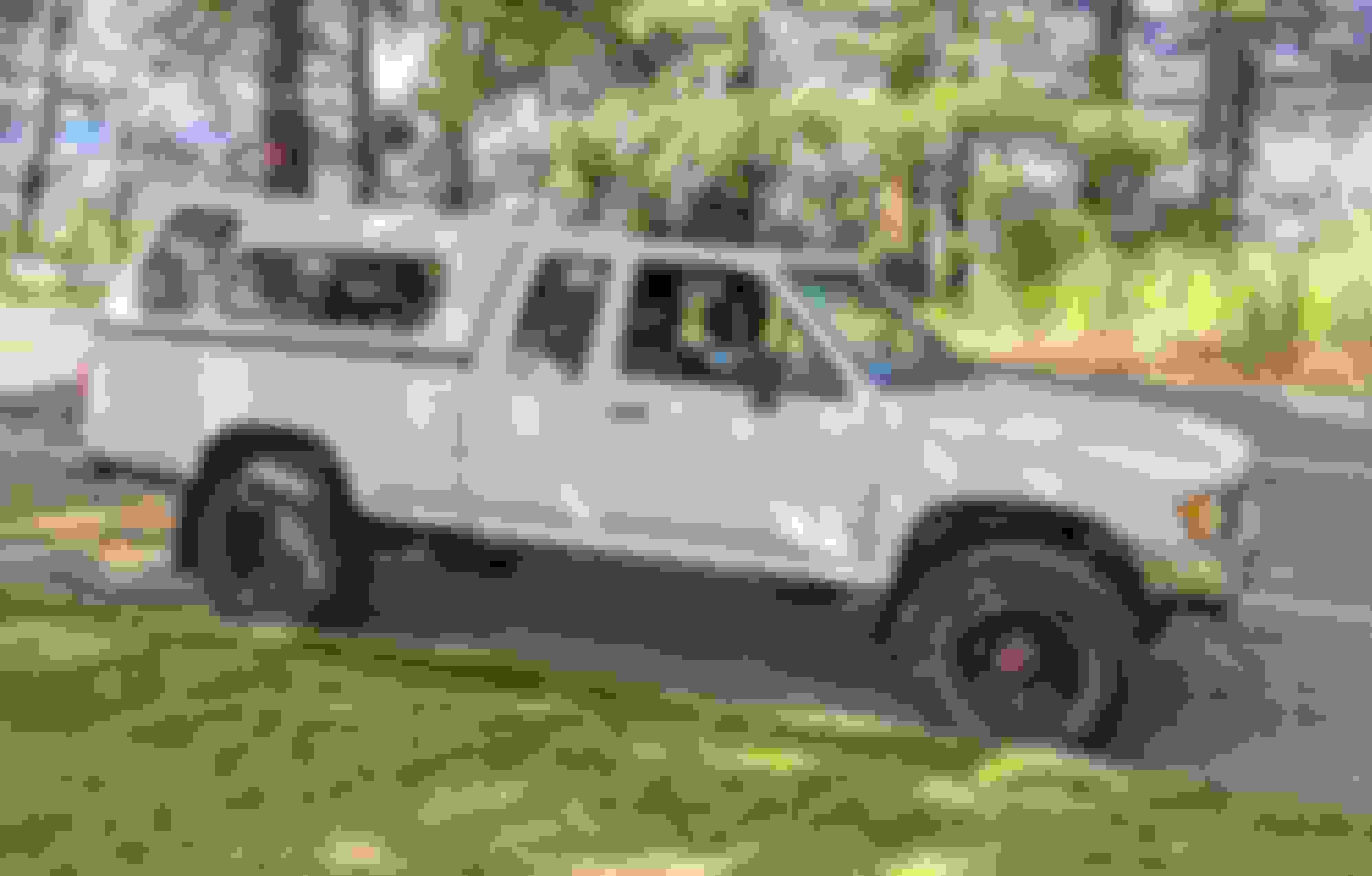
1994 P/U 4X4 22-RE Manual transmission
PROBLEM: Over pressurization of cooling system The cooling system runs at about 17psi. This problem has progressed over the past 2+ years. I can still drive around town but sustained periods (>20minutes) on the freeway cause a coolant loss (edit) out the overflow (/edit) substantial enough for overheating to occur.
TROUBLESHOOTING:
Block test (multiple tests- always passes. Then I test the tester at the exhaust pipe)
New OEM water pump
New OEM fan clutch
Multiple New thermostats including OEM
1/8" hole drilled in thermostat
Multiple New radiator caps 13psi (all tested of course)
New Radiator (no cold spots found with infrared thermometer)
Bypassed heater core
Compression test (170psi holding for >10 minutes)
Cooling system pressure test (holds 20 psi for >10 minutes)
Coolant flows below radiator cap. No bubbling visible.
Cooling system burped.
HISTORY:
I blew a head gasket about 3 years ago. I used all OEM gaskets and head bolts and had the head pressure tested and decked at that time. Truck ran fine.
I broke a valve spring about 2 years ago in May 2022. I used all OEM gaskets and 22RE Performance 65lb valve springs, retainers and keepers. And I had the head pressure tested and decked at that time. The first low coolant event happened in October 2022 and has gotten worse since then. I can't drive on the freeway any more but I can drive around town without event.
NOTES:
The block was pitted at the deck every time I took the head off. It's counter intuitive but no-one (repair shops, machine shops...) said this would be a problem. I'm second guessing that.
I haven't tried opening the block plug by the bell housing and irrigating the water jacket.
(Edit) Coolant is leaving out the overflow only. (/Edit)
CONCLUSION:
I'm ˟˟˟˟.
Maybe I'm missing something.
Should I do head gasket again but take the head to a different shop for pressure testing and machine work?
Should I rebuild my long block so I can get rid of the pitting on the deck and double check the head?
Money and time are an issue. If they weren't I'd be posting in the TDI swap section.
Thanks for your help guys. This forum is great.
Last edited by ethanfurniss; Sep 23, 2024 at 07:54 AM.
"block test"? as in a combustion leak test at the radiator cap? fwiw, i think that it would only test for the presence of exhaust gas, see other options here: https://www.2carpros.com/articles/he...ket-blown-test
so where is the coolant actually being lost? sounds like back out the radiator cap and into the overflow when the engine gets hot? not out the tailpipe?
"block test"? as in a combustion leak test at the radiator cap? fwiw, i think that it would only test for the presence of exhaust gas, see other options here: https://www.2carpros.com/articles/he...ket-blown-test
Yes, block test OR combustion leak test (at radiator fill neck).
Thanks for that link. I have already performed those test as indicated by the results above. My variation test 5 omitted the removal of the spark plugs and turning over the engine. I merely pressurized the cooling system to verify it would hold pressure.
Last edited by ethanfurniss; Sep 22, 2024 at 09:56 AM.
so where is the coolant actually being lost? sounds like back out the radiator cap and into the overflow when the engine gets hot? not out the tailpipe?
Not exactly. I am losing coolant BEFORE the engine gets hot. The overheating is a result of low coolant.
The engine over pressurizes at normal temps and normal conditions (on the freeway) and pushes coolant out the radiator cap then out the overflow. When sufficient coolant has been expelled I have problems. First the heater stops working, then the engine starts to heat up.
Yes, block test OR combustion leak test (at radiator fill neck).
Thanks for that link. I have already performed those test as indicated by the results above. My variation test 5 omitted the removal of the spark plugs and turning over the engine. I merely pressurized the cooling system to verify it would hold pressure.
so there is no white smoke out the tailpipe and no mayonnaise under radiator cap/oil fill/etc?
Not exactly. I am losing coolant BEFORE the engine gets hot. The overheating is a result of low coolant.
The engine over pressurizes at normal temps and normal conditions (on the freeway) and pushes coolant out the radiator cap then out the overflow.
i can see how overheating would be associated with over-pressurization of the cooling system, but that's not what you are describing, it's the part about losing coolant before the engine gets hot that is weird.
so if you:
1) take off the radiator cap when the engine is stone cold, after sitting all night,
2) confirm or fill antifreeze until visible above the cooling fins in the radiator
3) leave cap off and start the engine
does the coolant immediately start overflowing the radiator?
i can see how overheating would be associated with over-pressurization of the cooling system, but that's not what you are describing, it's the part about losing coolant before the engine gets hot that is weird.
so if you:
1) take off the radiator cap when the engine is stone cold, after sitting all night,
2) confirm or fill antifreeze until visible above the cooling fins in the radiator
3) leave cap off and start the engine
does the coolant immediately start overflowing the radiator?
No. It doesn't not overflow in the driveway, nor with city driving- Cap on or off.
If i follow your three steps, but add a fourth...
4) attach Mityvac cooling system pressure tester and start engine.
The pressure will rise to about 17psi as the engine warms up.
OEM caps are a little over 13psi. FWIW.
The only time coolant is pushed out the overflow is with freeway driving.
Thank you for your replies.
I may try a higher PSI cap (like the 17psi one in my Sienna) but don't like this as a long term solution. My goal is to have a reliable vehicle that i am comfortable driving a thousand miles from my house.
that is good feedback, i agree with you about keeping the low pressure factory rated radiator cap.
i think that under normal operation in mild weather conditions the radiator cap will open and bleed coolant into the overflow, but i don't know what the actual temp trigger point for that is, or should be, and perhaps it's hard to tell because the temp gauge isn't working right.
you are in phoenix? 100 degree temps? what if at least part of this is caused by cooling system problems, like the fan clutch is defective or perhaps you aren't running the full fan shroud, including that short piece that clips onto the side of the shroud?
that is good feedback, i agree with you about keeping the low pressure factory rated radiator cap.
i think that under normal operation in mild weather conditions the radiator cap will open and bleed coolant into the overflow, but i don't know what the actual temp trigger point for that is, or should be, and perhaps it's hard to tell because the temp gauge isn't working right.
you are in phoenix? 100 degree temps? what if at least part of this is caused by cooling system problems, like the fan clutch is defective or perhaps you aren't running the full fan shroud, including that short piece that clips onto the side of the shroud?
Yeah, that's not how the rad cap works. You might be thinking of the thermostat which is 188 degrees. The rad cap has a pressure rating. The OEM cap on a 22RE is 13psi.
I'm in Portland. We have mild to wild temps here but the problem has persisted in all seasons.
Temp gauge should be working.
New OEM fan clutch, full shroud. Prob not it but keep spitballing.
Personally I would try two things One I would get a UV dye and dump that into your system I had an issue where mine kept losing coolant and it was due to me not bolting in the heater core return line only with adding and dye was I able to find it. The other thing I would do is fill it with coolant and let it sit for a couple of days with the cap on. if the coolant is leaking out of the vehicle you'll be able to trace it back with the dye two after a few days has passed if the coolant level is significantly lower pull the plugs and use a borescope to check inside the cylinders see if there's any rest or liquid pulled up inside of the cylinders it's entirely possible you have a cracked cylinder wall that you're not seeing. Also did you pull off the lower intake manifold when you did the head? I've heard that a lot of people have issues sealing that area back up as coolant flows through it but this is one of those things that you won't know where it's leaking from until you put a little dye in it
Personally I would try two things One I would get a UV dye and dump that into your system I had an issue where mine kept losing coolant and it was due to me not bolting in the heater core return line only with adding and dye was I able to find it. The other thing I would do is fill it with coolant and let it sit for a couple of days with the cap on. if the coolant is leaking out of the vehicle you'll be able to trace it back with the dye two after a few days has passed if the coolant level is significantly lower pull the plugs and use a borescope to check inside the cylinders see if there's any rest or liquid pulled up inside of the cylinders it's entirely possible you have a cracked cylinder wall that you're not seeing. Also did you pull off the lower intake manifold when you did the head? I've heard that a lot of people have issues sealing that area back up as coolant flows through it but this is one of those things that you won't know where it's leaking from until you put a little dye in it
Hey man. Thanks for your contribution.
I am not chasing down a coolant leak. Its exiting the system via the overflow.
Sorry if i didnt make that clear before. I edited the original post.
Ill earmark your suggestion if i have a pesky leak in the future though.
One other thing that's worth noting is you should be using your factory radiator cap and not the one that came with the new radiator I had put a new radiator in my truck that was using the path that came with it and had a similar issue as soon as I put the factory cap back on the issue was solved and their cause of this issue is new radiator cap how smaller lower gasket which means that they don't hold the pressure as well so your cap could say 13 psi but in reality it was like 4 PSI
One other thing that's worth noting is you should be using your factory radiator cap and not the one that came with the new radiator I had put a new radiator in my truck that was using the path that came with it and had a similar issue as soon as I put the factory cap back on the issue was solved and their cause of this issue is new radiator cap how smaller lower gasket which means that they don't hold the pressure as well so your cap could say 13 psi but in reality it was like 4 PSI
Thanks for the reply.
The rad didnt come with a cap.
The old cap tests at 13psi and new cap tests at 13psi. Gasket dimensions are the same too.
Like I said, im not chasing a coolant leak. The components that hold coolant in are functioning correctly.
Im chasing an overpressure issue.
At this time there isnt any thing else to try besides an engine rebuild so I can get the block decked and pressure test the head.
That said, keep spit balling if you think of things related to overpressurization.
Like Millball, i can only think of something related to the head. You might try a leakdown test to see if that offers anything, but if having the engine at operating temp is essential this might be tough to do. I'd highly recommend the test before pulling the head, though.
If the issue was at the block/head mating surface the headgasket should have signs of failure once the head is pulled. But I'd also think the block test would have shown that.
At freeway speeds enough air is being forced through the radiator that fan blade and fan clutch essentially freewheel. But considering what you're going through I'd probably would have put news ones on, too. Kudos for getting oem grade.
Toyota did have that special thermostat for the 22R# that addressed temperature overshoot (that small hole you drilled was sorta replicating that) but that condition was very specific, and oddly random. Only a minor percentage of 22R's did that. And that was weird (typically flaws in 22R design affected the vast majority, not a select few). The temp overshoot would happen when a cold engine was heating up. There would be a delay in the thermostat opening, creating the temp gauge to go up to about 3/4 before the thermostat fully opened and the temp needle would drop to normal. Once thrmostat fully opened the vehicle's gauge and cooling system behaved properly. But that initial spike during warm up was alarming to those paying attention. Vehicles with overshoot did it when vehicle was still pretty new, or not at all. It wasn't something that showed up years later.
The leakdown test is about the most informative test you can run in this situation, it can narrow your focus quite a bit if you're lucky.
The tricky thing will be analyzing the head if you pull it. I've found most machine shops not that great in scrutinizing. They recommend the resurfacing and possible valve job, while condemning the head pretty much kills their machine job.I can't tell you how many times we sent heads out for inspection, they got resurfaced and shipped back to us, only for our tech to find a hairline crack. So if you do pull the head I think taking an orbital sander with some wet/dry paper and cleaning up the head surface and doing your own inspection would be worthwhile. I'd probably really look over the valve seats where that spring broke. Most 22R head cracks that I saw were in the combustion area around the valve seats, not so much the mating surface. But right now everthing is on the table.
I'll ponder this as I walk the dog now.
At this time there isnt any thing else to try besides an engine rebuild so I can get the block decked and pressure test the head.
Have you had the engine fully rebuilt (new rings, bearings, and seals) or are you just doing the head? If you are going to rebuild the engine I would take the block to a machine shop and have them magnaflux the block. To verify that there are no cracks in the cylinder walls. The reason I mentioned this is because there is coolant that flows around the cylinders. A cheap way to do it is a cylinder leak down test you will want to do this at 100 psi or more if there is a crack you should see it in the coolant as bubbles. I would also do this when the engine is hot so the rings seal properly. Sometimes when the engine is running it can be hard to tell if there are bubbles coming out of the radiator



 Sep 21, 2024 | 11:08 AM