


Weber Carb wiring hookup
 Jan 7, 2015 | 10:40 AM
#1
Thread Starter
Registered User
Joined: Apr 2011
Posts: 40
Likes: 0
From: Moab, UT
Weber Carb wiring hookup
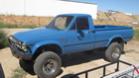
My '81 Toyota PU 22R came with a Weber carb. It performs smoothly when warmed up. However, during winter I have to pump the accelerator several times and then when it tries to run I have to give it a little gas and hold it. I suspect it could have to do with the choke, as it does not have a power wire going to the usual spot on the side of the carb. But, it does have a couple of wires going into the carb elsewhere.
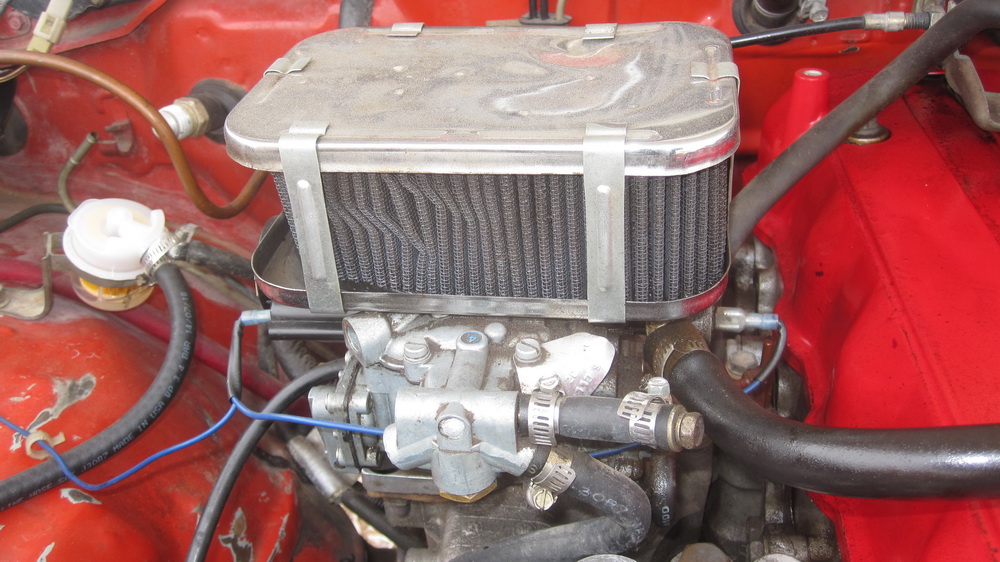
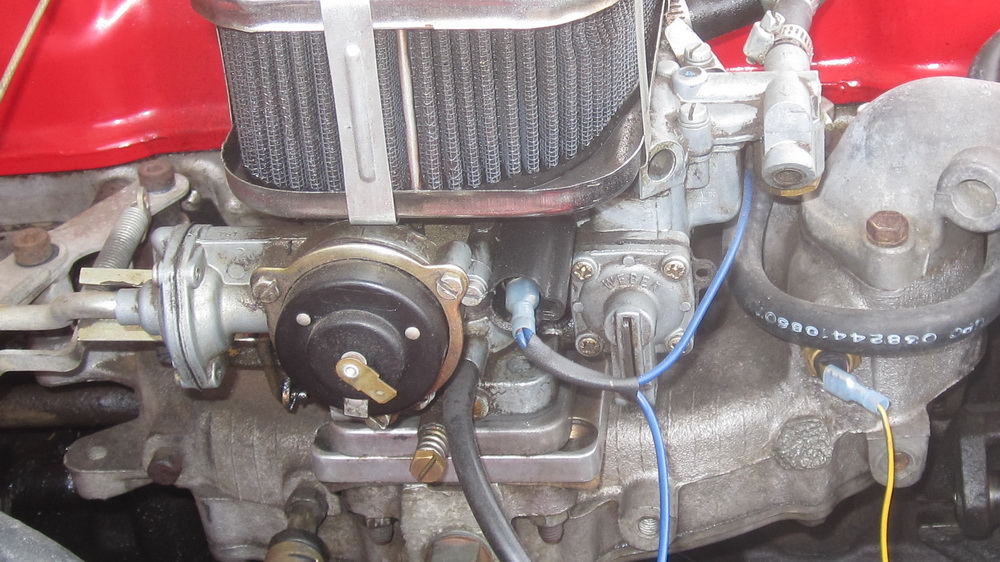
I have searched and found no pictures of this carb that shows these two wires or even the places on the carb that they are going into. I would like to know what they do before I possibly unnecessarily add a power wire to the usual place on the carb choke.
Also, it seems like my fuel filter is practically empty when I try to start the truck.
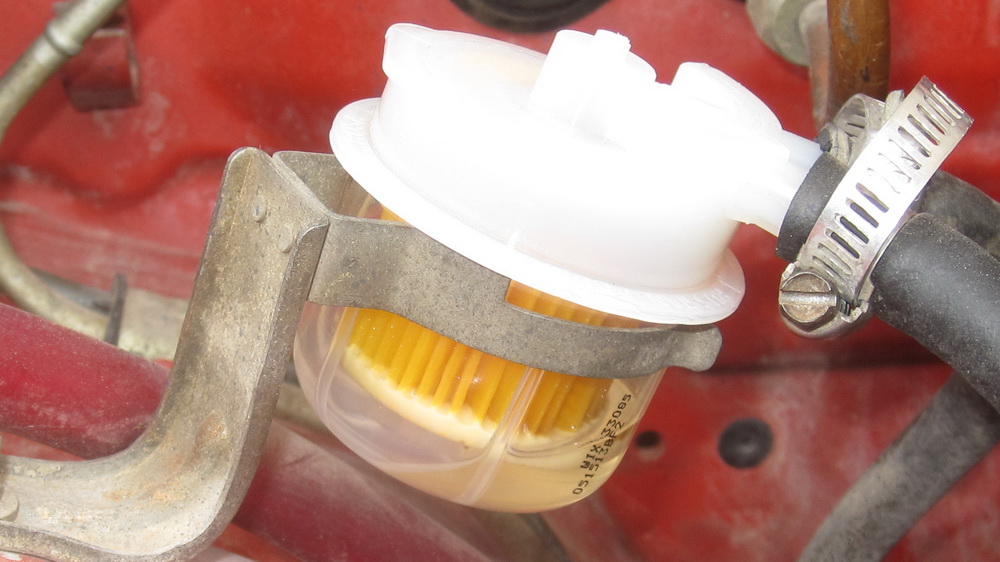
I thought that may be the reason it takes so long to get it started, but noticed it looks about the same level after it is warmed up and running. I replaced it with a new one but it has the same level. Maybe this is normal?
Any help with this issue would be greatly appreicated!
I have searched and found no pictures of this carb that shows these two wires or even the places on the carb that they are going into. I would like to know what they do before I possibly unnecessarily add a power wire to the usual place on the carb choke.
Also, it seems like my fuel filter is practically empty when I try to start the truck.
I thought that may be the reason it takes so long to get it started, but noticed it looks about the same level after it is warmed up and running. I replaced it with a new one but it has the same level. Maybe this is normal?
Any help with this issue would be greatly appreicated!
Jan 7, 2015 | 11:41 AM
#2

Registered User
Joined: Sep 2010
Posts: 100
Likes: 0
From: Portland, Oregon
Have you checked to make sure your choke butterfly isnt wired open for some reason? Im not sure how long you have had the truck, but maybe the PO bypassed the electric choke cause it quit working.
The electric choke on these just needs a key-on 12v source. I have a relay that activates when the key is turned on. Some people grab power off the coil. From your picture it looks like you could splice into the wire going to the fuel cutoff solenoid.
Also check the setting on your fast idle cam.
The electric choke on these just needs a key-on 12v source. I have a relay that activates when the key is turned on. Some people grab power off the coil. From your picture it looks like you could splice into the wire going to the fuel cutoff solenoid.
Also check the setting on your fast idle cam.
Jan 7, 2015 | 12:19 PM
#3
Thread Starter
Registered User
Joined: Apr 2011
Posts: 40
Likes: 0
From: Moab, UT
Have you checked to make sure your choke butterfly isnt wired open for some reason? Im not sure how long you have had the truck, but maybe the PO bypassed the electric choke cause it quit working.
The electric choke on these just needs a key-on 12v source. I have a relay that activates when the key is turned on. Some people grab power off the coil. From your picture it looks like you could splice into the wire going to the fuel cutoff solenoid.
Also check the setting on your fast idle cam.
The electric choke on these just needs a key-on 12v source. I have a relay that activates when the key is turned on. Some people grab power off the coil. From your picture it looks like you could splice into the wire going to the fuel cutoff solenoid.
Also check the setting on your fast idle cam.
I found a taped off green plug with the wire that I believe was used with the old carb. I checked it with a meter and it has voltage when I turn the key on. So I can use that to splice into and connect to that post. It probably won't hurt to go ahead and hook it up with those other two wires connected. Just a little leery as maybe their function has to do with the choke in place of the wire I might add. Hard to say not knowing what the heck they are and their function.
 Jan 12, 2015 | 06:14 AM
#7
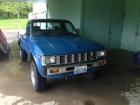
I have been running a stock Toyota mechanical fuel pump on my Weber for nearly a year with absolutely no problems. As long as your pump, whatever it is, doesn't put out over 3.5lbs pressure you'll be fine.
Trending Topics
Jan 12, 2015 | 04:22 PM
#8

Registered User
Joined: Apr 2013
Posts: 169
Likes: 0
From: Pacific Northwest Wonderland - OR
It's hard to tell what your stock pump is running at without a gauge. If you are going to install a gauge, might as well do a regulator so you know what it is running at. I am sure that your runs great with no problems, that does not mean that it is running at its optimal level with the proper A/F ratio. Webers require a lot of fine tuning. Running a FPR just takes out another variable to throw the whole thing off.
You could also just go for the manual choke. I used to have one of those a few webers ago, and i liked it. if my new electric ever gives me issues ill just swap it over to manual and have all the control!
You could also just go for the manual choke. I used to have one of those a few webers ago, and i liked it. if my new electric ever gives me issues ill just swap it over to manual and have all the control!
Jan 12, 2015 | 05:43 PM
#9
It's hard to tell what your stock pump is running at without a gauge. If you are going to install a gauge, might as well do a regulator so you know what it is running at. I am sure that your runs great with no problems, that does not mean that it is running at its optimal level with the proper A/F ratio. Webers require a lot of fine tuning. Running a FPR just takes out another variable to throw the whole thing off.
You could also just go for the manual choke. I used to have one of those a few webers ago, and i liked it. if my new electric ever gives me issues ill just swap it over to manual and have all the control!
You could also just go for the manual choke. I used to have one of those a few webers ago, and i liked it. if my new electric ever gives me issues ill just swap it over to manual and have all the control!
About your regulator insight; the need for an FPR is overstated and has a cult like following. While there is no harm in it, a GOOD FPR generally runs in the 70-100 dollar range. That's something to consider for most folks. I have 15 years of experience in tinkering with carburetors on GM, Chrysler and Ford V8's from factory stock to cammed up aftermarket big carbs. I also have the benefit of a formal trade school education, two years in the auto repair industry and having built, modified and Weber'd two 'R' engines of my own. Neither with an FPR or a tuning problem.
I've had this debate several times. Run an FPR if you like, it's your wallet. You won't hurt anything. However, the stock Toyota pump is a low psi pump as is with the benefit of a return line that may also shed excess pressure assuming its working properly. So far I have never seen one shred, even the tiniest, of evidence that a stock mechanical pump is harmful to Weber without an FPR. Every case I've found the user had a blocked off return line or another issue in tandem. I assure you, my truck runs just fine.
I do not off-road. When off-roading and running slow at odd angles, I can see why an FPR is necessary and would use one. For street use a stock, properly functioning mechanical fuel pump should not need a regulator.
Sermon over.
Jan 15, 2015 | 08:16 PM
#10
Thread Starter
Registered User
Joined: Apr 2011
Posts: 40
Likes: 0
From: Moab, UT
Thanks to all for their input on this matter. I'm a happy camper, now!
Jan 19, 2015 | 07:42 PM
#11
Thread Starter
Registered User
Joined: Apr 2011
Posts: 40
Likes: 0
From: Moab, UT
My '81 Toyota PU 22R came with a Weber carb. It performs smoothly when warmed up. However, during winter I have to pump the accelerator several times and then when it tries to run I have to give it a little gas and hold it. I suspect it could have to do with the choke, as it does not have a power wire going to the usual spot on the side of the carb. But, it does have a couple of wires going into the carb elsewhere.


I have searched and found no pictures of this carb that shows these two wires or even the places on the carb that they are going into. I would like to know what they do before I possibly unnecessarily add a power wire to the usual place on the carb choke.
Also, it seems like my fuel filter is practically empty when I try to start the truck.
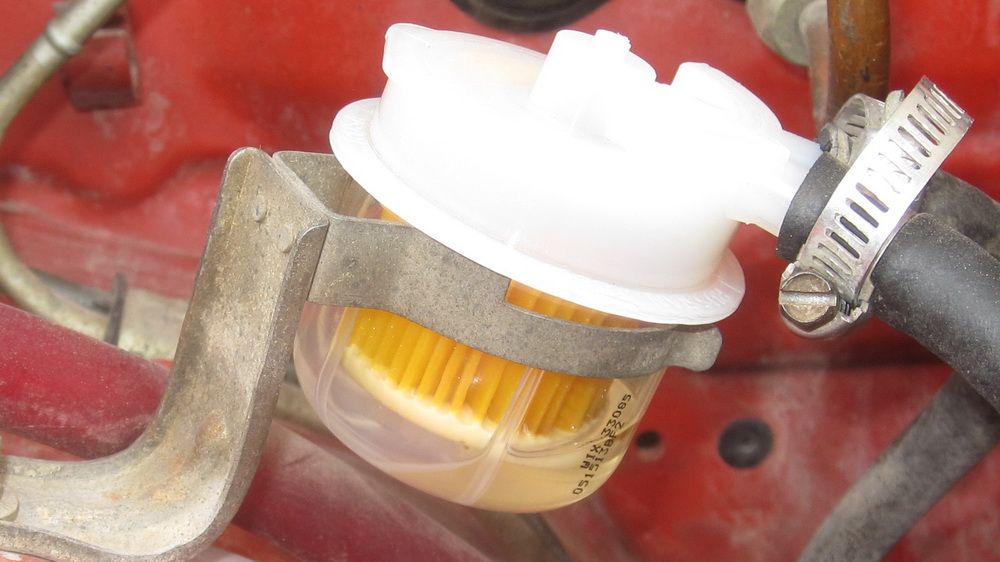
I thought that may be the reason it takes so long to get it started, but noticed it looks about the same level after it is warmed up and running. I replaced it with a new one but it has the same level. Maybe this is normal?
Any help with this issue would be greatly appreicated!
I have searched and found no pictures of this carb that shows these two wires or even the places on the carb that they are going into. I would like to know what they do before I possibly unnecessarily add a power wire to the usual place on the carb choke.
Also, it seems like my fuel filter is practically empty when I try to start the truck.
I thought that may be the reason it takes so long to get it started, but noticed it looks about the same level after it is warmed up and running. I replaced it with a new one but it has the same level. Maybe this is normal?
Any help with this issue would be greatly appreicated!
Last edited by chuckwagonjack; Jan 20, 2015 at 10:52 AM.

Thread
Thread Starter
Forum
Replies
Last Post


