


Successively Increased MPG in my 91 4runner!!
 Oct 5, 2014 | 09:45 PM
#1

Thread Starter
Registered User
Joined: Sep 2014
Posts: 29
Likes: 0
Successively Increased MPG in my 91 4runner!!
**91 4Runner 3.0L 3VZE**
First of all, I would like to say that my truck got terrible mileage... Even more terrible than normal. I was getting about 250kms to a tank and my truck seemed to be in great shape. I tried for quite a while to figure out what the cause was... I leaned out my AFM, I got a cold air intake, I drove like a granny, I did the spark plugs... You name it. I tried it. Then, I put a new stereo into the truck and wanted to see how much power it was drawing. Using a multimeter I did some tests on my fuse box and alternator to see if I could zero in on a reading that would satisfy my curiosity. In doing this I found out that my alternator was only putting out about 10V of electricity! So, obviously, I got a new alternator and put it in right away. Since then I have noticed quite an increase in my fuel economy!! I just filled the tank to get an accurate amount, but I would like to say it's probably as high as 25%!!!! How it works? I did some research and found this! http://delcoremy.com/documents/high-...ite-paper.aspx
The first half or more is mostly about how an alternator works. After that it gets into why it will save you money on gas and all that other stuff. Hope this helps anyone who is pissed about their fuel economy and is looking for a way to make it better
First of all, I would like to say that my truck got terrible mileage... Even more terrible than normal. I was getting about 250kms to a tank and my truck seemed to be in great shape. I tried for quite a while to figure out what the cause was... I leaned out my AFM, I got a cold air intake, I drove like a granny, I did the spark plugs... You name it. I tried it. Then, I put a new stereo into the truck and wanted to see how much power it was drawing. Using a multimeter I did some tests on my fuse box and alternator to see if I could zero in on a reading that would satisfy my curiosity. In doing this I found out that my alternator was only putting out about 10V of electricity! So, obviously, I got a new alternator and put it in right away. Since then I have noticed quite an increase in my fuel economy!! I just filled the tank to get an accurate amount, but I would like to say it's probably as high as 25%!!!! How it works? I did some research and found this! http://delcoremy.com/documents/high-...ite-paper.aspx
The first half or more is mostly about how an alternator works. After that it gets into why it will save you money on gas and all that other stuff. Hope this helps anyone who is pissed about their fuel economy and is looking for a way to make it better
Last edited by ElJameso; Oct 5, 2014 at 09:48 PM. Reason: forgot engine details




Trending Topics
Oct 7, 2014 | 06:21 AM
#8
Registered User
Joined: Jun 2014
Posts: 228
Likes: 1
From: North Alabama
Oct 7, 2014 | 10:25 AM
#9
Thread Starter
Registered User
Joined: Sep 2014
Posts: 29
Likes: 0
Oct 7, 2014 | 10:27 AM
#10
Thread Starter
Registered User
Joined: Sep 2014
Posts: 29
Likes: 0
http://delcoremy.com/documents/high-...ite-paper.aspx
Last edited by ElJameso; Oct 7, 2014 at 10:31 AM.
Oct 7, 2014 | 12:29 PM
#11
Registered User
Joined: Jun 2014
Posts: 228
Likes: 1
From: North Alabama
My battery wasn't dead. It had no problem with using the lights or stereo or anything. The alternator just wasn't giving it a full charge. the battery was fine. It's the alternator that was the problem.
http://delcoremy.com/documents/high-...ite-paper.aspx
http://delcoremy.com/documents/high-...ite-paper.aspx
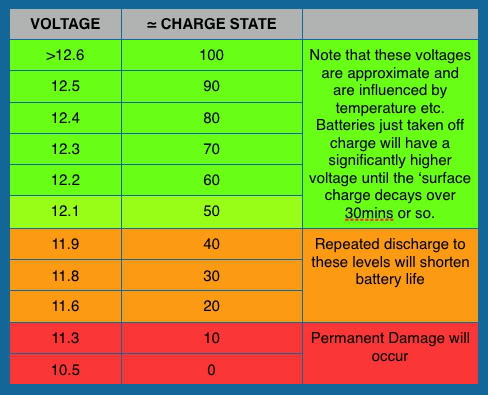
A battery at 10 volts is BEYOND dead, it's destroyed.
Oct 7, 2014 | 02:28 PM
#12

Registered User

Joined: Sep 2007
Posts: 8,380
Likes: 871
From: San Francisco East Bay
Thanks for the article, ElJameso. It was quite interesting.
Look at page 28, where they give the "fuel savings" over 350k miles for 20% increase in alternator efficiency. (This is for a City Tractor; you're not using 40amps average, so you couldn't save as much.) They show 93 gallons saved ($372/$4) over 350K miles. If you were getting 17.5 mpg (much more likely for your truck; I get 20 hwy and 15 city), 350K miles would take 20,000 gallons of gasoline. That 20% increase in alternator efficiency would increase your mileage by 93/20000 = 0.4%. Not 2.5%, and certainly not 25%.
As others have pointed out, if your old alternator was really putting out 10.5 volts (or anything less than about 14.1 volts), it would not be able to charge the battery. Even if all of your components (ignition, lights, stereo) were somehow running on 10.5volts, your battery charge would drift down to the "completely discharged" state in a few hours. Then you could not crank the starter. So you can see why we're all skeptical of your 10.5v measurement.
Trying to measure fuel efficiency in terms of km per tank is mostly a lost cause. You never run it all the way to empty, so you will have 5 or 10 or 20 liters in the tank when you fill up. So what number do you divide by 250km (per tank) to get liters/km? You need to just write down how much fuel you pump in each time, and the exact mileage at the time of the fillup. Do this 5 or 10 times to get a good average. Then you'll have a usable figure.
And let's hope its higher than your 14mpg; that's not too good for your truck, even if you only drive in the city and have a lead foot.
Look at page 28, where they give the "fuel savings" over 350k miles for 20% increase in alternator efficiency. (This is for a City Tractor; you're not using 40amps average, so you couldn't save as much.) They show 93 gallons saved ($372/$4) over 350K miles. If you were getting 17.5 mpg (much more likely for your truck; I get 20 hwy and 15 city), 350K miles would take 20,000 gallons of gasoline. That 20% increase in alternator efficiency would increase your mileage by 93/20000 = 0.4%. Not 2.5%, and certainly not 25%.
As others have pointed out, if your old alternator was really putting out 10.5 volts (or anything less than about 14.1 volts), it would not be able to charge the battery. Even if all of your components (ignition, lights, stereo) were somehow running on 10.5volts, your battery charge would drift down to the "completely discharged" state in a few hours. Then you could not crank the starter. So you can see why we're all skeptical of your 10.5v measurement.
Trying to measure fuel efficiency in terms of km per tank is mostly a lost cause. You never run it all the way to empty, so you will have 5 or 10 or 20 liters in the tank when you fill up. So what number do you divide by 250km (per tank) to get liters/km? You need to just write down how much fuel you pump in each time, and the exact mileage at the time of the fillup. Do this 5 or 10 times to get a good average. Then you'll have a usable figure.
And let's hope its higher than your 14mpg; that's not too good for your truck, even if you only drive in the city and have a lead foot.
Last edited by scope103; Oct 7, 2014 at 02:29 PM.
Oct 8, 2014 | 02:25 PM
#13

Registered User
Joined: Sep 2013
Posts: 1,631
Likes: 110
Interesting conversation.
My 1991 3vze is giving me 15.5 mpg avg, I don't see what else is left to help the fuel efficiency. But I do see a huge difference in HWY vs. City driving numbers. Also, these figures are all with AC on (maybe robs 3 or 4 hp?).
My 1991 3vze is giving me 15.5 mpg avg, I don't see what else is left to help the fuel efficiency. But I do see a huge difference in HWY vs. City driving numbers. Also, these figures are all with AC on (maybe robs 3 or 4 hp?).
Oct 8, 2014 | 02:31 PM
#14
Registered User
Joined: Sep 2007
Posts: 8,380
Likes: 871
From: San Francisco East Bay
Your hwy speed makes a big difference; I find I get about 10% better mileage driving 61mph rather than 66mph. (I think RJR calls that "gram-pa driving." Wind resistance is big, even bigger for a boxy pickup truck. The energy necessary to overcome wind resistance increases as the 3d power of speed, so slowing down always helps. Sometimes a lot.
Of course, you can do the calculation on how many "dollars per hour" your getting by slowing down. If you are really in a hurry, it may not be worth it to you.
Driving 61mph isn't for everyone, but it does work.
Of course, you can do the calculation on how many "dollars per hour" your getting by slowing down. If you are really in a hurry, it may not be worth it to you.
Driving 61mph isn't for everyone, but it does work.
Oct 8, 2014 | 02:37 PM
#15
Registered User
Joined: Sep 2013
Posts: 1,631
Likes: 110
Funny thing you mention that Scope. For the LIFE of me I have been trying to go through ONE whole tank where I do mostly 55 to 60 mph (what these cars were 'designed' to coast at right?) But, I have yet been able to not exceed those speeds enough to where the mpg reading would be legitimate.
I usually drive about 70 mph on fwy. But, I don't smash the throttle in the city... i let it do it's thing..
I usually drive about 70 mph on fwy. But, I don't smash the throttle in the city... i let it do it's thing..
Oct 8, 2014 | 03:04 PM
#16

Also if you can get <30ft from the tail end of semi. It works out pretty good, really. In Arkansas they are limited to 65mph, which is better for your economy, and then you have the added benefit of a draft. You'll buffer around a little bit, but being 30ft back from a semi driver shouldn't bother him too much. Any closer and they like to brake check you occasionally  I have achieved 21mpg on i40 westbound to OKC on several occasions with an automatic 4.88s and 31" tires.
I have achieved 21mpg on i40 westbound to OKC on several occasions with an automatic 4.88s and 31" tires.
Last edited by vasinvictor; Oct 8, 2014 at 03:05 PM.
 Oct 8, 2014 | 06:48 PM
#18

Registered User
Joined: Jul 2012
Posts: 1,776
Likes: 110
From: Northern Colorado
One way that alternators commonly fail is for one of the diodes in the rectifier bridge to go out. When that happens, the voltage output drops, but more interestingly, the relatively smooth DC voltage now has some pretty nasty spikes on it. It's conceivable that those spikes could interfere enough with some of the sensor readings to the ECU such that it can no longer do an accurate job of managing the engine fuel mixture, and I can at least hypothesize that power and economy could suffer as a result.
I would agree that a steady diet of 10.5V as a charging voltage will not make for long battery life. It'll likely be dead in less than 100 miles of driving.
I would agree that a steady diet of 10.5V as a charging voltage will not make for long battery life. It'll likely be dead in less than 100 miles of driving.
Oct 8, 2014 | 08:08 PM
#19

Registered User
Joined: Mar 2008
Posts: 12,723
Likes: 6
From: Temecula Valley, CA
An LA battery at 10v may simply be discharged, it may have a dead cell even.
A bad diode in the three-phase bridge doesn't always drop voltage, rather, it induces AC into the system... it is an 'alternator' and not a 'generator' right? , and that can affect a battery's charge in a not-so-good way.
Saying a battery is bad @ 10v is not correct. Providing a proper charge and load testing it is the only way to get there from here. Particularly, an otherwise good battery subjected to the AC from a bad alternator will test bad under most cases, but test good when properly charged, provided it hasn't suffered damage from the AC input.
A bad diode in the three-phase bridge doesn't always drop voltage, rather, it induces AC into the system... it is an 'alternator' and not a 'generator' right?
, and that can affect a battery's charge in a not-so-good way.Saying a battery is bad @ 10v is not correct. Providing a proper charge and load testing it is the only way to get there from here. Particularly, an otherwise good battery subjected to the AC from a bad alternator will test bad under most cases, but test good when properly charged, provided it hasn't suffered damage from the AC input.
Last edited by abecedarian; Oct 8, 2014 at 08:09 PM.
Oct 8, 2014 | 08:23 PM
#20
Registered User
Joined: Jul 2012
Posts: 1,776
Likes: 110
From: Northern Colorado
Saying a battery is bad @ 10v is not correct. Providing a proper charge and load testing it is the only way to get there from here. Particularly, an otherwise good battery subjected to the AC from a bad alternator will test bad under most cases, but test good when properly charged, provided it hasn't suffered damage from the AC input.
I think we're in agreement, but perhaps communicating in different terms.


