


Dual Battery Installation FAQ
 Apr 2, 2005 | 06:03 PM
#1

 Dual Battery Installation FAQ
Please post your setups here so that we can get all the dual battery information in one spot for future modders!
Update: I'm having to add a marine battery switch to manually select which of the two rear dual batteries I want to charge as trying to charge them both at once is not working. I'll post pics when I get it finished.
Update: I'm having to add a marine battery switch to manually select which of the two rear dual batteries I want to charge as trying to charge them both at once is not working. I'll post pics when I get it finished.
Last edited by rworegon; Sep 17, 2014 at 04:17 PM.
Apr 2, 2005 | 06:53 PM
#2
Contributing Member
Joined: Nov 2004
Posts: 3,572
Likes: 1
From: Upsate SC
Just a quick question... when you do a setup like yours do you increase amperage or just the voltage? This is one area I was unsure of in electronics class and was wondering about how the deisel setups where.
Apr 3, 2005 | 04:39 AM
#3

Banned
Joined: Jun 2003
Posts: 0
Likes: 1
in series, you increase voltage
connect the terminals like: + - + - + - and you will increase voltage
in parallel, you increase amperage (like brian has)
connect the terminals like: +++ and seperately --- and you will increase amperage
connect the terminals like: + - + - + - and you will increase voltage
in parallel, you increase amperage (like brian has)
connect the terminals like: +++ and seperately --- and you will increase amperage
Apr 3, 2005 | 06:33 AM
#4
Originally Posted by bamachem
in series, you increase voltage
connect the terminals like: + - + - + - and you will increase voltage
in parallel, you increase amperage (like brian has)
connect the terminals like: +++ and seperately --- and you will increase amperage
connect the terminals like: + - + - + - and you will increase voltage
in parallel, you increase amperage (like brian has)
connect the terminals like: +++ and seperately --- and you will increase amperage

 Apr 3, 2005 | 07:25 AM
#5
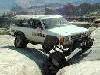
Here's my setup, been working fine for about 6 years now:
http://www.4crawler.com/4x4/CheapTri...atteries.shtml
Provides more current for starting, a separate battery for use in running accessories while camping, or winching, and a built-in jump start which is probably the feature I have used quite a lot. I still have most of my "stuff" connected to the main battery so have drained it more than once. A simple flick of the switch and you are up and running.
http://www.4crawler.com/4x4/CheapTri...atteries.shtml
Provides more current for starting, a separate battery for use in running accessories while camping, or winching, and a built-in jump start which is probably the feature I have used quite a lot. I still have most of my "stuff" connected to the main battery so have drained it more than once. A simple flick of the switch and you are up and running.
Apr 3, 2005 | 07:43 AM
#6
Don't you in reality have (3) batteries like I do? Do you have the (2) rear ones in series or parallel? I was reading about "dueling batteries" and wondered if these (2) would do this? I know the rear and the fronts separate when you switch modes via the isolator/solenoid, just wondering about the rears?
Apr 3, 2005 | 07:55 AM
#7
Mostly 2 batteries (in parallel) and I stick a 3rd one (12V battery pack) in the back when needed. The solenoid separates the two main batteries (both in back, under the truck) unless the engine is running. The battery pack just plugs into a lighter socket for charging, so it is totally separate.
Trending Topics
 Apr 3, 2005 | 08:21 AM
#9
Originally Posted by 4Crawler
Mostly 2 batteries (in parallel) and I stick a 3rd one (12V battery pack) in the back when needed. The solenoid separates the two main batteries (both in back, under the truck) unless the engine is running. The battery pack just plugs into a lighter socket for charging, so it is totally separate.
Or do you think that will be a problem?
Apr 3, 2005 | 08:56 AM
#11
Originally Posted by bamachem
since they'll both be yellow tops w/ the same ratings, it shouldn't be a problem. they should simply self-equalize since they are continuously connected.
Apr 3, 2005 | 09:39 AM
#12

Registered User
Joined: May 2004
Posts: 444
Likes: 0
From: ARIZONA
Originally Posted by bamachem
since they'll both be yellow tops w/ the same ratings, it shouldn't be a problem. they should simply self-equalize since they are continuously connected.
Usually you only want to do that if theyre the "same age" as well. Not just brand and type.
When they are connected like that if one gets a bad cell, itll take the other one down with it. Then your backup isnt much of a backup.
Ive had "few" of the optimas in various cars over the last 10 years, primarily for the sealed design. Optima batteries sometimes have lasted 8 years and Ive had a few only last 2 or 3.
A SOLUTION

Just add in a second solenoid between the two yellows same way as youre doing the main and auxillaries now. Put a manual switch in so you can have the 2 AUXs connected when the ignition is off.
-----------------
All that said, I ran a 93 Nissan with an optima and 2 lead acid 30 group (? (the big suckers)) all in parallel with no solenoids or any other isolators for 5 years and never had a problem.
 Apr 3, 2005 | 01:51 PM
#13
Contributing Member
Joined: Nov 2004
Posts: 3,572
Likes: 1
From: Upsate SC
Ok another stupid question... if you increase voltage on any circuit, does it cause more heat or is it amperage that will cause too much heat (not talking about resistance). I am thinking more along the lines of voltage since on a mig welder more volts equal more heat, would this apply to electricals also or is it just resistance?
Apr 3, 2005 | 02:20 PM
#14
They are all related, V=I*R and P=V*I=Watts.
Generally, if the resistance is fixed, the only way to increase I is to increase V, that is to get twice the current through a given resistance, you need to double the voltage: 2V=2I*R.
But the power is four times as much, since you now have 2V*2I=4*P_original, so a small voltage change can make a large change in power and thus heat.
Generally, if the resistance is fixed, the only way to increase I is to increase V, that is to get twice the current through a given resistance, you need to double the voltage: 2V=2I*R.
But the power is four times as much, since you now have 2V*2I=4*P_original, so a small voltage change can make a large change in power and thus heat.
Apr 4, 2005 | 06:39 AM
#15
Contributing Member
Joined: Nov 2004
Posts: 3,572
Likes: 1
From: Upsate SC
Originally Posted by 4Crawler
They are all related, V=I*R and P=V*I=Watts.
Generally, if the resistance is fixed, the only way to increase I is to increase V, that is to get twice the current through a given resistance, you need to double the voltage: 2V=2I*R.
But the power is four times as much, since you now have 2V*2I=4*P_original, so a small voltage change can make a large change in power and thus heat.
Generally, if the resistance is fixed, the only way to increase I is to increase V, that is to get twice the current through a given resistance, you need to double the voltage: 2V=2I*R.
But the power is four times as much, since you now have 2V*2I=4*P_original, so a small voltage change can make a large change in power and thus heat.
Jun 2, 2005 | 12:43 PM
#16

Contributing Member

Joined: Feb 2005
Posts: 3,546
Likes: 1
From: Nashville, TN
I am about to run a second optima, and i just want to check on a few things as far as installation and how everyone runs this set up. I am going to keep one in the tray , and another in the back. What is the best way i should wire these together? What does the isolator do? The alternator puts out 60A. If all of that amperage is taken up the batterey's will be used, correct? And if the engine is off, how should i have it set up? To use one battery first then the other? or both at the same time. I will be running one battery that is bigger, and it seems to me that there would be a "weakest link" connotation if they were together. Also...is there anybody around here that would want to help me do the install?
Jun 2, 2005 | 12:51 PM
#17
Isolator does just that, isolates the two batteries. Classic setup is on an RV, one battery for the engine, one for the rest of the RV (lights, etc.). One alternator on the engine. Isolator is essentially two big diodes, lets charging current flow from the alt. into each battery to charge them. Loads are connected to each battery, engine loads up front, RV accessories in back. Drain the back battery, the front is still is fully charged.
A solenoid is how I have mine connected, engage it and the two batteries are in parallel, turn it off and the two batteries are separate. I control how the solenoid works and can either have two separate batteries or two in parallel.
http://www.4crawler.com/4x4/CheapTri...es.shtml#Parts
Other options are to hard wire the two batts. in parallel (they should be identical units) or have a manual switch or get a fancier isolator/combiner type connection, sort of like an isolator with a solenoid across it.
For my needs a solenoid works very well. Very simple and reliable, normal mode has it switch on automatically when the enging is running to charge the batts, disconnects when the engine is off. For self jump starting, I can turn it on manually to use the 2nd battery for starting and I can run both batteries in parallel for starting and winching.
A solenoid is how I have mine connected, engage it and the two batteries are in parallel, turn it off and the two batteries are separate. I control how the solenoid works and can either have two separate batteries or two in parallel.
http://www.4crawler.com/4x4/CheapTri...es.shtml#Parts
Other options are to hard wire the two batts. in parallel (they should be identical units) or have a manual switch or get a fancier isolator/combiner type connection, sort of like an isolator with a solenoid across it.
For my needs a solenoid works very well. Very simple and reliable, normal mode has it switch on automatically when the enging is running to charge the batts, disconnects when the engine is off. For self jump starting, I can turn it on manually to use the 2nd battery for starting and I can run both batteries in parallel for starting and winching.
Jun 2, 2005 | 01:14 PM
#18
Contributing Member
Joined: Feb 2005
Posts: 3,546
Likes: 1
From: Nashville, TN
So, I need to get a solenoid, keep my battery wehre it is now....run it to the solenoid?...install the second battery, run the winch to it and run it to the solenoid and the solenoid has the switches to run either battery or both....and charge either or both correct?
Jun 2, 2005 | 02:10 PM
#19
However you want to wire it is up to you. See my page for how I wired mine. One solenoid (a.k.a. a big honking relay) that connects (i.e. shorts) the two battery "+" terminals together. Winch wired to #2 battery, most everything else hooked to #1, solenoid ties the two together.
Jun 2, 2005 | 07:27 PM
#20
Contributing Member
Joined: Feb 2005
Posts: 3,546
Likes: 1
From: Nashville, TN
thats what i want to do......i wish the solenoid wasnt 176 dollars. thats upsetting. I will proabably get the winch first. then do the batteries right after that. so if i have mechanical problems inbetween (which usually happens after a major purchase in my case) I wont be out of money (cause im a poor college kid). Thanks for the help. Do you think i should keep the #2 batt. in the cargo area or under the body somewhere?


