


 Apr 21, 2016, 03:20 PM
Last edit by: IB Advertising
See related guides and technical advice from our community experts:
Browse all: Toyota 4Runner Tire Repair and Maintenance
- Toyota 4Runner, Tacoma, and Tundra: Why is the Tire Pressure Light On?
Guide to diagnose trouble and recommended solutions.
Browse all: Toyota 4Runner Tire Repair and Maintenance

What PSI (pressure) are you running?
Jan 4, 2009 | 06:03 PM
#101
Registered User
Joined: Jan 2008
Posts: 166
Likes: 0
From: Harrisonburg, Va
On my Fourrunner when pulling daily driver duty's it's at 27psi, 35x12.50-15 Mud King's. On my 83 Chevy K10 it's 8psi front & rear, 16x35x15 Bogger's on 15x10 steely's.
Last edited by Issues; Jan 7, 2009 at 07:45 PM.
 Feb 19, 2009 | 08:29 PM
#103

Registered User
Joined: Feb 2009
Posts: 6
Likes: 0
From: lewis county
30-35 is a good psi to run on a yoda!(for a daily driver) if you have to much air for the weight of the car/truck you will wear the center of your tires out faster, if your psi is to low you will wear the side of your tire out, and just because your tires say "MAX" psi doesnt mean you have to have your psi to that number. An "B" or "C" rated tire 30-35psi. "D" rated 35-max(max if your hauling) "E" 35(if not diesel) then run 40-max when hauling! But now you have to worry about TPMS in 08 and newer rigs!
Feb 28, 2009 | 02:05 PM
#104
Registered User
Joined: Jan 2009
Posts: 110
Likes: 0
From: The great white north.
Holy crap! 50psi for some of these tires? If it works for you then awesome. I have a 98 Jetta I use as an SCCA car, and was always told on her track tarmac ready W rated 245's to use no more than 44psi. Now I understand a track car with soft compound tires is going to run alot of heat in the tires, with speed and track temp and the corners, thus raising the pressures. But I saw alot of guys blowing any less of a tire at even 40.
I tend to run 24psi on the 35's on my Jeep and 34 on the stock sized tires on my runner.
I tend to run 24psi on the 35's on my Jeep and 34 on the stock sized tires on my runner.
Feb 28, 2009 | 02:56 PM
#105

Registered User
Joined: Nov 2006
Posts: 119
Likes: 0
From: Chilliwack, BC
There's so many variables when running tire pressure I think it is really misleading to base your decision off of what other people are doing.
I live in BC, I run on wet pavement an awful lot. I'll sacrifice fuel economy and tire wear for more traction so I'm willing to run a bit lower tire pressure most of the time.
If I know I'm making a road trip, I air up a bit.
If I'm pulling a trailer, I air up.
If there's snow on the road, I air down.
If I'm yanking a ford out of the mud, I Air down.
If I want to play on the sand dunes in Oregon I air WAY down.
If I'm hitting the trails, I'm prepared to go up and down at my whim.
The important thing is to know is that at the end of the day your tires are the extension of you that touches the road. Understand what airing up and down does, and do so accordingly.
I strongly recommend carrying a valve tool and a compressor in your truck all the time. A few PSI can make the difference between needing a rescue and being able to do a rescue.
While tire wear and fuel economy are good motivators for setting your air-pressure, saving money should always take a back seat to safety when it comes to running your rig.
I live in BC, I run on wet pavement an awful lot. I'll sacrifice fuel economy and tire wear for more traction so I'm willing to run a bit lower tire pressure most of the time.
If I know I'm making a road trip, I air up a bit.
If I'm pulling a trailer, I air up.
If there's snow on the road, I air down.
If I'm yanking a ford out of the mud, I Air down.
If I want to play on the sand dunes in Oregon I air WAY down.
If I'm hitting the trails, I'm prepared to go up and down at my whim.
The important thing is to know is that at the end of the day your tires are the extension of you that touches the road. Understand what airing up and down does, and do so accordingly.
I strongly recommend carrying a valve tool and a compressor in your truck all the time. A few PSI can make the difference between needing a rescue and being able to do a rescue.
While tire wear and fuel economy are good motivators for setting your air-pressure, saving money should always take a back seat to safety when it comes to running your rig.
Last edited by srozell; Feb 28, 2009 at 03:00 PM.
Feb 28, 2009 | 03:04 PM
#106
Registered User
Joined: Jan 2009
Posts: 110
Likes: 0
From: The great white north.
There's so many variables when running tire pressure I think it is really misleading to base your decision off of what other people are doing.
I live in BC, I run on wet pavement an awful lot. I'll sacrifice fuel economy and tire wear for more traction so I'm willing to run a bit lower tire pressure most of the time.
If I know I'm making a road trip, I air up a bit.
If I'm pulling a trailer, I air up.
If there's snow on the road, I air down.
If I'm yanking a ford out of the mud, I Air down.
If I want to play on the sand dunes in Oregon I air WAY down.
If I'm hitting the trails, I'm prepared to go up and down at my whim.
The important thing is to know is that at the end of the day your tires are the extension of you that touches the road. Understand what airing up and down does, and do so accordingly.
I strongly recommend carrying a valve tool and a compressor in your truck all the time. A few PSI can make the difference between needing a rescue and being able to do a rescue.
While tire wear and fuel economy are good motivators for setting your air-pressure, saving money should always take a back seat to safety when it comes to running your rig.
I live in BC, I run on wet pavement an awful lot. I'll sacrifice fuel economy and tire wear for more traction so I'm willing to run a bit lower tire pressure most of the time.
If I know I'm making a road trip, I air up a bit.
If I'm pulling a trailer, I air up.
If there's snow on the road, I air down.
If I'm yanking a ford out of the mud, I Air down.
If I want to play on the sand dunes in Oregon I air WAY down.
If I'm hitting the trails, I'm prepared to go up and down at my whim.
The important thing is to know is that at the end of the day your tires are the extension of you that touches the road. Understand what airing up and down does, and do so accordingly.
I strongly recommend carrying a valve tool and a compressor in your truck all the time. A few PSI can make the difference between needing a rescue and being able to do a rescue.
While tire wear and fuel economy are good motivators for setting your air-pressure, saving money should always take a back seat to safety when it comes to running your rig.
 May 4, 2009 | 03:16 AM
#109
Registered User
Joined: Apr 2009
Posts: 101
Likes: 0
From: clinton, louisiana
30-35 is a good psi to run on a yoda!(for a daily driver) if you have to much air for the weight of the car/truck you will wear the center of your tires out faster, if your psi is to low you will wear the side of your tire out, and just because your tires say "MAX" psi doesnt mean you have to have your psi to that number. An "B" or "C" rated tire 30-35psi. "D" rated 35-max(max if your hauling) "E" 35(if not diesel) then run 40-max when hauling! But now you have to worry about TPMS in 08 and newer rigs!
May 4, 2009 | 08:40 PM
#110
Registered User
Joined: Oct 2008
Posts: 29
Likes: 2
From: VT
I run 30lbs in my 31 10.50 15s... and ur chalk test is really worthless.. as if ur doing ur test cold ur tires is going to blow up.. and if ur doing it warm its still cooled down and shrunk to much.. a tire done on this test should be found then back the air pressure back down for the expansion its going to make on the highway..
May 4, 2009 | 08:46 PM
#111
Registered User
Joined: Oct 2008
Posts: 29
Likes: 2
From: VT
and reading the max tires pressure is not what u want.. our short bed, 4cyl, 4x4, 94 pickups way about 3400 pounds... now that same tire could be on a s-10 weighing 3900lbs? or a full size Chevy weighing 4400? now all these trucks arnt going to take the same air pressure!!! with the heaviest one taken the most pressure and the lightest taken the least pressure
May 30, 2009 | 09:51 PM
#112
Registered User
Joined: Jul 2007
Posts: 19
Likes: 0
From: Tampa, FL/Sharps Chapel, TN
Car & Driver did some definitive comparisons of tire pressure vs mileage a few months ago over a closed course with test equipment to verify the data. Bottom line on pressure was to air them cold to 5 lbs over the recommended pressure. Any higher than that compromised cornering, stopping and ride quality with little additional benefit.
I run my Firestone Destination A/T's at 37 lbs cold with good results. 30,000+ miles with rotations every 5k and the wear has been excellent and even all around. Last summer's roadtrip totalled 4,000 miles, 95% interstate driving and the rest was suburban plus about 40 miles of dirt and gravel logging roads. Average interstate speed with GPS was 71mph, above that mileage dropped off quickly to 17.8 at 75mph due to wind resistance. Using GPS to validate speed and correcting for the taller 70 profile, I documented 19.9 mpg overall. Taking the crossbars off the roof rack gives you a few 10ths and every 100lbs of additional weight drops mileage by .1%. Best advice for better mileage? Watch the traffic flow and drive it like you have no brakes, getting off the gas as early as possible when you see traffic is stopping. Drive smoothly and use the cruise when traffic permits.
I run my Firestone Destination A/T's at 37 lbs cold with good results. 30,000+ miles with rotations every 5k and the wear has been excellent and even all around. Last summer's roadtrip totalled 4,000 miles, 95% interstate driving and the rest was suburban plus about 40 miles of dirt and gravel logging roads. Average interstate speed with GPS was 71mph, above that mileage dropped off quickly to 17.8 at 75mph due to wind resistance. Using GPS to validate speed and correcting for the taller 70 profile, I documented 19.9 mpg overall. Taking the crossbars off the roof rack gives you a few 10ths and every 100lbs of additional weight drops mileage by .1%. Best advice for better mileage? Watch the traffic flow and drive it like you have no brakes, getting off the gas as early as possible when you see traffic is stopping. Drive smoothly and use the cruise when traffic permits.
Last edited by crunchfoot; May 30, 2009 at 09:53 PM.
May 31, 2009 | 01:33 PM
#113

Registered User
Joined: Feb 2009
Posts: 590
Likes: 0
 I tend to not use my cruise control because I find that it actually uses more gas when driving in hills and dips. Going downhill it will let off, slowing the vehicle down too much then it will give gas to speed up to compensate. Then if an uphill section is coming up it will be going way too slow at the bottom of the hill and overcompensate giving lots of gas. It might keep me within the speed limit(or whatever I set the cruise at), but I'd rather coast down the hill, gain a bit of speed and moderately accelerate up the next hill. I hate driving with CC because it's not as efficient as most people think it is. It can't predict the ups and downs of the road.
Jun 17, 2009 | 09:33 AM
I tend to not use my cruise control because I find that it actually uses more gas when driving in hills and dips. Going downhill it will let off, slowing the vehicle down too much then it will give gas to speed up to compensate. Then if an uphill section is coming up it will be going way too slow at the bottom of the hill and overcompensate giving lots of gas. It might keep me within the speed limit(or whatever I set the cruise at), but I'd rather coast down the hill, gain a bit of speed and moderately accelerate up the next hill. I hate driving with CC because it's not as efficient as most people think it is. It can't predict the ups and downs of the road.
Jun 17, 2009 | 09:33 AM
#114
Registered User
Joined: Jun 2009
Posts: 23
Likes: 0
From: Alabama
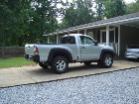
i run 34 all the way around on my new tires 265/70/16....my stock tires 245/75/16 toyota recommended 30 all the way around...and toyota recommends 29 front and 32 rear for 265s which is the size i got now....but i did that on other vehicles in the past and i never really noticed any difference....it's easier to run 32 all around or 34 then you don't have to adjust the pressure when you rotate your tires...there's really no difference in gas mileage or wear....the differences are so little...the handling is still the same etc...i would never go above 35 cuz it makes the ride bumpy (harsh) when you hit bumps in the road...unless you have a load in back or are in the snow or something i would stay between 32-34 all around

 Jan 16, 2010 | 07:40 AM
#117
Registered User
Joined: Dec 2009
Posts: 14
Likes: 0
From: Portland, OR.
Tire pressure
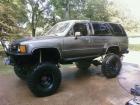
I was reading through here and noticed that most of you are running more pressure in the rear than in the front. I find that to be backwards. More weight on a tire = more pressure needed to keep it at full contact. I don't Carrie a lot of weight in the back most of the time. If I know I'm going to be hauling a load I will increase the pressure. I did the chalk test and I'm at 30psI front & 28 rear to wear the chalk evenly across the tire. I'm running Kumho KL71 MT 31/10.50/15 93 ext cab 4x4 2.4L. Just my observation. Any scientific words of wisdom welcome.
I didn't see some of the last posts on the list before I posted and I see that most of the ? have been discussed. Thanks
I didn't see some of the last posts on the list before I posted and I see that most of the ? have been discussed. Thanks
Last edited by mbuhr66; Jan 16, 2010 at 07:53 AM.
Feb 14, 2010 | 03:20 PM
#118
Contributing Member
Joined: Feb 2004
Posts: 1,071
Likes: 0
From: Shepherdstown WV 25443
my 88 - 26 rear 35 front in 235-75/15 Revos
Over the last 5 years Ive ran 26 rear and 35 front in P235/75-15" Revos, all have worn great, they have almost 50,000 miles on them and just passed state inspection inspection, the outsides of my fronts are worn but my alignment is a little off "camber" and Ive not roated them in probaly 20,000 miles. Im getting ready to have my new Geolander AT-S LT235/75-15 installed and will probably run a little more since they are 6 ply tires but not much if I do.... I have a fiberglass bed so my rear end is light when empty! Im going to check my ride height up front and have a proper F. E. Align. done ASAP as well!
Last edited by Ilovemountains; Feb 14, 2010 at 03:21 PM.
 Mar 5, 2010 | 11:10 PM
#120
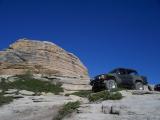
I'm currently at 23 psi for the highway, with my 33x12.5's. I'll run 26-28 when I get the new 10.50's. 10-12 psi works for me off road. I like to leave a little room to air down, in case I 'need' that extra traction.


