


Have I been punked? Where are the oil sender and sensor?
 Aug 16, 2021 | 03:47 PM
#21


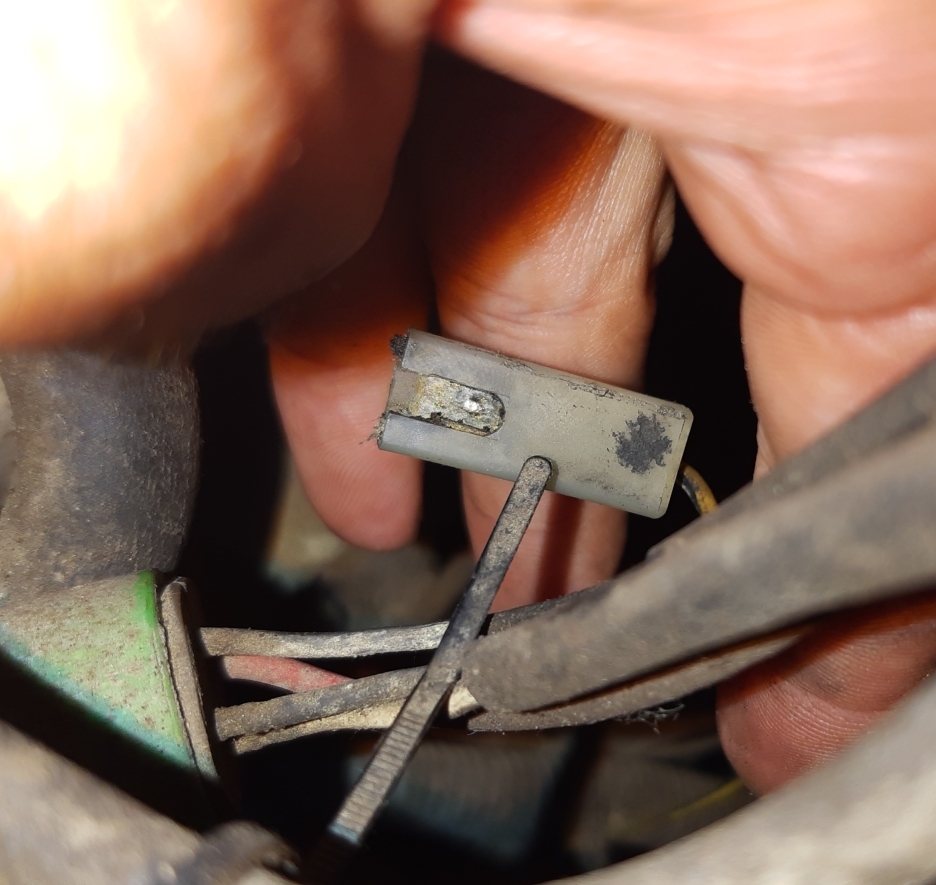
Anyway, I know this seems to be a common issue, so I've been digging and found the correct connector I'm 99% sure. The plastic housing is super cheap, but the special terminal is really hard to get, almost had to order 2000 of them, but I found a site that had high prices per unit, but I can buy the 100qty I'm looking for. I went out to my 86 to check to make sure the connectors I have matches the housing for an adapter.... and the connector has the slot on the side! It's a dual use connector, the slot side should slip right onto the button on the oil sender.
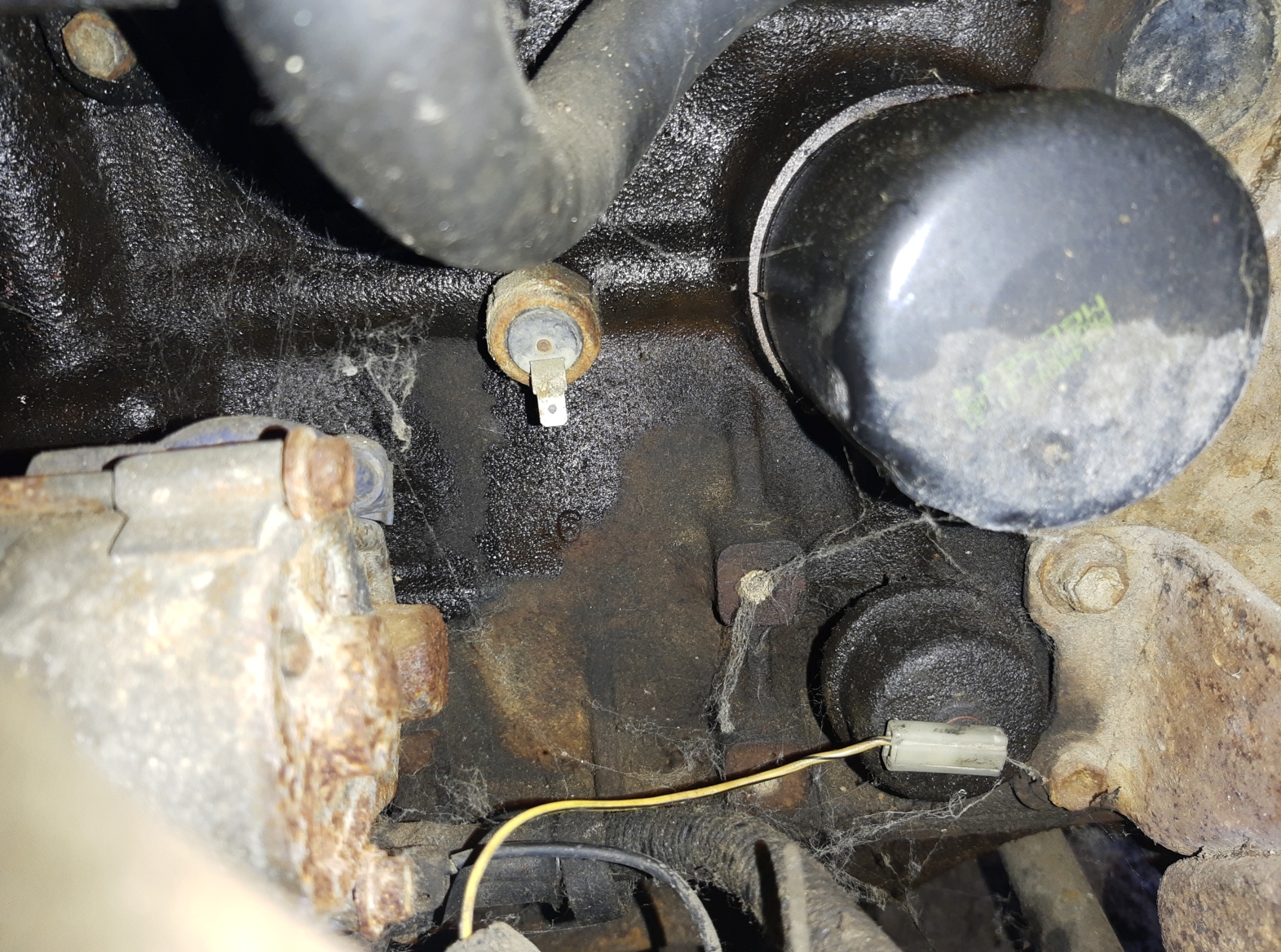
For the location of installing the oil sender, my truck has like 280k miles on it, but I don't think it's been worked on too much, it doesn't have hack job wiring besides for the battery cables and a lead wire I made up for the radio when I was driving it (didn't have wire diagrams back then, just band aid to get the truck working).
Here's the pic of the connector and it installed on the oil sender. The 4 bolts there around it should give you a solid location of where the "correct" spot is. The location where my oil pressure switch is installed should work just as well, but I'm assuming the thread on both are the same, both tap into the oil system to read pressure, so I'd assume the pressure is the same at both spots. My wire looks a lot more yellow/black now too. Since the adapter should be needed (anyone with a stock connector with out the notch in the side, shoot me a pm!), I'll just make pig tails for the connector since I'm sure it gets messed up quite often. It should have a click feeling when pushing on either terminal.
Also, the wire in your pic really looks white/black to me, the connector seems like it doesn't have the slot. White/black is commonly used as a ground wire on the truck. My truck is carb'ed and 2wd, and I didn't see that wire on mine but it's a little hard to really find it lol. I pulled out my EFI harness from my 86 4x4 truck, it was a hack job nightmare, I don't see the wire, but I suspect it's part of the engine harness.
For the yellow/black wire for the oil sensor/sender, it's also part of the engine harness. Right behind the battery a little towards the engine should be where the connectors are for the engine harness. Follow that as well as possible, for me it goes down by the frame and that wire splits off from that area, pretty long section with not much protection, might just be pulled apart on my truck though. Might be a little easier to get under the truck and check that area for the plug. The one in your pic is a male housing, the one I have is female.
 Aug 16, 2021 | 08:25 PM
#22

Thread Starter
Registered User
Joined: Jun 2021
Posts: 31
Likes: 2
That connects many dots. The connector does indeed slide over the round knob on the sensor, but there is an air gap and no metal on metal connection.
But, I'm struggling with terminology on something basic: sender vs sensor. For example, on the 22reperformance website, they sell what they call an "oil pressure switch for light only", and it looks like this:
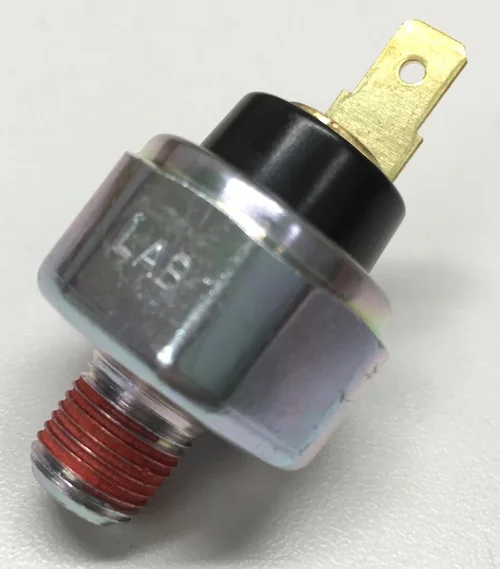
Every source I've read defines this as a "sender"; that is, for idiot lights. They also sell what they call an "oil pressure sending unit for gauge", and it looks like this:
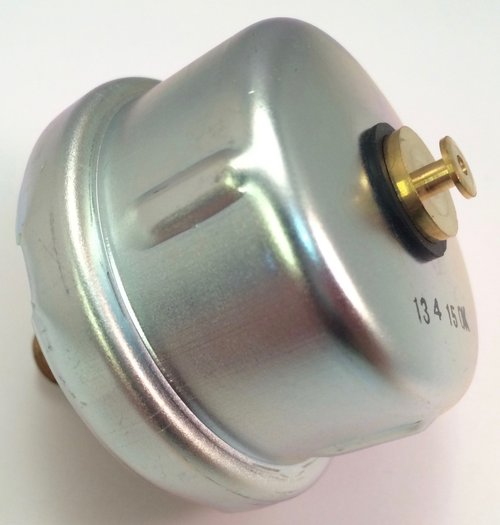
But that not a sender! It transmits a variable signal used for a gauge and therefore it's a sensor, isn't it? Before I proceed, I need somebody to help me sort this out. Thanks.
But, I'm struggling with terminology on something basic: sender vs sensor. For example, on the 22reperformance website, they sell what they call an "oil pressure switch for light only", and it looks like this:
Every source I've read defines this as a "sender"; that is, for idiot lights. They also sell what they call an "oil pressure sending unit for gauge", and it looks like this:
But that not a sender! It transmits a variable signal used for a gauge and therefore it's a sensor, isn't it? Before I proceed, I need somebody to help me sort this out. Thanks.
Aug 16, 2021 | 08:54 PM
#23
People selling parts can call things whatever they want, so the market can be confusing. Knowing what the part looks like that you need is the main thing. The top one is a switch, once it hits x psi of oil, it closes the connection and the light pops on (or the analog display would shoot to the opposite side it was reading). The lower one (what I've been calling a sender) operates as a resistor, power is flowed through it and how much power flows effects where the needle lands on the gauge. Hopefully that makes sense, basically one is just on/off vs the other giving a variable output. The button connector one is 100% the analog version.
To make things fun, the original parts probably have Japanese names, and some sellers probably translate them, so things might get mixed up in translation too.
Anyway, a sender and sensor are pretty much the same atleast in my thinking. Like the coolant temp sensor is also sometimes called the coolant temp sender. The biggest thing is knowing if it acts as a switch or gives a ranges of values and match the type you need with the type of gauge it's hooked to. For the temp sensor/sender example, if I recall correctly, the sensor is for the gauge display, and the sender goes to the computer for it to use the temp in the calculations on making the engine run (odd that there's two, but a lot of vehicles are like that). In that case, both act about the same, but generally the one for the computer will have a dedicated ground wire to give a more accurate reading.
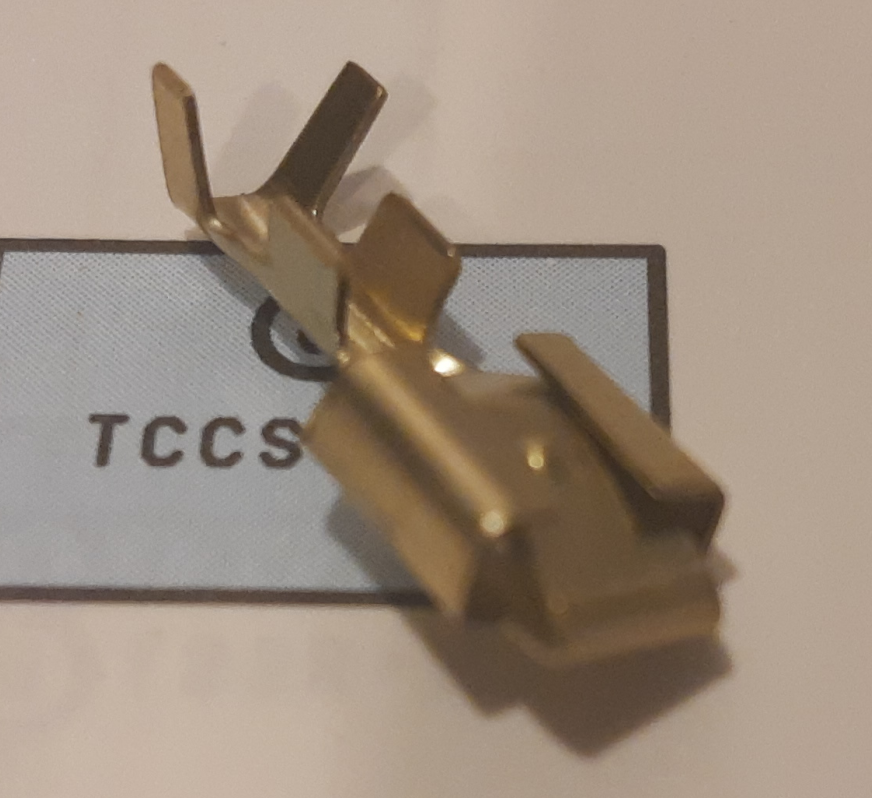
For the connector you have, if it has the slot but it doesn't clip on, then the inner metal tab must be bent down or damaged. Here's a photo of what the terminal should look inside the housing (it's a very similar designed one I have on hand). That little button in the middle is what sets in the hole on the flat terminal on the oil pressure switch. When it's pressed over the button on the oil sender, it keeps it from falling back off too easily, the actual housing stops it from moving "on" any farther. Really odd design, but pretty simple design overall. I prefer the spade style connection personally though over the odd button setup.
Oh, you'll probably have to remove the terminal from the housing to bend the tab up, there's another tab (a tang as it's called) on the opposite side, you press that in and pull on the wire and it should slide out. It's challenging for your first time, but once it's apart it makes a lot more sense how it's held in. You'll want to bend the tang back up some so it can lock the terminal in the housing again when you assemble it back together. The other route is to replace the connector with one of the pigtails I plan to make, I'm thinking it will be $10 shipped once I get the supplies in. I had to order wire too, I have black/yellow, but not yellow/black.
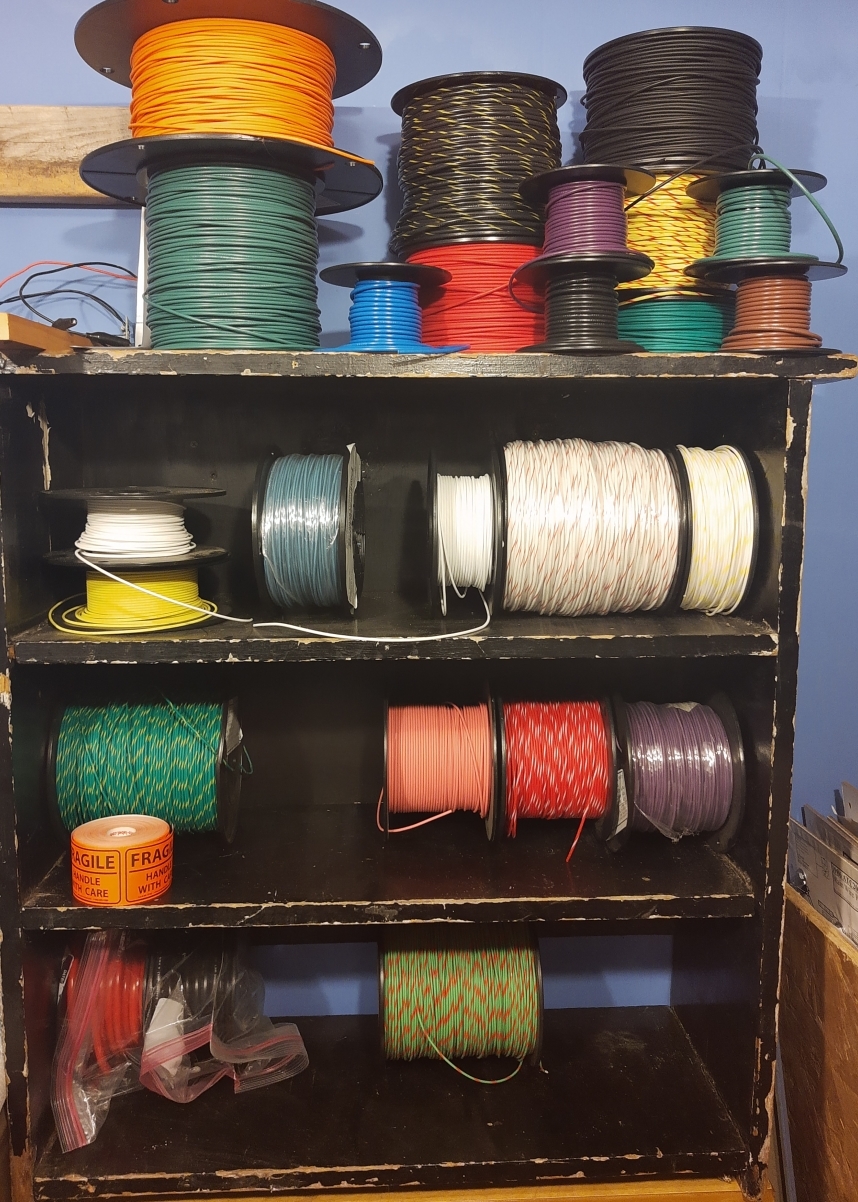
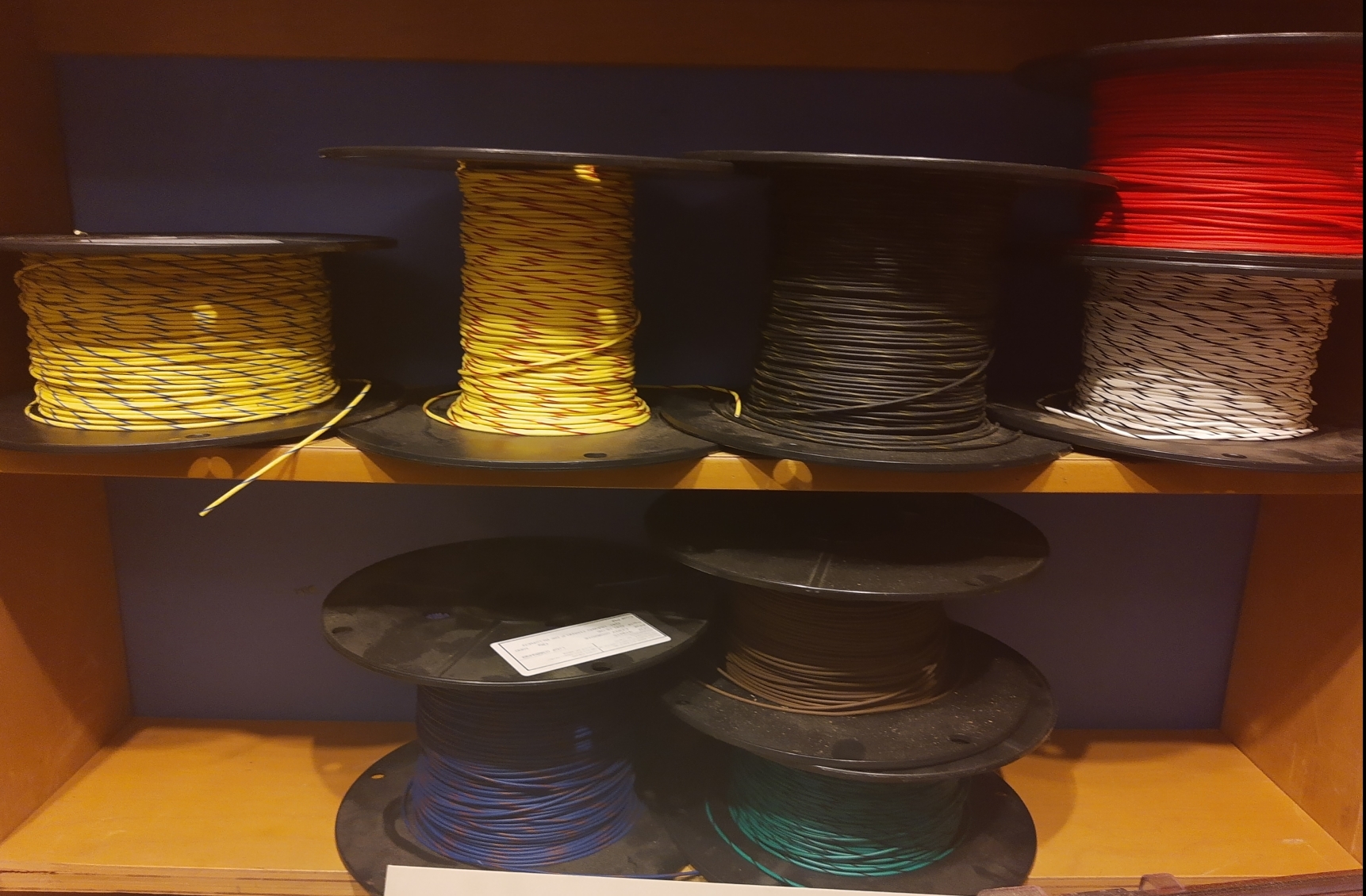
Here's the wire I use for fun too. I have some spools pulled out, but it gives an idea what I have =).
To make things fun, the original parts probably have Japanese names, and some sellers probably translate them, so things might get mixed up in translation too.
Anyway, a sender and sensor are pretty much the same atleast in my thinking. Like the coolant temp sensor is also sometimes called the coolant temp sender. The biggest thing is knowing if it acts as a switch or gives a ranges of values and match the type you need with the type of gauge it's hooked to. For the temp sensor/sender example, if I recall correctly, the sensor is for the gauge display, and the sender goes to the computer for it to use the temp in the calculations on making the engine run (odd that there's two, but a lot of vehicles are like that). In that case, both act about the same, but generally the one for the computer will have a dedicated ground wire to give a more accurate reading.
For the connector you have, if it has the slot but it doesn't clip on, then the inner metal tab must be bent down or damaged. Here's a photo of what the terminal should look inside the housing (it's a very similar designed one I have on hand). That little button in the middle is what sets in the hole on the flat terminal on the oil pressure switch. When it's pressed over the button on the oil sender, it keeps it from falling back off too easily, the actual housing stops it from moving "on" any farther. Really odd design, but pretty simple design overall. I prefer the spade style connection personally though over the odd button setup.
Oh, you'll probably have to remove the terminal from the housing to bend the tab up, there's another tab (a tang as it's called) on the opposite side, you press that in and pull on the wire and it should slide out. It's challenging for your first time, but once it's apart it makes a lot more sense how it's held in. You'll want to bend the tang back up some so it can lock the terminal in the housing again when you assemble it back together. The other route is to replace the connector with one of the pigtails I plan to make, I'm thinking it will be $10 shipped once I get the supplies in. I had to order wire too, I have black/yellow, but not yellow/black.
Here's the wire I use for fun too. I have some spools pulled out, but it gives an idea what I have =).
Last edited by atcfixer; Aug 16, 2021 at 09:02 PM.
Aug 16, 2021 | 09:03 PM
#24
Thread Starter
Registered User
Joined: Jun 2021
Posts: 31
Likes: 2
That's probably the best explanation of that topic I've read. My truck is unavailable for 24 hours but I am very much looking forward to getting back to work on it. More to follow, no doubt! lol
Thanks
Thanks
 Aug 16, 2021 | 09:06 PM
#25
No prob, good luck. I've for sure learned something from this thread and spent $$$ on a possible new product to make lol. I'm sure people finding this thread via google will be glad to see what all you had to do to get your gauge working and such.
Aug 21, 2021 | 02:52 PM
#26
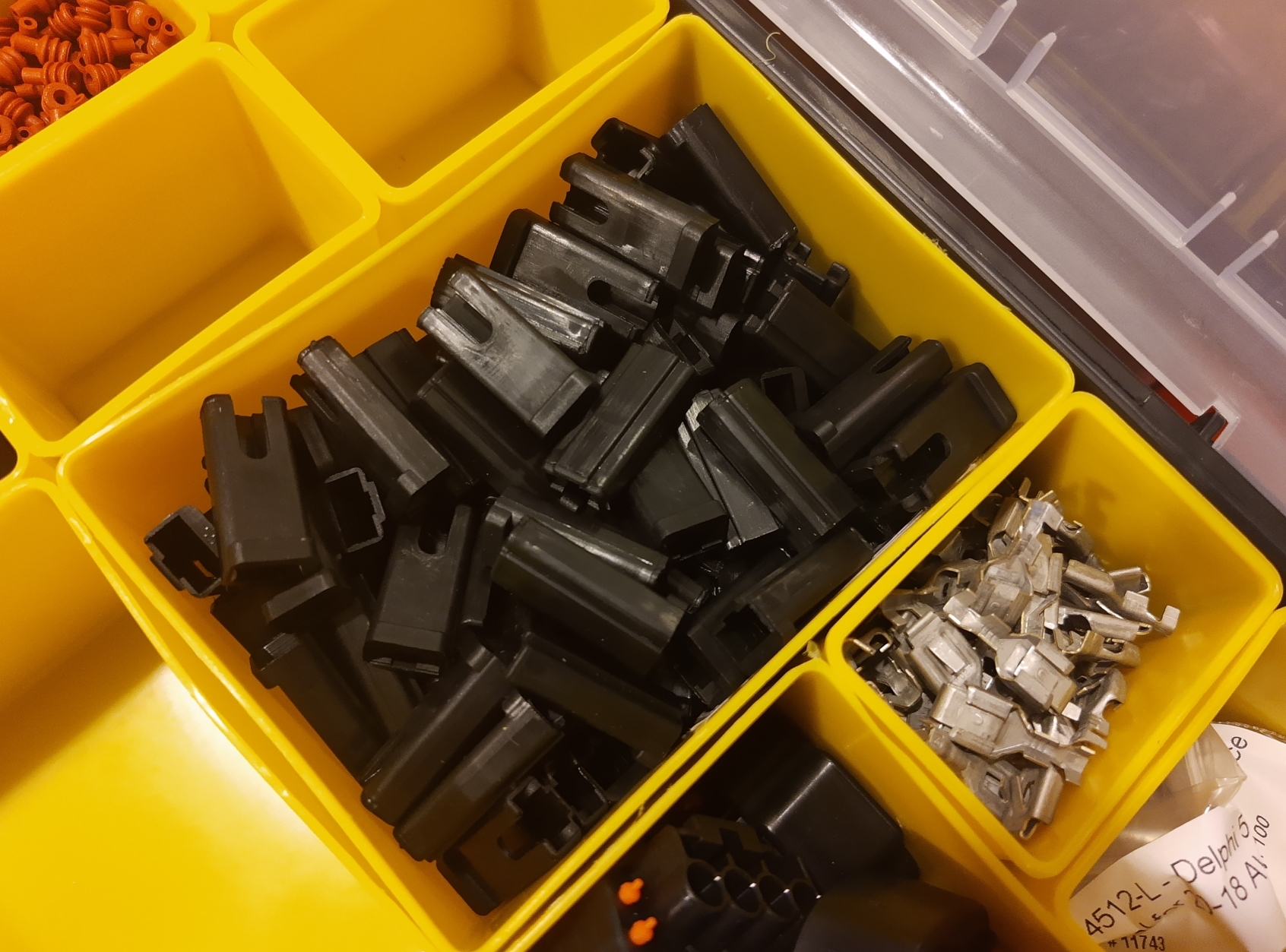
Small update on this, I received the connectors for the oil pressure switch/sender with the notch in the side. I can make pigtails to repair harnesses, or adapters if needed with these now. I have the correct yellow/black wire ordered, but my supplier says 4-5 week wait on it, but I do have solid yellow that would work fine too. If anyone needs a pigtail or anything, shoot me a pm.
@tofino
Hopefully all is going well with your truck.
@tofino
Hopefully all is going well with your truck.
Aug 30, 2021 | 06:05 AM
#27

Registered User
Joined: Aug 2021
Posts: 6
Likes: 0
sensor appearance/type/location
Dude, first of all thanks for helping me find the answer for what I was looking for as to the idiot light sender/sensor switch... mine is under the oil filter... I think if you look on the on the back of the block on the passenger side of the block up underneath the intake manifold you will see this type of round sensor/sending wit the round slide connector.. that slides on to the unit sideways its the one on the bottom picture... which is used for the gauges.. or maybe there are 2 of them on my truck...I remember seeing something like the one on the bottom picture when I had my engine out with the intake off and thinking.. why the heck did they put a sending unit like that there cause if it goes bad and needs to be changed out, How in blazes are you going to get back up in there to hook it up??? but since I had no lights on before the rebuild I didn't replace the sensors.. now I am a little sorry for that cause my idiot light comes on and am paranoid that it is low oil pressure so I got a test a gauge set... but in any case... if it was up to me and I could find another location to put that the one for the gauges.. I would try another location if I wanted to install a set of Gauges... right now I am dealing with the idiot light which looks exactly like the one in the top picture ...I even thought of using an oil cooler adapter plate just to try and screw my test gauges into in to get a reading cause I didn't want to take the chance of breaking off the old sensor that was there for 25 years probably... but the cooler adapter plate is just something I would try and was thinking about actually... I don't know how accurate it would be or if it would actually work...
Last edited by backyardbob; Aug 30, 2021 at 06:11 AM. Reason: grammar
Aug 30, 2021 | 06:26 AM
#28
No problem. Here's an updated pic, might make more sense. You should be able to use the oil pressure guage one to actually read the pressure but you'd need an ohm meter. Sadly, I can't find the ohm specs for it. If you leave the engine off and take a reading, then start it and take a reading, if no change, you have 0 oil pressure. If the top end isn't rattling, you have atleast some oil flow though.
If the light is stuck on with the oil light switch one, then make sure that yellow/black wire isn't hooked to a ground point. The only way the gauge light can come on is if that wire is grounded out. It's a bit hard to get to, but you should be able to visually check it with everything together, atleast I can on my 86 22r. I suspect it's also possible for the switch to be stuck on and be bad, or you really do have low oil pressure. I read somewhere that the min at idle is something like 4psi and a person installed a manual gauge and was reading 2psi at idle, but that was a v6 I think 5vz.
You should be able to remove the oil sender/switch that you're not needing and install an oil gauge and have both the light in the truck and the analog gauge. Either case, good luck with the project.
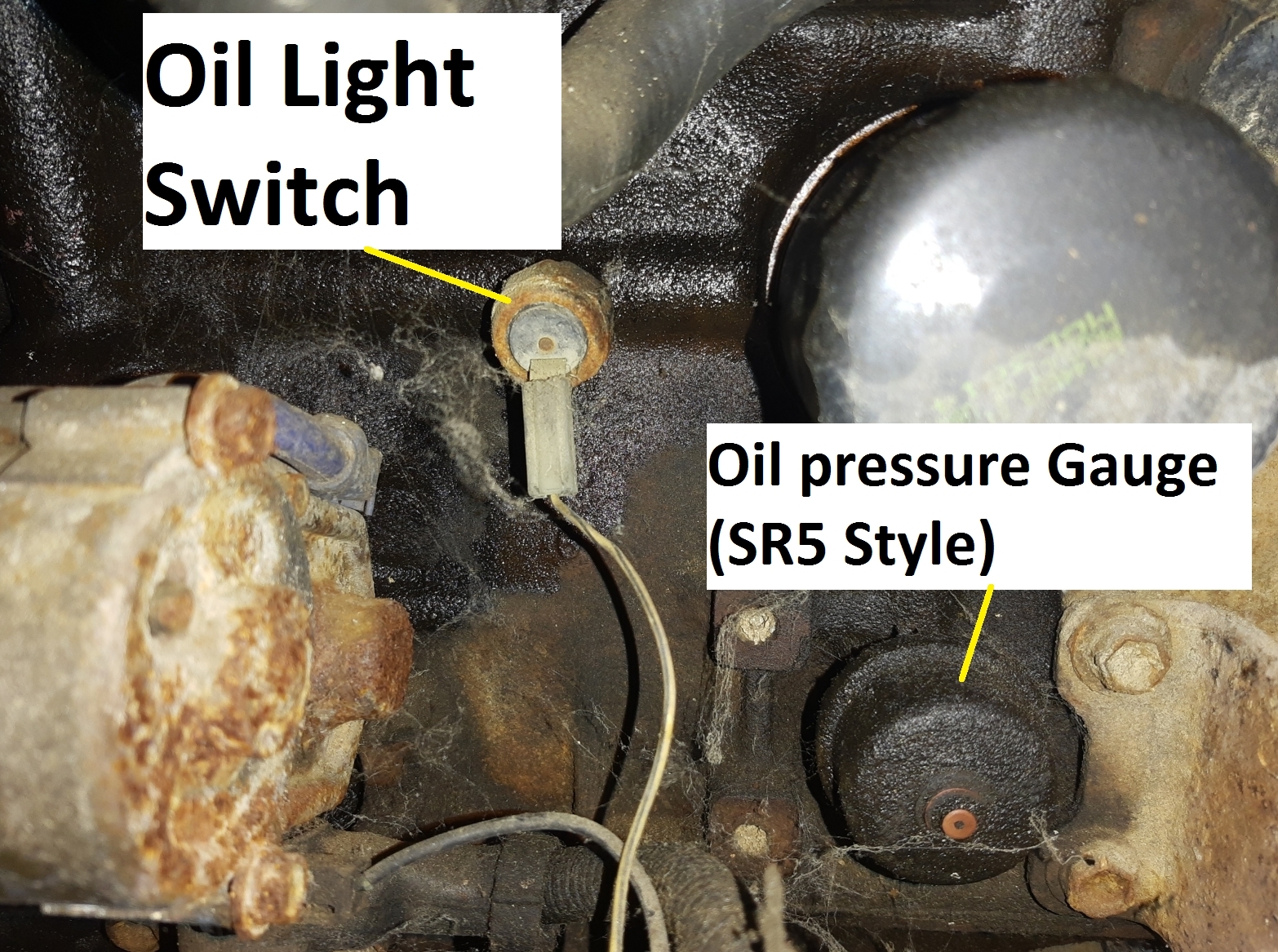
If the light is stuck on with the oil light switch one, then make sure that yellow/black wire isn't hooked to a ground point. The only way the gauge light can come on is if that wire is grounded out. It's a bit hard to get to, but you should be able to visually check it with everything together, atleast I can on my 86 22r. I suspect it's also possible for the switch to be stuck on and be bad, or you really do have low oil pressure. I read somewhere that the min at idle is something like 4psi and a person installed a manual gauge and was reading 2psi at idle, but that was a v6 I think 5vz.
You should be able to remove the oil sender/switch that you're not needing and install an oil gauge and have both the light in the truck and the analog gauge. Either case, good luck with the project.


Thread
Thread Starter
Forum
Replies
Last Post
Z400intheair
95.5-2004 Tacomas & 96-2002 4Runners
5
Feb 6, 2009 06:40 AM


