


back yard paint job
 Aug 17, 2014 | 11:24 AM
#1

Thread Starter
Registered User
Joined: Jan 2009
Posts: 245
Likes: 0
back yard paint job
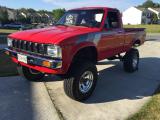
Doing a single stage paint job in a home-made, plastic sheeting paint booth. Using a HF HVLP gun and a low-end, 33 gallon compressor with CFS sufficient for the gun. The paint is Limco SS Dune Beige (got a good deal).
So, here are the questions:
1) the bed and the cab are different colors (dark blue and "cardinal red"--the blue is a much darker shade). Anyone know if this will be an issue after a couple coats?
2) the bed was not thoroughly primered from the factory. While sanding, I've hit bare metal just below the paint on about 75% of the bed. Can I just be delicate and scuff the factory paint, or do I need to get rid of it? If the answer to 1) is "yes" then I guess I'll need more primer since I only got a quart to cover the old decal areas (sanded to bare metal) and dents/rust areas.
3) Dents. Don't care. Got a few out, whatever.
4) It's pretty hot here, around 100 today, but humid. Any advice for hot and humid?
5) Beer. I've got maybe eight left. Think that'll do it?
So, here are the questions:
1) the bed and the cab are different colors (dark blue and "cardinal red"--the blue is a much darker shade). Anyone know if this will be an issue after a couple coats?
2) the bed was not thoroughly primered from the factory. While sanding, I've hit bare metal just below the paint on about 75% of the bed. Can I just be delicate and scuff the factory paint, or do I need to get rid of it? If the answer to 1) is "yes" then I guess I'll need more primer since I only got a quart to cover the old decal areas (sanded to bare metal) and dents/rust areas.
3) Dents. Don't care. Got a few out, whatever.
4) It's pretty hot here, around 100 today, but humid. Any advice for hot and humid?
5) Beer. I've got maybe eight left. Think that'll do it?
Aug 18, 2014 | 09:35 AM
#2
Painting for your average Joe, but if you do your research and take your time you can certainly come up with a paint job that looks pretty good. The first motorcycle that I ever painted was a pretty good "20 footer" - it looked great from 2o feet, but the closer you got the more mistakes you could see. I know you have likely heard this, but PREP IS THE KEY to a successful paint job. Even the best painter will produce a crap paint job if the prep work isn't done properly.
First, I think you have chosen a rather forgiving paint. I lot of people say and base coat/clear coat systems are more forgiving, but I have found that single stage is the best option for beginners since clear coats tend to magnify your mistakes. Plus beige colors don't show your mistakes as much either. To answer your questions:
1) The colors underneath WILL make a difference in your final color after only 2 coats - especially that red. You really should shoot some primer first and then your color. The primer will give you a uniform substrate as well as better adhesion for your color. You definitely want to go with a primer from the same paint system so since you are using Limco paint, go get a compatible Limco primer. Not all primers/paints are compatible with each other because of their chemical composition so it is best to stick with the same system. I'm assuming that it is a Limco 2K Urethane so go with the Limco 2K urethane primer or even epoxy primer.
2-Get rid of any rust and loose/chipping paint. If the paint isn't sticking to the metal, what makes you think that the new paint you put on top of it will stick too? Use a 180-220 grit paper to knock off most of the loose stuff and then work up to a 320-400 grit (or a maroon Scotch Brit pad) for a paintable primer surface; up to 600 grit for a paintable color surface. You definitely want to prime bare metal before color. Your best bet for priming will be with epoxy (seals metal), but a 2K urethane can work as well. With epoxy, you also get a great chemical bond if you spray your top coat within the re-coat window (usually 5-7 day) and you won't have to abrade the epoxy.
3) Ok, but bodyfiller isn't all that hard to do...
4) Humidity can be a killer. Shoot your paint below 70% and you should be ok. Just watch the weather and plan accordingly. Humidity usually just affects your curing times, but your bigger factor is heat. Ideally, you want to be in the 60-80* range. I went out and bought a little temperature and humidity gauge from Home Depot for $20 to keep an eye on temperature and humidity - you might want to do the same.
5) You'll have plenty of beer left over. Flash times between coats are usually 10-20 minutes and during that time you'll be mixing paint so you won't have much time to drink. Not to mention, painting a vehicle takes a lot less time than you think. Grab some coozies too, the last thing you want is condensation on your hands and paint surface...
First, I think you have chosen a rather forgiving paint. I lot of people say and base coat/clear coat systems are more forgiving, but I have found that single stage is the best option for beginners since clear coats tend to magnify your mistakes. Plus beige colors don't show your mistakes as much either. To answer your questions:
1) The colors underneath WILL make a difference in your final color after only 2 coats - especially that red. You really should shoot some primer first and then your color. The primer will give you a uniform substrate as well as better adhesion for your color. You definitely want to go with a primer from the same paint system so since you are using Limco paint, go get a compatible Limco primer. Not all primers/paints are compatible with each other because of their chemical composition so it is best to stick with the same system. I'm assuming that it is a Limco 2K Urethane so go with the Limco 2K urethane primer or even epoxy primer.
2-Get rid of any rust and loose/chipping paint. If the paint isn't sticking to the metal, what makes you think that the new paint you put on top of it will stick too? Use a 180-220 grit paper to knock off most of the loose stuff and then work up to a 320-400 grit (or a maroon Scotch Brit pad) for a paintable primer surface; up to 600 grit for a paintable color surface. You definitely want to prime bare metal before color. Your best bet for priming will be with epoxy (seals metal), but a 2K urethane can work as well. With epoxy, you also get a great chemical bond if you spray your top coat within the re-coat window (usually 5-7 day) and you won't have to abrade the epoxy.
3) Ok, but bodyfiller isn't all that hard to do...
4) Humidity can be a killer. Shoot your paint below 70% and you should be ok. Just watch the weather and plan accordingly. Humidity usually just affects your curing times, but your bigger factor is heat. Ideally, you want to be in the 60-80* range. I went out and bought a little temperature and humidity gauge from Home Depot for $20 to keep an eye on temperature and humidity - you might want to do the same.
5) You'll have plenty of beer left over. Flash times between coats are usually 10-20 minutes and during that time you'll be mixing paint so you won't have much time to drink. Not to mention, painting a vehicle takes a lot less time than you think. Grab some coozies too, the last thing you want is condensation on your hands and paint surface...
Aug 21, 2014 | 12:18 PM
#3
Thread Starter
Registered User
Joined: Jan 2009
Posts: 245
Likes: 0
Wow, thanks for the thorough reply! I recieved some first-hand advice from another YT member who's used the same paint, and you guys are agreement. I'm picking up more primer tomorrow, sanding her down to metal. I'll have to price out the epoxy primer since that is not what came with the paint.


Thread
Thread Starter
Forum
Replies
Last Post
TURBOrunnerNM
86-95 Trucks & 4Runners
4
Jul 22, 2015 11:01 AM
toyoda8488
84-85 Trucks & 4Runners (Build-Up Section)
2
Jul 5, 2015 10:18 PM


