When you click on links to various merchants on this site and make a purchase, this can result in this site earning a commission. Affiliate programs and affiliations include, but are not limited to, the eBay Partner Network.
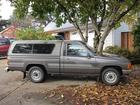
I have a 1991 Toyota Pickup V6 3.0 4x4 with 155,000 miles on it, and I have recently starting having loss of power, delayed acceleration, some backfiring, all with a CEL on. Seems like there are many on this forum that work their way through theses problem, but what bothers me is I can't seem to get it to flash the diagnostic codes. So I feel like I am especially stabbing in the dark here. Any help with getting the codes to flash? I'm getting good contact on my T and E1 terminals. If the truck sits long enough it will flash the CEL as if no codes are stored, but if I jump the terminals right after the CEL has been on it flashes no codes-just nothing.
As far as my stabs in the dark go- So far I have cleaned the MAF and changed the fuel filter, and I'm having the same problems.
When you try to draw the codes, is the engine shut off? THEN jump Te-E1, turn the key to ON, and watch the CEL. It should either flsh the codes stored, or a steady stream of flashes, indicating no codes.
Did you try pulling the negative battery terminal for about a minute, which will clear out all the stored codes, to ensure that it has "room" to store the new ones? Then run the truck until you get the CEL, shut down the engine, put the jumper in, turn the key to ON, and see if it has a code waiting to be read. If nothing else, like I said, it should, and please note use of the word "should", flash a steady stream of flashes, indicating no code.
This morning I took the battery terminal off- waited- and put it back on. I ran the truck and the CEL came one. I let it get to temperature, and then turned off the truck. I jumped the TE and E terminals and turned the key to on. The CEL flashed once and then faded off almost like there isn't enough batter power. I checked the voltage on the battery and getting 11 V. Tried the same process once again and got no flashes at all- not even the constant "no codes" flashing- just nothing.
I'm tempted to purchase a OBD1 to OBD2 adapter off of amazon. Does anyone have experience with these?
Okay, I let the truck sit for a couple of hours and tried it again. The CEL flashed 4 times and then faded out- I could also hear clicking from under the hood. Almost seems like not enough battery, but the battery reads 10-11V.
On a lot of the more modern vehicles, 10-11 VDC isn't enough, in fact, to operate the electronics.
You might want to take the battery to a auto parts type store. They'll do a load test on it. I wager they'll say it's bad. Not just to sell you a new one, but because it is. There are some honest salesmen (women...people?) out there Not many, but some.
If it's a lead-acid type battery, you might want to check the water (acid) in the cells. It may just be low. Only use distilled water though!
You might also clean the terminals real well. Both sides, the terminal AND the thingy that attaches to it. Clean, bare metal. Including all the wires attached. They often get acid under the insulation, and it damages the wire, where you can't see it. You can have a wire completely "open" inside the insulation somewhere, and not be able to see it visually.
Have you checked the output of the alternator? IE: What's the voltage across the battery when the vehicle is running? With the battery that low to start with, it should be well above 13.5 VDC. If not, either the alternator, or the wire between it and the battery, is bad. The large, white wire that bolts to the side of the alternator. It's under a rubber protective cap. Easy enough to slip the tip of a meter probe under the rubber to check the voltage.
The alternator should be grounded up to the head right near it. The head should be grounded to the body's sheet metal. Again, both critical to the proper operation.
Check the grounds from the battery to the engine block and the body's sheet metal. They are critical, and, if bad, the battery can't charge. Both ends of both wires.
Anywho, keep us appraised (big word of the day ) of how things go!
Pat☺
Okay, I agree that the battery is low with the 10-11V. I went ahead and swapped the battery with a new one we had here at work. I did go through and check the the running volts and the alternator. All are good. Getting 14.5 on the battery running and 14.7 from the alternator. Having said that, I still haven't got the diagnostic codes to flash. Again, if the truck has sat long enough, I can jump the diagnostic terminals and the CEL will flash, but it is never repeatable and often times theres nothing.
So where should I look next? I'm jumping the correct terminals in the diagnostic box. I have the voltage on the battery. Does this mean that it's likely electrical from the diagnostic terminal to the ECM?
Might be wiring to the ECU, and I regret to say that it might be the ECU..
You might remove the ECU and open it up to see if there's any burned/damaged components.
Also, check the ground right by the ECU. It can get corroded. Worth a look.
This morning I took off the ECU and it looked very clean inside. I didn't actually test anything, as I don't know enough and could cause more damage than good. The electrical wires going into the ECU from under the hood also look good (no rodent damage or anything), as well as the ground. I'm racking my brain as what to do next. It seems like it must be something electrical, right?
Recap- Jumping TE and E terminals and getting good contact. Sometimes the truck will flash the CEL but won't ever give two number codes. Often times no flashing. If I clear the codes from the truck the CEL will flash continuously as it is clear. The battery is good and the grounds look good.
Now that you've verified the components at both ends of the wires feeding the ECU, it's time to ohm out the wires themselves. You'll need to make an extension for your meter leads. Just a wire long enough to reach from wherever you will have your meter to one end of the wire. You can place the meter where the other end of the wire is. Near the ECU, for example. Set the meter to it's lowest ohms reading, and some meters have a "continuity" setting, where the meter will beep at you if the wire, etc being ohmed out is a short, which is good for a wire, obviously.
Check the wiring diagrams, and ohm every wire going to the ECU, from the end where it originated, to the pin it feeds on the ECU.
For example, connect the jumper to the plug that feeds the TPS. Check the wiring diagram, and see what pin on th ECU the pin on the TPS plug goes to. Connect your meter to the jumper, and the plug from the ECU, and see what the ohms reading is. The longer the wire, the higher the ohms reading will be, within reason. Like a 5 foot section of wire might ohm out to 0.004 ohms, and a 20 foot section might ohm out to 0.04 ohms. That's an example, not actual readings, but it gives you some idea.
Then go to the next pin on the ECU, and ohm it out to the other end.
Make sure to move and bend the wire along it's entire length while reading it. Sometimes the wires get old, and can break inside the insulation. Look good from the outside, ohm out good when just sitting there, but flex the wire in question, the strands separate, suddenly the formerly good wire is reading open.
Ok, I've babbled enough.
I wish you very best of luck. This is a long, boring process, but may well reveal the trouble.
Pat☺
Thanks again for your help and going into detail on this. I have not done this before.
Please help me understand. Since I'm not getting the CEL to flash the diagnostic code, would the first place to start be checking for continuity from the Diagnostic box to the pin that goes into the ECU?
Or should I just check all the sensors for continuity to the ECU to see where my poor performance is coming from?
First things I ALWAYS check are power and ground to the ECU. If those aren't in good shape, nothing else will be. Remember, you can put the meter lead into the back of the plug to check the desired pin, so that the ECU is still in-circuit.
Check the wiring diagram to see which pins in which plugs are hot and ground. Check you battery voltage across the two terminals on the battery first. Then see if that voltage is present on the plug to the ECU. IIRC, there should be two power pins. On on all the time, to keep the ECU's memory alive, and one that's only on when the key is in the ON position. Check both pins for the voltage that you read across the battery terminals. Meter should be set to Volts DC setting. Since it's DC, the polarity, which color probe goes in which pin, matters. Use the red lead to check the voltage, and the black probe onto a bare metal location of body sheet metal. Once you have determined that the voltage on the ECU is good, if it is, then go to the ground pin, and ohm it out.
If the voltage ISN'T good, start ohming the wires between the battery and the ECU to see if you can find a bad wire or plug causing it. Make sure you've pulled the battery leads first! The ohms side of the meter can't take any external voltage going into it!
Remember, battery voltage present on any wire you ohm out can be very bad for your meter. Remove the battery leads and wait a bit before ohming anything out. Ohms don't have polarity, so what lead goes where doesn't matter. I use red to go to the pin, and black to the other end, whether ground, or a sensor. That's just me, though. It doesn't matter. Check the ohms between the ground pin of the ECU, and the ground point nearby.
Then go to the plugs of the diagnostic test jack. Are the wires between it and the ECU in good shape? If not, start checking any plugs, and the wires going to the ECU. Quite often, problems like these are loose or corroded plug connections. Every plug along the way is a possibility. Pull each one apart and look at the terminals inside. Clean, bare metal? Do the get pushed out the back when you plug them back together?
I always put a dab of silicone dielectric grease into the female side of ANY plug I open before I put it back together again. It helps keep the dirt and corrosion out for a LONG time.
I hope there's something helpful in all this...
Pat☺



 Nov 29, 2021 | 01:59 PM




 Not many, but some.
 ) of how things go!