


Questions about Stale Gas
 Jan 5, 2015 | 08:41 AM
#1

Thread Starter
Contributing Member
Joined: Oct 2006
Posts: 367
Likes: 0
From: Los Angeles
Questions about Stale Gas
Hi All, Happy New Year.
So Tl;DR: My Rig's been sitting for over a year with about 1/4-1/2 a tank of gas. I had to let it sit for too long for too many reasons to go into on the board. See below for recap/issues.
TIA for any Help on this!
So Tl;DR: My Rig's been sitting for over a year with about 1/4-1/2 a tank of gas. I had to let it sit for too long for too many reasons to go into on the board. See below for recap/issues.
- Changed Oil
- Replace broken parts
- Battery maybe dead, but I still have a little hope, it was warm after the recharge session, I just didn't start it yet due to the next reason
- Gas is Stale - What should I do?
- Anything else I should worry about before I restart it?
TIA for any Help on this!

 Jan 5, 2015 | 10:59 AM
#4

Registered User
Joined: Oct 2014
Posts: 905
Likes: 4
It "might" still run but I can't imagine it being good running that crud through there.
I'd probably drain as much of it out as I could then pump whatever's in the fuel line out.
THEN add some FRESH gas.
If you plan to let it sit for another long period add non ethanol premium or mix the pump gas with a fuel stabilizer BEFORE you add it to the tank.
I'd probably drain as much of it out as I could then pump whatever's in the fuel line out.
THEN add some FRESH gas.
If you plan to let it sit for another long period add non ethanol premium or mix the pump gas with a fuel stabilizer BEFORE you add it to the tank.
Jan 5, 2015 | 12:19 PM
#5



supposedly there are additives that you can put in stale gas and rejuvenate it. I would try one of those if it's a good amount of gas. i have no experience with it, but know it exists. EPA also probably doesn't want people draining out gallons upon gallons of fuel as you can imagine some people would have a mini hazmat situation on their hands 
Jan 5, 2015 | 02:35 PM
#6
Registered User
Joined: Oct 2014
Posts: 905
Likes: 4
If there's water in the gas that got there from either the stations tank, from ethanol pulling it through vent lines, or sweating from not having the tank FULL it works it's way down to the bottom of the tank.
Everything I've seen about ethanol gas says that once contamination and separation occurs it's too late. The somewhat, effective products out there are mostly for use BEFORE you let the gas sit and allow bad things to happen. I wouldn't want to be running that stuff at the bottom of the tank through the fuel system and engine.
But as always, there are different opinions.
Everything I've seen about ethanol gas says that once contamination and separation occurs it's too late. The somewhat, effective products out there are mostly for use BEFORE you let the gas sit and allow bad things to happen. I wouldn't want to be running that stuff at the bottom of the tank through the fuel system and engine.
But as always, there are different opinions.
Last edited by Odin; Jan 6, 2015 at 10:58 AM.
Jan 5, 2015 | 02:58 PM
#7

Registered User

Joined: Jan 2015
Posts: 592
Likes: 3
I just resurrected my 92 P/U after sitting 5+ years. The in-tank fuel pump and fuel sending unit were toast, completely rusted. It was easier to pull the bed off than wrestle with dropping the tank to replace them, took about 2 hours only because I'm old.
Trending Topics
Jan 6, 2015 | 10:50 AM
#9
Registered User
Joined: Oct 2014
Posts: 905
Likes: 4
Jan 6, 2015 | 11:10 AM
#10
Registered User
Joined: Oct 2014
Posts: 905
Likes: 4
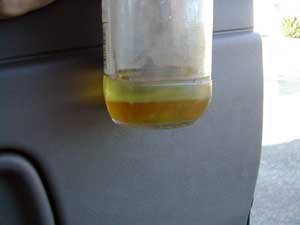
From a boating site
Written by John Siefert, Edison Oil Company
Phase separation is the separation of water and ethanol from fuel within a tank. When water is present in a tank, it bonds to the ethanol molecules in the fuel. Once the three-part mixture of water, ethanol and fuel reaches a certain point, the ethanol and water will drop to the bottom of the tank and separate from the fuel. Once this occurs, you are in danger of severely damaging your motor. Depending where your fuel inlet is located, your motor might receive the fuel portion of what is in the tank or the ethanol/water mixture. Both will cause problems with your motor. While the water/ethanol mixture will obviously cause damages, the fuel portion will be about three octane less than what it should be and therefore result in damages to your motor. Both these scenarios start with the presence of water in your fuel tank. With the humidity we have, the rains that we get, and the inherent nature of boats being on the water, let’s face it, water will get in your tank over time.
While on the topic of tanks, this is where your fuel system begins and the first point where ethanol has a chance to deteriorate your equipment. Most boat manufactures do not use fiberglass tanks anymore, however there are still several in use today. Ethanol will break down certain resins that hold the glass fibers together, allowing that debris to potentially reach your motor. Fiberglass is just one of the materials that ethanol will deteriorate. What about rubber, plastic, even some types of metal? It is true, it can deteriorate all these materials, all of which are a part of your fuel system. Many people mix additives to try to counteract the effects of ethanol, but that is a difficult and uncertain way of dealing with the problem.
Additives have been around for years, mostly to boost octane and preserve stagnant fuel for extended periods of time. More recently, additive manufactures have developed products designed specifically for ethanol treatment. The problem is, there are many different types of fuels throughout the country. They go through different refining processes, have different Reid Vapor Pressures (RVP), and they all have their own blend packages added by the major oil companies already. The chance that additive manufacturers have tested their products on all these different fuel types is highly unlikely. I wouldn’t trust my multi-thousand dollar investment on chemicals that are untested and may not be compatible with my fuel.
Jan 6, 2015 | 11:11 AM
#11
Registered User
Joined: Oct 2014
Posts: 905
Likes: 4
And here is test performed by an average Joe like us who documented a one year test with pictures!
Notice one of them was crap right out of the pump and the rest of the ethanol fuels started having separation issues with just a few months of sitting.
I highly suggest you read this.
http://suzukisavage.com/cgi-bin/YaBB...m=1382699778/0
Notice one of them was crap right out of the pump and the rest of the ethanol fuels started having separation issues with just a few months of sitting.
I highly suggest you read this.
http://suzukisavage.com/cgi-bin/YaBB...m=1382699778/0
Last edited by Odin; Jan 6, 2015 at 02:16 PM.
Jan 6, 2015 | 06:02 PM
#12

Registered User
Joined: Jun 2010
Posts: 1,448
Likes: 100
From: Virginia
^^ In the boating forums I've always seen them say to put the old boat gas in your car 'cause it doesn't care. I'm sure injectors care. A lot of gas tanks seem to leak after using the drain plug. You can get a hand transfer pump from Harbor Freight for $6.99 and pump it from the fill hole. I've seen too many movies to ever siphon it the classic way.
This site has pictures:
http://autorepair.about.com/od/gloss...m#step-heading
This site has pictures:
http://autorepair.about.com/od/gloss...m#step-heading

Thread
Thread Starter
Forum
Replies
Last Post
skoti89
General Vehicle Related Topics (Non Year Related)
4
Sep 11, 2015 07:46 AM
pyramid
86-95 Trucks & 4Runners
10
Jul 30, 2015 10:05 AM


