


Gas milage
 May 3, 2021 | 06:13 AM
#1

Thread Starter
Registered User
Joined: May 2019
Posts: 65
Likes: 2
Gas milage
Hi
was wondering if anyone can help me figure out how to get better mileage.
i currently at best with an itasca rv on a 87 22re automatic with 87,000 miles at best 12 to 13 mpg.
yesterday an identical vehicle parked next to me and I found out he gets 18.
i have eliminated all the Cali pollution stuff and she’s running fine with good compression and I take good care of her.
i just have always had the feeling that I can do better but not sure how. I have not used an oem fuel pump or pressure regulator and am not sure that would help any.
The odometer is accurate and looking for any ideas to try.
Thanks much
Jef Free
was wondering if anyone can help me figure out how to get better mileage.
i currently at best with an itasca rv on a 87 22re automatic with 87,000 miles at best 12 to 13 mpg.
yesterday an identical vehicle parked next to me and I found out he gets 18.
i have eliminated all the Cali pollution stuff and she’s running fine with good compression and I take good care of her.
i just have always had the feeling that I can do better but not sure how. I have not used an oem fuel pump or pressure regulator and am not sure that would help any.
The odometer is accurate and looking for any ideas to try.
Thanks much
Jef Free

 May 5, 2021 | 06:41 AM
#4
Registered User


Joined: Jun 2017
Posts: 2,436
Likes: 965
From: 02176
Check your ignition timing. When i was experimenting with fuel economy on my old Camaro recurving the timing had the greatest effect next to leaning the carb out at cruise speeds. I use an air/fuel meter in the exhaust also. Without that, you don’t really collect any empirical data. I think your ignition probably *does not* have a vacuum advance, but if it does make sure it is holding vacuum and mechanically moving correctly. Check for any other vac leaks.
Also, FYI, disabling my EGR with a BB in the vac line per the old TRD whitepaper (or by any other method) will make it more responsive but i experienced no fuel mileage improvement on the 22re.
My 4runner will get 20-22mpg on all highway trips but you have a lot of wind resistance working against you in that rig.
Also, FYI, disabling my EGR with a BB in the vac line per the old TRD whitepaper (or by any other method) will make it more responsive but i experienced no fuel mileage improvement on the 22re.
My 4runner will get 20-22mpg on all highway trips but you have a lot of wind resistance working against you in that rig.
May 5, 2021 | 02:57 PM
#5


Hi
was wondering if anyone can help me figure out how to get better mileage.
i currently at best with an itasca rv on a 87 22re automatic with 87,000 miles at best 12 to 13 mpg.
yesterday an identical vehicle parked next to me and I found out he gets 18.
i have eliminated all the Cali pollution stuff and she’s running fine with good compression and I take good care of her.
i just have always had the feeling that I can do better but not sure how. I have not used an oem fuel pump or pressure regulator and am not sure that would help any.
The odometer is accurate and looking for any ideas to try.
Thanks much
Jef Free
was wondering if anyone can help me figure out how to get better mileage.
i currently at best with an itasca rv on a 87 22re automatic with 87,000 miles at best 12 to 13 mpg.
yesterday an identical vehicle parked next to me and I found out he gets 18.
i have eliminated all the Cali pollution stuff and she’s running fine with good compression and I take good care of her.
i just have always had the feeling that I can do better but not sure how. I have not used an oem fuel pump or pressure regulator and am not sure that would help any.
The odometer is accurate and looking for any ideas to try.
Thanks much
Jef Free
 May 6, 2021 | 07:35 AM
#6
Thread Starter
Registered User
Joined: May 2019
Posts: 65
Likes: 2
i do coast, everywhere I go is downhill both ways and do not drive at excessive speeds. After meeting someone with the same vehicle that gets 5 mpg more than I it makes me wonder if something is amiss.
May 6, 2021 | 07:44 AM
#7
Thread Starter
Registered User
Joined: May 2019
Posts: 65
Likes: 2
just as likely that "he's" lying, or doesn't accurately keep track of his MPG. you drive a brick, with a non-efficient 4-banger. 12 to 13 is pretty good in that rig. i can coax about 20 to 21 mpg out of my '87 22re in my two sr5 4runners. i doubt someone is getting 18mpg with the 22re and an auto in an RV.
i cannot see how mine will run any better with exception of replacing fuel pump that I have and just have not gotten to. I know mine is not producing the volume that it should and possibly the regulator also. Only getting 38 at the cold start and it will not hold at all when shut down
Trending Topics
May 6, 2021 | 07:58 AM
#8

YT Community Team
Joined: Jan 2020
Posts: 2,253
Likes: 1,005
Tire pressure.
ND or NGK plugs(just regular resistor)
Maybe a top tier gas. Still reg unleaded, but maybe a better brand. Many Drivers were surprised what a tank of Chevron did compared to Thrifty Gas.
Wax it. Boring as hell. do the front first in case you quit half way through.
Remove as much external stuff tied to the RV that's reasonable.(kayak on roof, bikes lashed to ladder, etc)
Take into account that two drivers comparing gas mileage is only somewhat relevant if they both do the same drive. I'd also suspect the guy who said 18 was either exaggerating, or doesn't know how to calculate.
ND or NGK plugs(just regular resistor)
Maybe a top tier gas. Still reg unleaded, but maybe a better brand. Many Drivers were surprised what a tank of Chevron did compared to Thrifty Gas.
Wax it. Boring as hell. do the front first in case you quit half way through.
Remove as much external stuff tied to the RV that's reasonable.(kayak on roof, bikes lashed to ladder, etc)
Take into account that two drivers comparing gas mileage is only somewhat relevant if they both do the same drive. I'd also suspect the guy who said 18 was either exaggerating, or doesn't know how to calculate.
May 6, 2021 | 02:06 PM
#9
May 7, 2021 | 11:47 AM
#10

Registered User

Joined: Jul 2005
Posts: 2,345
Likes: 657
From: Chiloquin, OR


Reminds me of when I had to walk 5 miles to school. It was uphill, both ways, and in the snow, waist deep. Barefoot, too...


Have fun all!
Pat☺
May 8, 2021 | 06:43 AM
#11

Registered User
Joined: May 2017
Posts: 16
Likes: 1
From: Baltimore, Maryland
My 22re 2wd manual pick up averages 28 mpg (up to 34 on hwy). When I got it, it averaged 17 or 18mpg. It has no erg delete, came with no AC or power steering. I credit the turn around to: complete tune-up, correct timing (maybe a little advanced), LCE long stroke header, resolving issues with idle so it can idle at correct speed, new tires, and using a 3 and 3/4 quarts of oil (doesn't matter if it's synthetic or dino). Also, I drive with an lightfoot. Keeping the brakes clean helps. It never takes long for brake gunk to build up and affect rolling resistance. I keep an eye on tire pressure, since it changes with the seasonal temp swings. And I get better mileage with the more energy dense summer blend gas (as does everyone). I also only go to name brand gas stations (for regular unleaded). Cleaning fuel injectors, throttle body may help. I've been tracking my fuel economy for three years with the "fuelio" app.
Last edited by joedever; May 8, 2021 at 06:44 AM.
May 8, 2021 | 04:31 PM
#12
Registered User
Joined: Jun 2017
Posts: 2,436
Likes: 965
From: 02176
My 22re 2wd manual pick up averages 28 mpg (up to 34 on hwy). When I got it, it averaged 17 or 18mpg. It has no erg delete, came with no AC or power steering. I credit the turn around to: complete tune-up, correct timing (maybe a little advanced), LCE long stroke header, resolving issues with idle so it can idle at correct speed, new tires, and using a 3 and 3/4 quarts of oil (doesn't matter if it's synthetic or dino). Also, I drive with an lightfoot. Keeping the brakes clean helps. It never takes long for brake gunk to build up and affect rolling resistance. I keep an eye on tire pressure, since it changes with the seasonal temp swings. And I get better mileage with the more energy dense summer blend gas (as does everyone). I also only go to name brand gas stations (for regular unleaded). Cleaning fuel injectors, throttle body may help. I've been tracking my fuel economy for three years with the "fuelio" app.
May 16, 2021 | 12:40 PM
#14

Registered User
Joined: Apr 2017
Posts: 964
Likes: 197
Double digits with a 460! Im impressed.
12/13 on a 4 cyl RV is what Id expect, 18 with a well tuned motor is believable.
Other than the mechanical stuff, the only thing you can do is keep your accelarations as slow as possible and keep the engine in its powerband.
Or you can talk to anyone that drives an old chevy or ford RV and 12/13 mpg wont seem so bad anymore.
12/13 on a 4 cyl RV is what Id expect, 18 with a well tuned motor is believable.
Other than the mechanical stuff, the only thing you can do is keep your accelarations as slow as possible and keep the engine in its powerband.
Or you can talk to anyone that drives an old chevy or ford RV and 12/13 mpg wont seem so bad anymore.
May 16, 2021 | 12:54 PM
#15
Registered User
Joined: Jul 2016
Posts: 171
Likes: 36
OP should run higher octane fuel, the added cost evens out with better fuel mileage and performance. I run 91 octane all summer towing 17' boat with my 22RE. Many tend to expand on the truth as to their fuel mileage,,they don't want wife knowing the daily driver pickup sucks 10mpg with $6.00 a gallon fuel
Last edited by jazz1; May 16, 2021 at 12:56 PM.
May 16, 2021 | 01:15 PM
#16
OP should run higher octane fuel, the added cost evens out with better fuel mileage and performance. I run 91 octane all summer towing 17' boat with my 22RE. Many tend to expand on the truth as to their fuel mileage,,they don't want wife knowing the daily driver pickup sucks 10mpg with $6.00 a gallon fuel
only toyota i had with 30 mpg was my 89 tercel i bought in 08 or 09 the last time gas hit $4/gallon.
May 22, 2021 | 05:58 AM
#17

Registered User
Joined: Feb 2021
Posts: 33
Likes: 22
From: Illinois
This is an internet myth we can bust. Waxing does not reduce aerodynamic drag since the air next to the surface is subject to what we call a "no-slip condition":
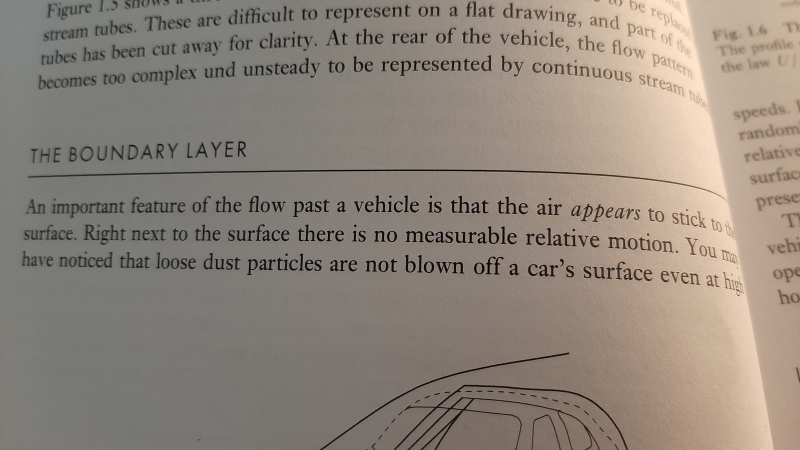
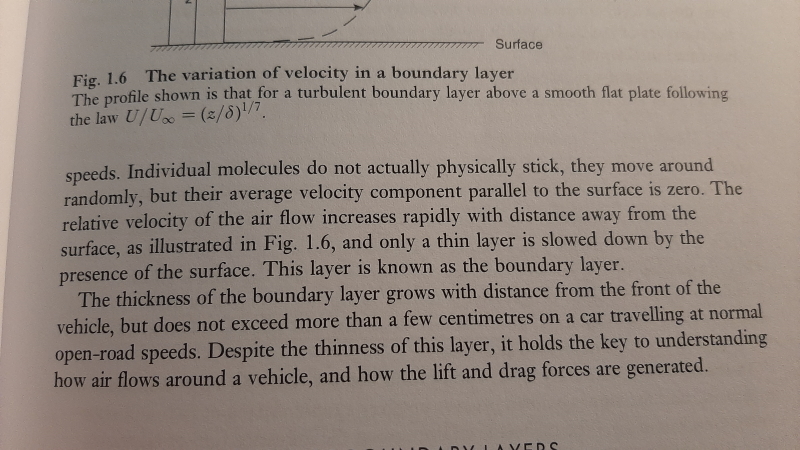
(Barnard, RH. Road Vehicle Aerodynamic Design. St. Albans: MechAero Publishing, 2009. 8-9)
Since the air next to the truck body does not move relative to it, making the surface apparently more "slippery" doesn't change the airflow over it. A Hot Rod magazine article in 2007 said the same; that, according to Gary Eaker (owner of the A2 wind tunnel), "Contrary to what you may read on your favorite message board, well-waxed, smooth paint is no more aerodynamic than the worst spray-can, flat-black primer job you can imagine."
(Barnard, RH. Road Vehicle Aerodynamic Design. St. Albans: MechAero Publishing, 2009. 8-9)
Since the air next to the truck body does not move relative to it, making the surface apparently more "slippery" doesn't change the airflow over it. A Hot Rod magazine article in 2007 said the same; that, according to Gary Eaker (owner of the A2 wind tunnel), "Contrary to what you may read on your favorite message board, well-waxed, smooth paint is no more aerodynamic than the worst spray-can, flat-black primer job you can imagine."
 May 22, 2021 | 08:32 AM
#18
Thread Starter
Registered User
Joined: May 2019
Posts: 65
Likes: 2
Thanks everyone
The art dynamic info is good and interesting. The things that happen that we do not see, the eternal laws of the universe always amaze me. Quite a place. Well I almost just said, well it used to be but I bit my tongue. I still hold onto hope which is eternal and do my best each day to create positive ripples of change. If everyone lifted everyone just a teeney weeney bit everyone would be going up all the time.
I have the itasca and the only aerodynamic element I see are rounded corner copings(corner posts) and the tapered roof over the cab. I found in a junkyard near by the aerodynamic components that are right behind each door. They have a profile to divert the invisible molecules outward. Currently it must be like hitting a brick wall little guys. I think that will help some and I am sure the little guys will appreciate the ease in which they will experience. There’sa1/4 to 3/8 inch above the cab to the cabin bedroom and am going to fill it with spray foam and then find or fabricated some sort of trim to hide the stuff. Would you advise that and anyone have any other modification ideas to help with drag. I would imagine that at the back there is significant drag and was thinking about something there similar to the tractor trailers. Have never seen those on rvs so maybe it’s negligible but on a truck with a fleet it adds up.
On another note my girl is running fine and am wondering what creates the higher idle when starting cold and as it warms up it backs down. It’s just like an automatic choke which I do not have. The cold start injector I believe is not being activated because I pulled the connection at start and no change. When left idle ing after she’s warm it will sometimes fluctuate with a surge in rpms maybe like 300 to 50
0 and then comes right back.
i was thinking of going through the fsm directions for setting Tps . Timing and valves are spot on.
the other thought is the injectors. I have had a problem or two with #1 and have cleaned them. When I purchased get it had 52,000 miles and now 87,000 but I am almost certain they are original. If this seems like a worthwhile investment to some could you verify that with me and what are the# 1 and 2 kinds I should replace mine with.
i just know that there will be a day when I will not have to be under the hood or singing🎶Onthe side of the road again. I could bend your ears for days with the stories of breakdowns and parts I have replaced and admittingly some were my fault overlooking or missing the obvious but this imposter mechanic retired carpenter is getting better every day and I am with this gal for the long haul. We are well suited and my invisible rabbit O,Hare is no trouble. I venture to guess that 99 people out of a hundred would have thrown in the towel on this old gal and believe me friends and family both have offered that advice .
one other thought I just remembered.
front breaks will sometimes lock up especially on gravel or when why not together but always independently. New booster and master, bled and new tires rotors and top of the line pads. Was thinking maybe load proportional valve?
any advice
Thanks in advance
I have the itasca and the only aerodynamic element I see are rounded corner copings(corner posts) and the tapered roof over the cab. I found in a junkyard near by the aerodynamic components that are right behind each door. They have a profile to divert the invisible molecules outward. Currently it must be like hitting a brick wall little guys. I think that will help some and I am sure the little guys will appreciate the ease in which they will experience. There’sa1/4 to 3/8 inch above the cab to the cabin bedroom and am going to fill it with spray foam and then find or fabricated some sort of trim to hide the stuff. Would you advise that and anyone have any other modification ideas to help with drag. I would imagine that at the back there is significant drag and was thinking about something there similar to the tractor trailers. Have never seen those on rvs so maybe it’s negligible but on a truck with a fleet it adds up.
On another note my girl is running fine and am wondering what creates the higher idle when starting cold and as it warms up it backs down. It’s just like an automatic choke which I do not have. The cold start injector I believe is not being activated because I pulled the connection at start and no change. When left idle ing after she’s warm it will sometimes fluctuate with a surge in rpms maybe like 300 to 50
0 and then comes right back.
i was thinking of going through the fsm directions for setting Tps . Timing and valves are spot on.
the other thought is the injectors. I have had a problem or two with #1 and have cleaned them. When I purchased get it had 52,000 miles and now 87,000 but I am almost certain they are original. If this seems like a worthwhile investment to some could you verify that with me and what are the# 1 and 2 kinds I should replace mine with.
i just know that there will be a day when I will not have to be under the hood or singing🎶Onthe side of the road again. I could bend your ears for days with the stories of breakdowns and parts I have replaced and admittingly some were my fault overlooking or missing the obvious but this imposter mechanic retired carpenter is getting better every day and I am with this gal for the long haul. We are well suited and my invisible rabbit O,Hare is no trouble. I venture to guess that 99 people out of a hundred would have thrown in the towel on this old gal and believe me friends and family both have offered that advice .
one other thought I just remembered.
front breaks will sometimes lock up especially on gravel or when why not together but always independently. New booster and master, bled and new tires rotors and top of the line pads. Was thinking maybe load proportional valve?
any advice
Thanks in advance
May 22, 2021 | 08:36 AM
#19
YT Community Team
Joined: Jan 2020
Posts: 2,253
Likes: 1,005
"Contrary to what you may read on your favorite message board, well-waxed, smooth paint is no more aerodynamic than the worst spray-can, flat-black primer job you can imagine."
That's very possible. Not much different than debating whether a open or closed tailgate is a factor in mpg.
I think what happens is those trying to make adjustments to improve gas mileage do multiple things and become more conscientious in their habits. Checking tire psi more regularly, not doing hard accelerations, not hauling unneeded weight, etc. The amount mpg drops when taking off quickly from a dead stop is just crushing.
There's a valve that mounts to the underside of the intake manifold that raises the idle on a cold engine(IACV)
That's very possible. Not much different than debating whether a open or closed tailgate is a factor in mpg.
I think what happens is those trying to make adjustments to improve gas mileage do multiple things and become more conscientious in their habits. Checking tire psi more regularly, not doing hard accelerations, not hauling unneeded weight, etc. The amount mpg drops when taking off quickly from a dead stop is just crushing.
There's a valve that mounts to the underside of the intake manifold that raises the idle on a cold engine(IACV)
Last edited by Jimkola; May 22, 2021 at 08:57 AM.
May 22, 2021 | 02:21 PM
#20
Registered User
Joined: Jul 2005
Posts: 2,345
Likes: 657
From: Chiloquin, OR
"Contrary to what you may read on your favorite message board, well-waxed, smooth paint is no more aerodynamic than the worst spray-can, flat-black primer job you can imagine."
That's very possible. Not much different than debating whether a open or closed tailgate is a factor in mpg.
I think what happens is those trying to make adjustments to improve gas mileage do multiple things and become more conscientious in their habits. Checking tire psi more regularly, not doing hard accelerations, not hauling unneeded weight, etc. The amount mpg drops when taking off quickly from a dead stop is just crushing.
There's a valve that mounts to the underside of the intake manifold that raises the idle on a cold engine(IACV)
That's very possible. Not much different than debating whether a open or closed tailgate is a factor in mpg.
I think what happens is those trying to make adjustments to improve gas mileage do multiple things and become more conscientious in their habits. Checking tire psi more regularly, not doing hard accelerations, not hauling unneeded weight, etc. The amount mpg drops when taking off quickly from a dead stop is just crushing.
There's a valve that mounts to the underside of the intake manifold that raises the idle on a cold engine(IACV)
A lot of the Olympic swimmers have gone to suits with pebbling on the surface. Again, like shark skin, water over water is much more dynamic than over the materiel of the suit.
Heck, even the Navy's submarines, and Seal Delivery Vehicles, have a rubberized, pebbled, coating skin over their hull. Allows them to go faster, and more importantly, much more quietly, than the metal hulls did. Even the ships in the yacht races have pebbled hulls. same reasons. The first one that did it was the America, one of the America's Cup yachts, and the others quickly followed suit.
It's why there are dimples on a golf ball. They fly a lot farther than the older ones that were "smooth".
Have fun, all!
Pat☺
Last edited by 2ToyGuy; May 22, 2021 at 02:25 PM.


