When you click on links to various merchants on this site and make a purchase, this can result in this site earning a commission. Affiliate programs and affiliations include, but are not limited to, the eBay Partner Network.
Had some trouble with my 4Runner that eventually ended up with my starter burning out. Wanted to share in case it helps someone else, and also ask a question. Just in case anyone else might have an easy fix to this problem. It's still happening and I want to hopefully fix it without having to spend a small fortune on a new ignition switch and have to have two sets of keys.
Problem started happening randomly a few months ago, and since it fixed itself every time, I couldn't figure out why it was happening. Truck would crank fine but be running like total crap, with the check engine light lit up, and couldn't let it idle or it would die, Happened for maybe the 4-5th time last week, a quarter mile from home when leaving the store. Barely made it home but this time, with that awful familiar smell of burning brushes filling the cab. Starter was fried. Couple days of research on this and other Yota forums, and checking out the whole system good, revealed that my ignition switch has a small sticky spot just before the cranking position, causing the starter to stay engaged with the engine running.
Just installed the new starter and have been consciously remembering to manually move the switch back to the run position after it starts. Forgot once today though, and heard the starter sound like it was trying to barely reengage the spinning flywheel. Has anyone else manged to fix this switch problem by just cleaning / lubing the switch, and if so, with what exactly? Only thing I found on youtube was a guy spaying WD-40 into his sticky switch to fix it. IDK about spraying a flammable liquid into an electronic part though, Doesn't sound good. I have two other options on hand that may work. Opinions, or hopefully some input from someone who has dealt with this before? I'm thinking the silicone "Lube-A-Trol" spray, made for control pots and such might be good. Getting the incredibly messy graphite Never-Seez in there where it needs to go could be difficult I think.
As millball points out, the lock cylinder is separate. It's possible that's the part that is bad; you'll have to disassemble to find out. If the cylinder is okay, you can replace the switch and keep the key. If the cylinder is bad, any competent locksmith can repin (re-disc) it to match your current key.
As millball points out, the lock cylinder is separate. It's possible that's the part that is bad; you'll have to disassemble to find out. If the cylinder is okay, you can replace the switch and keep the key. If the cylinder is bad, any competent locksmith can repin (re-disc) it to match your current key.
I was basing that on the cost of a full replacement with OEM parts, added to the cost of a locksmith. Many posts and comments I've read said the aftermarket parts were very low quality and many had problems with them. It seems to be more of a mechanical issue than an electrical one.
The point is that there is a sweet spot somewhere between taking it to a dealer with "I don't care what it costs," and spraying an ancient can of "lube a trol." I expect that the $90 Toyota OEM part is probably somewhat better than the $16 eBay part. But if you're that worried about spending a fortune, I'm almost certain that the $16 part will serve you much better than spraying junk into your lock.
Of course, no one knows until you take it apart to determine if its the switch, the cylinder, both, or something else.
How is the positive cable to the starter from the battery. I was having this same problem thought it was the old starter only later to find out that cable was holding on by a few threads. It looked good initially but once I bent it at the ring terminal it let go. There was no chance of driving around with the starter running though it was loud so maybe your positive cable is good.
You can pop the lock cylinder out pretty easily with a pick. I dropped mine in a ultrasonic cleaner to remove the years of accumulated grime and oil. Usually it's the plating on the key that wears off and clogs the lock, so a new key, preferrable from code, will make a big difference. Oiling an ignition lock that is already full of old oil and dirt will be a short term remedy at best.
Once it's clean I don't recommend any oil, but I know everyone is dying to add some, so a dry graphite or silicone would be ok.
You can pop the lock cylinder out pretty easily with a pick. I dropped mine in a ultrasonic cleaner to remove the years of accumulated grime and oil. Usually it's the plating on the key that wears off and clogs the lock, so a new key, preferrable from code, will make a big difference. Oiling an ignition lock that is already full of old oil and dirt will be a short term remedy at best.
Once it's clean I don't recommend any oil, but I know everyone is dying to add some, so a dry graphite or silicone would be ok.
Thanks, glad to hear it's no big deal to pop the cylinder out for cleaning. I may have to try that if I run into any more probs down the road. For now the lube-a-trol silicon spray worked like a charm. Moves much smoother and springs right back out of crank position. Hopefully that lasts awhile.
My original key is pretty worn, so that makes perfect sense where all that finish and metal has gone. Thought it was the worn key keeping my rear window lock from working properly, will only roll down the window if inserted one way. Had an extra key cut years ago but it might not have been from code because that one does the same thing.
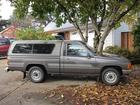
Wow that's a nice looking truck you got there bud! Looks the same color as my 89 SR5 P/U.
The drawback to making a copy of a key is you're typically copying a key that has wear. Sorta like making a Xerox of a photo that is fuzzy. You just get a copy of a fuzzy photo.
The key code is stamped on the body of the passenger door lock. You'll have to pull the door panel to see it, maybe even pop the door lock out, which is easy once the panel is off.
It's worth having the code in case of emergencies.
Thanks on the compliment. I'm currently painting. Again. I first painted it a few years ago using two-stage; It was merely ok. I'm re-doing with single stage. All the professional painters prefer two, but I've found single a little easier to work with, especially when it comes to fixing my many mistakes.
By the same token, if you're making a new key for the old lock(s), using the worn key as an example works nicely. The original key and lock pair wore to where they are together. If you get a copy of the worn key made, it's worn like if it wore with the lock cylinder. It's worked good for me.
I'm still using the factory key on my 87 pickup, and, while I can pull it out with the truck running, it still works fine in the worn down lock cylinders.



 Jan 25, 2022 | 02:25 PM

 I'm thinking the silicone "Lube-A-Trol" spray, made for control pots and such might be good. Getting the incredibly messy graphite Never-Seez in there where it needs to go could be difficult I think.