When you click on links to various merchants on this site and make a purchase, this can result in this site earning a commission. Affiliate programs and affiliations include, but are not limited to, the eBay Partner Network.
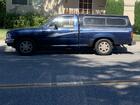
'93 22r-e pickup, 227k, owned it since 2019/143k. I am totally green outside of routine maintenance so everything here is me figuring out for the first time guided by the FSM. This is the first major issue I've had with my truck, in temps of 70 F and below it starts up and runs great... for about 20 minutes. Right around the 20 minute or 13 mile mark is when sudden sporadic loss of power occurs and gradually worsens until the engine sputters and stalls out. Won't start for 20-30 minutes but once it's cooled down it starts and runs great for another 20 minutes then repeats the gradual sputter and stall. If outside temp is higher than 70 it will either stall more quickly or sometimes not start at all (spark sporadic in high temps). Was throwing codes 25 and 41, replaced O2 sensors and cap and rotor (which had hairline cracks) and codes haven't returned but the problem persists to where I am now commuting by bus. Thought maybe FP but that is operating fine when I bypass COR and flap the AFM. Checked TPS - good. New ECT sensor, old one was brittle and cracked. Checked igniter and coil according to FSM, and was in spec which led me back to the distributor. Found the O ring for the cap disintegrated and the air gap is > ten times what it should be (0.183 in. vs spec: 0.008-0.015 in) What's my next step? Happy to answer questions because this is a very brief rundown
Thanks for reading
Last edited by augiepizza; Jan 31, 2025 at 01:51 PM.
So as you kinda already deduced, time(or distance) is related to temp. The longer a cold engine runs or drives from home, the warmer it gets. I’d bee looking at testing your water temp sensor. I had one fail on a honda, making the cpu think it was -26F outside and trying to compensate. It’s in the realm of possibility.
when it conks out, test for spark the old fashioned way. That will rule out the ignitor.
I'll throw one out here too. There is a Bi Metal Switching Valve near front of lower intake that feeds vacuum to the EGR. Follow that back to where it sources its vac from and temporarily cap it off. When engine warms up that valve opens up and feeds vacuum to the EGR through a modulator, you might have a leak somewhere in that chain that would only show up when engine is warm.
Took your advice and capped the vacuum lines that go to the vsv. I did it after the vehicle warmed up and had already stalled out once. It turned over and idled for about ten seconds but then died again.
as for the water temp sensor, that would be the ECT sensor correct? I replaced it since the problem started but it’s possible I got a bad part. I can try replacing it again. It seems like it might be an EGR issue since the problem coincides roughly with the EGR kicking on (coolant temp. reaching approx. 104 F) ?
That bvsv is screwed into your lower intake near front of engine. When coolant warms it up enough, it allows vac to flow thru from one port to the other. This is what I was suggesting that you cap off. There are of course other things to consider, but I was just going for a quick and easy test. Some other things to think about, once your engine warms up, the Idle Air Control valve shuts, this valve allows extra air into the engine while it is cold. Perhaps your idle is set too low and once this extra air cuts off, it kills your engine. Is your cold idle somewhere around like 1200 to maybe 1500 rpm? If your cold idle is low, like only 900 rpms, then when the engine warms, maybe it closes off the idle air control valve and now the idle is too low and the engine dies. If this is the case, the fix is simple, I would adjust the idle screw to raise the cold idle up to at least 1200 rpms, and then see what happens when warm. Ideally once you get it running when warm, you need to set the idle speed to get your warm idle to what it is supposed to be.
The ECT sensor is not related to this BVSV, they are separate things.
Yeah, that distributor gap is way off. Swap it, test again.
Spoiler
The distributor issue might be the culprit, especially with the large air gap. I recommend addressing that first by replacing or adjusting the distributor to meet the specified air gap. You might also want to check the wiring harness and connections to ensure there's no intermittent electrical issue. Keep troubleshooting systematically! If you need sociology essay help about technical troubleshooting and its social implications, at UKWritings here https://ukwritings.com/sociology-essay-help can provide the expert support you need. Their writers are skilled in creating sociological analyses of both technical and social problems.
Last edited by SullivanTate; Feb 21, 2025 at 02:08 AM.
@coryc85 thanks for the rundown, I was actually replying to melrose up there about the water temp sensor. Cold idle is nice and high, I don’t have a tachometer but it seems to warm up with a higher idle and then drops to about 850 as it should. I did look for the bmsv and guess what? It’s not there. FSM shows California EGR systems are laid out with a different vacuum switching valve which I tested (good) and then performed vacuum test on the egr valve itself. Once the engine warmed up it died again. Egr modulator seems bad per FSM test and EGR valve is definitely due for a cleaning so that’s what I’ll try next. Considering an egr delete mod since I’m not registered in CA anyway but really just looking for the most economical option. I’d prefer to keep the egr system intact but not if it’s going to cost $500+
Last edited by augiepizza; Feb 4, 2025 at 05:46 AM.
Nothing new to report. Can’t figure out what’s causing the problem. Going to replace fuel pump and if that doesn’t solve it I’ll be at a loss. Anyone have fuel pump recommendations? I’m looking at over $300 for pump and sock at my local dealership
On the EGR, just connect a vacuum line to it and suck on it. You will hear it open or not open. If you want to defeat it, just put a bb in the line between the vac modulator and egr valve.
It could be stuck open(probably not, it would run like real crap) stuck closed(not really a problem) clogged up(same as stuck closed).
you can do the suck test running or off. Idling it will stumble if you open the valve.
So can you clarify, if you block off vacuum going to that Bimetal switching valve that feeds vacuum to your EGR modulator....does your problem go away? If your problem goes away, then yeah you have an issue with your EGR components, if it does not go away, then more troubleshooting is needed. I'm not sure what is leading you to think fuel pump is the problem, I mean I guess it could be, but I'd want to make sure, not just from a cost perspective, but also on your truck I think you have to drop the fuel tank to get to it. Seems like a lot of trouble if that does not end up being your issue.
Just reread your earlier post, and you are saying you don't even have the bimetal valve screwed into the intake? If you look at the vacuum diagram on the underside of your hood, it should show the valve I am talking about. If that valve is missing, then what is feeding vacuum to your EGR?
On the EGR, just connect a vacuum line to it and suck on it. You will hear it open or not open. If you want to defeat it, just put a bb in the line between the vac modulator and egr valve.
It could be stuck open(probably not, it would run like real crap) stuck closed(not really a problem) clogged up(same as stuck closed).
you can do the suck test running or off. Idling it will stumble if you open the valve.
Did the suck test and it reacted as it should. Also took the egr valve off and cleaned it. Didn’t appear to be stuck before and definitely isn’t now. Also replaced the modulator with a new one.
Last edited by augiepizza; Mar 6, 2025 at 10:33 AM.
So can you clarify, if you block off vacuum going to that Bimetal switching valve that feeds vacuum to your EGR modulator....does your problem go away? If your problem goes away, then yeah you have an issue with your EGR components, if it does not go away, then more troubleshooting is needed. I'm not sure what is leading you to think fuel pump is the problem, I mean I guess it could be, but I'd want to make sure, not just from a cost perspective, but also on your truck I think you have to drop the fuel tank to get to it. Seems like a lot of trouble if that does not end up being your issue.
Just reread your earlier post, and you are saying you don't even have the bimetal valve screwed into the intake? If you look at the vacuum diagram on the underside of your hood, it should show the valve I am talking about. If that valve is missing, then what is feeding vacuum to your EGR?
youre right, dropping the fuel tank is a huge hassle if it’s not the problem but at this point I don’t know where else to turn. I think I’ve ruled out the egr system as I removed the egr valve and cleaned it and also replaced the egr modulator. My truck is a california vehicle so instead of vsv on the intake it has an electronic vsv on top of the head. The pages from the manual I shared above illustrate the difference. I tested it and it’s working. I guess I could replace all the wiring and all vacuum lines but fuel pump seems like it might be causing the problem since it could be that the electric motor on it is dying and functions worse as it warms up.
Ok I misunderstood when you said missing the valve, I thought it was actually missing, but you mean it never came from factory with one because of california emissions, now I understand.
Vacuum leaks perhaps? Is your timing set properly? There are 2 sensors for the coolant temperature, one sensor just goes to the gauge, the other sensor goes to the ECU so it knows when the engine is warm. You can remove that sucker, clean it and its threads, ohm it out with a meter and make sure that it is reading properly. Looks like you already checked your TPS and you changed your O2 sensor. There is a nice writeup here somewhere on using a timing light to adjust the TPS, that might be worth doing.



 Jan 27, 2025 | 02:44 PM