When you click on links to various merchants on this site and make a purchase, this can result in this site earning a commission. Affiliate programs and affiliations include, but are not limited to, the eBay Partner Network.
New member here, bought this vehicle in Wild Rose, Wisconsin in late 2002. Didn't use it much because I didn't really need it. Let the tabs expire in 2012 and haven't driven it since, battery went dead in 2012. Just retired and want to use the truck, intend to buy a popup truck bed camper and go steelhead fishing everywhere in the PNW. I'm not scared of auto mechanics and have been messing with vehicles since I was 14 or 15. Have the tools have the understandiing, well sorta, things have changed. New battery installed but nothing but trouble, everything I try to fix breaks. All small bolts just break so the more I try to fix the more trouble I encounter. I think I can eventually get the motor running but that won't help if I can't fix the other problems. First problem is the hydraulic clutch system.
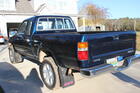
The master cylinder seems fine but has a disc of what appears to be coagulated brake fluid floating on top. Trouble is the coagulated brake fluid, if that's what it is is almost perfectly symmetrical and appears it could be part of the system. It floats in the center of the master cylinder, I don't know if it belongs or is some weird conglomeration from lack of use. The Clutch petal will not depress. I don't understand why but haven't removed the slave cylinder yet. Engine turns over nicely with the clutch over ride button depressed but will not start. I'll add a couple pics, first is of the floating disc that's floating on the brake fluid and second is truck. Second pic it just the truck sitting on jack stands. I'm now an old man and using a creeper becomes creepy when I can't hardly get up. Any help of advice would be greatly appreciated.
Long road ahead of you. Fuel in the tank is probably a science experiment gone bad long ago. Engine turns over so that’s good. You can free up the clutch. I would drop the fuel tank, put in a new pump and probably a sending unit, get the injectors rebuilt, new fuel filter, new hoses, radiator, water pump, new tires. I did one about a year ago. I did the starter and alternator too, just because.
I'm with db on this one. These trucks do NOT like to sit still.
The mystery disc you found is included in almost all the older master cylinders. I have one in all three of my trucks. Have since they were new, so it's not coagulated brake fluid, or anything like that. It's supposed to be there. Just WHY, I'm not sure.
Here's the picture from the FSM showing the breakdown of the master cylinder. You can see that the mystery disc is in the picture.
Anywho, in addition to all the joyful fun things db listed, I would bleed the brake system real good.After sitting that long, the brake fluid has probably soaked up a gallon or two of water. Not good at all.
You shouldn't leave the top off the MC while bleeding. The fluid can come back on the return stroke, and go everywhere. In fact, now I think about it, I believe that's what the mystery disc is for. Keeps the fluid from squirting out the air vent in the middle of the cap. Problem solved.
Anywho, two things: Make sure you do the bleed in the right sequence, and do NOT let the MC run out of fluid, so you get air sucked into the system.
The sequence is
right rear,
left rear,
right front,
left front,
LPSV.
Do NOT forget the LPSV, or you may as well not have done the whole procedure at all. If you need, I can post the picture out the FSM as to what the LPSV looks like, and where it is located.
Bleed each brake until you get nice, clean fluid out of it, however long that takes. Keep a sharp eye on the MC so it always has plenty of clean fluid in it. Many use a turkey baster to suck most of the fluid out of the MC, and then refill it with new, clean fluid, so it starts out with nice clean fluid in it.
Personally, I do the two person system, where one person pumps the pedal, the other opens and closes the bleeder valve. Some people just open the bleeder valve, and let gravity do the work.
Remember there are 3 main radiator hoses, the upper, the lower, and the jumper, right under the power steering pump. A lot of people never replace that one, because they don't know it exists. Be careful. No matter HOW well you drain the radiator, when you go to pull the bottom hose off, it will, WILL try to drown you. Trust me on that one. Wear good eye protection, and keep you mouth SHUT when you go to pull it off. Stay off to the side, too. Amazing how much water gets left in the system.
When you go to refill the system, use the Toyota Red coolant, NOT the generic green stuff. It matters, because Toyotas use an iron block/aluminum head set up, and the green coolant will encourage the differential metal corrosion those engines are prone to. The Red coolant will help prevent that corrosion. As always, use distilled water ONLY, and keep a good, 50/50 mixture. It takes about 8 quarts of coolant in the whole system. Sometimes the Toyota coolant comes premixed, sometimes not, so pay attention.
Don't forget to replace the thermostat, and it's seal. Inexpensive insurance against future problems.
Be prepared to only fit about 6-7 quarts of coolant in the system at first. Once you "burp" it, it will take in the rest. Burping it is an essential step, BTW. You'll definitely need to do that.
Speaking of the power steering pump, make sure you only use Automatic Transmission fluid in the power steering system. If you use power steering fluid, it eats the seals and hoses. Not that *I* ever did that...<ahem>...I've HEARD that that's what will happen. Yeah, heard about it. Nothing to see here. Move along...
I, personally, would also change the oil, transmission fluid, and differential fluids. I use the Toyota oil filter, PN: 90915-YZZD3 . It's actually one of the best filters on the market, in independent testing. I use Castrol Syntec 10W-30 oil, but really, the choice of oil you use is pretty much personal.
Now, watch me get this bass-ackwards. I always do. Make sure you use GL-5 gear oil in the differentials, and GL-4 in the transmission. The weight isn't as critical as the GL rating you use, although, just for general temperature ranges, the 75W-90 is quite acceptable.
You'll probably also want to do a general tune up on it as well. Plugs, wires, distributor cap and rotor, and so forth. Always use OEM parts wherever possible. They seem to work best, and last longest.
You've got some fun ahead of you, but just think how well you'll know all about your truck once you get done
Ok, I shut up now...
Good luck!
Pat☺
Thanks for the comments, it's good to know the clutch MC disc belongs, strange but thanks for clarifying. When I parked the truck in 2012 there was very little fuel in the gas tank and I'm pretty sure a not so near neighbor siphoned all he could out of the tank so it's been empty or close to empty for most of the time, though certainly there could have been a tad fuel in the tank which would be ethanol contaminated. Assuming the tank had very little fuel would it have fouled the fuel pump? I doubt it but I don't know. Truth is I can't hear the fuel pump engage when spinning the motor so it's very well could be the fuel pump is dead. When I began trying to renovate the truck I didn't expect any of these problems. Since I bought it in Wisconsin I knew rust could be a problem but when I brought it to Washington I drove it several times in deep snow. ...mostly hoping here but rust is rust and doesn't seem to quite making problems. Both front brake calipers will need replacing because I broke stuff while removing the right one and can't remove the tubes that hold the pads in place, I tried drilling them out and was successful on one of them but I damaged the alignment of the tube and decided to just replace the calipers..I think I can save the rotors, they have rust but are not damaged and look decent, not worn. I can lightly grind them or use electrolysis to clean them up. The bigger problem is the rear brake drums, I cannot remove them. They have threaded holes for this purpose but I need hardened steel bolts to do it, I've tried already and they work to a point but I can't go further because the threads are messing up. I have the tools to re thread the holes but I'm certain the brake drums are not hard enough to allow me to get it done that way. I've decided to use an angle grinder to just cut them off. I'll likely damage stuff but that's the way it is. So, I'll replace the drums, shoes and likely all the internal rear brake components. One very small thread of hope is the hood release cable was stuck, it wouldn't move within it's flexible tube so I couldn't lock the hood down. Messed with it a bunch using penetrating oil but no luck, then I put it in my freezer overnight and the next day I got it freed up. So, that works but nothing else does. Also, I decided to look at the distributor and broke all three bolts that hold the cap on. I have a new one now but have lost the timing because I've spun the motor since. I'll most likely buy a new timing belt and believe I'll be able to re-set the timing to go forward once that is done.
Thanks again for your help, I don't think I'll worry about the alternator, power steering pump or any of the cooling stuff but if I have problems I'll try to deal with them. I do intend to replace the transmission fluid and rear end and other oils and I'll certainly replace the plugs and wires and hope the ignition coil works.
Last edited by klickrolf; Jul 10, 2021 at 02:34 PM.
Two ways to check the fuel pump operation. One, is to put a jumper, like say a paperclip (expensive, I know ), in the test connector attached to the engine compartment's fuse block, pins B+ to Fp, then turn the key to the run position. You should be able to hear the fuel pump run. Remember, the pump is cooled by the fuel around it, so don't run it too long without gas in the tank. A few gallons, at least.
Another way is to NOT press the clutch in, or the clutch cancel switch, then turn the key to start. Again, you should hear the fuel pump run. I do that if the truck has sat without being run for a few days. It pressurizes the fuel system, and the truck will fire right up for me.
Bear in mind, that with tank totally, or nearly, empty, and sitting for that long, when you put fuel in it there's liable to be a lot of rust flake off the interior of the tank. It can, and will, clog up the fuel pump, the fuel lines where they turn corners, the filter, and the injectors. You may need to replace the fuel tank, or get the interior chemically cleaned, and coated to prevent more rust from forming.
I would, without any doubt, at the VERY least, flush the cooling system. Even a commercially made flush will do the job. After sitting this long, you can bet there's a fair amount of rust built up in the system. Flush it out real good, and put in new water and coolant. No less. Check that you have good flow by feeling the bottom hose when the engine is warmed up. It should get warm. If not, the radiator is completely clogged up, and needs replacement.
The front brake calipers are pretty easy to remove and replace. Same with the rotors.
Sounds like the rear drums are in trouble. Before you cut them apart, did you try loosening them off with the adjustment wheel on each one? Might be all it takes to get the drum off. Quite often, that does the trick. Loosen them way off, and give the drum a few firm taps with a ball peen hammer. Not enough to damage it obviously, but the impact might help loosen things up.
Some things just do NOT like to sit still. As you can see
Have fun, and keep us up to date on how things go for you.
Pat☺
Don't forget to include the LPSV when bleeding the brake fluid after all the work. It's just as important as all the brakes themselves.
So, I just checked and found the pin locations in the small fuse box attached to the large one. I found Fp and +B, not B+, but I think that must be what I was looking for. Hoping the fuel pump will operate without the engine turning over because the engine sound is too much louder than any electric fuel pump I've heard. Sure hope I don't need to remove the gas tank but it is what it is, I don't want too but I will. Just ordered a timing belt kit that includes the water pump (Aisen Tkt-014) so I will be draining the cooling system, and certainly flushing.
HOW IMPORTANT IS USING TOYOTA RED COOLANT?
I've messed with the star shaped adjustable tightener in the rear drums but can't make it move more than two heavy screw driver moves. I can move a few clicks one way and few clicks back, that's about it, seems like it's rusted. Hence grind off and replace drums.
I just reread your post and realize you covered it 2ToyGuy. The motor won't turnover without the clutch over ride button being pressed, I'm learning.
The only trouble I had with the truck before I parked it was a leaking A/C tube that I replaced and all was good. I like the truck and am serious about getting it going again.
Last edited by klickrolf; Jul 10, 2021 at 02:38 PM.
Reason: Realization
Using the Toyota Red coolant is pretty important to prevent differential metal corrosion in these engines. It costs a little more, but the return is well worth it in terms of length of time a fill can last without developing rust anywhere.
Yes, that helps a bunch. I've been under the impression for years that the leading coolant creators have understood and fixed it. I've seen serious corrosion occur with water heaters (home water heaters) where copper water lines were attached to iron or steel or whatever. I've always used green coolant but not for any reason other than that's the color it is. The oddest thing here is there is no liquid better at cooling or, in this case, maintaining temperature better than water. I suppose additive ingredients can cause some cellular reactions, rust is not supposed to occur with aluminum but it certainly does in iron compounds. Assuming I get this truck on the road you can be sure it'll have the correct coolant. If Toyota only then that's what it'll be, I need to research this and will.
Thanks 2ToyGuy.
By the way, I should mention the transmission shifts through the gears perfectly but since the motor doesn't run and the clutch is unusable I can't drive it so I can't learn of any problems. I think the clutch is the most important problem. I still haven't removed the slave cylinder, well I got one bolt loosened. It's been very warm around here for the last week plus and I'm not interested in dripping sweat trying to crawl under the rig.
On my truck there was fuel tank drain plug. If yours has one you could at least get the old gas out that way.
I would try to whack the brake drums with a hammer while putting the bolts in as well. They’re just frozen on there. Run the bolts in best as you can, whack on the drum a few times, see if you can get another half turn, and so on. If you can’t, leave it like that overnight and let time argue with it. Patient persuasion will bring victory.
rust is not supposed to occur with aluminum but it certainly does in iron compounds.
I never said aluminum would rust. That's why I specified "Corrosion" not rust. An iron block, and aluminum head, with water running through them, will cause them both to corrode in their own way. The iron block will develop rust, yes, but the aluminum of the head will corrode as well. Not rust. Corrode. Either way, it's the metal molecules combining with oxygen molecules from the water, or the other metal. Essentially, corrosion is the same as burning. It's just much slower, so the heat given off is minimal.
The Red coolant from Toyota is formulated to help reduce this effect as much as is possible. The green actually tends to accelerated it.
Sorry, I ramble sometimes.
By the way, I should mention the transmission shifts through the gears perfectly but since the motor doesn't run and the clutch is unusable I can't drive it so I can't learn of any problems. I think the clutch is the most important problem. I still haven't removed the slave cylinder, well I got one bolt loosened. It's been very warm around here for the last week plus and I'm not interested in dripping sweat trying to crawl under the rig.
Pretty easy to check the two cylinder of the clutch actuator. Get under the truck, maybe at night, when it's cooler, and have an assistant push the clutch pedal for you. You should be able to see the slave cylinder push the fork easily. Bleed the system well to ensure there's NO air in it. Check the MC alignment . The length of the bar going to the pedal. The book has an excellent alignment and test procedure in it.
Yes, I would drain out whatever fuel is left in the tank. It might be contaminated with water, rust, etc. Drain out the old, pour in a few gallons of new, and good to go. Keep the neighbor out of it
Apologies 2ToyGuy, I didn't mean it to sound that way. Corrosion and rust are not the same thing but they sort of are, like you said it's corrosion, there's plenty of it on the externals of my upper half aluminum engine, not hard to see at all. Almost all metals corrode to some degree and it can be worse depending the associated metal.
The clutch slave cylinder will not move, should also say I can't confirm that the master cylinder will push fluid either. I can press the clutch pedal down no more than 2 inches, it's basically frozen in the engaged position. I sure hope there hasn't been any corrosion between the metal in the clutch disc and the flywheel or pressure plate, that would be really bad. And, I can't imagine how the hydraulic parts here could create this problem, sounds pretty bad. I'm not sure what the actuator is but I think I might. Can't remember what we used to call them but it's the clutch release mechanism that puts the pressure on the pressure plate which physically releases the clutch to allow shifting while the vehicle is running or moving. I've been avoiding removing the slave cylinder but I think it's gotta be my next task.
dbittle, the truck does not have a drain plug in the tank, nor does it have access to the tank from the bed. Sucks so I'll remove the tank if I can't hear any activiity from the fuel pump, removel of which will require dropping the tank. Assuming the tank was about empty, and it wouldn't start I added about 4 gallons from a gas can. So that's what in the tank and 4 extra gallons won't help me remove the tank, it is what it is. I've done exactly what you mentioned wrt the rear drums. I actaully have hardened bolts, have used them on both sides doing half turn and hammer again and again. The brake shoes must have created too much of lip on drums, they won't come off. I've moved the drums close to 3/16" but they won't release. I wish I knew another way to remove the drums but I don't. I've found all the plastic covers on the back plate, I even have a mirror tool but it's too dark to really see anything. Guess that's an excuse but I gotta realistic if I'm gonna get her running.
Last edited by klickrolf; Jul 12, 2021 at 04:07 PM.
Reason: Clarification
It sounds like you have had a number of things freeze up on you over the years. If you can get the truck bed off, you can access the fuel pump and sender from the top. That gives easy access to everything back there so it might be worth doing anyway. You can clean up rust and paint the chassis while you’re there.
yeah, if you have backed off the star wheel as far as it will go to retract the shoes and moved the drum 3/16 and it still won’t release, you might be out of options that don’t involve the death of the drum. My truck took $4000 of parts to bring back so I feel the pain with you.
So, I've been thinking about this too much. Becoming single minded has never helped me. I'm gonna forget about this truck for a few days and find something else to do or think about.
I'll likely come back in a week or so and ask more questions or present more problems.
Thanks for your help so far, removing the truck bed is not something I can reasonably do. It's an 8 ft.bed, that's why I bought the truck. I don't think I can hang it on my rafters under the carport, too much weight to risk it. When I get back to it It'll be the clutch.



 Jul 8, 2021 | 04:49 PM