


Lift Kit Recommendations
 Oct 26, 2017 | 08:42 AM
#1

Thread Starter
Registered User
Joined: Sep 2016
Posts: 32
Likes: 1
Lift Kit Recommendations
I'm wanting any information for lift kits under 4". I don't feel the need to lift my truck that high. I would prefer an Old Man Emu setup but when I looked online I couldn't find much for my truck. Any suggestions or recommendations for a lift? Suggested tire size as well? Just getting ideas for a game plan to lift it.
Oct 26, 2017 | 10:35 AM
#2
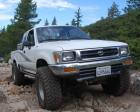

OME kit is one of the few under 4" as you've seen. On my 93 I only used the leafs and shocks mainly to fix my saggy leafs, skipped new tbars and shackles. Ride height is 22.5" center axle to fender lip to give you an idea of what the height would be.
Oct 29, 2017 | 01:42 PM
#3

Registered User
Joined: Feb 2017
Posts: 89
Likes: 4
Same here, been looking for a few months and not coming up with much. All I really want to do is fit 31’s comfortably and have a little wheel well left. Not a fan of stuffing it completely full of tire-looks odd to me.
I think a true 4” lift with 31’s is a little much in my age (ha ha) as I used to have a 86 Chevy with that setup and it was a little jump to get into each time.
2.5 or 3” max is what I’d like to find AND retain a nice ride
I think a true 4” lift with 31’s is a little much in my age (ha ha) as I used to have a 86 Chevy with that setup and it was a little jump to get into each time.
2.5 or 3” max is what I’d like to find AND retain a nice ride
Oct 29, 2017 | 08:40 PM
#4

Registered User


Joined: Mar 2012
Posts: 7,125
Likes: 681
BPearson, pls specify what model-year-engine-transmission-trim we're talking about. Saves everybody time.
If first-gen 4Runner, 31's will fit stock lift.
OME gives 2-inches. I suggest you search for two people who used OME's on first-gen 4Runners that had taken them to places we could only dream of: member "defrag" aka home on the highway online, and "ruined adventures". Their experience would tell a lot.
My thoughts on OME:
I wish it produces less lift than 2 inches. 2-inch lift in rear is OK. However, to match it up front, one would either have to use, among others:
1) Ball-Joint spacers- requires cutting away material from upper control arm = unpredictable strength / results.
2) Use OME's own torsion bar that gives 2-inch lift. This may put ball-joint position to its specified flex limit - unpredictable results
3) Use the popular Blazeland long-travel kit. Need to research that. Supposedly engineered to address above (1 & 2) Could be pricey.
Please keep us posted.
Cheers!
If first-gen 4Runner, 31's will fit stock lift.
OME gives 2-inches. I suggest you search for two people who used OME's on first-gen 4Runners that had taken them to places we could only dream of: member "defrag" aka home on the highway online, and "ruined adventures". Their experience would tell a lot.
My thoughts on OME:
I wish it produces less lift than 2 inches. 2-inch lift in rear is OK. However, to match it up front, one would either have to use, among others:
1) Ball-Joint spacers- requires cutting away material from upper control arm = unpredictable strength / results.
2) Use OME's own torsion bar that gives 2-inch lift. This may put ball-joint position to its specified flex limit - unpredictable results
3) Use the popular Blazeland long-travel kit. Need to research that. Supposedly engineered to address above (1 & 2) Could be pricey.
Please keep us posted.
Cheers!
Oct 29, 2017 | 09:43 PM
#5
Thread Starter
Registered User
Joined: Sep 2016
Posts: 32
Likes: 1
1987 Toyota Xtra Cab SR5 22RE 5-speed manual transmission. I'm wanting to run 31x10.5 15 tires. I want to build the suspension to have the absolute best ride quality possible for these old trucks. I hunt and fish a lot. Not much on rock crawling or major off-roading. I'm restoring the truck to basically look stock for the most part only improving on everything possible along the way.
Oct 30, 2017 | 03:12 AM
#6

Registered User
Joined: Oct 2016
Posts: 13
Likes: 2
From: Fairbanks
I bought mine with a 2" lift from ball joint spacers in the front and add-a-leaves in the rear, riding on 265/75R15's (basically 31's). I removed the extra leaves and ball joint spacers due to the fact that they can negatively affect longevity of other components, especially ball joints and CV axles, and potentially brake lines at full droop. I kept the tires and have no clearance issues whatsoever. I honestly don't think you're going to get it to ride better than the stock setup, and with 31" tires, you keep the same axle to ground clearance. It sounds like we're looking for approximately the same thing, and I find that it works great for me.
Oct 30, 2017 | 06:01 AM
#7
Registered User
Joined: Feb 2017
Posts: 89
Likes: 4
I bought mine with a 2" lift from ball joint spacers in the front and add-a-leaves in the rear, riding on 265/75R15's (basically 31's). I removed the extra leaves and ball joint spacers due to the fact that they can negatively affect longevity of other components, especially ball joints and CV axles, and potentially brake lines at full droop. I kept the tires and have no clearance issues whatsoever. I honestly don't think you're going to get it to ride better than the stock setup, and with 31" tires, you keep the same axle to ground clearance. It sounds like we're looking for approximately the same thing, and I find that it works great for me.
Trending Topics
Oct 30, 2017 | 07:07 AM
#8
 Oct 31, 2017 | 05:41 AM
#9
Registered User
Joined: Nov 2014
Posts: 123
Likes: 1
Here is the thing with the OME....They give you new torsion bars but, so what? You still add preload to "crank" the bars to the height you want, eating up available travel in one direction.
Based on your needs do this:
1. Remove your sway bar, dial in about half an inch of lift on factory torsion bars and get it aligned (this preload will more than make up for the swaybar's absence). This is not a significant enough change to shorten ball joint life, and it will not impact ride quality much at all (think about 2" with OME in comparison).
2. Space down your factory shocks by using a half inch thick nut as a spacer and the available remaining thread on the end of the rod. This ensures the shocks do not stop the control arm from drooping, a common reason lower ball joints fail early.
3. Add a long soft leaf to the rear for about 1.5" of lift, rancho has them. This will compliment the half an inch lift in the front nicely, and ride stays soft.
4. Buy a $20 differential drop kit and install it and then install low profile droop stops for the upper control arms. This will help with the cv angle. You can run the extra travel with the low profile stops because you lowered the diff.
Boom, a cheap and effective "lift" that will not destroy your CVs, is reliable, adds travel and cost next to nothing. Remove your front valance to improve approach angles. All cheap and reliable.
Now, take that extra money and have a rear locker installed. Your 4Runner will be more capable (and MUCH stronger) like this than with a bracket lift kit. It will also ride smooth, instead of knocking your teeth out like the OME bars cranked to 2".
Based on your needs do this:
1. Remove your sway bar, dial in about half an inch of lift on factory torsion bars and get it aligned (this preload will more than make up for the swaybar's absence). This is not a significant enough change to shorten ball joint life, and it will not impact ride quality much at all (think about 2" with OME in comparison).
2. Space down your factory shocks by using a half inch thick nut as a spacer and the available remaining thread on the end of the rod. This ensures the shocks do not stop the control arm from drooping, a common reason lower ball joints fail early.
3. Add a long soft leaf to the rear for about 1.5" of lift, rancho has them. This will compliment the half an inch lift in the front nicely, and ride stays soft.
4. Buy a $20 differential drop kit and install it and then install low profile droop stops for the upper control arms. This will help with the cv angle. You can run the extra travel with the low profile stops because you lowered the diff.
Boom, a cheap and effective "lift" that will not destroy your CVs, is reliable, adds travel and cost next to nothing. Remove your front valance to improve approach angles. All cheap and reliable.
Now, take that extra money and have a rear locker installed. Your 4Runner will be more capable (and MUCH stronger) like this than with a bracket lift kit. It will also ride smooth, instead of knocking your teeth out like the OME bars cranked to 2".
Last edited by 89fourrunner; Oct 31, 2017 at 09:05 AM.
Nov 20, 2017 | 04:56 AM
#10
Thread Starter
Registered User
Joined: Sep 2016
Posts: 32
Likes: 1


