


How do I get to the fuel pump?
 Sep 19, 2013 | 02:15 PM
#1

Thread Starter
Registered User
Joined: Sep 2013
Posts: 21
Likes: 0
From: Madison, MS
How do I get to the fuel pump?
Ok, for starters, yes, I'm new, but I did search...and search...and search these forums and could not find the answer to my question. I just dropped a few bucks on a '79 2WD SB (my first carb'ed auto) and I want to change the fuel pump. It's a 20R with the electric fuel pump in the tank. My question is, what's the easiest way to get to it, drop the tank or take the bed off? I'm working with limited resources (tools, space, time) so what ever is quickest would be best, or maybe the most discreet. And while I'm at it, the bolts that hold the bed on, are they studs that are permanently attached to the bed or are they bolts that will need a wrench on top and bottom? There's enough gunk at the top end of those bolts that it's hard to tell.
Also, on my drive "home" I experienced the get-up-to-45-mph-and-wanna-stall-out thing...a couple of times, and it did die right around the corner from my destination. I changed the fuel filter already and that helped and hopefully changing the pump will help too but someone I worked with suggested that since the truck is coming from Oregon that maybe the carb is jetted for higher altitude and here closer to sea level it might be causing it to run a little lean. Is this a possibility? If so, how do I check it and if I'm lean how do I fix it?
Thanks
Also, on my drive "home" I experienced the get-up-to-45-mph-and-wanna-stall-out thing...a couple of times, and it did die right around the corner from my destination. I changed the fuel filter already and that helped and hopefully changing the pump will help too but someone I worked with suggested that since the truck is coming from Oregon that maybe the carb is jetted for higher altitude and here closer to sea level it might be causing it to run a little lean. Is this a possibility? If so, how do I check it and if I'm lean how do I fix it?
Thanks
 Sep 19, 2013 | 03:25 PM
#3

Registered User
Joined: Dec 2010
Posts: 88
Likes: 0
From: Oregon
Depends on where it came from in Oregon. Oregon has all sorts of elevations including sea level. But it never hurts to just check the jets it's not hard. Plus I would just go through it and tune and check everything. Fuel
Filter, air filter, jets, spark plugs and wires, coolant, brake fluid, clutch fluid, all the lines and connections. Battery, cables starter, alternator. Just check them all off a list. Change oil and filter if you haven't yet. First thing info with any new motor to me.
Filter, air filter, jets, spark plugs and wires, coolant, brake fluid, clutch fluid, all the lines and connections. Battery, cables starter, alternator. Just check them all off a list. Change oil and filter if you haven't yet. First thing info with any new motor to me.
Sep 20, 2013 | 02:07 AM
#4
Thread Starter
Registered User
Joined: Sep 2013
Posts: 21
Likes: 0
From: Madison, MS
I guess I should've checked the city first. Title says it came from Corvallis, OR with an elevation of 235ft so that should be a problem. The PO sold the truck bc of the trouble trying to get it to pass smog test. I think they might have made some of the cheaper attempts but gave up. I was planning on changing a lot of that stuff but it looks like the plugs, wires and distributor cap are all new and in the cab I found a box with an old rotor in it so I'm guessing that was changed too. Air filter looks ok, coolant is so clear it almost glows in the dark, in the radiator and in the reservoir. I plan to change the battery/starter cables simple bc they look like they've lived a hard life. I checked the battery (12.5v) and alternator (13.7v at idle) with a multimeter. I though the alt should be putting out over 14v but I was told by a coworker that 13.7 is ok but charge light stays on so...
As far as dropping the tank, if the fuel gauge is right it's a full tank which mean what, 80-90lb of fuel? I'll see what I can figure out. Thanks for the responses.
As far as dropping the tank, if the fuel gauge is right it's a full tank which mean what, 80-90lb of fuel? I'll see what I can figure out. Thanks for the responses.
Sep 20, 2013 | 04:03 AM
#5
I lift the bed as the hoses dont give you alot of room for dropping the tank in my opinion. The bed bolts have a tab on top to keep them from spinning so no top wrench required. The bed bolts can be rusty so start soaking them in PB Blaster a few days ahead of time and even still then I have had them to break.
I have loosened the drivers side bolts and removed the passenger side bolts and just tilted the bed. Just make sure it is supported stable if doing it that way.
I have loosened the drivers side bolts and removed the passenger side bolts and just tilted the bed. Just make sure it is supported stable if doing it that way.
Last edited by Terrys87; Sep 20, 2013 at 04:05 AM.
Sep 20, 2013 | 06:56 AM
#6
Thread Starter
Registered User
Joined: Sep 2013
Posts: 21
Likes: 0
From: Madison, MS
Thanks, Terrys87, I looked at it early this morning and came to the conclusion that dropping the tank would be very hard for me to do by myself. What I thought was the fuel pump apparently isn't, I was looking at the wires going to the back side of the tank (is that the sending unit for the gauge?) that I can reach from the wheel well. I figured that I could just loosen the front bolts and remove the back ones and give myself enough room to work the pump out but I saw this morning that it's actually up front so that makes it a lot harder to do it that way and I don't think I can handle a full tank of gas all by myself so, the bed's got to be easier. Got the PB blaster started already, gonna go put some more on there a little later. I was thinking about the tilting the bed thing but I was thinking remove front mounts and loosen rear ones and tilt it that way, didn't think about to the side, that sounds quite a bit easier, thanks for the tip. Do you know off hand what size the nuts are?
Sep 20, 2013 | 07:15 AM
#7
You will need a 17mm deep well socket. I would suggest a 1/2 drive, and a foot long extention. I see you have an electric fuel pump. If by chance you just have the mechanical pump, here is some more info that might help. I will be leaving but will check back in a couple of hours.>>> https://www.yotatech.com/forums/f197...l#post51818622 The tanks can get bad on these. I know you are away from home but something to make you aware of. Usually the bolts/screws are 8mm or amybe 6mm that hold the pickup assembly.
Trending Topics
Sep 20, 2013 | 10:23 AM
#8
Thread Starter
Registered User
Joined: Sep 2013
Posts: 21
Likes: 0
From: Madison, MS
Yeah, definitely electric, the engine has the blanking plate on where the mechanical pump would be. Thanks for the link, I'll take as good a look as I can inside the tank when I get to it and hopefully it won't be too bad, if so I won't be able to do anything about it except continue to change the filter.
Sep 20, 2013 | 10:29 AM
#9
Registered User
Joined: Dec 2010
Posts: 88
Likes: 0
From: Oregon
I dropped the fuel tank in my truck last week. It was not too bad. The bolts are easy to get to and the only spot that was a pain was getting the breather and filler hoses reconnected but nothing that a little wiggling and patience can't get it done. I did it in my drive way without lifting the truck. The truck has a 3 1/2 lift so it made it a little easier to crawl under to get the bolts. A couple of the bolts broke so I had to get new ones. If you got a few buckets around the tank drains easy into it I had 5 gallons in mine that I drained.
 Sep 20, 2013 | 03:28 PM
#11
Thread Starter
Registered User
Joined: Sep 2013
Posts: 21
Likes: 0
From: Madison, MS
Went for a little drive today and all was good until I hit about 40-45mph, then it started the sputtering and stalling thing so it looks like the fuel filter alone didn't do much, hopefully the pump will when I get a chance to change it. And it looks like the bed will be easier to take off than I expected. Went out this afternoon to see how well the PB Blaster was working and 2 of the nuts came off so easily after breaking them free that I wonder when's the last time it was taken off. I was able to take one of them completely off by hand after breaking it loose. The only catch is that I do need a wrench at the top and bottom. The way this one is set up is a true bolt through the hole instead of a welded on stud and on the bottom side there are two nuts on each bolt, the whole "jam nut" thing. That shouldn't be much of a problem either though.
Sep 20, 2013 | 04:30 PM
#14
Thread Starter
Registered User
Joined: Sep 2013
Posts: 21
Likes: 0
From: Madison, MS
Not sure Terry but it looks like all 4 corners will require me to use a wrench on top to keep the bolt from spinning with the nut. Not a problem though, the wrench I was using easily fit up there to hold the bolt.
As for the fuel pressure gauge, I guess that'd be easier than changing the pump, huh? But according to the papers that came with the new pump this is a 5-8 psi pump, are there pressure gauges that read that low of a pressure? But either way there's still something allowing the fuel to drain back in to the tank and I'm assuming that is the cause of my starting problem.
As for the fuel pressure gauge, I guess that'd be easier than changing the pump, huh? But according to the papers that came with the new pump this is a 5-8 psi pump, are there pressure gauges that read that low of a pressure? But either way there's still something allowing the fuel to drain back in to the tank and I'm assuming that is the cause of my starting problem.
Sep 21, 2013 | 10:50 AM
#15
Registered User
Joined: Dec 2010
Posts: 88
Likes: 0
From: Oregon
I would suspect the carb is giving you all your problems. The choke might needed adjusted for the starting issue, also try pressing the pedal down 6 times or so before cranking the key to get some fuel in the ventrulis. I would also suspect the jetting is off for you altitude fixing you the stalling problem at 45mph. I would personally do a rebuild on the carb or at least a tear down to inspect. Then rejet it for your altitude.
Sep 22, 2013 | 05:20 AM
#16
Thread Starter
Registered User
Joined: Sep 2013
Posts: 21
Likes: 0
From: Madison, MS
I would suspect the carb is giving you all your problems. The choke might needed adjusted for the starting issue, also try pressing the pedal down 6 times or so before cranking the key to get some fuel in the ventrulis. I would also suspect the jetting is off for you altitude fixing you the stalling problem at 45mph. I would personally do a rebuild on the carb or at least a tear down to inspect. Then rejet it for your altitude.
Sep 22, 2013 | 08:04 AM
#17
Thread Starter
Registered User
Joined: Sep 2013
Posts: 21
Likes: 0
From: Madison, MS
Warning: Stupid question ahead!
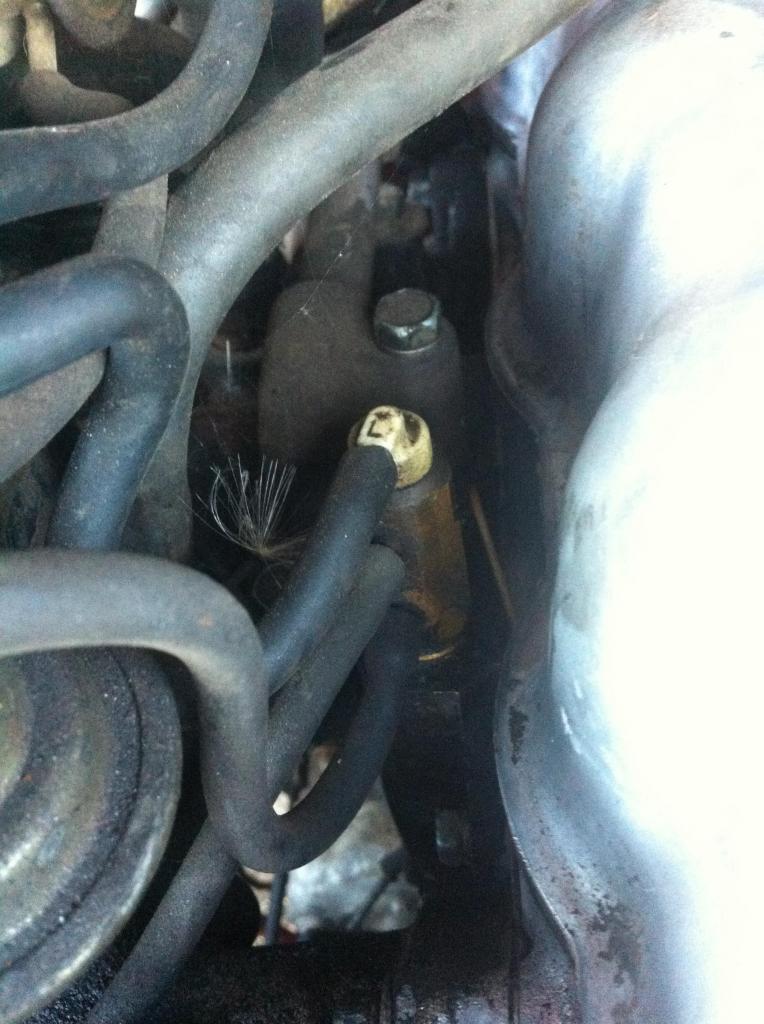
So, how much trouble could a disconnected vacuum hose cause? Or, to be more exact, could a loose vacuum hose cause the problem(s) I'm having? I went to see what I was working with and what I found was...holy crap there's a lot of vacuum hoses hooked up to this thing...and one of them isn't connected to anything.

But I found where it went pretty quick, on that piece right underneath it, this thing. What is this and what does it do?
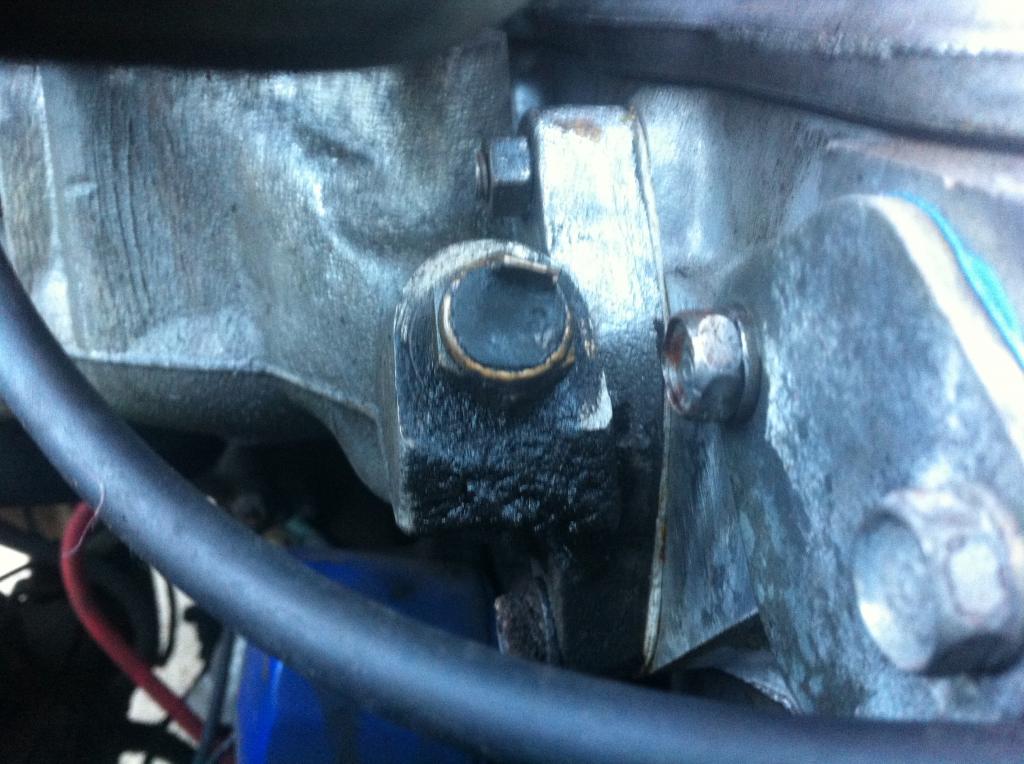
I also found this, it's a bad picture but it looks like a sending unit or something like that. It's mounted on the intake manifold and there's no wires anywhere near it, any idea what it's for?
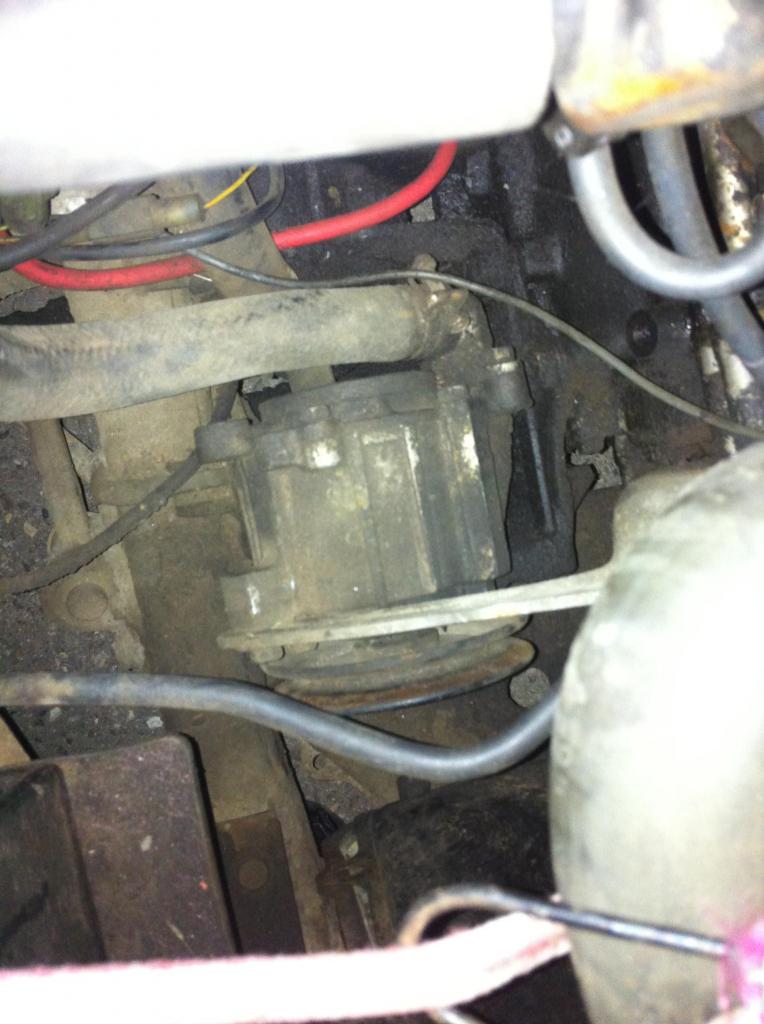
And then there's this, there's no belt connected to it so it's not doing anything anyway, just curious. At first I thought AC compressor but then saw that those big hoses on it go into the air filter housing. Smog pump?
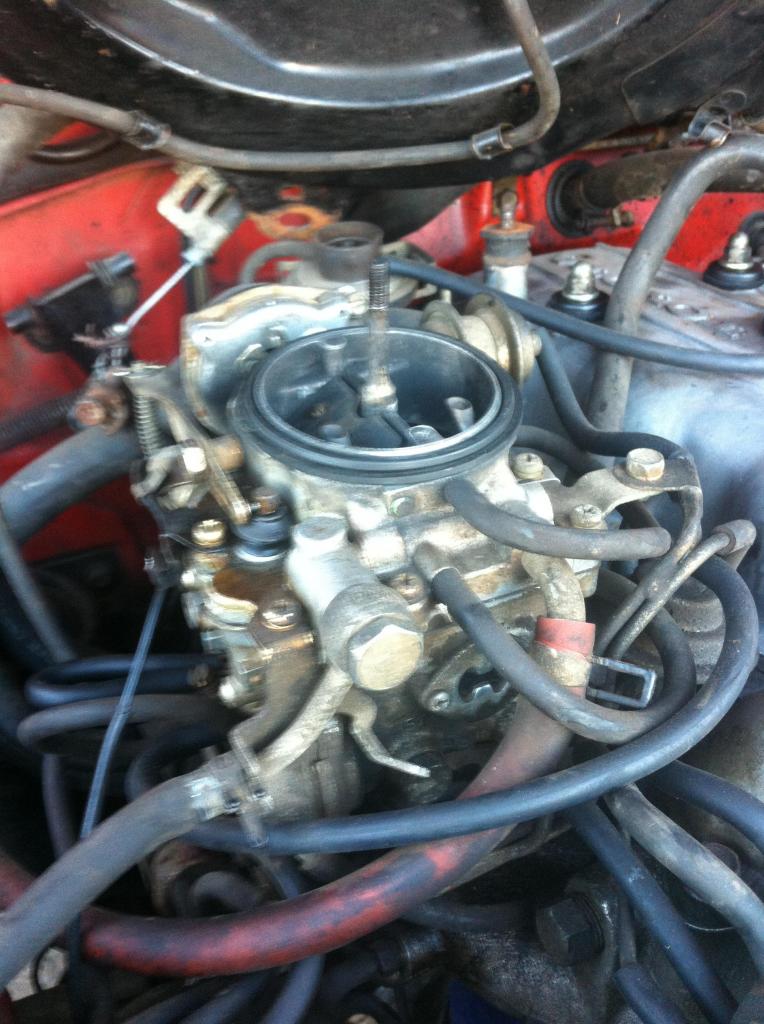
As far as the carb itself, is this the stock one? It has Aisan stamped on it.
But I found where it went pretty quick, on that piece right underneath it, this thing. What is this and what does it do?
I also found this, it's a bad picture but it looks like a sending unit or something like that. It's mounted on the intake manifold and there's no wires anywhere near it, any idea what it's for?
And then there's this, there's no belt connected to it so it's not doing anything anyway, just curious. At first I thought AC compressor but then saw that those big hoses on it go into the air filter housing. Smog pump?
As far as the carb itself, is this the stock one? It has Aisan stamped on it.
Sep 22, 2013 | 11:14 AM
#18
Registered User
Joined: May 2008
Posts: 4,591
Likes: 126
From: Montana
Yes a loose vacuum hose could cause your problems.
That pulley is your smog pump. Having it disconnected shouldn't effect much. It pumps air into the mixture to help burn up any unburnt fuel. Mine is disconnected in my truck, and the only thing that happened is it stopped backfiring
Most of your questions are asking about the emissions system. Most of us know pretty much nothing about how all that stuff works. If you really want to figure it out...that would be great! Then teach us all. Most responses you'll get around here about all those vacuum hoses is: disconnect and plug them all, ie "desmog".
That pulley is your smog pump. Having it disconnected shouldn't effect much. It pumps air into the mixture to help burn up any unburnt fuel. Mine is disconnected in my truck, and the only thing that happened is it stopped backfiring
Most of your questions are asking about the emissions system. Most of us know pretty much nothing about how all that stuff works. If you really want to figure it out...that would be great! Then teach us all. Most responses you'll get around here about all those vacuum hoses is: disconnect and plug them all, ie "desmog".
 Jan 31, 2014 | 11:27 AM
#20

Registered User
Joined: Jan 2014
Posts: 14
Likes: 1
when i had my bed off to paint 79 truck ,i cut out bed and made a rubber gasket and then screwed it back down with 4 sheetmetal screws .theres two bed cross members below that work perfect for a flange .best thing i did to get at fuel pump


