


Problems with a 22RE after a head gasket install.
 Dec 6, 2007 | 05:35 AM
#1
Thread Starter
Contributing Member
Joined: Jan 2004
Posts: 897
Likes: 0
From: Maryville, TN 37803
Problems with a 22RE after a head gasket install.
I posted this yesterday in the 84-85 4 runner section with no response.
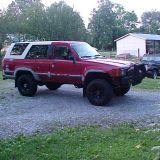
Last month I blew a head gasket on my 1985 4 runner with the 22RE engine.
When I pulled the head, I found it to be cracked in a couple of places. The local machine shop assured me that the head could be welded and machined backed down. They installed new guides, seats and valve stem seals.
I replaced the head gasket, timing chain set and installed a new oil pump.
My engine is now smoking quite a bit at idle speeds. The smoke is white and smells like oil. Yesterday I performed a compression test and all cylinders are 165 - 170 lbs. I got 120 on the first stroke and was to the 165 by the 3rd stroke. My engine did not smoke or use oil before this.
I hope to locate a cylinder leak down tester today and attempt to pinpoint where the problem is. My lower block has 128,000 miles on it.
I do not have any driveability problems, and it is not down on power. It mostly smokes at idle - which means at evey red light and stop sign.
I am suspecting that the head still has problems ! I don't think that I'd get 165 - 170 lbs of compression with bad rings.
Any helpful thoughts ?
Last month I blew a head gasket on my 1985 4 runner with the 22RE engine.
When I pulled the head, I found it to be cracked in a couple of places. The local machine shop assured me that the head could be welded and machined backed down. They installed new guides, seats and valve stem seals.
I replaced the head gasket, timing chain set and installed a new oil pump.
My engine is now smoking quite a bit at idle speeds. The smoke is white and smells like oil. Yesterday I performed a compression test and all cylinders are 165 - 170 lbs. I got 120 on the first stroke and was to the 165 by the 3rd stroke. My engine did not smoke or use oil before this.
I hope to locate a cylinder leak down tester today and attempt to pinpoint where the problem is. My lower block has 128,000 miles on it.
I do not have any driveability problems, and it is not down on power. It mostly smokes at idle - which means at evey red light and stop sign.
I am suspecting that the head still has problems ! I don't think that I'd get 165 - 170 lbs of compression with bad rings.
Any helpful thoughts ?
Dec 6, 2007 | 06:23 PM
#2

Registered User
Joined: Oct 2005
Posts: 108
Likes: 0
I'd be just about willing to bet you have a crack or two on the top of a valve seal that is holding compression but allowing oil in when the valve opens. Remember, the top of the head is covered in oil when its running. Of course there is always the possibility of a cracked block. It's a slim chance, but it could happen. The gap only opens up when it's hot. Try the compression check with the engine hot. Good luck.
Dec 7, 2007 | 05:51 AM
#3
Thread Starter
Contributing Member
Joined: Jan 2004
Posts: 897
Likes: 0
From: Maryville, TN 37803
I'd be just about willing to bet you have a crack or two on the top of a valve seal that is holding compression but allowing oil in when the valve opens. Remember, the top of the head is covered in oil when its running. Of course there is always the possibility of a cracked block. It's a slim chance, but it could happen. The gap only opens up when it's hot. Try the compression check with the engine hot. Good luck.
I wish now that I had just purchased a new head ! I do not suspect the block - it looked great and the cylinder walls all were smooth with a little cross hatch still showing. I did do the compression test with the engine warm but it was not hot. I don't have a leak down tester and the local auto parts stores don't carry them. I may look up the parts list today and just build me one !
The good news is that it's running and I can drive it - the runner is not my daily driver but I DO drive it as much as I can - my wife say's it's so me.
For the record - my engine was never allowed to over-heat when the head gasket blew - I kept an eye on the gauge and added water when the needle started to creep up. I am the only one that drives my rig.
I'll follow up with this as soon as I figure out what's going on.
 Dec 16, 2007 | 07:10 PM
#5
Registered User
Joined: Dec 2007
Posts: 9
Likes: 0
When the thermostat opens, all that cold water goes in at once and can crack the head. You should refill it cold or add it slowly with the engine running so it has a chance to circulate and mix with the existing water. Of course, you should wait for the pressure to reduce before removing the cap.
Last edited by 85BigBlue; Dec 16, 2007 at 07:27 PM.

Thread
Thread Starter
Forum
Replies
Last Post
steve miller
General Electrical & Lighting Related Topics
2
Oct 10, 2015 01:40 AM
Jnkml
95.5-2004 Tacomas & 96-2002 4Runners
3
Jul 6, 2015 01:20 PM


