


87 22r Pickup stalling
 Jan 6, 2020 | 04:11 PM
#1

Thread Starter
Registered User
Joined: Jan 2020
Posts: 6
Likes: 0
 87 22r Pickup stalling
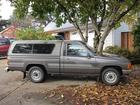
Hello, I own a 1987 toyota pickup. 22r rwd. Today heading home about to make my way to the gas station and with the clutch in at a dead stop the charge light, brake light, and one other light came on real quick before stalling. Afterwards it started right u . However I had to stay on the gas for it not to stall. Figured maybe I was too low on gas.
Filled up and started driving down the street to my house and it felt like it wanted to stall unless I had my foot on the gas peda . Once I pulled in I let idle for a second, i smelled gas and heard the engine kind of knocking. Opened the hood and saw the engine rocking and seeming to struggle at idle. Any ideas as to what this may be?
87 toyota pickup
120k original miles
Since ownership have replaced battery and fuel filter.
current issues: truck battery tends to drain after sitting for a couple days in the cold without being drive . Starts right up when jumped
Filled up and started driving down the street to my house and it felt like it wanted to stall unless I had my foot on the gas peda . Once I pulled in I let idle for a second, i smelled gas and heard the engine kind of knocking. Opened the hood and saw the engine rocking and seeming to struggle at idle. Any ideas as to what this may be?
87 toyota pickup
120k original miles
Since ownership have replaced battery and fuel filter.
current issues: truck battery tends to drain after sitting for a couple days in the cold without being drive . Starts right up when jumped
Jan 6, 2020 | 04:33 PM
#2

Hello, I own a 1987 toyota pickup. 22r rwd. Today heading home about to make my way to the gas station and with the clutch in at a dead stop the charge light, brake light, and one other light came on real quick before stalling. Afterwards it started right u . However I had to stay on the gas for it not to stall. Figured maybe I was too low on gas.
Filled up and started driving down the street to my house and it felt like it wanted to stall unless I had my foot on the gas peda . Once I pulled in I let idle for a second, i smelled gas and heard the engine kind of knocking. Opened the hood and saw the engine rocking and seeming to struggle at idle. Any ideas as to what this may be?
87 toyota pickup
120k original miles
Since ownership have replaced battery and fuel filter.
current issues: truck battery tends to drain after sitting for a couple days in the cold without being drive . Starts right up when jumped
Filled up and started driving down the street to my house and it felt like it wanted to stall unless I had my foot on the gas peda . Once I pulled in I let idle for a second, i smelled gas and heard the engine kind of knocking. Opened the hood and saw the engine rocking and seeming to struggle at idle. Any ideas as to what this may be?
87 toyota pickup
120k original miles
Since ownership have replaced battery and fuel filter.
current issues: truck battery tends to drain after sitting for a couple days in the cold without being drive . Starts right up when jumped
You should also inspect the dash pot, which keeps the throttle from slamming shut during coast down and between shifting gears. A faulty dash pot can cause the engine to flood with fuel, flooding is to much fuel and not enough oxygen to burn it which can also cause the spark plugs to become wet and result in no ignition sparks.
If the engine isn't firing on all cylinders it will shake and buck and be hard to keep running without some throttle input to keep the rpms up.
A popular way to identify a misfire is to pull each spark plugs wire, if you pull one that is connecting to a cylinder that is firing the bucking will increase where if you pull one that isn't firing you won't see an RPM change. Keep in mind this is hard on the ignition system and there are serious risks of shocking your self. A work around that won't stress the ignition coil and ignitor is to string to high tension (sparkplug wires) together with a 1/4 inch rod or bolt, this gives you a junction in the middle of the wire you can touch to ground and divert the spark but there is still a shock risk..
Jan 6, 2020 | 04:43 PM
#3
Thread Starter
Registered User
Joined: Jan 2020
Posts: 6
Likes: 0
Those lights come in when the engine stalls, but you should inspect the charging circuit to be safe.
You should also inspect the dash pot, which keeps the throttle from slamming shut during coast down and between shifting gears. A faulty dash pot can cause the engine to flood with fuel, flooding is to much fuel and not enough oxygen to burn it which can also cause the spark plugs to become wet and result in no ignition sparks.
If the engine isn't firing on all cylinders it will shake and buck and be hard to keep running without some throttle input to keep the rpms up.
A popular way to identify a misfire is to pull each spark plugs wire, if you pull one that is connecting to a cylinder that is firing the bucking will increase where if you pull one that isn't firing you won't see an RPM change. Keep in mind this is hard on the ignition system and there are serious risks of shocking your self. A work around that won't stress the ignition coil and ignitor is to string to high tension (sparkplug wires) together with a 1/4 inch rod or bolt, this gives you a junction in the middle of the wire you can touch to ground and divert the spark but there is still a shock risk..
You should also inspect the dash pot, which keeps the throttle from slamming shut during coast down and between shifting gears. A faulty dash pot can cause the engine to flood with fuel, flooding is to much fuel and not enough oxygen to burn it which can also cause the spark plugs to become wet and result in no ignition sparks.
If the engine isn't firing on all cylinders it will shake and buck and be hard to keep running without some throttle input to keep the rpms up.
A popular way to identify a misfire is to pull each spark plugs wire, if you pull one that is connecting to a cylinder that is firing the bucking will increase where if you pull one that isn't firing you won't see an RPM change. Keep in mind this is hard on the ignition system and there are serious risks of shocking your self. A work around that won't stress the ignition coil and ignitor is to string to high tension (sparkplug wires) together with a 1/4 inch rod or bolt, this gives you a junction in the middle of the wire you can touch to ground and divert the spark but there is still a shock risk..
Update****
Started truck up after sitting for a bit, did the same thing, stalled unless I had my foot on the gas However no smell of gas Once it stalled I started it right back up and it is now idling fine, no gas smell, no shaking of engine, and currently has been idling for 10 min no issues. However still afraid this may happen again.
In regards to charging issues I've had the alternator tested (passed with flying colors) cleaned up all grounds and checked wiring. All was good there
Jan 6, 2020 | 05:22 PM
#4
Testing your alternator on a big box retail franchise testing machine is not the same as inspection of your charging system. There are lots of important things from the wires, the individual connections, right down to your belt that drives the alternator.
Your stalling engine and battery going dead may or not be related issues and the only way to be certain one way or the other is by testing.
So where to start testing? You have two choices. Track down the misfiring cylinder, which might not be a specific cylinder. Or sart with the draining battery as it could point to a failing component which affects the misfire such as the electrical components of the carburetor or the emissions computer.
Do the cylinder balance test, if it's a consistent misfire of a single cylinder you can proceed to finding out why. Is it a bad sparkplug, maybe a valve or other issue.
OR
So make sure everything is turned off and get a baseline amp draw from the battery, then you will move thru the subsystems by pulling fuses and disconnecting components to find the source of the drain. Maybe it's something simple and not critical like a stereo.
Your stalling engine and battery going dead may or not be related issues and the only way to be certain one way or the other is by testing.
So where to start testing? You have two choices. Track down the misfiring cylinder, which might not be a specific cylinder. Or sart with the draining battery as it could point to a failing component which affects the misfire such as the electrical components of the carburetor or the emissions computer.
Do the cylinder balance test, if it's a consistent misfire of a single cylinder you can proceed to finding out why. Is it a bad sparkplug, maybe a valve or other issue.
OR
So make sure everything is turned off and get a baseline amp draw from the battery, then you will move thru the subsystems by pulling fuses and disconnecting components to find the source of the drain. Maybe it's something simple and not critical like a stereo.
Jan 6, 2020 | 05:24 PM
#5
PS I don't do carb tuning.. It's akin to trying to figure out why your woman is glaring at you and tapping her foot, too many fiddly plumbing parts. If it's the carb you're on your own.


Trending Topics
Sep 25, 2021 | 10:28 AM
#8
Thread Starter
Registered User
Joined: Jan 2020
Posts: 6
Likes: 0
87 toyota 22r overheating and stalling
Hello, I was driving home after getting new tires on and I noticed my truck was running hot. Increased quite rapidly. I've never had over heating issues. While driving the car shut off, I let it sit and cool off. It had a hard time starting and once started it would stall if my foot wasn't on the gas. I was able to get it home but it was hot and stalled around every corner. Any ideas?
130k miles.
130k miles.
Sep 25, 2021 | 01:56 PM
#9

Registered User


Joined: Jul 2005
Posts: 2,345
Likes: 657
From: Chiloquin, OR
Beware.
An overheat like that can warp, or crack, your head. Happened to me.
Well, a friend that had borrowed my truck. He threw the water pump belt, and instead of stopping and replacing it with the spare, and tools, I had in the truck, he drove it till it overheated, stopped till it cooled down, drove it till it overheated, stopped to let it cool down, etc, until he got it back to my house. Some friend, huh? I never lent it out again, after I replaced the head, twice, got a cracked one from the mfr.
I would pull your head off and take it to a REPUTABLE machine shop to get it checked for warpage and cracking. While it's off, you'll need to "deck" the block. Check it's upper surface for warping. The FSM has an excellent how-to on this.
You'll need to replace your head gasket, and head bolts, along with the gaskets for the intake, throttle body, and exhaust. The EGR system, as well. There are numerous kits available that have ALL the gaskets you'll need for this evolution. Plus some.
Make sure NOT to use metal tools to remove the old gasketing materiel. Especially on the mating surface of the block/head.
Check the cylinder walls for still having a good pattern on them. If not, you may need to hone them a bit. It also gives you a good chance to remove the carbon that can build up on the upper surface of the pistons.
While you have the TB off, check the small water hoses under it. They may be getting pretty bad after all these years. I would replace them all while you can. With OEM ones!
Once you start assembly, make sure the Throttle Position Sensor is properly aligned, and that the IACV is functioning correctly.
Finally, while the head is off, check the timing chain, it's guide, and it's tensioner. They tend to go bad after so many years of operation, especially the guide and tensioner.
There are timing chain kits available.
I already answered in another thread in the 84-85 forum as to what may have caused the overheat. You might want to glance over it.
You have a job of work ahead of you, trust me. Whenever possible, use OEM parts. After all, look how long the old ones lasted!
Good luck!
Pat☺
An overheat like that can warp, or crack, your head. Happened to me.
Well, a friend that had borrowed my truck. He threw the water pump belt, and instead of stopping and replacing it with the spare, and tools, I had in the truck, he drove it till it overheated, stopped till it cooled down, drove it till it overheated, stopped to let it cool down, etc, until he got it back to my house. Some friend, huh? I never lent it out again, after I replaced the head, twice, got a cracked one from the mfr.
I would pull your head off and take it to a REPUTABLE machine shop to get it checked for warpage and cracking. While it's off, you'll need to "deck" the block. Check it's upper surface for warping. The FSM has an excellent how-to on this.
You'll need to replace your head gasket, and head bolts, along with the gaskets for the intake, throttle body, and exhaust. The EGR system, as well. There are numerous kits available that have ALL the gaskets you'll need for this evolution. Plus some.
Make sure NOT to use metal tools to remove the old gasketing materiel. Especially on the mating surface of the block/head.
Check the cylinder walls for still having a good pattern on them. If not, you may need to hone them a bit. It also gives you a good chance to remove the carbon that can build up on the upper surface of the pistons.
While you have the TB off, check the small water hoses under it. They may be getting pretty bad after all these years. I would replace them all while you can. With OEM ones!
Once you start assembly, make sure the Throttle Position Sensor is properly aligned, and that the IACV is functioning correctly.
Finally, while the head is off, check the timing chain, it's guide, and it's tensioner. They tend to go bad after so many years of operation, especially the guide and tensioner.
There are timing chain kits available.
I already answered in another thread in the 84-85 forum as to what may have caused the overheat. You might want to glance over it.
You have a job of work ahead of you, trust me. Whenever possible, use OEM parts. After all, look how long the old ones lasted!
Good luck!
Pat☺

Thread
Thread Starter
Forum
Replies
Last Post
Diggity
General Electrical & Lighting Related Topics
7
Jan 18, 2008 07:10 PM


