


How do balljoint spacers work (and do they work on 4wd)?
 Aug 9, 2004 | 08:04 PM
#1

Thread Starter
Contributing Member
Joined: Dec 2003
Posts: 767
Likes: 0
From: Way down in the hole...
How do balljoint spacers work (and do they work on 4wd)?
In my continuing quest to get a grip on all the possibilities for lifting my tacoma (and still hoping to find the magic combination of being cheap[er] and yet not adversely affecting the ride and/or travel of the truck-heck maybe even improving it) I ask, what are ball joint spacers? How do they work? Do they work on 4wd trucks? Do they work well? And lastly, whats the best place to get 'em?
Google hasn't been much help.
Thanks in advance.
Ian
Google hasn't been much help.
Thanks in advance.
Ian

 Aug 10, 2004 | 03:57 AM
#4

Contributing Member
Joined: Nov 2002
Posts: 10,666
Likes: 5
From: Oklahoma State
Originally Posted by 914runner
I don't think anyone makes BJ spacers for tacos or 3rd gen. runners because of how the upper BJ mounts to the upper control arm.
They space the lower control arm down farther and allow the torsion bars adjustment to be softed up, giving a softer ride and more flex while at the same time giving lift too. The best of all worlds. So they work great for trucks with torsion bars, but Tacos don't have t-bars. That's not to say something similar couldn't be designed to work on a Taco.
Last edited by mt_goat; Aug 10, 2004 at 04:00 AM.
Aug 10, 2004 | 10:02 AM
#5
Registered User
Joined: May 2004
Posts: 3,291
Likes: 0
From: 100 miles offshore as much as possible, & Springfield Oregon USA
That site should put up a pic or two showing what they look like installed maybe a before and after pic of the suspension? Why would I send them my money if I can't tell from the site what this spacer think actually is and does...
Aug 10, 2004 | 10:53 AM
#6
Contributing Member
Joined: Nov 2002
Posts: 10,666
Likes: 5
From: Oklahoma State
Originally Posted by Flamedx4
That site should put up a pic or two showing what they look like installed maybe a before and after pic of the suspension? Why would I send them my money if I can't tell from the site what this spacer think actually is and does...
Aug 10, 2004 | 12:22 PM
#7
Registered User
Joined: May 2004
Posts: 3,291
Likes: 0
From: 100 miles offshore as much as possible, & Springfield Oregon USA
Originally Posted by mt_goat
I'm sure Frank will apprecate the helpful advice. He is a fulltime mechanical engineering student so I think SDORI is just a little thing on the side right now and having been thought engineering school myself, I'm sure he has little time right now for anything extra, like designing websites.
I imagine so, but I wasn't really criticizing the site. Just seems that if he wanted to sell these it might be real usefull if folks could see what they are. That nifty aluminum piece doesn't make me realize how it works or what benefit it gives.
Trending Topics
Aug 10, 2004 | 03:34 PM
#8

Here's a link to a pretty good pictorial on Schaeffer's site
http://fastq.com/~sschaefer/san_dieg...olutions_.html
http://fastq.com/~sschaefer/san_dieg...olutions_.html
Aug 10, 2004 | 03:39 PM
#9

Registered User
Joined: Apr 2004
Posts: 635
Likes: 1
From: Warrenton, VA
Click here for more info than you'll ever need about Frank's ball joint spacers. I have them on my junk and they work great. About 1.5" of lift and increased travel. They won't work on Tacomas though.
You might want to check out Cornfed Suspension for lift spacers for your Taco.
You might want to check out Cornfed Suspension for lift spacers for your Taco.
Last edited by BeaterToyota; Aug 10, 2004 at 03:41 PM.
Aug 10, 2004 | 03:46 PM
#10

Registered User
Joined: Dec 2003
Posts: 1,526
Likes: 0
From: N37 39* W122 3*
Originally Posted by ianshoots
I ask, what are ball joint spacers? How do they work?
Ian
Ian
but you have to know how the torsion bar system works first.
think of a TB as a coil spring that's been extended. but the way TB works is by rotational forces, instead of compressing, like a regular spring.
by twisting a TB, it wants to twist back to it's original state. kinda like when someone twists your arm, you want them to let go.
now, there is a certain PRELOAD placed on the TB once it's is installed. otherwise, the suspension will be REALLY SOFT. it will collapse onto itself.
now, on a TB suspension system, the more you put load on it, the hard it gets to twist.
but guess what. in order to raise a TB suspension, you have to PUT MORE LOAD into it. cause as you know, when you "crank" the TB, that forces the upper and lower a-arms to point downwards. but now the TB is harder to twist to compress for normal suspension travel.
now it works the other way too. to make a normal TB suspension "softer" or more plush, you UNCRANK the TBs. but then you lower the ride height.
now, back the spacers.
with a spacer placed on the top a-arm (btw, i heard that toyota and only toyota uses the upper a-arm design ON A TRUCK, to mount the TB. ford, chevy, nissan, etc, all mount their TB to the LOWER a-arm where they are more easily damaged by rocks and stuff), you get the best of both worlds: you can UNCRANK the TBs but still maintain the HEIGHT. and that is the magic that you can get for $120...
Aug 11, 2004 | 03:46 AM
#12
Contributing Member
Joined: Nov 2002
Posts: 10,666
Likes: 5
From: Oklahoma State
Originally Posted by ianshoots
Thanks for the explanation. Looks like I got the short answer I needed; they won't work for ME. 
Thanks,
Ian
Thanks,
Ian
 Aug 11, 2004 | 09:22 AM
#13
Registered User
Joined: May 2004
Posts: 3,291
Likes: 0
From: 100 miles offshore as much as possible, & Springfield Oregon USA
 This turned out to be a good thread!
Anyone know if the alignment is changed? Having just got an alignment, be a shame to have to do it again...
Last edited by Flamedx4; Aug 11, 2004 at 09:53 AM.
Aug 11, 2004 | 12:09 PM
#14
Registered User
Joined: Apr 2003
Posts: 917
Likes: 0
From: San Diego, CA
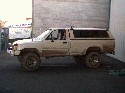
Alignment does change. It will pull your tires in(toe in) and it will also give you a little positive camber. Definately get an alignment afterwards. I'm loving them on my truck. I'm actually running the same height as I did before, but with a softer front end and better articulation. 
Aug 11, 2004 | 12:17 PM
#15
Registered User
Joined: May 2004
Posts: 3,291
Likes: 0
From: 100 miles offshore as much as possible, & Springfield Oregon USA
That's what I was thinking, put those on and lower the bars down to the same height I have now, should ride smoother and flex better! I just might do this.
Aug 11, 2004 | 01:21 PM
#16
Registered User
Joined: Aug 2003
Posts: 613
Likes: 0
From: Mountains outside of Boulder
ldivinag, i'm going to nitpick a little here. i don't mean any disrespect, but i don't think you explained somethings right.
when you crank the TB, you're not adding any load, you're just moving the eqilribrium point so that the front of the truck sits higher.
using hook's law for a perfect spring: F=k(x-x0), where F is the force on the spring, x is the position of the spring, and x0 is the equilribirum point. k is a property of the spring, we can't change that. F is the force on the spring (i.e. the weight of the front of the truck), we can't change that. so x-x0 is how far the spring is deflected from it's equilribirum position. no matter how much (within reason) we crank the TB, we do not change x-x0. what we change is x0 itself, or the starting place for the spring.
cranking the TB doesn't stiffen the ride, all it does is cause the A-arms to be pushed down, and the front of the truck to be pushed up. this gives a cheap lift and increases upward travel, but (unless you change your bump stops) it decreases the droop.
what the space does is add space (hence the clever name ) between the lower and upper A-arm. it adds the space at the top, so that in effect it's pushing down on the lower A-arm, and giving some lift. as you said, toyota attaches the TB to the upper A-arb, since we're in effect messing with stuff below the A-arm, the TB and bump stops and everything remain uneffected. this way, we get a lift, but we don't sacrifice the droop to get it.
think of it this way. to lift the front end, we need to push the wheel down away from the truck. there are (at least) two ways to do this:
1a - we can push the whole upper A-arm down (cranking the TB). this is easy to do, but we lose droop because the upper A-arm can only go down so far
1b - we can put stiffer TBs on. This is like making a larger k in the F=k(x-x0) equation. so with the same F, the truck will sit higher. This is where you get the harsher ride that you were talking about. we also lose droop here.
2 - we can push the wheel down away from the upper A-arm (install BJ spacers). this is harder to do, but since we're not messing with the A-arm we don't lose any droop. The suspension parameters are basically unchanged.
Originally Posted by ldivinag
but guess what. in order to raise a TB suspension, you have to PUT MORE LOAD into it. cause as you know, when you "crank" the TB, that forces the upper and lower a-arms to point downwards. but now the TB is harder to twist to compress for normal suspension travel.
when you crank the TB, you're not adding any load, you're just moving the eqilribrium point so that the front of the truck sits higher.
using hook's law for a perfect spring: F=k(x-x0), where F is the force on the spring, x is the position of the spring, and x0 is the equilribirum point. k is a property of the spring, we can't change that. F is the force on the spring (i.e. the weight of the front of the truck), we can't change that. so x-x0 is how far the spring is deflected from it's equilribirum position. no matter how much (within reason) we crank the TB, we do not change x-x0. what we change is x0 itself, or the starting place for the spring.
cranking the TB doesn't stiffen the ride, all it does is cause the A-arms to be pushed down, and the front of the truck to be pushed up. this gives a cheap lift and increases upward travel, but (unless you change your bump stops) it decreases the droop.
Originally Posted by ldivinag
with a spacer placed on the top a-arm (btw, i heard that toyota and only toyota uses the upper a-arm design ON A TRUCK, to mount the TB. ford, chevy, nissan, etc, all mount their TB to the LOWER a-arm where they are more easily damaged by rocks and stuff), you get the best of both worlds: you can UNCRANK the TBs but still maintain the HEIGHT. and that is the magic that you can get for $120...
what the space does is add space (hence the clever name
) between the lower and upper A-arm. it adds the space at the top, so that in effect it's pushing down on the lower A-arm, and giving some lift. as you said, toyota attaches the TB to the upper A-arb, since we're in effect messing with stuff below the A-arm, the TB and bump stops and everything remain uneffected. this way, we get a lift, but we don't sacrifice the droop to get it.think of it this way. to lift the front end, we need to push the wheel down away from the truck. there are (at least) two ways to do this:
1a - we can push the whole upper A-arm down (cranking the TB). this is easy to do, but we lose droop because the upper A-arm can only go down so far
1b - we can put stiffer TBs on. This is like making a larger k in the F=k(x-x0) equation. so with the same F, the truck will sit higher. This is where you get the harsher ride that you were talking about. we also lose droop here.
2 - we can push the wheel down away from the upper A-arm (install BJ spacers). this is harder to do, but since we're not messing with the A-arm we don't lose any droop. The suspension parameters are basically unchanged.
Aug 11, 2004 | 06:56 PM
#17
Contributing Member
Joined: Nov 2002
Posts: 10,666
Likes: 5
From: Oklahoma State
I think the only problem with using Hook's law in this case is it is a linear equation. I believe the leverage on the t-bars, as applied by the wheels changes in a non-linear way. As the UCA swings through it's path of motion the leverage on the t-bars decreases, (the ride gets stiffer exponentially). Or at least it does with my weird Superlift UCA/ t-bar linkage.
Aug 11, 2004 | 08:14 PM
#18
Thread Starter
Contributing Member
Joined: Dec 2003
Posts: 767
Likes: 0
From: Way down in the hole...
Originally Posted by mt_goat
I'll repeat,"That's not to say something similar couldn't be designed to work on a Taco". Post some pictures of your front end, maybe we can come up with a new product.

My digital camera pretty much sucks, but I'll try and jack it up this weekend and get some pics going.
Aug 11, 2004 | 08:39 PM
#19
Registered User
Joined: Dec 2003
Posts: 1,526
Likes: 0
From: N37 39* W122 3*
here's what the diff between a COIL spring and TB.
a coil spring, in a suspension is at equilabirum when you put it into a vehicle.
as soon as you drop the vehicle back onto it's wheels, it compresses so you are at NEG EQ.
when you compress more, you are even at more NEG EQ. when you drop the wheel, the spring, if connected at top and bottom, can stretch. x>0.
with a TB. when you first put it on a vehicle, it is at x=0. as soon as you drop it, then x<0. for math sake, lets put x=-5 (normal height, vehicle not moving).
when you then compress, x=-10 (this at the point where the upper a-arm hits the bumpstop). and like any spring, the closer you get to it's MAX EQ, the harder it is.
but since a TB will never get x>0, that's where the diff lies.
again, this is assuming, (like my downey 26MM TBs) does not ship from the factory where x>0...
why the heck did you have to bring math into this...
a coil spring, in a suspension is at equilabirum when you put it into a vehicle.
as soon as you drop the vehicle back onto it's wheels, it compresses so you are at NEG EQ.
when you compress more, you are even at more NEG EQ. when you drop the wheel, the spring, if connected at top and bottom, can stretch. x>0.
with a TB. when you first put it on a vehicle, it is at x=0. as soon as you drop it, then x<0. for math sake, lets put x=-5 (normal height, vehicle not moving).
when you then compress, x=-10 (this at the point where the upper a-arm hits the bumpstop). and like any spring, the closer you get to it's MAX EQ, the harder it is.
but since a TB will never get x>0, that's where the diff lies.
again, this is assuming, (like my downey 26MM TBs) does not ship from the factory where x>0...
why the heck did you have to bring math into this...
Aug 12, 2004 | 05:50 AM
#20
Contributing Member
Joined: Nov 2002
Posts: 10,666
Likes: 5
From: Oklahoma State
Originally Posted by ldivinag
here's what the diff between a COIL spring and TB.
a coil spring, in a suspension is at equilabirum when you put it into a vehicle.
as soon as you drop the vehicle back onto it's wheels, it compresses so you are at NEG EQ.
when you compress more, you are even at more NEG EQ. when you drop the wheel, the spring, if connected at top and bottom, can stretch. x>0.
with a TB. when you first put it on a vehicle, it is at x=0. as soon as you drop it, then x<0. for math sake, lets put x=-5 (normal height, vehicle not moving).
when you then compress, x=-10 (this at the point where the upper a-arm hits the bumpstop). and like any spring, the closer you get to it's MAX EQ, the harder it is.
but since a TB will never get x>0, that's where the diff lies.
again, this is assuming, (like my downey 26MM TBs) does not ship from the factory where x>0...
why the heck did you have to bring math into this...
a coil spring, in a suspension is at equilabirum when you put it into a vehicle.
as soon as you drop the vehicle back onto it's wheels, it compresses so you are at NEG EQ.
when you compress more, you are even at more NEG EQ. when you drop the wheel, the spring, if connected at top and bottom, can stretch. x>0.
with a TB. when you first put it on a vehicle, it is at x=0. as soon as you drop it, then x<0. for math sake, lets put x=-5 (normal height, vehicle not moving).
when you then compress, x=-10 (this at the point where the upper a-arm hits the bumpstop). and like any spring, the closer you get to it's MAX EQ, the harder it is.
but since a TB will never get x>0, that's where the diff lies.
again, this is assuming, (like my downey 26MM TBs) does not ship from the factory where x>0...
why the heck did you have to bring math into this...
 I have seen it with a solid axle where leverage would help with the drooping and lots of travel to extend the spring.
 I see the main difference between coil and t-bar springs being the linear motion VS rotational motion. The wheels are basically moving up and down in a linear path, with the coil set-up the springs are basiclly working the same path. With the t-bars you have to change the motion from the mostly linear motion (up and down path of the wheels) to the rotational torqueing of the t-bar. The t-bar gets the most flex when it is as close to unloaded as possible and when the force vector is at a 90 deg angle to the pivot point of the rotation. So as the control arm moves past that 90 deg angle to the force of the wheel motion the t-bar feels stiffer. At least that's my thinking on it anyway.

Last edited by mt_goat; Aug 12, 2004 at 05:54 AM.


