When you click on links to various merchants on this site and make a purchase, this can result in this site earning a commission. Affiliate programs and affiliations include, but are not limited to, the eBay Partner Network.
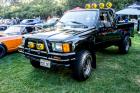
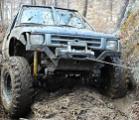
I strictly stick to pavement BUT I wanted to take my truck to the sand for some slight off-road fun this weekend. I took this to the snow but never had the chance to use the 4x4.
Long story short, once I drove back to the pavement (parking lot) it was difficult to turn from a stop so I could straighten out and unlock the hubs. I really had to give it some gas and clutch to move the damn thing. Moving straight is fine, but turning or turning from a stop, no good.
Is this normal?
(Pismo Beach CA)
Last edited by BK2TFUTURE; Jun 1, 2015 at 09:56 AM.
The front diff is locked, meaning both wheels turn the same speed regardless of straight or turning. When you turn on dry pavement (not recommended) the outside wheel must travel further than the inside wheel. Thats why the rear has a slip diff. Lets one when move faster further than the other. So when your off roading and then turn onto drive pavement, slip it out of 4wd so not to ruin your front diff
The front diff is locked, meaning both wheels turn the same speed regardless of straight or turning. When you turn on dry pavement (not recommended) the outside wheel must travel further than the inside wheel. Thats why the rear has a slip diff. Lets one when move faster further than the other. So when your off roading and then turn onto drive pavement, slip it out of 4wd so not to ruin your front diff
You're almost right. From what I read from the OP he was in 4wd on pavement and trying to turn which is difficult and bad for the drivetrain. It's not from the front axle being locked, but from the front axle hubs being locked. This connects the front and rear axles through the transfer case. Since the transfer case does not have a differential in it, there is no room for slipping between the 2 axles. When you turn the front and rear want to turn at different speeds and causes everything to bind up.
You're almost right. From what I read from the OP he was in 4wd on pavement and trying to turn which is difficult and bad for the drivetrain. It's not from the front axle being locked, but from the front axle hubs being locked. This connects the front and rear axles through the transfer case. Since the transfer case does not have a differential in it, there is no room for slipping between the 2 axles. When you turn the front and rear want to turn at different speeds and causes everything to bind up.
You're almost right. From what I read from the OP he was in 4wd on pavement and trying to turn which is difficult and bad for the drivetrain. It's not from the front axle being locked, but from the front axle hubs being locked. This connects the front and rear axles through the transfer case.
hmmm, gotta think about this one... not sure about ifs, but on sfa, you'd have to also have the truck in 4wd at the trans, in order to connect the front and rear axles... locking just the hubs doesn't give you 4wd, it just locks each front axle shaft to it's respective wheel.
however, with both front axle shafts going into a detroit locker, i imagine that it's turning the front driveshaft as well... you can hear a mild whining noise going down the road, even tho the trans is only in 2wd, and it doesn't turn as cleanly, with the front hubs locked... the front tires going down the road are driving everything in the front end, not the engine, there is no connection between the axles.
with dual cases and twin sticks, i can shift on the fly, while the truck is rolling, between 2wd and 4wd, because both front and rear axles are turning at the same speed.
Still dont understand whats the purpose of locking hubs...
Locking hubs lock the wheel to the axle. so your not turning the front diff 100% when youre not using 4wd. I assume more of a gas saver and diff saver than anything else.



 Jun 1, 2015 | 09:55 AM