


Vacuum Leaks: replace hoses or desmog it?
 Aug 4, 2016 | 05:41 PM
#1
Thread Starter
Registered User
Joined: Jun 2016
Posts: 4
Likes: 0
From: wNC
Vacuum Leaks: replace hoses or desmog it?
So I should just say right away that I'm a complete newbie with regard to any auto work. First time posting here but I've been lurking a while. I bought this truck several months ago as incentive to learn, and it has given me many, many opportunities! The truck was running very rough when I got it: high surging idle, tough to start in morning, etc. I did a compression test and the cylinders seem to be in good shape (150, 160, 142, 150, dry). I replaced PCV valve and grommet, replaced and gapped plugs and wires, tightened the drive belts (soon to be replaced), adjusted the idle screw -- pretty much by ear since I don't have a tach -- and now the thing is doing much better, but still has some issues, and more knowledgable people seem to think they're caused by vacuum leaks. I tried the carb cleaner trick, but couldn't find any results, I think because I just have many minor leaks that are adding up.
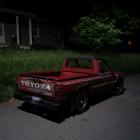
The truck is a 1981 RWD 22R
My first question is: what are the sizes of these vacuum lines? Can you buy bulk vacuum hoses at an auto part store? I saw LCE has a hose kit for the 22RE here, which lists the three hose sizes. Would these sizes be usable on my 22R. Here is a picture of my engine bay and a hose diagram from that year's FSM. I replaced one hose already that was visibly cracked -- going from valve cover to air filter housing -- and had moderate results. The other visibly compromised one I'll change asap is the PCV hose. But it seems like changing every line couldn't hurt (depending on how much they cost) and will probably help; they're all so old. Sorry, I'm very naive about some of this stuff, but eager to learn.
My second question: I read Pumpkinyota's tutorial on desmogging, and started getting ambitious. It almost seems easier/cheaper than replacing all these hoses (there are so many!) and like it could prevent future vacuum issues. I was ready to jump into that project, until I read on another thread some people disputing whether or not desmogging hurts gas mileage (it's a city truck and that's a big one for me) and that the factory carburetor doesn't run right after a desmog, that it's better to do on a Weber carb. Also my girlfriend thinks desmogging would be unethical... (but if it improves MPG?)
Wasn't sure if I should post this here or in the newbie section. Thanks for the help! You already helped a ton before I ever even posted here.
The truck is a 1981 RWD 22R
My first question is: what are the sizes of these vacuum lines? Can you buy bulk vacuum hoses at an auto part store? I saw LCE has a hose kit for the 22RE here, which lists the three hose sizes. Would these sizes be usable on my 22R. Here is a picture of my engine bay and a hose diagram from that year's FSM. I replaced one hose already that was visibly cracked -- going from valve cover to air filter housing -- and had moderate results. The other visibly compromised one I'll change asap is the PCV hose. But it seems like changing every line couldn't hurt (depending on how much they cost) and will probably help; they're all so old. Sorry, I'm very naive about some of this stuff, but eager to learn.
My second question: I read Pumpkinyota's tutorial on desmogging, and started getting ambitious. It almost seems easier/cheaper than replacing all these hoses (there are so many!) and like it could prevent future vacuum issues. I was ready to jump into that project, until I read on another thread some people disputing whether or not desmogging hurts gas mileage (it's a city truck and that's a big one for me) and that the factory carburetor doesn't run right after a desmog, that it's better to do on a Weber carb. Also my girlfriend thinks desmogging would be unethical... (but if it improves MPG?)
Wasn't sure if I should post this here or in the newbie section. Thanks for the help! You already helped a ton before I ever even posted here.
Last edited by Born to Rust; Aug 4, 2016 at 05:43 PM.
Aug 5, 2016 | 08:53 AM
#2
Registered User
iTrader: (1)
Joined: Apr 2009
Posts: 13,381
Likes: 100
From: I live in New Tripoli Pa out in the woods
I buy Vacuum line in Hundred Foot roles I would have to look at the sizes to be sure.
Myself I would fix it make it right.
Start removing parts and you end up with a mess that even you the one who moved and removed things can`t figure out
Myself I would fix it make it right.
Start removing parts and you end up with a mess that even you the one who moved and removed things can`t figure out
Aug 13, 2016 | 03:38 PM
#3

Registered User


Joined: Jun 2016
Posts: 711
Likes: 188
From: Florida
The small vac lines that go to the carb ports are likely 3 millimeter. The ports seem to measure 1/8", but most parts stores do not stock 1/8" inside diameter vac hose. I did find out tho that 5/32" inside diameter works well w/a tight fit. Guy behind the counter said it would work and sure enuff it did, with no leaks (imagine that!) Haven't found any parts stores with 3mm vac line in stock, but you might could fine it online. I wouldn't bother tho, as the difference is so slight & the 5/32" works.
"Fixing it right" is usually a good idea with vehicles, however, there are several expensive vacuum switching valves in the Toyota smog system of that vintage. if even one of them isn't working right the smog system isn't working right either. plus the cheapest I've seen on them is $80 each, and mine (1978) has two of them. I've desmogged the truck and according to the Pumpkin's desmog write-up on here, you can run the stock carb with no problem. I desmogged mine recently & am still trying to get mine to run right (see my post - 1978 Toyota Pickup 20R Won't Stay Running - Detailed). My truck has many other problems that needed fixing so I don't think my run problem has much to do with the desmog. Still working on it.
I've heard (and seen, with with exhaust gas analyzer proof) that a desmogged older motor can actually run cleaner than the same motor with faulty smog equipment. Food for thot & actually more ethical than leaving it alone.
Good luck with it and keep us posted. And oh yeah, and good job on having access to the FSM; it's a big help when you work on any car or truck.
"Fixing it right" is usually a good idea with vehicles, however, there are several expensive vacuum switching valves in the Toyota smog system of that vintage. if even one of them isn't working right the smog system isn't working right either. plus the cheapest I've seen on them is $80 each, and mine (1978) has two of them. I've desmogged the truck and according to the Pumpkin's desmog write-up on here, you can run the stock carb with no problem. I desmogged mine recently & am still trying to get mine to run right (see my post - 1978 Toyota Pickup 20R Won't Stay Running - Detailed). My truck has many other problems that needed fixing so I don't think my run problem has much to do with the desmog. Still working on it.
I've heard (and seen, with with exhaust gas analyzer proof) that a desmogged older motor can actually run cleaner than the same motor with faulty smog equipment. Food for thot & actually more ethical than leaving it alone.
Good luck with it and keep us posted. And oh yeah, and good job on having access to the FSM; it's a big help when you work on any car or truck.
Last edited by 13Swords; Aug 15, 2016 at 05:04 AM.

Thread
Thread Starter
Forum
Replies
Last Post
joshik
Engines - Transmissions
0
Jan 28, 2016 07:59 PM


